
Reviewed · TREME & MARIGNY TOURS
60-minute Tremé Walking Tour & Photo Experience
Tremé without the tourist crush. This private walking tour threads through New Orleans’ Tremé neighborhood, where the stories are local, the pace is human, and you get help taking better photos along the way. I like that it includes a photo experience built into the walk, not tacked on after.
Two things I’d pick right away: first, it’s a true private tour with your own local guide (Hollis) so you can ask questions and move at a comfortable rhythm. Second, the stops connect big, messy chapters of the city—Storyville, Charity Hospital, and the effects of I-10—without turning them into museum-style lectures. One thing to consider: some stops do not include admission, and the schedule is short at each location, so it’s not the type of tour where you linger for long.
In This Review
- Key Highlights You’ll Actually Feel
- Tremé on Your Terms: Private 60–90 Minutes With Photo Help
- Backatown Coffee Parlour: Storyville’s Soundtrack in One Stop
- Storyville District: The Red-Light Era Explained at Street Level
- Charity Hospital at MCLNO East: Katrina’s Ripple Effect
- The I-10 Overpass and Tremé: How Infrastructure Changed a Neighborhood
- Mardi Gras Museum Stop: Grassroots Costumes and Culture (Admission Included)
- Getting Great Photos Without Stiff Poses
- Price and Value: When $15 Makes Sense for Your Day
- Who Should Book This Tremé Walk (and Who Might Skip It)
- Should You Book This Tremé Walking Tour?
- FAQ
- How long is the Tremé Walking Tour & Photo Experience?
- What does the $15 price include?
- Is this tour private?
- Where does the tour start and end?
- What language is the tour offered in?
- What kind of ticket do I use?
- What happens if the weather is poor?
Key Highlights You’ll Actually Feel
- Private guide + photo support: You’re not just walking—you’re getting help framing shots.
- Backatown Coffee Parlour on the Storyville site: A chance to hear the city’s past through everyday neighborhood life.
- Charity Hospital and Katrina’s aftermath: A focused stop on what changed and why it mattered.
- The I-10 cut through Tremé: See how infrastructure reshaped homes and businesses, plus what funding is now trying to fix.
- Mardi Gras Museum stop with admission included: Grassroots pageantry, built for people who like the real mechanics of celebration.
Across Esplanade into Treme and the Marigny
- Frenchmen Street VIP Live Music Pub Crawl in New Orleans★ 4.5 · 613 reviews
- New Orleans: Tremé African American & Creole History Tour★ 4.9 · 208 reviews
- 60-minute Tremé Walking Tour & Photo Experience★ 5.0 · 72 reviews
- New Orleans Voodoo, Storyville, Treme, Walking Tour★ 4.5 · 58 reviews
Tremé on Your Terms: Private 60–90 Minutes With Photo Help
This experience runs about 1 hour to 1 hour 30 minutes, and it’s designed for a small group—your group only. That matters in New Orleans, where a “quick stop” can turn into a crowded photo scramble. Here, you can slow down when the street scene or lighting begs for it.
The tour is offered in English, and you’ll use a mobile ticket. You start at 301 Basin St #1 and end at 1010 Conti St, which is handy for planning dinner after. It’s also listed as near public transportation, so you’re not locked into a single mode of getting there.
Good weather is required. If rain shows up, you’ll need to roll with the weather-based plan the operator sets. If you’re the type who hates last-minute changes, this is worth factoring in early.
Backatown Coffee Parlour: Storyville’s Soundtrack in One Stop
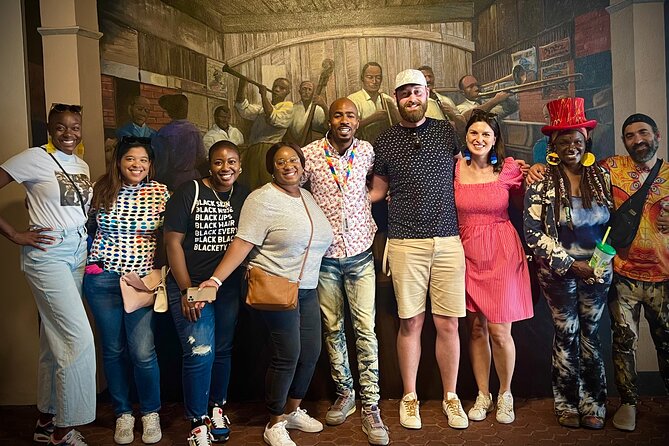
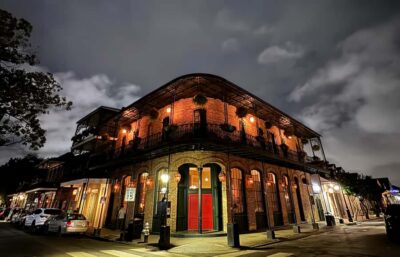
Your first stop is Backatown Coffee Parlour, placed at the site of old Storyville. The framing here is smart: you’re not standing in a “cold history” spot. You’re starting in a living neighborhood gathering place, which makes the past feel connected to the present.
Backatown is described as a space where you can imagine the sounds of major New Orleans figures—Jelly Roll Morton, Louis Armstrong, and King Oliver—and also meet people from all walks of life. If you’re into atmosphere, this stop gives it to you fast. The stop lasts about 10 minutes, and admission is not included, so don’t assume your coffee break is paid for.
For photos, think about reflections, doorways, and the little everyday details that scream New Orleans without needing a guide to point at them. This is the kind of location where a careful angle beats a wide, generic shot.
Storyville District: The Red-Light Era Explained at Street Level
Next up is the Storyville District, the city’s red-light district from 1897 to 1917. The tour explains that Storyville was established by municipal ordinance under the New Orleans City Council, to regulate prostitution. You also get the role of Sidney Story, the alderman connected to guidelines and legislation.
The practical thing about this stop is time. It’s about 10 minutes, so you get the key framework without wandering for an hour. That’s good for people who want clarity, not overload. The tradeoff is that you won’t be able to go deep on every social angle in one short pass.
For your photos here, prioritize context shots: street corners, building edges, and the space where people would have moved through. If you only shoot one “marker,” you’ll end up with a photo that looks like many other photos. With a short stop, you’ll want images that hint at story, not just scenery.
Charity Hospital at MCLNO East: Katrina’s Ripple Effect
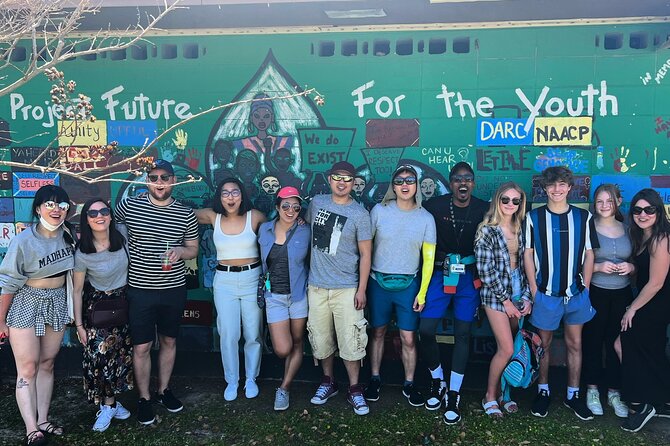
Then you’ll head to the Medical Center of Louisiana at New Orleans East Campus. This stop centers on Charity Hospital, which was one of the teaching hospitals in the MCLNO system. After Hurricane Katrina, the story shifts from healthcare to policy and community impact: then-Governor Kathleen Blanco said Charity Hospital would not reopen as a functioning hospital just three weeks after the events.
The Louisiana State University System, which owns the building, stated it had no plans to reopen Charity Hospital in its original location. Instead, the plan was to incorporate it into the city’s new medical center in lower Mid-City, and the new hospital completed in August 2015 was named University Medical Center New Orleans.
This is listed as free for admission, and again the time at the stop is about 10 minutes. That shorter timing works best when you’re okay with big-picture understanding. If you want a long, academic breakdown of medical history, this is probably not your only stop. Still, it’s a powerful anchor because the story is told in a real place, not just in a brochure.
If you’re photographing here, aim for “memory photos”—the architecture, the scale, and the sense of the site. The photo coaching on this tour is useful because hospital campuses can be tricky with light and lines.
More of New Orleans on foot
The I-10 Overpass and Tremé: How Infrastructure Changed a Neighborhood
Now comes one of the most pointed parts of Tremé’s modern story. The tour addresses the elevated Interstate 10 stretch above North Claiborne Avenue and how it has long been described as a villain to the historic African American community. The building of the highway is described as taking homes, businesses, and a glorious strand of oak trees.
What I like about the way this is presented is the “then and now” framing. The tour notes that for decades, generations have imagined a day when the highway would be removed—or at least closed off to traffic. The current update tied to the tour is that an infrastructure bill sets aside federal funding to help neighborhoods like Tremé.
This stop is about 10 minutes and free for admission. It’s short, but it lands a big idea: city planning decisions aren’t abstract. They show up in streets, property, and community life.
For photos, watch for the layers—street level vs. overpass lines, shadows, and how the neighborhood continues to exist beneath infrastructure. If the goal is to capture the tension of the space, framing matters more than distance.
Mardi Gras Museum Stop: Grassroots Costumes and Culture (Admission Included)
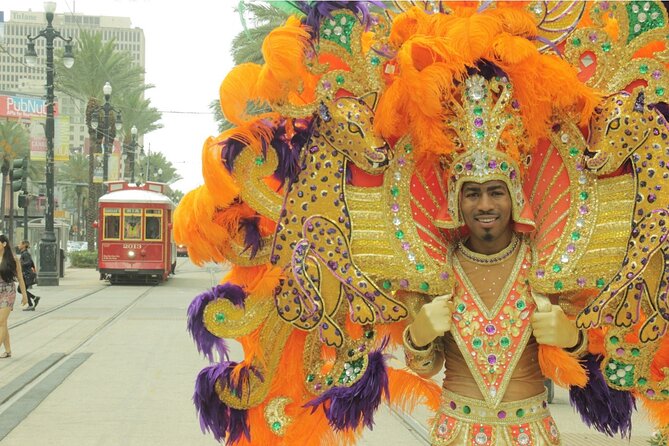
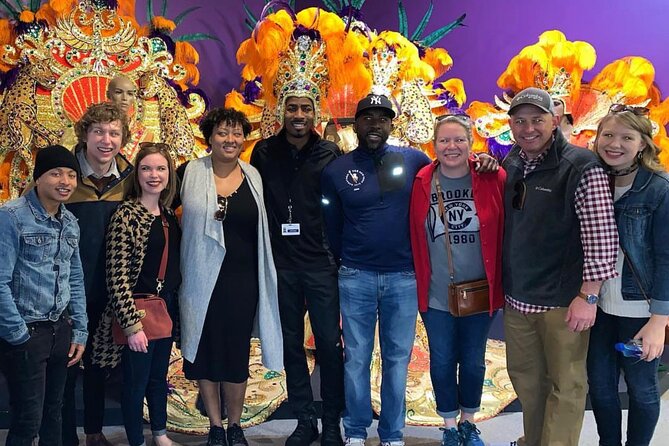
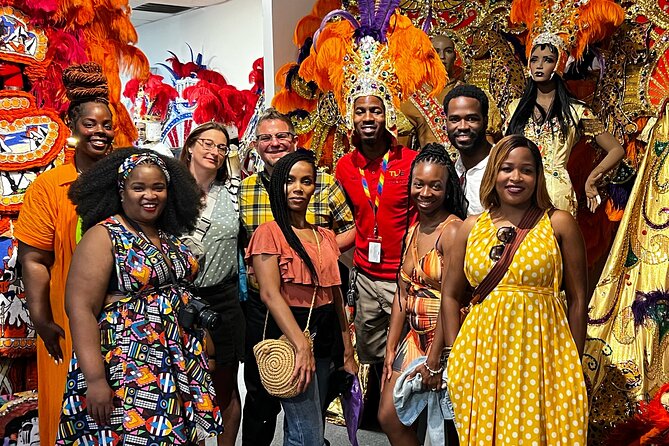
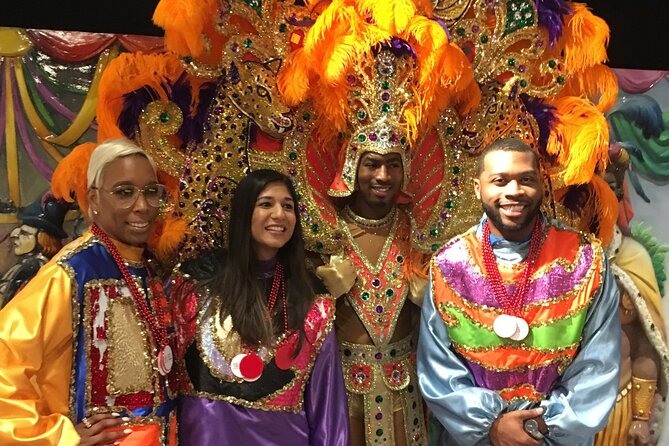
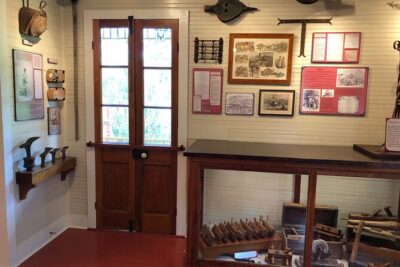
To balance the heavier stops, the tour ends with the Mardi Gras Museum of Costumes and Culture. This part is about grassroots tradition—pageantry, fun, and the creativity that shows up when Mardi Gras is made by local people, not imported for tourists.
This stop lasts about 20 minutes, and admission is included. That’s a real value piece: you’re paying one set price for the tour, and at least one major museum-style stop is already handled.
If you’re into costumes, details, and the design behind the spectacle, this is the most “visual payoff” segment. For photos, look for color contrast and eye-level compositions rather than only shooting wide rooms. A museum can be crowded in general, but the private format helps you get angles you actually like.
Getting Great Photos Without Stiff Poses
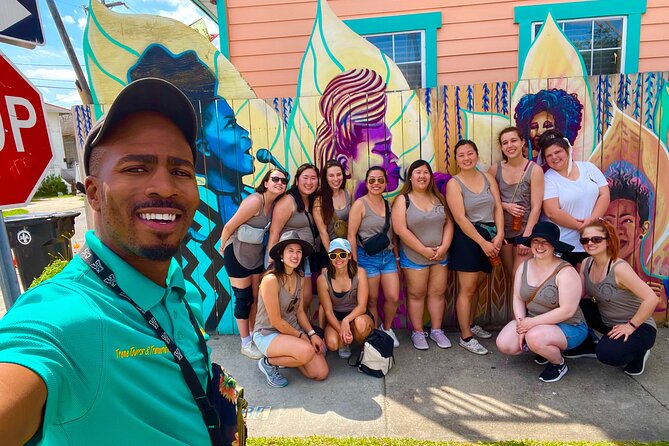
This tour is explicitly built with photo support in mind. You’re not left to guess where to stand or how to frame a shot while your guide races ahead. Instead, you get assistance with taking great photos as part of the walk.
If you want to get the most out of that, bring your phone or camera charged and ready, and think about the kind of photos you want before you arrive:
- People and street context
- Architecture and textures
- “Story clues” that hint at place and time
The guide Hollis is specifically mentioned as being a steady presence—people describe feeling at home and getting real New Orleans stories, plus help that goes beyond generic photo prompts. Another detail that shows up in how this tour is described: Hollis has been praised for incorporating audio from documentaries and adding local food spot recommendations. That can help fill gaps where a street view alone might not explain what you’re seeing.
Price and Value: When $15 Makes Sense for Your Day
At $15 per person, this tour is positioned as a budget-friendly way to get into parts of New Orleans many visitors never slow down to understand. The value isn’t just the ticket price—it’s the structure: multiple stops, a private guide, and photo assistance within about an hour to an hour and a half.
Here’s where the math gets real for most people: not every stop has admission included. Backatown Coffee and the Storyville District are listed as admission not included. Charity Hospital at MCLNO East is free. The Mardi Gras Museum stop includes admission. So you’ll likely spend a little extra on at least one location depending on what you choose to do at the paid spots.
Even with those added costs, the private format is the big reason this price can feel fair. In New Orleans, a guided experience that prevents you from wandering aimlessly often saves time, which is money you don’t spend later. If your goal is a guided, story-forward walk with photos, $15 is a bargain-style entry point.
Who Should Book This Tremé Walk (and Who Might Skip It)
This tour fits best if you want:
- A private guide instead of a large group
- Tremé focused stories rather than only the usual postcard circuit
- Help with photos, especially if you don’t want to rely on luck and timing
You might skip it if:
- You’re only interested in famous landmarks in the most tourist-heavy areas
- You need long stays at each stop (most stops are 10 minutes, except the museum at 20 minutes)
- You don’t want any extra admission costs at stops labeled as not included
It’s also a good choice for people who want a factual, direct account of New Orleans history from the African American perspective. Hollis is repeatedly highlighted for that tone—clear facts, local grounding, and practical recommendations.
Should You Book This Tremé Walking Tour?
If you want a short, story-driven walk through Tremé with photo help and a guide who talks like someone who belongs there, I think this is worth booking. The itinerary covers several key eras and themes—Storyville, Charity Hospital’s legacy, and the I-10 impact—then gives you a lighter closer at the Mardi Gras Museum with admission included.
Book it if you’re going to be in New Orleans for long enough to spend a focused hour on the city’s lived-in neighborhoods. Skip or rethink it if you’re expecting a slow, museum-style day where you linger at every location, or if weather volatility would stress you out.
One smart move: plan something flexible right after the tour since the end point is 1010 Conti St. That makes it easier to eat and rest without backtracking.
FAQ
How long is the Tremé Walking Tour & Photo Experience?
The tour runs about 1 hour to 1 hour 30 minutes.
What does the $15 price include?
The tour ticket is $15 per person. The Mardi Gras Museum admission is included, while admission is not included for Backatown Coffee Parlour and the Storyville District. Admission for the Medical Center of Louisiana at New Orleans East Campus stop is free.
Is this tour private?
Yes. It’s listed as a private tour/activity, and only your group participates.
Where does the tour start and end?
The start is 301 Basin St #1, New Orleans, LA 70112, and the end is 1010 Conti St, New Orleans, LA 70112.
What language is the tour offered in?
It’s offered in English.
What kind of ticket do I use?
You receive a mobile ticket, and confirmation is received at the time of booking.
What happens if the weather is poor?
The experience requires good weather. If it’s canceled due to poor weather, you’ll be offered a different date or a full refund.
If you tell me your travel dates and whether you prefer photos of people vs. architecture, I can help you decide if this fits your schedule and style.
More Tours in New Orleans


More Tour Reviews in New Orleans
Treme & the Marigny, Keep Going




Just added to The New Orleans Traveler
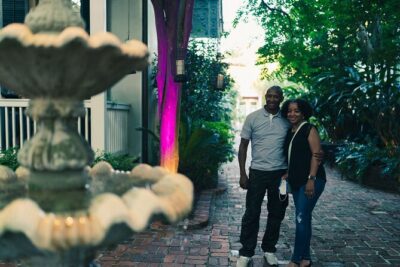
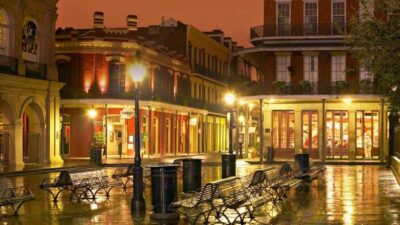


Treme & Marigny Tours, compared.
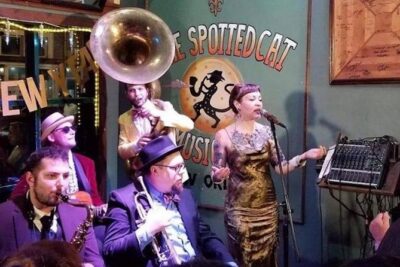 ★ 4.5Frenchmen Street VIP Live Music Pub Crawl in New OrleansFrom $52613 reviews
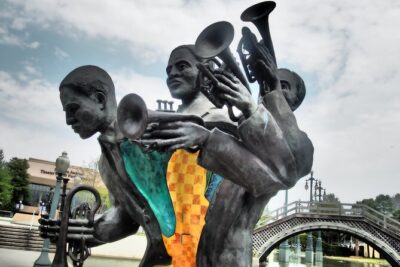 ★ 5.0Treme’ Walking TourFrom $20240 reviews
 ★ 4.9Tremé African American & Creole History TourFrom $22208 reviews
 ★ 4.5Voodoo, Storyville, Treme, Walking TourFrom $2958 reviews
 ★ 5.0Creole Architecture of the Marigny TourFrom $4046 reviews
 ★ 5.0Private French Quarter and Treme Walking TourFrom $60029 reviews
 ★ 4.5Walking the Tremé: A Self-guided Audio Tour of New OrleansFrom $924 reviews
 ★ 4.5Private VIP Frenchmen Street Live Music Pub Crawl New OrleansFrom $23517 reviews
Browse the lists this tour appears in