
Reviewed · FOOD TOURS
New Orleans Food and History Walking Tour
One part food tour, one part city lesson, and all hunger management. This 3-hour walk through the French Quarter connects Creole flavors to the stories behind them. You’ll hit five eateries and leave with a full belly and clearer context for what makes New Orleans taste like New Orleans.
I like that the tour is built around real dishes you actually want to order again later, not just “a bite here, a bite there.” I also like that the guide keeps linking food to place, including Louisiana geography and even the linguistic roots of names like étouffée and jambalaya. One consideration: there’s no gluten-free, dairy-free, or vegan option, and the menu can include spicy hot sauce, so adventurous eaters fit best.
In This Review
- Key things to know before you eat
- A French Quarter food walk that teaches by eating
- Stop 1 at 3rd Block Depot: gumbo first, always
- The hot sauce bar stop: fun, fast, and spicy by design
- Leah’s Pralines: sweet Creole candy with a history twist
- Fried catfish po-boy at NOLA Poboys: the sandwich you came for
- Muffuletta, boudin ball, and red beans: comfort foods with a story
- Bread pudding finale: the sweet landing
- What the guide adds: recipes, language, and Louisiana context
- Pace and walking: short distances, but wear real shoes
- Who this tour is best for (and who should skip it)
- Price and value: what $85 gets you in real terms
- Should you book this New Orleans Food and History Walking Tour?
- FAQ
- How long is the New Orleans Food and History Walking Tour?
- Where do we meet, and where does the tour end?
- What foods are included on the tour?
- Is there a vegetarian option or special dietary options?
- Are drinks included?
- What if the weather is bad?
Key things to know before you eat
- Five stops, progressive sampling: expect a set lunch menu with multiple mains, sides, and dessert.
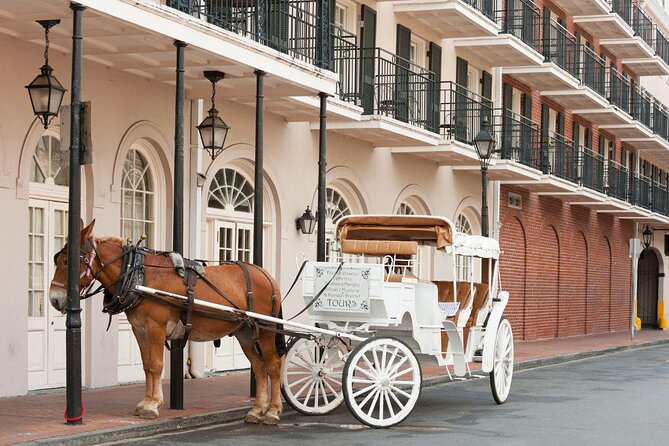
- French Quarter start in the Vieux Carré: you’ll begin at 3rd Block Depot and walk through the Old Square area.
- Hot sauce tasting is part of the plan: you can sample dozens of varieties, plus other seasoning types.
- Creole sweets show up early: Leah’s Pralines is on the route, with both traditional pralines and inventive candy.
- No major dietary substitutions (except vegetarian): vegetarian is available; gluten-free/dairy-free/vegan is not.
- Max group size of 16: small enough for questions, big enough for a lively vibe.
Still hungry? More gumbo, po'boys and beignets
- New Orleans Food Walking Tour of the French Quarter with Small-Group Option★ 5.0 · 6,118 reviews
- New Orleans Food and History Walking Tour★ 5.0 · 1,544 reviews
- New Orleans French Quarter Food Tour: Cajun, Creole and Culture★ 5.0 · 1,246 reviews
- French Quarter walking Food Tour Famous Flavors of New Orleans★ 5.0 · 1,115 reviews
A French Quarter food walk that teaches by eating
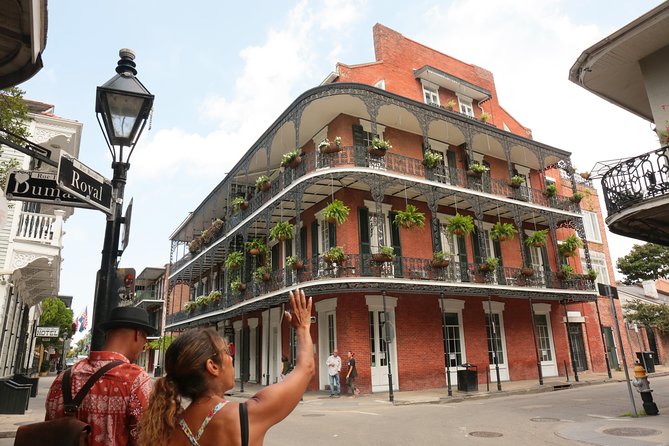
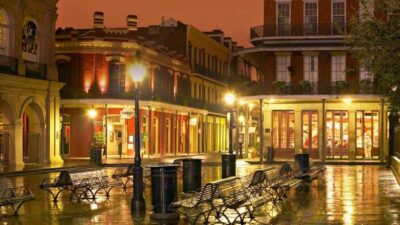
If you only have a short window in New Orleans, this kind of tour is efficient. You start in the heart of the Vieux Carré (Old Square) and focus on the dishes that define Louisiana’s culinary identity, from gumbo to po-boys to pralines.
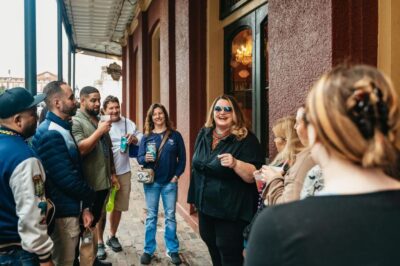
What makes it feel practical instead of gimmicky is the balance: you’re not just handed samples. Your guide talks as you go—about recipes, why certain flavors became classics, and how immigrant communities shaped what ended up on local plates.
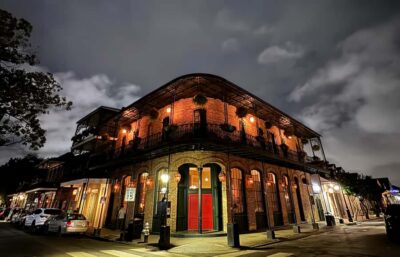
The route also helps you move like a local. Walking between stops means you get your bearings fast in a neighborhood that can otherwise feel like a maze of bars, balconies, and confetti-colored street energy.
Stop 1 at 3rd Block Depot: gumbo first, always
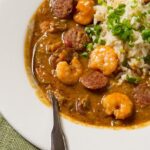
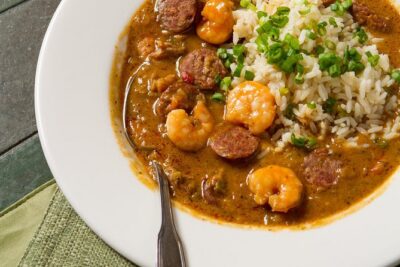
Your tour begins at 3rd Block Depot, 310 Chartres St. The first food moment is the kind that sets expectations: chicken and andouille sausage gumbo, served with a dollop of warm potato salad on the country-style side.
This is a great opener because gumbo is more than a dish here—it’s a signature. You’ll hear about the dark roux style (the tour describes it as dark roux gumbo) and how key ingredients come together, so by the time you see gumbo again on menus around town, you’ll recognize what to look for.
One small heads-up: there’s an optional bar stop early on. If you want a drink there, it’s own expense, and the tour notes that beverages other than water are not included.
The hot sauce bar stop: fun, fast, and spicy by design
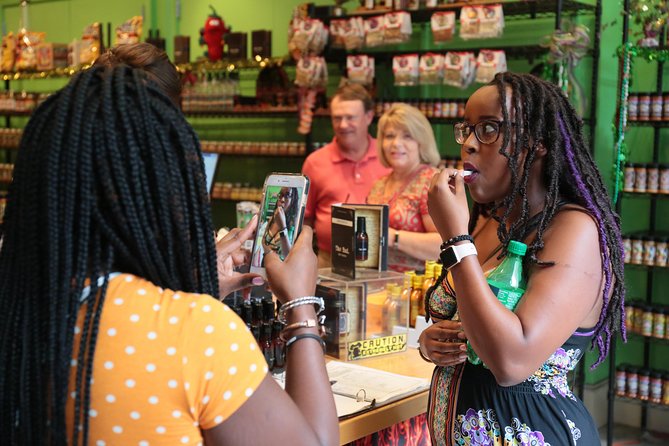
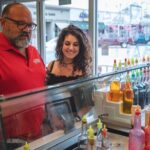
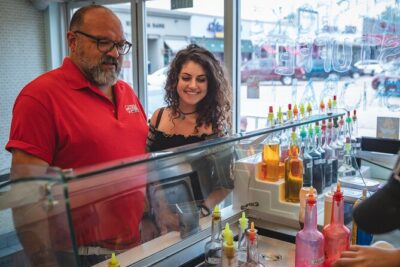
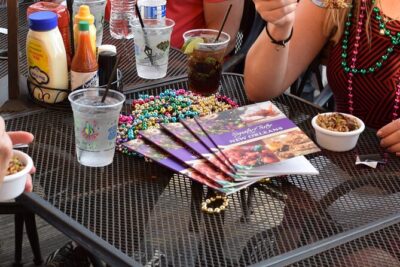
After gumbo, you get a quick break and then head to a hot sauce bar where you can sample dozens of varieties. This part is a huge part of why the tour works for curious eaters: you taste your way through Louisiana’s seasoning culture, not just its finished dishes.
You’ll also see that the sampling isn’t limited to one lane of heat. The tour description includes seasoning types beyond typical sauces, like dry rubs and barbecue sauces, and there are plenty of options if you want mild flavors.
Practical tip: go in with a plan. Take a little taste first, then decide if you want another. The goal here is discovery, not punishment—unless you truly enjoy sweating for fun.
Leah’s Pralines: sweet Creole candy with a history twist
Next up is Leah’s Pralines, where you’ll sample a Creole classic or something newer like bacon pecan brittle. That mix matters. Pralines aren’t just dessert-on-the-side; they’re part of the region’s sweet identity, tied to ingredients and local sourcing.
If you’re the type who thinks pralines all taste the same, this stop is designed to correct that. You get traditional brown sugar and pecans as described, plus the chance to compare that classic profile with an inventive take.
This is also a nice pacing break. After savory-heavy portions and hot sauce samples, pralines give your palate a reset without dulling your appetite for what’s next.
More of New Orleans on foot


Fried catfish po-boy at NOLA Poboys: the sandwich you came for
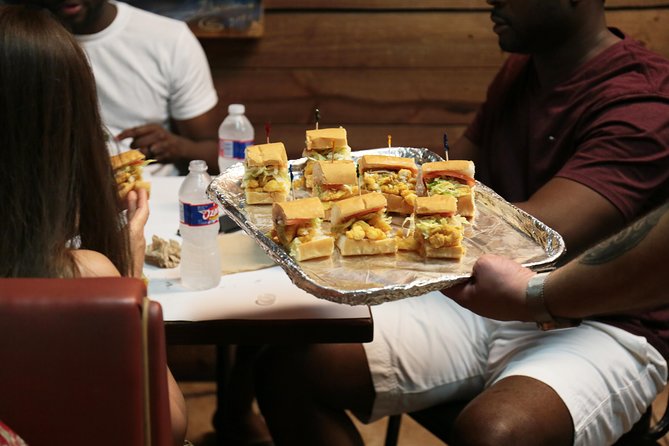
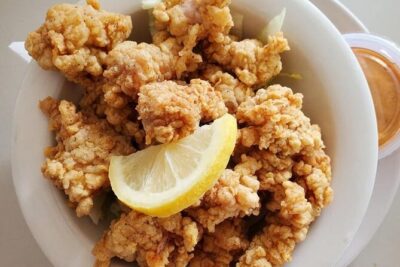
Then the tour leans into a New Orleans no-miss classic: po-boys. You’ll stop at NOLA Poboys, hear some context about seafood harvesting in Louisiana, and then get a bite of a fried catfish po-boy.
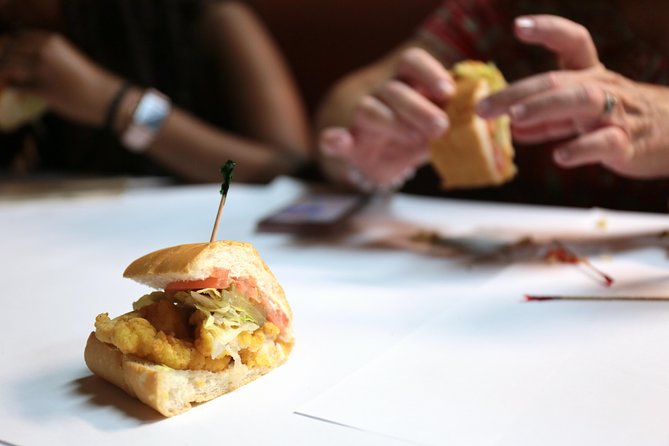
The tour description spells out what to expect: fried catfish on local French bread, dressed with lettuce, tomato, mayonnaise, and pickles. Hot sauce is optional, which is helpful if you already sampled the hot sauce bar and want to control the heat.
What I like about this stop is that it’s both iconic and learnable. You can taste the texture and contrast—crispy fish, soft bread, tangy dressing—and then connect that to the broader Creole story your guide is sharing while you walk.
Muffuletta, boudin ball, and red beans: comfort foods with a story
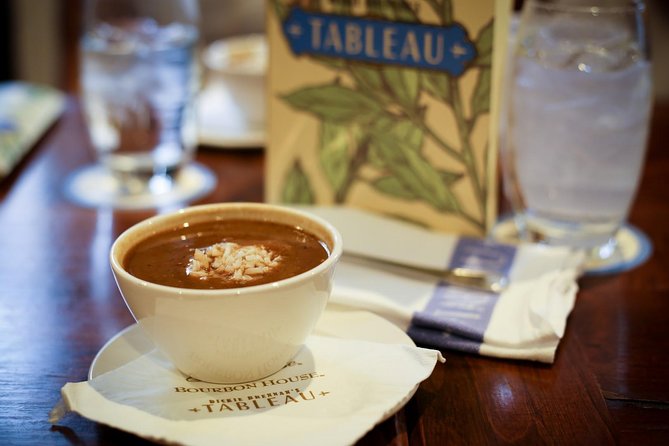
By the middle to later part of the walk, the menu expands into the dishes that people talk about like old friends.
You’ll get muffuletta sandwich sampling: Italian-style on Sicilian bread, layered with smoked ham, mortadella, Genoa salami, provolone, mozzarella, and a local olive salad. Even if you’ve eaten muffuletta before, it’s worth doing on this tour because your guide connects the dish to the ethnic food traditions that shaped Creole cuisine.
You’ll also sample boudin ball, a Cajun fried sausage ball with smoked pork, rice, and spices, served with a Creole remoulade dipping sauce. It’s the kind of snack that makes sense as a street-food bridge between heavier meals.
And there’s red beans and rice with andouille sausage, described as slow cooked, served over rice with green onions or scallions. This is comfort food with a reason to exist, and the guide’s talk about Louisiana geography adds meaning to why ingredients and techniques show up the way they do.
A small practical note from the food experience itself: you should come hungry. The tour is designed around a true tasting progression, not tiny appetizer-style nibbles.
Bread pudding finale: the sweet landing
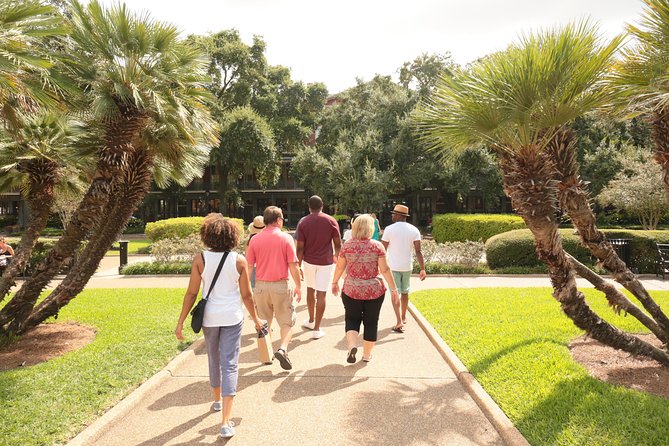
The tour ends on dessert: seasonal bread pudding, baked or fried. It’s an easy way to close the loop, since you’ve already had savory classics and sweet pralines earlier.
Dessert matters here because it balances the meal. If you’ve been chasing heat and spice (hot sauce bar) and salt and crunch (fried catfish po-boy, boudin ball), bread pudding gives you something warm, soft, and comforting to finish.
If you have a sweet tooth, you’ll feel like the last stop was planned. If you don’t, bread pudding is still a good closer because it’s filling and not overly experimental compared to what can sometimes happen on modern food tours.
What the guide adds: recipes, language, and Louisiana context
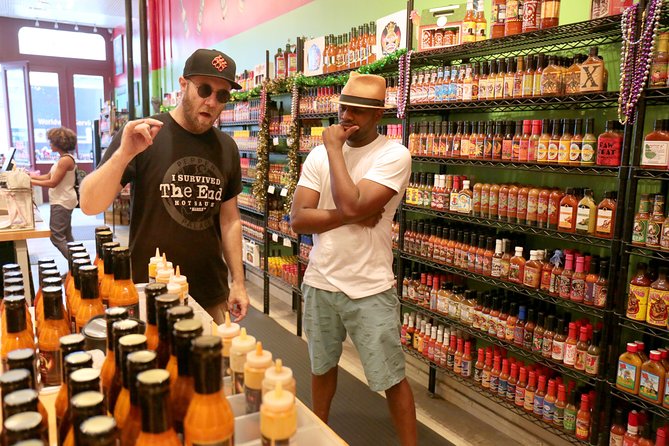
The most praised part of this experience is the way the guide turns food into a story you can remember. People consistently mention guides like Meg, Beth, Dillon (Dr. Gumbo), Gary, and John for being funny, engaging, and quick to answer questions while keeping the group moving at a good pace.
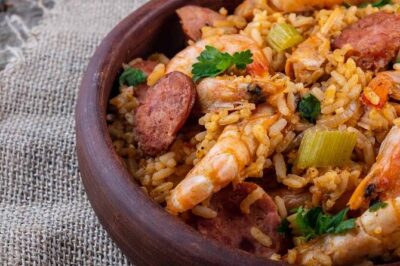
Here’s the useful takeaway for you: the history isn’t treated like a lecture. It’s tied to what you’re eating right then. The tour description notes that your guide explains how Louisiana geography plays into the food and that they cover linguistic origins of classic dish names like étouffée and jambalaya.
That kind of context helps in the real world. Next time you see dishes on a menu, you’re not just ordering by guesswork. You can recognize the ingredients, understand why certain styles became standard, and feel more confident exploring on your own after the tour.
Pace and walking: short distances, but wear real shoes
This is a walking tour with a manageable duration—about 3 hours. The route is planned for food stops, so it’s not the kind of marathon where you only get a menu description and a blurry photo.
That said, pace matters. Some people note you should wear walking shoes and be ready for a fairly brisk walk at points. Others mention the walking distances feel easy and minimal, with enough time at stops to eat and listen.
So I’d plan for a middle ground: comfortable sneakers, a water bottle if you like, and the mindset that you’ll be on the move more than you might expect for a “food tour.”
Who this tour is best for (and who should skip it)
This is best for you if you want an efficient first taste of New Orleans Creole cuisine, especially if it’s your first time in the city and you want guidance you can’t easily replicate on your own.
It also fits adventurous eaters. The tour explicitly notes that dietary preferences cannot be accommodated beyond the vegetarian option, and there’s no gluten-free, dairy-free, or vegan option.
Two more practical matches:
- If you love learning while you eat, you’ll probably enjoy the recipe talk and the context around dishes and names.
- If you like small groups, this caps at 16 travelers, which usually makes it easier to ask questions without feeling lost in a crowd.
If you have mobility concerns, the tour is not recommended for travelers with walking issues, so it’s worth considering a different format if you need a more seated experience.
Price and value: what $85 gets you in real terms
At $85 per person for about 3 hours, the value comes from what’s included—not just the number of stops.
You’re getting:
- A set lunch menu (with a vegetarian option available on request)
- Samples across five eateries
- Gratuities for servers at establishments included in the tour cost
- A guide who ties food samples to the history, geography, and language behind them
What’s not included:
- Beverages other than water
- A guide gratuity (optional)
- Any gluten-free/dairy-free/vegan alternatives
In plain terms: if you were trying to build your own “progressive lunch” across multiple classic New Orleans stops, you’d spend time coordinating and money ordering each dish individually. Paying one price for a planned progression, plus the guide context, is the tradeoff you’re making—and for a lot of people, it’s the smart one.
One more value note: the tour uses a mobile ticket, which reduces hassle. And if you’re traveling with limited time, it’s often booked around a month in advance, so picking a date sooner rather than later saves you stress.
Should you book this New Orleans Food and History Walking Tour?
I’d book it if you want a guided, high-impact sampler of the French Quarter’s most iconic flavors with enough story to make the dishes stick in your memory. The repeated praise for guide personality and pace is a big signal, especially for first-time visitors who want more than just eating.
I would not book it if you need gluten-free, dairy-free, or vegan options, or if you need a low-walking experience. And if you’re the type who hates heat, plan to control your hot sauce bar sampling carefully since the tour includes unlimited hot sauce and seasoning samples.
FAQ
How long is the New Orleans Food and History Walking Tour?
The tour lasts about 3 hours.
Where do we meet, and where does the tour end?
You meet at 3rd Block Depot, 310 Chartres St, New Orleans, LA 70130. The tour ends at New Orleans Creole Cookery, 508 Toulouse St, New Orleans, LA 70130.
What foods are included on the tour?
The tour includes a set menu and sampling at multiple eateries. The described menu features gumbo, hot sauce/seasoning samples, pralines, fried catfish po-boy, muffuletta, boudin ball, red beans and rice with andouille, and bread pudding.
Is there a vegetarian option or special dietary options?
A vegetarian option is available (requested at check-out). The tour also states there are no gluten-free, dairy-free, or vegan options, and you should notify the provider of food allergies (not aversions).
Are drinks included?
Water is included. Other beverages are not included, and any drinks you choose at bars are own expense.
What if the weather is bad?
The tour operates in all weather conditions and you should dress appropriately. If it’s canceled due to poor weather, you’ll be offered a different date or a full refund.
More Tours in New Orleans


More Tour Reviews in New Orleans

More Ways to Eat New Orleans


Just added to The New Orleans Traveler

Food Tours, compared.
 ★ 5.0Food Walking Tour of the French Quarter with Small-Group OptionFrom $756,118 reviews
 ★ 5.0French Quarter Food Tour: Cajun, Creole and CultureFrom $811,246 reviews
 ★ 5.0French Quarter walking Food Tour Famous Flavors of New OrleansFrom $751,115 reviews
 ★ 5.0Delicious Donuts & Beignets: A Sweet Walking TourFrom $70928 reviews
 ★ 5.0Cocktail and Food History TourFrom $160819 reviews
 ★ 4.9French Quarter Food History Walking TourFrom $85713 reviews
 ★ 4.5French Quarter walking Food Tour: Signature Tastes of New OrleansFrom $85592 reviews
 ★ 4.5The Premier New Orleans Food TourFrom $81398 reviews
Browse the lists this tour appears in