

Reviewed · TREME & MARIGNY TOURS
Walking the Tremé: A Self-guided Audio Tour of New Orleans
Want New Orleans without a group herd? Walking the Tremé is a self-guided GPS walking tour that strings together the neighborhood’s biggest stories, plus some seriously eye-catching stops. I especially like the precision of the audio that starts where you are, and the way it connects landmark culture spots like Backstreet Cultural Museum and Louis Armstrong Park. One thing to consider: you’ll need your own smartphone, and if the VoiceMap download/start screen acts up, you may lose time before the narration kicks in.
This is built for a relaxed pace. The tour runs about an hour, it’s in the Tremé area, and it uses offline access for audio, maps, and geodata—handy when New Orleans signals get moody. Expect street walking, some time outside, and a route that ends at Saint Augustine Catholic Church after moving through several key cultural landmarks.
Even though it’s self-guided, you’re not left guessing. VoiceMap provides directions to the starting point so the audio knows where to begin. And with a maximum group size of 10 travelers listed for the activity, the experience is designed to feel calm, not chaotic—just you, your phone, and a good neighborhood story.
In This Review
- Key highlights worth your attention
- Entering Tremé with a GPS audio storyteller
- Price and time: $9.99 for an hour that can be replayed
- Where you start and how the walk flows to the finish
- Getting started with VoiceMap: offline audio is the big win
- Stop 1: War of the Pews at Saint Augustine Church
- Stop 2: Backstreet Cultural Museum and the color of Mardi Gras
- Stop 3: New Orleans African American Museum grounds and Tremé Villa Meilleur
- Stop 4: Mahalia Jackson Theater—gospel roots to the world stage
- Stop 5: Louis Armstrong Park and the meaning of roots
- Street-smart tips for this self-guided Tremé walk
- Who should book this walking audio tour
- Should you book Walking the Tremé?
- FAQ
- How much does Walking the Tremé cost?
- About how long is the tour?
- Is the tour offered in English?
- Do I need a smartphone for this tour?
- Does the tour work with offline audio?
- Where does the tour start and end?
- What’s included with the purchase?
- What’s not included?
- Is the tour self-guided?
- What if I need to cancel?
Key highlights worth your attention
- GPS-triggered narration that should start the right segment when you reach each stop
- Backstreet Cultural Museum sights: Mardi Gras Indian costumes and second line umbrellas
- Mahalia Jackson Theater stop ties gospel music roots to world fame
- Louis Armstrong Park connection to Satchmo’s Tremé-area origins
- Offline audio and maps so you can keep going even when coverage gets tricky
- Tour stops in Tremé with real community landmarks and meaningful locations
Across Esplanade into Treme and the Marigny
- Frenchmen Street VIP Live Music Pub Crawl in New Orleans★ 4.5 · 613 reviews
- New Orleans: Tremé African American & Creole History Tour★ 4.9 · 208 reviews
- 60-minute Tremé Walking Tour & Photo Experience★ 5.0 · 72 reviews
- New Orleans Voodoo, Storyville, Treme, Walking Tour★ 4.5 · 58 reviews
Entering Tremé with a GPS audio storyteller
Tremé is one of those New Orleans neighborhoods where the city’s layers show fast. You’ll see it in street life, architecture, and in the way culture moves through everyday space. This tour is designed to help you notice that. Instead of bouncing randomly between “top sights,” you follow a narrative path tied to specific places—church pews, cultural museums, music-makers, and parks.
I like that the tour is quietly structured. It nudges you stop by stop, but it doesn’t try to force you into a sprint. That matters in New Orleans, where a “quick walk” can turn into a long one because you keep looking up at details—doors, window bars, balcony rails, or the next person carrying a story.
It also helps that the content includes both cultural pageantry and community history. You’re not just watching costumes; you’re learning why those expressions matter. And you’re not just naming music legends; you’re hearing how their roots stayed connected to home.
Price and time: $9.99 for an hour that can be replayed
At $9.99 per person and about 1 hour (approx.), this is one of the lower-cost ways to get a guided-level explanation of Tremé without paying for a full guided tour. The real value is that you also get lifetime access to the Walking the Tremé audio tour, so you can repeat it later or revisit parts if you want to linger.
One practical point: because the experience is self-guided, your time cost is mostly your own comfort. If you move quickly through the stops, you’ll finish fast. If you pause for photos at the museum grounds or want extra time at a church area, you’ll stretch it a bit. Either way, it stays focused on a small set of meaningful locations rather than trying to cover the entire city.
If you’re traveling on a budget, this is the kind of add-on that can replace a pricey “neighborhood orientation” guide. Just don’t assume it’s a free-for-all: you still need a smartphone and enough battery to run the app.
Where you start and how the walk flows to the finish
The tour starts at 801 N Rampart St, New Orleans, LA 70116 and ends at Saint Augustine Catholic Church, 1210 Governor Nicholls St, New Orleans, LA 70116. You’ll walk within Tremé, then finish at that church area—so it’s easy to plan your next stop nearby.
You can also treat this like a flexible “make the most of your afternoon” walk. The tour access window is listed as open daily, 12:00 AM to 11:59 PM over the long range dates shown, which basically means you’re not locked into one narrow appointment time. Still, for comfort and safety, I’d plan to do it in daylight or early evening when you can see the streets clearly and take breaks if you want.
Also note the route includes at least one tricky street-crossing situation. The audio may help guide you on where to cross, but you should still watch your own feet and the traffic around you.
Getting started with VoiceMap: offline audio is the big win
This tour runs through the VoiceMap application. The good news is included offline access for audio, maps, and geodata. That’s huge in New Orleans because you can’t always rely on constant mobile data at the exact moment you need it.
Here’s how to set yourself up for success:
- Download the tour on Wi-Fi before you head out.
- Bring headphones you can hear over street noise.
- Start the tour when you’re standing right where it wants you to begin (the directions are there for a reason).
A downside surfaced in real-world use: the tour sometimes may get stuck on the download/start screen at the starting location. That’s not a reason to avoid the tour—but it’s a reminder to arrive with patience. If it doesn’t begin immediately, try again, and if you still hit a block, be ready to troubleshoot rather than walking away disappointed.
More of New Orleans on foot





Stop 1: War of the Pews at Saint Augustine Church

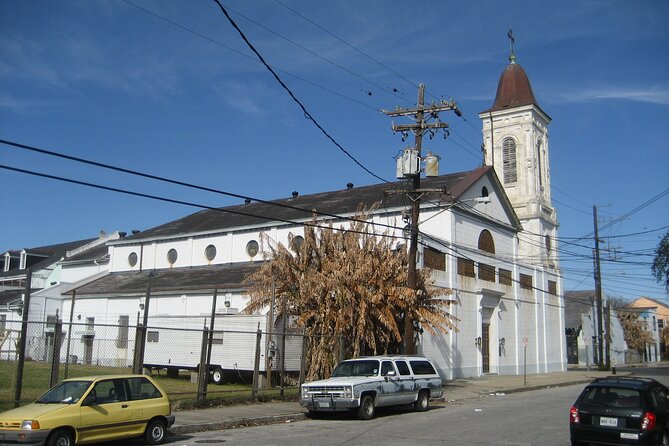
One of the most compelling parts of this walk is the first historical stop: Saint Augustine’s Church and the story known as the War of the Pews. The tour explains how, in 1842, Creoles of color began purchasing pews for their families’ Sunday worship. Soon, the news spread, and a white campaign followed to buy pews too—setting off a conflict over space, status, and access.
What I like about including this story in a walking tour is that it forces you to understand Tremé as more than an aesthetic neighborhood. It’s also a place shaped by real power struggles inside real institutions. When you’re standing at a church tied to that history, it lands differently than reading about it later.
Practical tip: if you’re sensitive to heavy history, take your time here. The content is about dignity, exclusion, and control—so it’s worth a pause and a slow listen rather than rushing through just to “get it done.”
Stop 2: Backstreet Cultural Museum and the color of Mardi Gras
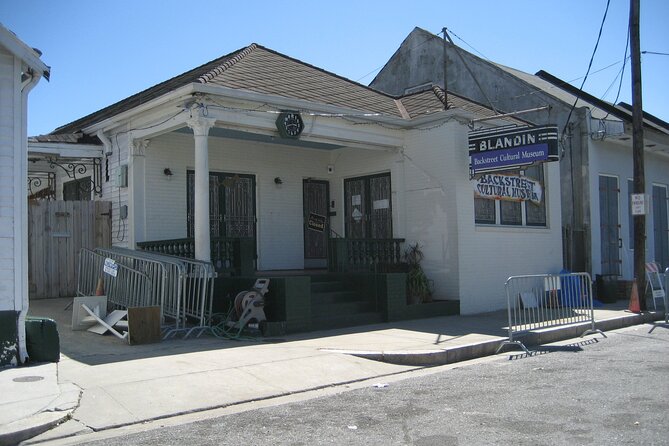
Next up is the Backstreet Cultural Museum, with a focus on the kind of New Orleans art you have to see in person to understand. The tour points you toward the museum’s collection of Mardi Gras Indian costumes, second line umbrellas, and photographs tied to backstreet life.
This is the part where your eyes do most of the work. The costumes and props aren’t just decorations; they’re built expressions of identity, memory, and community pride. Even if Mardi Gras isn’t your main reason for coming, this stop gives you a grounding in how celebration can act like history you can wear.
If you’re the type who likes “visual culture with context,” this stop is a strong match. If you’re only interested in famous names and landmark buildings, you might still enjoy it, but you’ll likely get more out of it if you pay attention to symbols and details.
Stop 3: New Orleans African American Museum grounds and Tremé Villa Meilleur
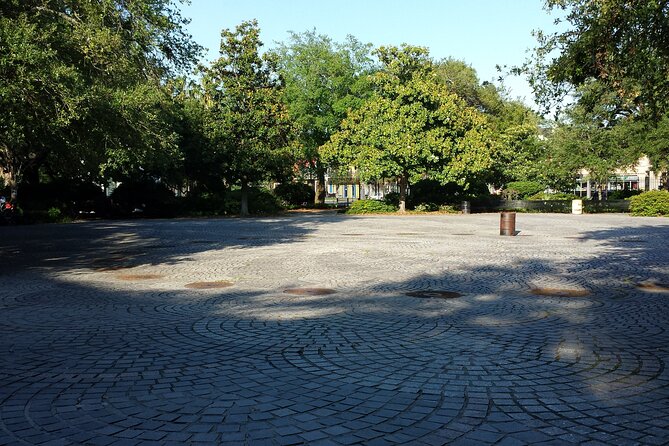
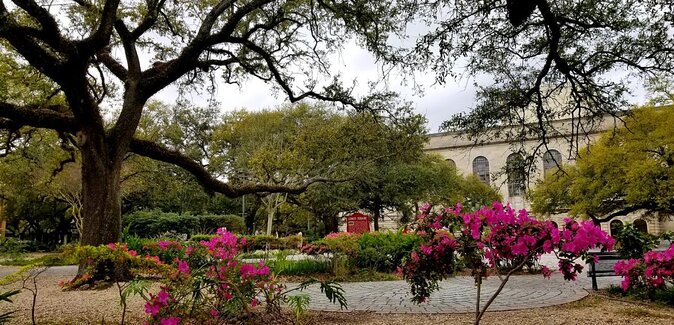
Then the walk shifts to the New Orleans African American Museum grounds, where the tour highlights the tree-shaded museum setting and specific historic features connected to Tremé Villa Meilleur. You also get mention of original kitchen dependencies and homes that reflect a range of local building styles.
This stop matters because it helps you see how Tremé’s story lives in the physical space, not only in stories people tell. The mention of multiple building styles is a quiet reminder that neighborhoods develop in layers—by different needs, different eras, and changing conditions.
I also like that this tour doesn’t keep everything at street-level spectacle. It gives you a more grounded, structural sense of what the community looked like and how it was shaped over time.
Stop 4: Mahalia Jackson Theater—gospel roots to the world stage
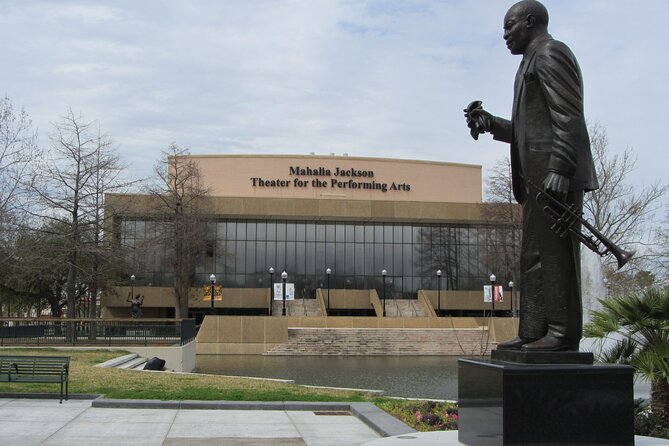
After that, you’ll hear the story of Mahalia Jackson, one of New Orleans’s most influential music ambassadors. The tour explains her place on the international stage after cutting a top-selling gospel song, while also stressing that she never forgot her New Orleans roots.
This is a great stop for people who want a musical connection that goes beyond “she was from here.” The way the tour ties recognition and fame back to home is exactly what makes a neighborhood tour feel personal. It’s not just a biography—it’s a reminder that greatness often comes from local community roots.
If you want to make this stop extra meaningful, listen carefully to how the narration connects her work to the place that shaped her. Don’t treat it like trivia you speed past.
Stop 5: Louis Armstrong Park and the meaning of roots
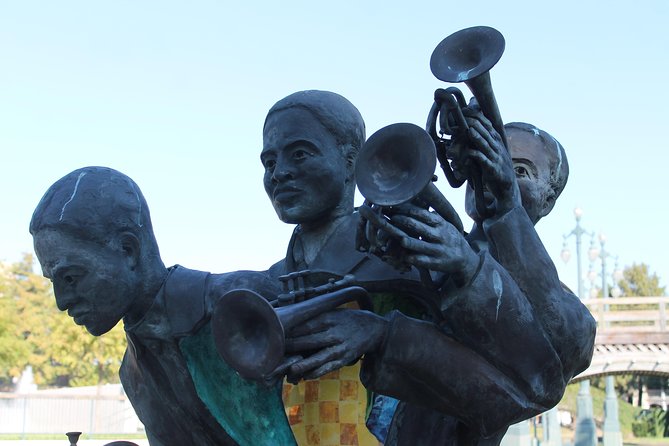
The tour also brings you to Louis Armstrong Park with a focus on Armstrong’s connection to the neighborhood. You’ll learn that the late Louis Armstrong was nicknamed Satchmo and Pops, that he was born in 1901 just outside Tremé, and that his early environment included churchgoers, hustlers, pimps, and musicians.
That mix of people is part of what makes Tremé feel real. Armstrong’s story is not sanitized into a neat “genius rose from paradise” version. Instead, it reflects a community ecosystem—music and spirituality in the same neighborhood as hard edges and survival.
For me, this ending portion is where the tour’s tone becomes most memorable. You finish with a sense that Tremé isn’t just a backdrop for famous names—it shaped the people who became famous.
Street-smart tips for this self-guided Tremé walk
Because this is self-guided and GPS-based, your success depends on small, practical choices:
- Give your phone battery a top-up. Offline audio helps, but you still need enough power to keep the app running.
- Watch crossings like you’re on your own. The tour includes guidance, but at least one segment involves crossing a roadway area that isn’t ideal for foot traffic. Use caution even if the audio is directing you.
- Plan for a slow, listening pace. One of the most praised elements of this tour is how it’s paced—short enough to stay lively, detailed enough to feel like a real guide.
- Expect interaction from the app. A big strength is that the system should detect your location and start the audio for the spot you’re standing at. When that works, it feels slick and low-effort.
One caution from a less positive experience: the GPS link may not always behave perfectly, and you could end up hearing only a portion of the audio path. If that happens, don’t panic. Keep going to the next stop and try to re-sync.
Finally, about tone: the storytelling style can feel approachable and historically instructional. Some people may prefer a harsher, more explicitly critical angle on power and displacement. If that matters to you, think of this tour as a strong starting point—not the last word on Tremé.
Who should book this walking audio tour
I’d point you toward Walking the Tremé if you want:
- a low-cost, high-context way to understand Tremé
- a walk that mixes music history and community culture
- a tour you can repeat later because of lifetime access
- a self-guided format that lets you stop when you notice something interesting
It’s also a good fit for solo travelers who like wandering, couples who want structure without locking into a group pace, and families who can handle about an hour on their feet.
You might hesitate if:
- you rely on your phone for everything and can’t afford a tech hiccup
- you want a heavily guided, in-person explanation rather than audio cues
- you strongly prefer ultra-critical, hard-edged interpretations of history rather than a more approachable narrative style
Should you book Walking the Tremé?
If your main goal is to get a smart, worth-your-time introduction to Tremé’s landmarks—without paying for a private guide—this is a solid pick. At $9.99, with offline audio and a route that connects Saint Augustine Church, Backstreet Cultural Museum, the African American Museum grounds, Mahalia Jackson, and Louis Armstrong Park, you’re buying a focused story you can revisit later.
My decision checklist is simple:
- You can bring a charged smartphone and headphones.
- You’re okay walking for about an hour and handling a careful crossing or two.
- You like learning through places, not just seeing them.
If those three points fit you, book it. Then take your time at the church and museums—those are the parts that turn a walk into a real understanding of the neighborhood.
FAQ
How much does Walking the Tremé cost?
It’s listed at $9.99 per person.
About how long is the tour?
The duration is about 1 hour.
Is the tour offered in English?
Yes, it’s offered in English.
Do I need a smartphone for this tour?
Yes. A smartphone is not included, and the VoiceMap app is used to access the tour.
Does the tour work with offline audio?
Yes. It includes offline access to audio, maps, and geodata.
Where does the tour start and end?
It starts at 801 N Rampart St, New Orleans, LA 70116, USA and ends at Saint Augustine Catholic Church, 1210 Governor Nicholls St, New Orleans, LA 70116, USA.
What’s included with the purchase?
You get lifetime access to the Walking the Tremé tour, the VoiceMap application, offline access, directions to the starting point, and flexibility to explore at your own pace with a self-guided GPS tour.
What’s not included?
A smartphone, transportation, food or drinks, and personal expenses for admission fees not included during the tour.
Is the tour self-guided?
Yes. It’s described as a self-guided GPS tour you do at your own pace.
What if I need to cancel?
Free cancellation is available. You can cancel up to 24 hours in advance for a full refund. If you cancel within 24 hours of the start time, the amount paid is not refunded.
More Tours in New Orleans




More Tour Reviews in New Orleans

Treme & the Marigny, Keep Going



Just added to The New Orleans Traveler

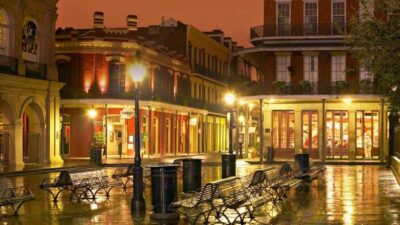


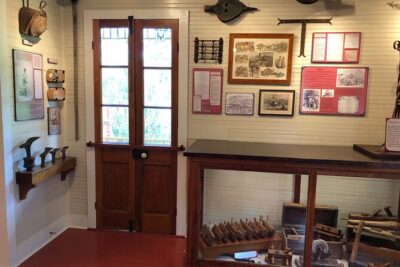
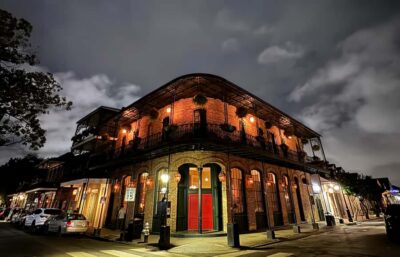
Treme & Marigny Tours, compared.
 ★ 4.5Frenchmen Street VIP Live Music Pub Crawl in New OrleansFrom $52613 reviews
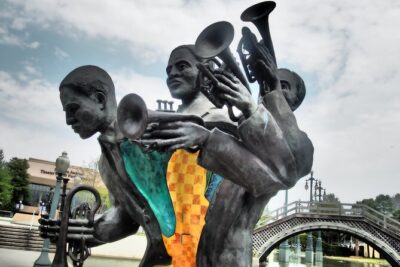 ★ 5.0Treme’ Walking TourFrom $20240 reviews
 ★ 4.9Tremé African American & Creole History TourFrom $22208 reviews
 ★ 5.060-minute Tremé Walking Tour & Photo ExperienceFrom $1572 reviews
 ★ 4.5Voodoo, Storyville, Treme, Walking TourFrom $2958 reviews
 ★ 5.0Creole Architecture of the Marigny TourFrom $4046 reviews
 ★ 5.0Private French Quarter and Treme Walking TourFrom $60029 reviews
 ★ 4.5Private VIP Frenchmen Street Live Music Pub Crawl New OrleansFrom $23517 reviews
Browse the lists this tour appears in