
Reviewed · HISTORICAL TOURS
New Orleans Creole History and Culture Ride
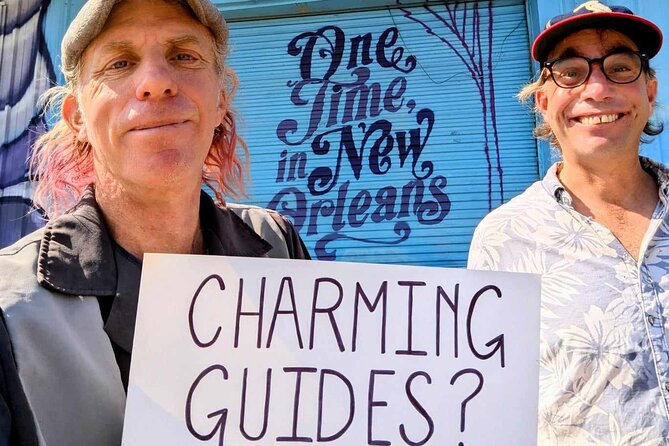
Bourbon Street can wait. This New Orleans Creole History and Culture Ride uses a bike to connect parks, neighborhoods, and the riverside with the stories that shaped Creole life—way more grounded than what you get from a quick photo walk. I especially liked the easy pace led by guide Danny and the way the tour makes you feel oriented fast, not lost.
Two other wins for me: you start in a classic green space for real context, and you finish at Marie’s Bar and Kitchen where the conversation continues with local recommendations. One possible drawback to plan around is that the drink stop is not included—alcohol is on you, though it’s also a laid-back time to ask questions.
In This Review
- Key points worth your attention
- Why this bike tour beats a stop-and-go history walk
- Starting at 634 Elysian Fields: the Washington Square Park orientation
- Faubourg Marigny: seeing the oldest Creole-adjacent “suburbs” up close
- Bywater Historic District: Plessy vs Ferguson, the levee wall, and Mississippi views
- The finish at Marie’s Bar and Kitchen: local recommendations with a drink stop (not included)
- Price and value: what $55 buys you in real life
- The itinerary pace: how this tour stays easy to enjoy
- What to bring (and how to time your day)
- Who should book this Creole culture bike ride?
- Quick practical notes before you go
- Should you book it?
- FAQ
- How long is the New Orleans Creole History and Culture Ride?
- Where does the tour start and what time does it begin?
- What’s included in the price?
- Are alcoholic drinks included?
- How many people are in the group?
- Is the tour offered in English?
- What happens if the weather is bad?
Key points worth your attention
- Small group size (max 10) helps the guide keep things relaxed and personal
- Washington Square Park kickoff gives you an instant sense of where you are and why it matters
- Faubourg Marigny streets show everyday Creole neighborhood life at an easy bike speed
- Bywater stops linked to major history and the Mississippi connect culture to place
- Marie’s Bar and Kitchen is a local-style ending with music and food suggestions on hand
- Bicycle + bottled water + storage basket mean you start riding without extra prep
More of the city's Black history and heritage
- Soul of New Orleans City Tour: Enslavement to Modern Day Culture★ 5.0 · 393 reviews
- New Orleans: Tremé African American & Creole History Tour★ 4.9 · 208 reviews
- New Orleans Creole History and Culture Ride★ 5.0 · 50 reviews
- Soul of New Orleans City Tour:Enslavement to modern culture★ 4.7 · 29 reviews
Why this bike tour beats a stop-and-go history walk
I like walking tours that linger, but New Orleans is made for moving—slowly, with breaks. This ride is built around that idea. You cover more ground than you could on foot, yet you still have time to listen, look, and ask questions without feeling herded.
The tour also avoids the common trap of treating Creole culture like a museum exhibit. Here, it’s tied to the neighborhoods themselves—the streets, the architecture, the river edge, and the kind of music and food culture you can actually sense while you ride. And since you’re biking in the morning, you usually get a calmer vibe before the city fully ramps up.
Starting at 634 Elysian Fields: the Washington Square Park orientation
You meet at 634 Elysian Fields Ave and start at 10:00 am. From there, the first real stop is Washington Square Park, dated to the early 1800s and shaded by Louisiana oaks. It’s a smart warm-up: you get your bearings in an actual landmark, not just at a random corner.
This is also where the guide sets expectations and frames the stories you’ll hear later. If you haven’t ridden a bike in a while, there’s even a chance to do a practice lap—short, low-pressure, and useful if you want your legs under you before you roll into the neighborhoods.
One practical detail: you’re next to Frenchmen Street, which matters because it helps you understand how music culture sits right inside these older parts of town, not off to the side.
Faubourg Marigny: seeing the oldest Creole-adjacent “suburbs” up close
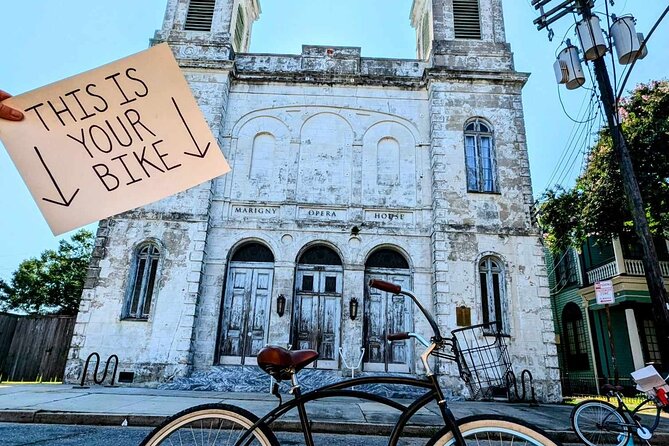
Next comes Faubourg Marigny, described here as one of the oldest “suburbs” around the French Quarter. You don’t just glance at it—you bike slowly through quiet streets, where the feel of daily life is the point.
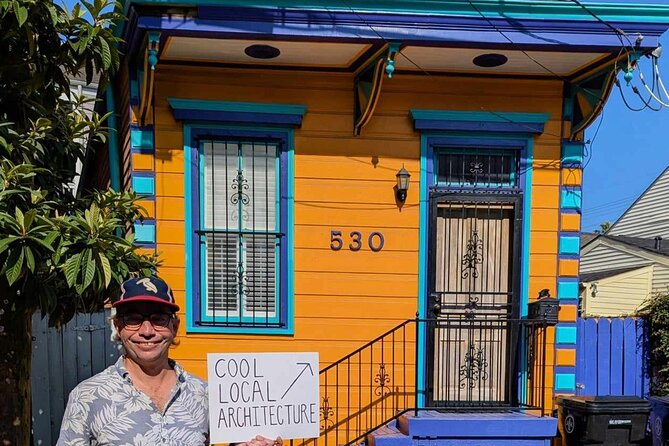
I like this stop because it’s about architecture and neighborhood mood, not just named buildings. You’ll notice how the area tries to hold onto its vibe even as the modern world pushes in. And it’s framed around lived culture: the people who play your music and cook your great food are part of the neighborhood rhythm, not something you read about later.
Faubourg Marigny is also a good example of why a guided ride can feel more honest than a sightseeing drive. When you’re pedaling, you can see the shape of blocks, the way streets connect, and how the community moves through its own spaces.
Time on this stop is about 1 hour 30 minutes, which is long enough to do more than “pass through.” You get time to ask questions and still roll at a comfortable pace.
Bywater Historic District: Plessy vs Ferguson, the levee wall, and Mississippi views
After Marigny, you move into Bywater Historic District. This is where the tour links culture to major moments in U.S. history while still staying rooted in what’s right there in the neighborhood.
You’ll make stops that point to the site connected with the Plessy vs Ferguson case—an important story for understanding how the city, and the country, wrestled with race, law, and public life. There’s also time around the levee wall and the Mississippi River, so you don’t just get history in the abstract. You get history plus the geographic reality of a city that lives beside water and flood risk.
The tour also includes examples of local art and stops tied to music culture—again, not as a separate “culture section,” but as part of the everyday streetscape. This stop explicitly acknowledges change: the neighborhoods are shifting, and the tour takes that seriously. You’re encouraged to think about both past and present as part of what makes the area worth visiting now, not just as something you compare to an older photo.
Plan for about 1 hour here. If you like history but also want your feet moving, this is a good balance point in the ride.
More of the city's three centuries

The finish at Marie’s Bar and Kitchen: local recommendations with a drink stop (not included)
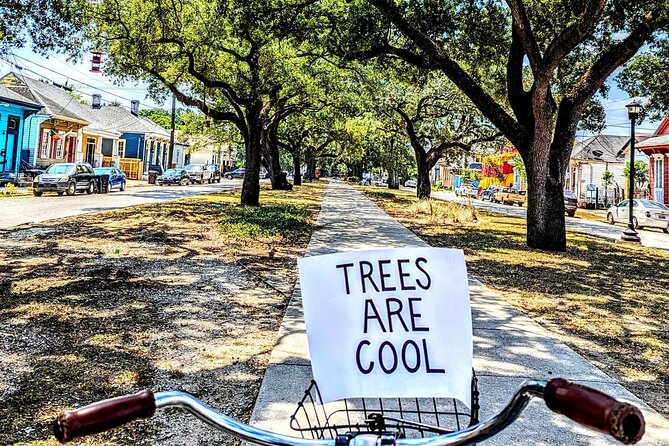
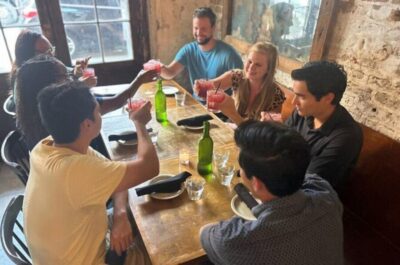
The last stop is Marie’s Bar and Kitchen, a neighborhood tavern that dates back to the 1930s. This is the ride’s social landing gear. You stop for drinks and relaxation, sit outside if the weather behaves, and continue the conversation in a way that fits the neighborhood.
I like this kind of ending because it gives you a natural moment to ask follow-ups. You’ve been collecting stories all morning, and at the bar you can get practical advice: where to eat, what music to catch, how to spend the rest of your day with less guessing. The guide also has music schedules handy and food recommendations, which is exactly the kind of local utility that makes the price feel fair.
Important note: alcoholic beverages are not included in the tour price. There’s no pressure to buy anything—this is still a time to relax and talk. But if you’re someone who wants included drinks, you’ll want to know up front.
If kids join the tour, the drink stop may change to a different place, but the goal stays the same: keep the ride fun and age-appropriate.
This stop is about 15 minutes, and then the tour ends back at the meeting point.
Price and value: what $55 buys you in real life
At $55 per person, this is priced like a guided activity that includes the basics—and it does. You get:
- Use of a bicycle
- Bottled water
- A basket for small bags
That matters in New Orleans, where a lot of “free walking” plans still leave you paying for transportation, snacks, and bottle water later. Here, the core riding comfort is handled.
The other value is the structure. In about 3 hours (approx.), you cover multiple neighborhoods and get a narrative thread tying them together—Creole culture as something you can trace through place. And the small group size (max 10 travelers) helps keep the experience from turning into a lecture where you can’t ask questions.
Also, the guide-level experience seems to be a strong point. Danny is highlighted for being engaging and for remembering everyone’s names. In a group setting, that small detail changes the whole feel: you’re not just another body rolling past a sign.
The itinerary pace: how this tour stays easy to enjoy
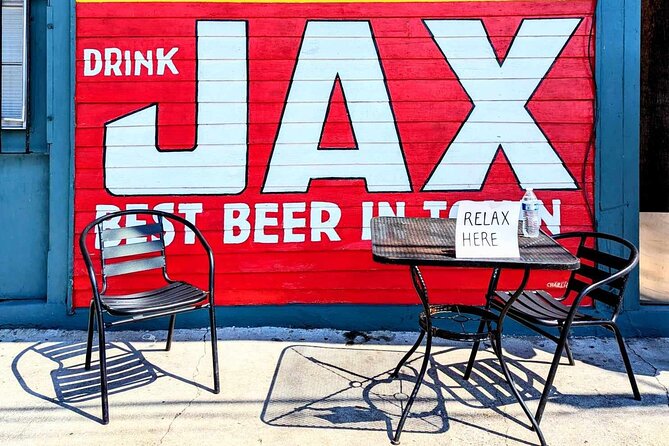
This ride is designed for comfort. The stop times range from short orientation moments to longer neighborhood stretches (like the 1 hour 30 minutes in Faubourg Marigny). That means you’re not sprinting from one site to the next.
You’ll likely appreciate the pacing if you:
- Want history but hate rushed tours
- Prefer a morning activity that still leaves energy for later plans
- Like asking questions while things are fresh in your mind
You’ll also get a built-in reset at the end. The bar stop isn’t just about drinks—it’s also when the guide can answer anything that popped up while you were biking. It’s a smart way to turn what could be a “drive-by” tour into something you actually leave understanding.
What to bring (and how to time your day)
The tour requires good weather, so plan for a morning that’s not stormy. If the day gets canceled due to poor weather, you’ll be offered a different date or a full refund.
For your actual gear, keep it simple:
- Wear comfortable shoes for the short transitions between riding and stopping
- Bring sunscreen and water habits for the morning heat
- Bring only what you can comfortably stash in the provided basket
Because the tour ends back where you started, you can treat this as a first-half activity. Then you can build the rest of your day using the guide’s local recommendations—especially music and food ideas from the bar stop.
Who should book this Creole culture bike ride?
This is a great fit if you want New Orleans Creole culture in a way that feels lived-in:
- You want to get out of the Bourbon Street bubble
- You enjoy neighborhoods more than monuments
- You like moving through the city while someone connects the dots
It also works well for first-time visitors who feel overwhelmed by all the geography. Starting with Washington Square Park and building through Marigny and Bywater is a clear route for making sense of the city.
On the other hand, if you only want famous single landmark photos and nothing else, you might find this too neighborhood-based. This tour is for people who like streets, stories, and context more than postcard stops.
Quick practical notes before you go
The tour is offered in English, uses a mobile ticket, and runs with a maximum of 10 people. It’s near public transportation, and service animals are allowed. Most people can participate, and it’s built around an easy bike approach with a practice moment at the first stop.
If you’re planning far ahead, it’s often booked about 18 days in advance on average, so try not to wait until the last minute.
Should you book it?
I’d book this tour if you want a morning plan that’s both informative and friendly—and if you like seeing New Orleans from the street level. The combination of Washington Square Park orientation, neighborhood biking through Faubourg Marigny, key history in Bywater, and a relaxed finish at Marie’s Bar and Kitchen makes it feel like you’re learning the city, not just checking boxes.
If you’re expecting included drinks, know that the drink stop is there for relaxation and questions, but alcohol isn’t included. And because weather matters, keep an eye on forecasts.
If you want Creole culture explained in a way that fits the neighborhoods where it lives, this one delivers.
FAQ
How long is the New Orleans Creole History and Culture Ride?
It runs for about 3 hours (approx.), including multiple stops and a drink-and-relaxation finish.
Where does the tour start and what time does it begin?
The tour starts at 634 Elysian Fields Ave, New Orleans, LA 70116 and begins at 10:00 am. It ends back at the meeting point.
What’s included in the price?
The price includes use of a bicycle, bottled water, and a basket for carrying small bags.
Are alcoholic drinks included?
No. The tour includes a drink stop at Marie’s Bar and Kitchen, but alcoholic beverages are not included in the tour price.
How many people are in the group?
This experience has a maximum of 10 travelers.
Is the tour offered in English?
Yes. The tour is offered in English and you’ll receive a mobile ticket.
What happens if the weather is bad?
This experience requires good weather. If it’s canceled due to poor weather, you’ll be offered a different date or a full refund.
More History of New Orleans
More Tour Reviews in New Orleans


More Black History & Heritage
Just added to The New Orleans Traveler

Historical Tours, compared.
 ★ 5.0Garden District History Walking TourFrom $352,879 reviews
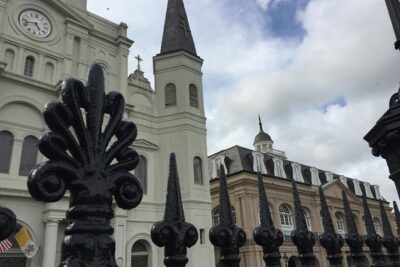 ★ 5.0French Quarter Historical Sights and Stories Walking TourFrom $352,724 reviews
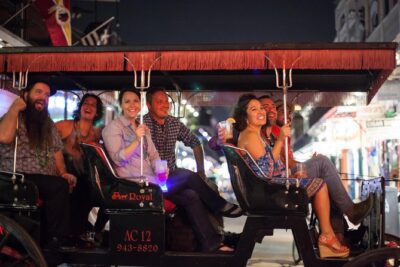 ★ 4.5Small-Group Haunted History Carriage TourFrom $652,289 reviews
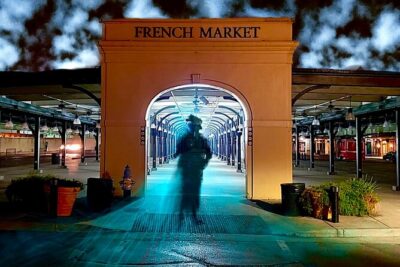 ★ 4.5Haunted History Ghost TourFrom $302,084 reviews
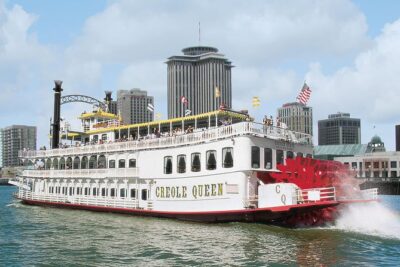 ★ 4.5Paddlewheeler Creole Queen Historic Mississippi River CruiseFrom $471,948 reviews
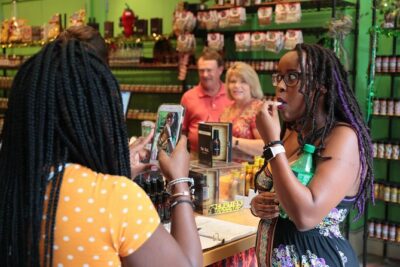 ★ 5.0Food and History Walking TourFrom $851,544 reviews
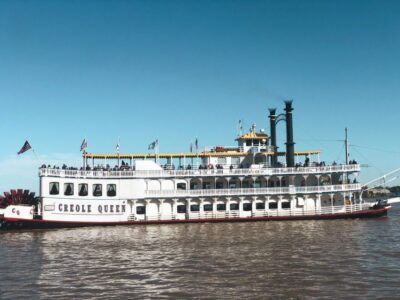 ★ 4.3Creole Queen History Cruise with Optional LunchFrom $471,112 reviews
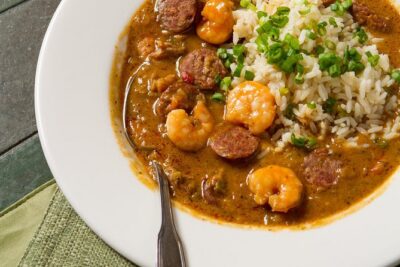 ★ 5.0Cocktail and Food History TourFrom $160819 reviews
Browse the lists this tour appears in