
Reviewed · FRENCH QUARTER TOURS
French Quarter Historical Sights and Stories Walking Tour
New Orleans starts telling its story on foot. This French Quarter historical sights walk strings together the key landmarks plus the side details that make the neighborhood feel real, not just postcard-perfect.
I like that it’s guided with a professional storyteller who connects buildings, religion, and everyday life into one clear narrative. I also love the small group size (max 12), which means you can actually ask questions and hear the answers without yelling over everyone’s camera.
The only real drawback is time. In about 2 hours, you’ll hit the big hitters—so you won’t see every alley, courtyard, or tiny façade that catches your eye. Wear good shoes, and bring water if it’s hot.
In This Review
- Key highlights worth circling
- Why a French Quarter history walk beats wandering on your own
- Price and logistics: $35 for a guided loop that saves your time
- Starting near Instrument Men: your route begins in the working part of the Quarter
- Stop-by-stop: what you’ll actually get at each landmark
- French Quarter introduction (about 30 minutes)
- French Market (about 15 minutes)
- St. Louis Cathedral (about 15 minutes)
- Mississippi River viewpoint (about 15 minutes)
- Royal Street (about 30 minutes)
- Jackson Square (about 15 minutes)
- What the small-group size changes (and why it matters)
- Weather, shoes, and water: the practical stuff that keeps the day enjoyable
- Who should book this walking tour?
- Should you book? My take
- FAQ
- How much is the French Quarter Historical Sights and Stories walking tour?
- How long is the tour?
- What are the main stops on the walk?
- Is the tour in English?
- Do I need to pay admission for the stops?
- What should I bring for the walk?
- Can I cancel if my plans change?
Key highlights worth circling
- Small group (up to 12 people): easier to hear, easier to ask questions.
- Iconic stops with no admission fees: French Market, St. Louis Cathedral, the river, Royal Street, Jackson Square.
- A route that helps you orient fast: you start near Dumaine and end at the heart of the Quarter.
- Local tips for shopping and dining: practical ideas so you don’t waste your limited time.
- Guides with strong storytelling voices: names you may hear include Tim, Scott, Lesley, Renée, and Yvonne.
- Runs in all weather: dress for rain and heat, because the show continues outside.
More ways to wander the Vieux Carre
- New Orleans Food Walking Tour of the French Quarter with Small-Group Option★ 5.0 · 6,118 reviews
- New Orleans French Quarter, Voodoo and Culture Walking Tour★ 4.5 · 2,961 reviews
- French Quarter Historical Sights and Stories Walking Tour★ 5.0 · 2,724 reviews
- Ghost and Vampire Walking Tour Of The French Quarter★ 4.5 · 2,406 reviews
Why a French Quarter history walk beats wandering on your own
The French Quarter can feel like a free-for-all in the best way—music, balconies, street life, and a lot of history stacked on top of itself. But without context, you might see the sights and miss what they mean.
This tour works because it gives you a framework. You’re not just ticking off famous places; you’re learning how French and Spanish influence shows up in the architecture and street layout, how religion shaped community life, and why the Mississippi is more than scenery. After the walk, you’ll notice details you probably would’ve walked right past—like what different façades were built to signal, or how public spaces functioned over time.
And for $35, you’re paying for one thing that’s hard to DIY: a guide who can make connections quickly. You’re also saving time. On a short New Orleans trip, a two-hour route can be smarter than trying to plan your own loop that hits the same core sites.
Price and logistics: $35 for a guided loop that saves your time
At $35 per person for about 2 hours, this is priced like a true walking-value option, not a premium sightseeing bus day. The structure matters: you get a professional guide plus a sequence of stops where you’d otherwise spend extra time figuring out what’s worth your attention.
Here’s what you should plan for. It’s offered in English, there are three daily departures, and you’ll receive a confirmation at booking time with a mobile ticket. The tour also runs in all weather conditions, so you’ll want to pack common sense: a light rain layer if needed, and comfortable shoes no matter what.
The group max of 12 is also part of the value. If you’ve ever been stuck behind taller people on a crowded tour, you know the problem. Here, the smaller size makes the walk feel more like a conversation you happen to walk through.
Starting near Instrument Men: your route begins in the working part of the Quarter
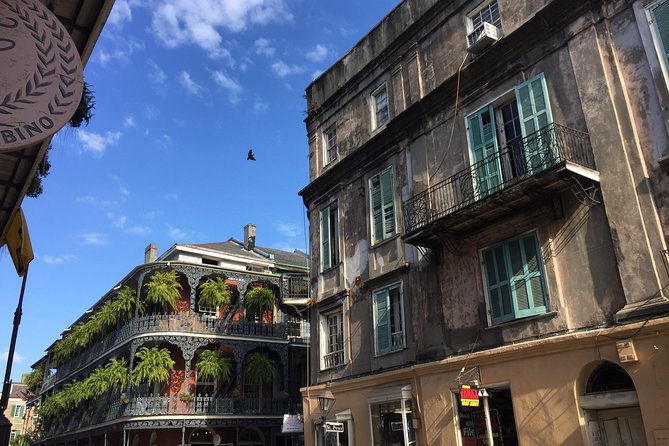
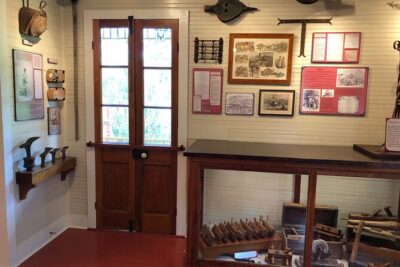
The meeting point is at Instrument Men, 400 Dumaine St. That location is a good clue about how the tour thinks: you’re starting in the Quarter as a lived-in neighborhood, not only at the most photographed corners.
From the get-go, you’ll get orientation fast. The first stop is essentially a launch into the French Quarter itself—where the oldest neighborhood context starts to click. Even if you’ve been to New Orleans before, this kind of guided start helps you stop seeing everything as random attractions and start seeing it as a place with an internal logic.
You’ll also finish near the center of the action. The tour ends at 701 Decatur St, right at Jackson Square. That’s an underrated advantage: you don’t have to guess how to transition into the next part of your day. When the walk ends, you’re already at the heart of the Quarter.
Stop-by-stop: what you’ll actually get at each landmark
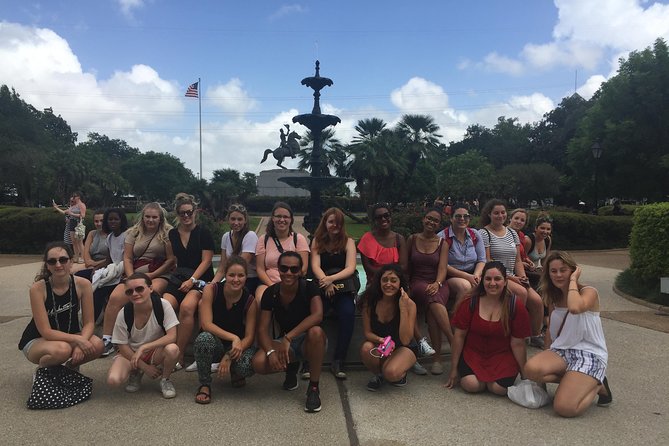
More of New Orleans on foot



French Quarter introduction (about 30 minutes)
This first stretch sets the tone. You’ll visit the iconic locations of the oldest neighborhood, and the guide’s job is to give you the “why” behind what you’re seeing.
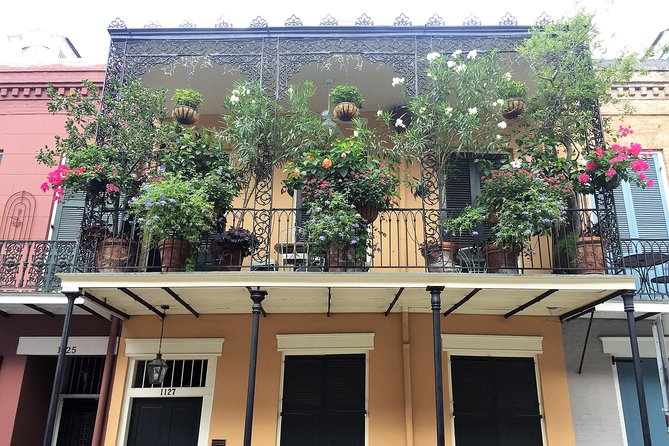
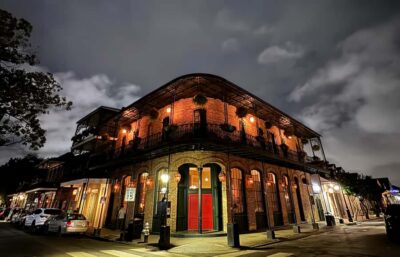
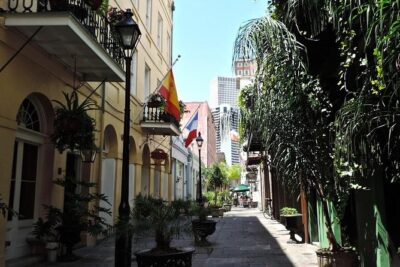
What I’d focus on here is architecture and street-level story. The French Quarter is famous for its look, but it’s also famous for layers—colonial influence, changing power structures, and the way people built for survival and identity. When a guide points out what to watch for—ironwork details, balcony styles, and how spaces are shaped—you’ll start recognizing patterns as you walk.
Practical note: because this section is about orientation, it’s a great time to ask questions. If you’re thinking ahead—where to eat, what to skip, which streets feel more comfortable for you—early questions will pay off later.
French Market (about 15 minutes)
Next up is the French Market, a stop designed for contrast. The guide brings the history to the surface while you’re surrounded by the noise and motion of a busy market area.
This is where the tour helps you read the neighborhood like a local. You’ll hear stories connected to the market’s role and why this space matters. Even if you’re the type who usually walks past souvenir stands, you’ll understand what the market was meant to be, not just what it sells now.
Also, keep your eyes open. A market stop is quick by design, so it’s less about deep shopping and more about context—and then you can decide later whether you want to browse.
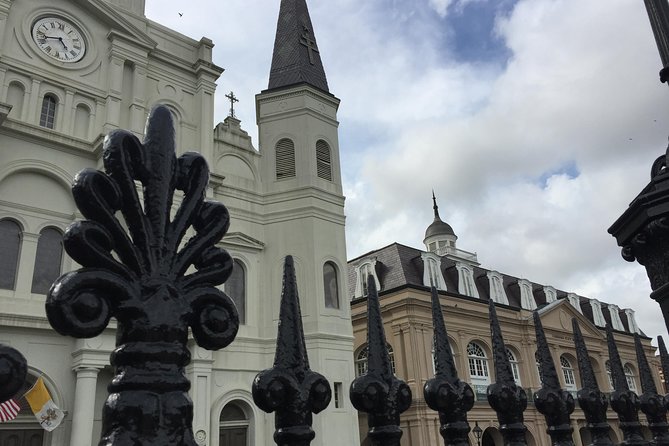
St. Louis Cathedral (about 15 minutes)
Then you’ll arrive at St. Louis Cathedral, built in the late 18th century. This isn’t just a pretty façade; it’s a witness. The tour frames the cathedral as a place that has seen moments of tragedy and triumph.
Religious architecture in the Quarter isn’t random decoration—it reflects community priorities and public life. When you learn that the cathedral served as a kind of anchor through serious historical events, the building stops being background. It becomes a reference point for understanding how the neighborhood worked.
Timing is tight here, so don’t expect a long visit inside. Instead, treat this as your “big picture” stop: look outward, learn the meaning, and let the guide point out what you’re supposed to notice.
Mississippi River viewpoint (about 15 minutes)
The Mississippi River stop is short but memorable. The tour reminds you that the river gave New Orleans life—while also highlighting that the city still deals with its force every day.
You’ll hear the kind of comparison that makes the river feel less abstract: it’s described as the third largest river in the world. That stat is meant to reset your mental scale. After that, the river isn’t just water you can see—it’s a constant influence on how a city like this grows, prepares, and survives.
If you want one takeaway from this segment, it’s that New Orleans isn’t only built by people; it’s shaped by geography. Once you understand that, the French Quarter stories feel less like isolated facts and more like cause-and-effect.
Royal Street (about 30 minutes)
This is the longest mid-route stop: Royal Street gets about 30 minutes. You’ll see why it’s famous for shopping, street performers, and restaurants—then you’ll get the stories that explain how the street became what it is.
This stop is great for people who want both sides of travel: the practical and the poetic. Yes, you can browse and plan dinner. But more importantly, you’ll connect the street’s character to the Quarter’s evolution over time.
If you like photos, this is where you’ll get your best ones without feeling like you’re standing in the same spot for an hour. If you like walking but hate wasting time, this is where the tour’s recommendations help you choose what to prioritize next.
Jackson Square (about 15 minutes)
You end at Jackson Square, described as the heart of New Orleans. The guide ties the square to the idea that the city is shaped by French and Spanish influences, and also by American and Caribbean identity.
This final stop is your payoff. After hearing the stories and seeing the landmarks in context, Jackson Square stops feeling like a generic “must-see” and starts feeling like a meeting point—an outdoor room where multiple cultures and eras overlap.
Because the tour ends here, you can decide how long to linger. Some people want a quick last look and move on. Others stay for sketches, street performers, or a slow coffee break. Either way, you’ve arrived with better questions and clearer instincts about what you’re seeing.
What the small-group size changes (and why it matters)
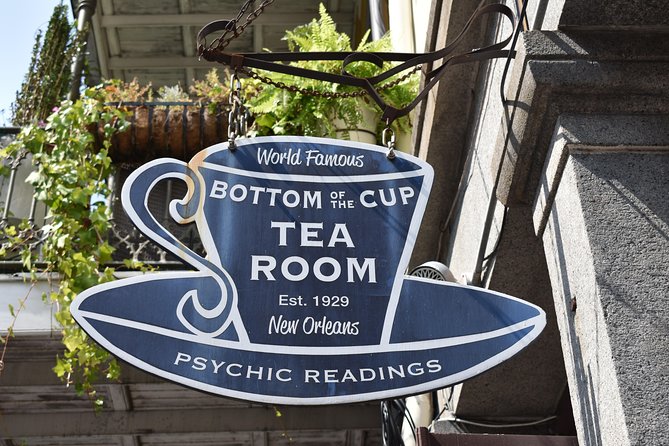
A group max of 12 is more than a number. It changes the feel of the walk.
You can hear the guide without constantly shifting position. You can ask follow-ups without feeling rushed. And you’ll likely get personal help—like where to go next or how to structure the rest of your French Quarter day. This comes through in guide feedback across different departures, where tour leaders like Scott, Tim, Lesley, Renée, and Yvonne are repeatedly praised for friendliness, humor, and answering questions.
If you’re traveling solo, that matters even more. A guided walk is a low-stress way to get conversation and local guidance without having to “perform” sociability.
Weather, shoes, and water: the practical stuff that keeps the day enjoyable
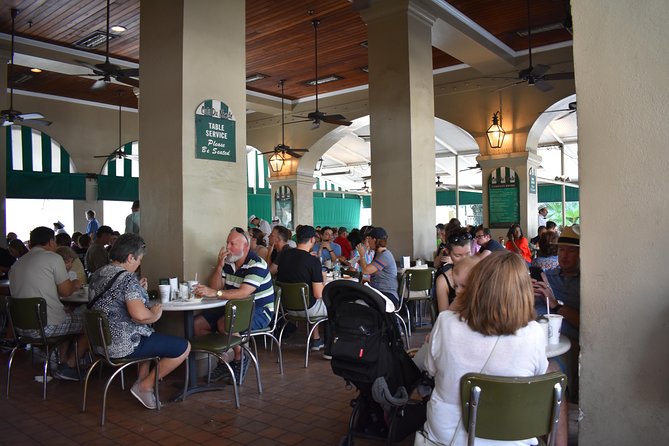
The tour operates in all weather conditions, so you should dress like the sidewalks in New Orleans are your main attraction. Bring a light layer if rain shows up, and prioritize comfortable walking shoes—not your cutest pair that looks good for photos but hurts after 20 minutes.
The recommendation to bring water is especially smart in warmer months. Even with only about 2 hours of walking, the humidity can make that feel longer than it is.
If you’re traveling with a service animal, the tour allows them. Since it’s primarily outdoors, you’ll still want to plan around crowds and sidewalks, but at least you’re not dealing with a “can’t bring the dog” surprise.
Who should book this walking tour?
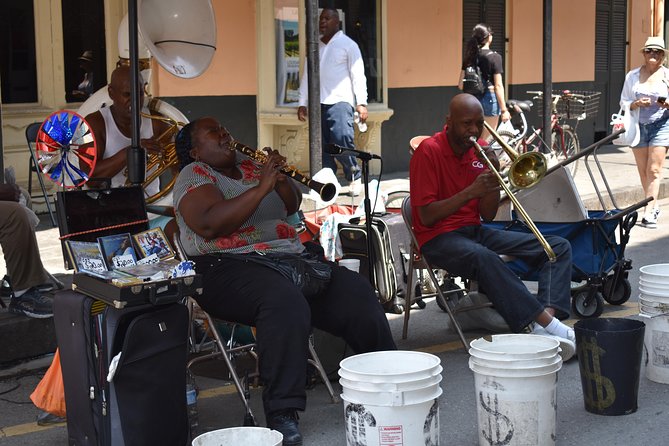
Book it if you want:
- A first-timer orientation to the French Quarter that goes beyond surface details
- A short trip plan where you still want history, architecture, and local direction
- A small-group experience where you can ask questions
- A guided route that ends in a perfect location for continuing your day
Skip it if you want:
- An all-day deep dive into every building and side street (this is timed)
- A tour focused more on one narrow theme (like only ghost stories or only food)
- Long indoor stops (the itinerary is mainly exterior and short per stop)
Should you book? My take

Yes, I think this is worth booking for most visitors because it hits the French Quarter’s core landmarks in a tight 2-hour format, and it does it with enough story to change how you see the neighborhood. The $35 price makes sense when you factor in that there are no admission fees at the stops listed and you’re paying for a guide to connect the dots—especially if you only have a day or two in New Orleans.
If you can, schedule it early in your trip. You’ll walk out with better instincts for what to revisit, where to shop, and where to eat without wandering aimlessly.
FAQ
How much is the French Quarter Historical Sights and Stories walking tour?
It’s $35.00 per person.
How long is the tour?
The tour lasts about 2 hours.
What are the main stops on the walk?
You’ll visit the French Quarter, French Market, St. Louis Cathedral, the Mississippi River, Royal Street, and you’ll end at Jackson Square.
Is the tour in English?
Yes, it’s offered in English.
Do I need to pay admission for the stops?
The tour indicates admission is free for the listed stops.
What should I bring for the walk?
Wear comfortable walking shoes and bring water, especially in warmer months. The tour runs in all weather, so dress appropriately.
Can I cancel if my plans change?
You can cancel up to 24 hours in advance for a full refund.
If you want, tell me when you’re visiting and whether you care more about architecture, food, or river views, and I’ll suggest how to pair this with the rest of your French Quarter day.
More Tours in New Orleans


More Tour Reviews in New Orleans
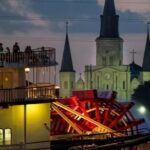
More of the French Quarter


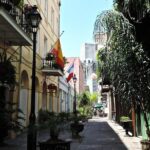

Just added to The New Orleans Traveler
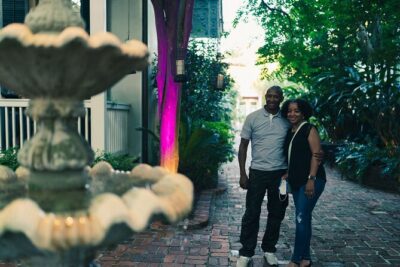
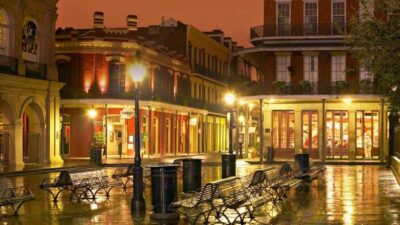


French Quarter Tours, compared.
 ★ 5.0Food Walking Tour of the French Quarter with Small-Group OptionFrom $756,118 reviews
 ★ 4.5French Quarter, Voodoo and Culture Walking TourFrom $272,961 reviews
 ★ 4.5Ghost and Vampire Walking Tour Of The French QuarterFrom $212,406 reviews
 ★ 4.5City Tour: French Quarter, Garden District & CemeteryFrom $402,209 reviews
 ★ 5.0French Quarter Food Tour: Cajun, Creole and CultureFrom $811,246 reviews
 ★ 5.0French Quarter and More Carriage RideFrom $651,141 reviews
 ★ 5.0French Quarter walking Food Tour Famous Flavors of New OrleansFrom $751,115 reviews
 ★ 4.5French Quarter Ghost Tour with Interior VisitFrom $241,024 reviews
Browse the lists this tour appears in