
Reviewed · FRENCH QUARTER TOURS
Beyond the French Quarter Bike Tour
New Orleans from a bike makes the city click. This tour gives you a low-stress way to cover about 9 miles of real neighborhoods, plus key sights most people skip when they only chase the French Quarter. I love how the route is mostly flat and the pace leaves room to take it in, and I especially liked the story-driven stops led by guide Tonya. One thing to plan for: you do need a moderate fitness level for steady pedaling and a few potholes along the way.
You’ll spend 3 hours 30 minutes seeing the city in an efficient, practical way—without feeling rushed. The group stays small (up to 10), so you get more personal attention than with big crowd tours. The main consideration is simple: this is biking first, sightseeing second, so if you want tons of time standing still, this may feel like too much motion.
In This Review
- Key things that make this New Orleans bike tour worth it
- Why this route is a smart alternative to the usual French Quarter loop
- Starting point and timing: what the morning actually feels like
- What’s included for $60—and why it’s good value
- Stop 1: Esplanade Avenue and the old-money street vibe
- Stop 2: Degas House and the charm of historic homes
- Stop 3: Seventh Ward streets and the stories that make it real
- Stop 4: St. Louis Cemetery No. 3 and the Cities of the Dead
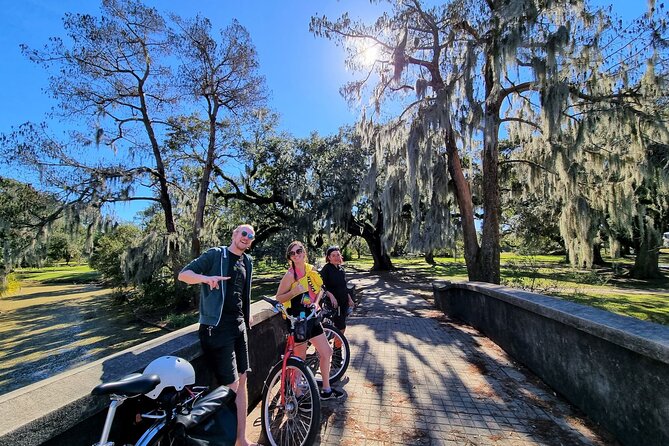
- Stop 5: City Park’s live oaks and Spanish moss pause
- Stop 6: Café du Monde break in City Park
- Stop 7: Bayou St. John and the city’s origin story
- Stop 8: Rolling past the French Quarter and Faubourg Marigny
- Pace and riding conditions: what to expect from the bike itself
- Who this New Orleans bike tour is best for
- What you’ll remember after: the city’s different faces
- Should you book this tour?
- FAQ
- How long is the Beyond the French Quarter Bike Tour?
- How far do I bike on this tour?
- What is the group size?
- Where do I meet and what time does it start?
- What’s included in the price?
- Are beignets or café au lait included?
- Is the tour good for beginners?
- What happens if it rains?
Key things that make this New Orleans bike tour worth it
- Small group (max 10) means more time for questions and better pacing
- About 9 miles of mostly flat riding keeps it doable while still feeling like you went somewhere
- Oak-lined Esplanade Avenue and historic neighborhood streets give you a side of town beyond the usual route
- City Park + Spanish moss is a great change of scenery from the thicker downtown feel
- Cemetery No. 3 stop adds cultural depth without turning the tour into a lecture
- Tonya’s guidance turns familiar landmarks into stories you can actually picture
More ways to wander the Vieux Carre
- New Orleans Food Walking Tour of the French Quarter with Small-Group Option★ 5.0 · 6,118 reviews
- New Orleans French Quarter, Voodoo and Culture Walking Tour★ 4.5 · 2,961 reviews
- French Quarter Historical Sights and Stories Walking Tour★ 5.0 · 2,724 reviews
- Ghost and Vampire Walking Tour Of The French Quarter★ 4.5 · 2,406 reviews
Why this route is a smart alternative to the usual French Quarter loop
A lot of New Orleans walking tours feel like they’re glued to one tight strip of streets. This one changes the angle. You start in a practical place near Chartres Street, then you move outward, through neighborhood streets, and back again—so the French Quarter is part of the orbit, not the whole planet.
The big value here is how the route design respects your time. Instead of spending your day hopping from one hotspot to another by car or foot, you pedal a consistent length of city. That’s why it works so well as a first or second day activity. You get a mental map fast: which areas feel residential, which streets carry big history, and where the city’s green space actually lives.
And because it’s capped at 10 riders, the guide can adjust. If someone needs extra time at a stop, or you’re curious about a street sign or building details, you’re more likely to get a real answer instead of a quick wave-off. In the reviews, Tonya keeps showing up as the standout—friendly, quick with history, and good at keeping energy up without turning the ride into a textbook.
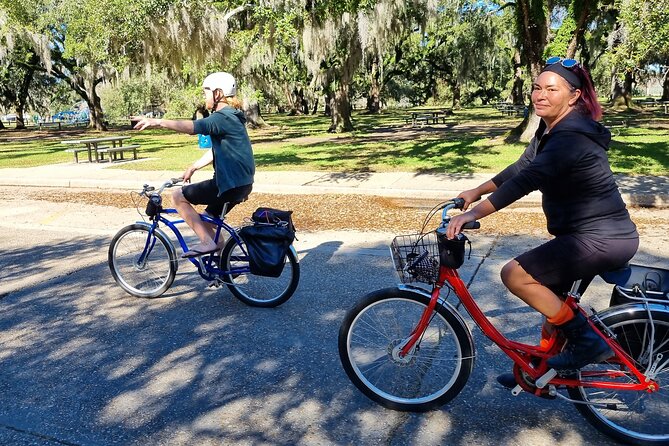
The other practical win: the streets you’ll be on are generally described as flat, so the ride feels more like steady cruising than a workout death march. Still, you should expect a long-ish stretch of riding. Think of it as a city bike spin with stops, not a casual park loop.
Starting point and timing: what the morning actually feels like
The tour begins at 9:30 am at 3027 Chartres St and ends back at the same meeting point. That matters more than it sounds. Starting near the French Quarter means you can pair this with other nearby activities afterward—then later, when you’re walking, you’ll know which streets you want to revisit.
The total duration is about 3 hours 30 minutes, which is long enough to feel like you saw more than “just a couple blocks,” but not so long that the day disappears. Most of the time is on the bike, with scheduled stops that are short but meaningful. You’ll be moving through the city in a way that helps you understand geography, not just collect photos.
You’ll use a mobile ticket, and there’s bottled water, a helmet, and a poncho if rain shows up. That’s helpful because New Orleans weather loves surprises. Tours run rain or shine unless weather becomes dangerous, in which case the plan is to reschedule or refund. Translation: you shouldn’t bank on perfect weather, but you also shouldn’t feel like your day is at the mercy of clouds.
What’s included for $60—and why it’s good value
At $60 per person, you’re not just paying for a bicycle. You’re buying the guide, the equipment basics, and time-efficient city coverage.
Here’s what’s included:
- Bicycle use
- Helmet
- Bottled water
- Poncho when raining
- Local guide
What’s not included:
- Snacks at the Café du Monde stop (beignets and café au lait are optional purchases)
- Gratuity, which you’ll want to budget for since the guide is the main ingredient
I think the reason this price feels fair is that you’re getting a structured ride through several distinct areas—big-name streets, quieter neighborhoods, City Park, and a cemetery. Many tours charge similar amounts for far fewer miles and less variety. Here, the bike makes the city bigger without making the schedule frantic.
Also, because the group is small, the guide’s attention doesn’t get diluted. If you’re the type who likes to ask why something is where it is—how neighborhoods developed, why certain rituals exist, or how the city’s layout makes sense—you’ll feel like you got your money’s worth.
Stop 1: Esplanade Avenue and the old-money street vibe
The ride kicks off with a cruise up Esplanade Avenue, a street once known as Creole Millionaires Row. This is one of those places where the architecture does the talking. You’ll pedal along an oak-lined avenue while the guide points out details you’d likely miss if you were just walking past.
You also get a sense of transition: the route carries you past Faubourg Treme and toward Faubourg St. John. That’s a big deal for first-time visitors. You start noticing how neighborhoods can feel related without being identical.
This stop works even if you don’t consider yourself an architecture person. The street has a rhythm—shadows, fronts of buildings, and that slow-moving sense of grandeur—that makes the ride feel special before you even hit the more “toury” stops.
More of New Orleans on two wheels




Stop 2: Degas House and the charm of historic homes
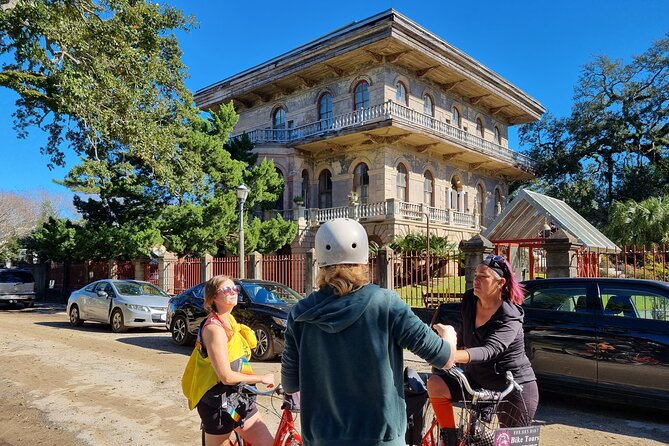
Next up is a quick look at Degas House and other charming homes along the way, including Luling Mansion. This is a short stop, so it’s not meant to be a long museum-style experience. Instead, it’s more like getting your eyes calibrated to what these buildings are like in person.
What I like about this style is that it keeps the tour from dragging. You get a taste of the historic residential side of New Orleans while you’re already in motion. You’re not losing your momentum to a long waiting line or a long entrance experience.
Stop 3: Seventh Ward streets and the stories that make it real
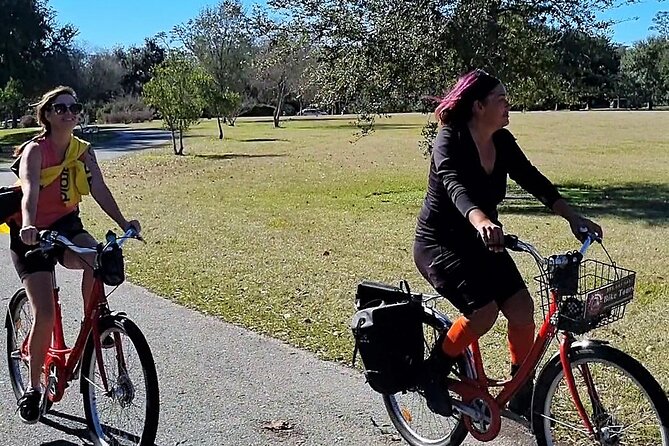
From there you head through the Seventh Ward, riding through Creole neighborhoods like Faubourg Treme and Faubourg St. John. This portion is about more than scenery. You’ll hear stories about how older New Orleans developed and where locals go for things you might not find on a standard must-see list.
This stop is one of the reasons I’d pick this tour over the “only famous sights” approach. You get context. You start to understand that New Orleans isn’t one big postcard scene—it’s multiple layers of communities, each with its own feel.
If you like history but hate long lectures, this section is a good compromise: you’re hearing short, usable stories while you’re moving, so your brain stays engaged.
Stop 4: St. Louis Cemetery No. 3 and the Cities of the Dead
Then comes St. Louis Cemetery No. 3, one of the most distinctive parts of New Orleans heritage. The guide talks about burial rituals in the city’s so-called Cities of the Dead. This is the kind of stop that changes how you view the city’s approach to memory and space.
Timing is relatively short here, so don’t expect a full, hour-long cemetery immersion. But it’s enough to give you a meaningful foundation. You’ll walk away with the basics you need to read the cemetery instead of just looking at headstones like they’re random old rocks.
It also helps that you’re not doing this on a sweaty, crowded walking tour. You’ve already been moving by bike, so when you get to the cemetery, it feels like a break—still focused, but calmer.
Stop 5: City Park’s live oaks and Spanish moss pause
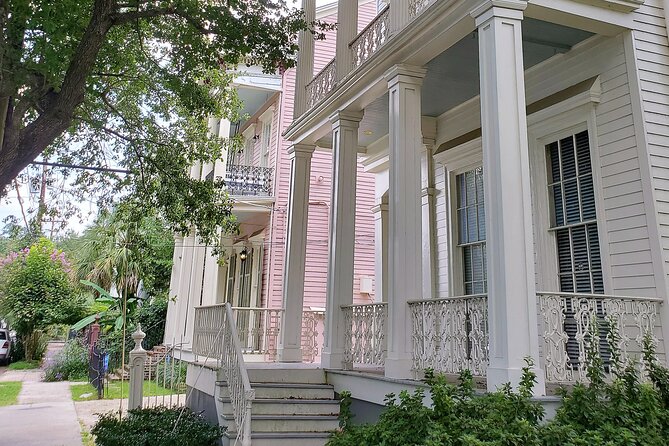
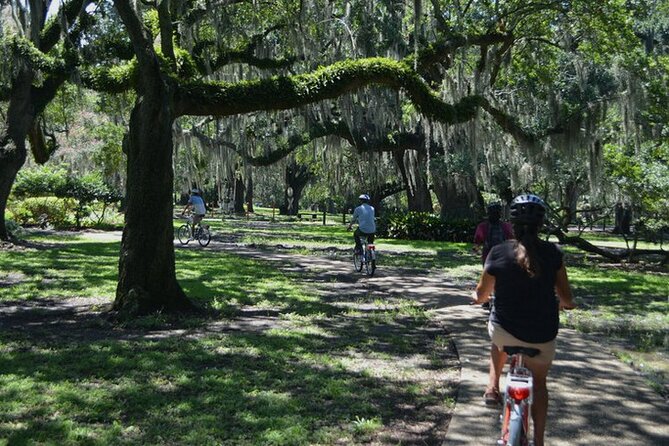
After the cemetery, you get a breather at City Park. This is a bigger, scenic block where the ride turns into an easier, more relaxed pedal through live oak groves and that classic Spanish moss look.
The guide also points out features around the park, including museums, botanical and sculpture gardens, and other attractions. You’re not getting a full museum tour, but you’ll get enough orientation to decide what you might want to explore later on foot.
This is one of the best value parts of the tour because City Park can feel like a separate world. The city’s mood changes. The air feels different under the trees. It’s a great reset before you head back into the denser streets.
Stop 6: Café du Monde break in City Park
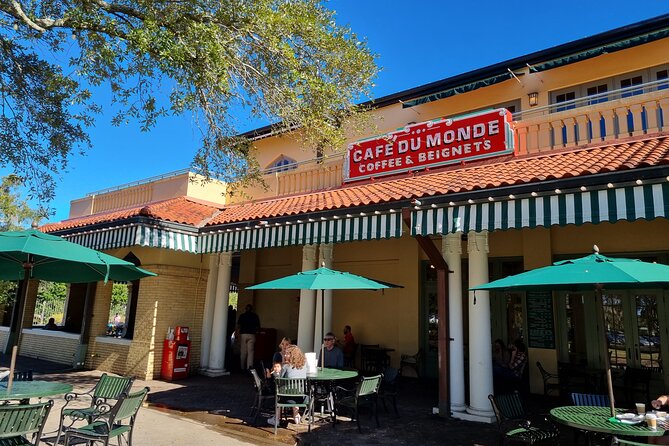
You’ll take a break at Café du Monde in City Park. Riders can buy beignets and café au lait, but this part is not included in the tour price. That’s good to know up front so you don’t feel surprised when the bill shows up.
This stop is timed to give you energy for the rest of the ride. It also adds a very New Orleans texture moment—sweet, warm, and a little messy in the best way. If you’re trying to keep your budget tight, you can also treat it as a quick drink stop instead of committing to a full beignet spread.
Stop 7: Bayou St. John and the city’s origin story
Then you follow the trail of Bayou St. John, tracking the path of Bayou Road—the route tied to the idea of why New Orleans exists. This stop is short, but the payoff is perspective.
You start connecting the city’s layout to the water routes and natural geography that shaped it. Even if you don’t leave with a full map of the bayou system, you’ll walk away understanding that the city wasn’t invented in a vacuum. Water mattered. The city’s growth followed those lifelines.
Stop 8: Rolling past the French Quarter and Faubourg Marigny
To finish, you ride back through the historic French Quarter and Faubourg Marigny on the way to the end point. This is where the tour closes the loop: you’ve seen the city beyond the famous streets, and now you get a final look at the areas most people recognize.
You’ll likely notice things you didn’t notice earlier. Streets you passed the first time feel more connected to the neighborhoods you rode through. That’s the real advantage of doing this kind of route: it trains your eye and your sense of distance.
Pace and riding conditions: what to expect from the bike itself
The ride is described as mostly flat, and it’s paced to keep it enjoyable rather than punishing. Most stops are brief, so the tour keeps moving and you’re rarely stuck waiting. That matches what I look for in a good bike tour: clear rhythm.
That said, you should plan for potholes and street imperfections. Even on relatively smooth routes, New Orleans isn’t built like a bike-lane paradise. If you’re the cautious type, take it slow at intersections. If you’re the confident type, keep your eyes up and ride smooth through cracks and uneven pavement.
Distance is another detail to pay attention to. The tour experience is presented as biking about 9 miles, and some riders have estimated around 6.5 miles based on their own map. So yes—expect roughly that length, but don’t stress if your number differs a bit. Your actual distance can vary with how you follow turns and where the route guide adjusts along the way.
Who this New Orleans bike tour is best for
This works best for you if:
- You want to see more of the city in less time
- You enjoy history told through streets and buildings, not just dates
- You like a small group with room to ask questions
- You’re comfortable with moderate physical activity
It also suits you if you’re social and want to meet other people who genuinely like biking and moving through neighborhoods. And if you’re the kind of traveler who gets bored by cookie-cutter tour scripts, this one tends to feel more personal because of the guide attention and the neighborhood focus.
If you have limited bike confidence or you expect a totally gentle, no-street-surprises ride, you might want to consider a more walking-heavy option. This is not extreme biking, but it is real city biking.
What you’ll remember after: the city’s different faces
The big “stickiness” of this tour is variety. You don’t just get the expected sights. You’re out riding oak-lined avenues, residential neighborhood streets, and park paths under Spanish moss. Then you swap that scenery for the mood of Cemetery No. 3, and later you reconnect the city to its water history at Bayou St. John.
And because the guide is doing the storytelling while you’re moving, you end up remembering it as a sequence. New Orleans often makes more sense that way. It’s not one big static scene—it’s a set of connected places with different rules and different rhythms.
Should you book this tour?
Book it if you want a practical, small-group New Orleans bike tour that shows you more than the usual map highlights—especially if you like neighborhood history and you enjoy being outdoors on a steady ride. The value is strong once you factor in what’s included (bike, helmet, water, poncho) and the guided stops across multiple parts of town.
Skip it if you want lots of time sitting and looking without biking, or if you know you struggle with sustained moderate activity. Also, if potholes make you anxious, understand that city streets are part of the deal—you can manage it, but you can’t erase it.
If you’re unsure, this is still a solid “yes” for most visitors because it hits an efficient sweet spot: 3.5 hours, up to 10 people, a route that generally stays flat, and guided stops that give you more than surface-level sightseeing.
FAQ
How long is the Beyond the French Quarter Bike Tour?
It runs for about 3 hours 30 minutes.
How far do I bike on this tour?
The experience is described as biking about 9 miles, though your exact distance may vary depending on the route and your measurements.
What is the group size?
The tour has a maximum of 10 travelers.
Where do I meet and what time does it start?
You meet at 3027 Chartres St, New Orleans, LA 70117 and the start time is 9:30 am. The tour ends back at the meeting point.
What’s included in the price?
The price includes bicycle use, bottled water, a helmet, a poncho when raining, and a local guide.
Are beignets or café au lait included?
Not included. You can buy beignets and café au lait at Café du Monde in City Park during the break.
Is the tour good for beginners?
It’s best for people with moderate physical fitness. The ride is generally described as flat, but it is still a steady bike ride with city streets.
What happens if it rains?
The tour operates rain or shine. If weather becomes dangerous, the provider will work with you to reschedule or refund.
More Tour Reviews in New Orleans



More Two-Wheel New Orleans
More of the French Quarter



Just added to The New Orleans Traveler


French Quarter Tours, compared.
 ★ 5.0Food Walking Tour of the French Quarter with Small-Group OptionFrom $756,118 reviews
 ★ 4.5French Quarter, Voodoo and Culture Walking TourFrom $272,961 reviews
 ★ 5.0French Quarter Historical Sights and Stories Walking TourFrom $352,724 reviews
 ★ 4.5Ghost and Vampire Walking Tour Of The French QuarterFrom $212,406 reviews
 ★ 4.5City Tour: French Quarter, Garden District & CemeteryFrom $402,209 reviews
 ★ 5.0French Quarter Food Tour: Cajun, Creole and CultureFrom $811,246 reviews
 ★ 5.0French Quarter and More Carriage RideFrom $651,141 reviews
 ★ 5.0French Quarter walking Food Tour Famous Flavors of New OrleansFrom $751,115 reviews
Browse the lists this tour appears in