
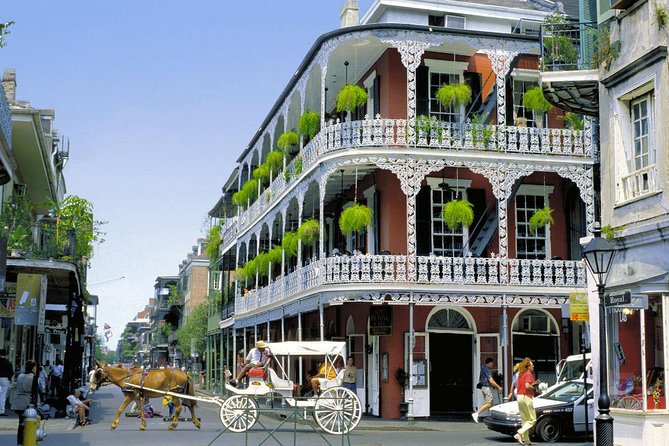
Reviewed · FRENCH QUARTER TOURS
Private French Quarter Walking Tour
A three-hour walk can feel like a history lesson.
This private French Quarter tour is built for slow gazing, smart questions, and real local context as you move through some of New Orleans’ most famous corners and calmer side streets. I like that it stays personal—your group walks with a licensed guide and sets the pace instead of getting herded. You’ll also get concrete story threads that connect the city’s past to what you see today. One heads-up: the streets are uneven, and you are walking about 1.5 miles total.
In This Review
- Key things I’d call out before you go
- Quick highlights you’ll feel in real time
- A Private French Quarter Walk That Actually Teaches You to Look
- Price, group size, and when this tour is a smart value
- Where you meet: Tableau by Dickie Brennan & Co., then straight to orientation
- Jackson Square: the 1718 founding story in the first 15 minutes
- The river walk feel: how Mississippi life shaped the Quarter
- St. Louis Cathedral: one of the oldest places you’ll see
- Cabildo and the Louisiana Purchase ceremony connection
- Royal Street: 30 minutes of windows, governors, and street-level clues
- Alleys and courtyards: Pirate’s Alley, Exchange Alley, and quiet space
- Louisiana Supreme Court and the preservation fight you’ll recognize today
- Bevelo gas light making factory: old craftsmanship after 1803
- Pharmacy stops: licensed practice, firsts, and the stories behind the buildings
- Napoleon House: a famous stop with a food-related payoff
- Vincent Nunez House: the fire that shifted architecture from French to Spanish
- What kind of traveler this tour fits best
- Should you book the Private French Quarter Walking Tour?
- FAQ
- Where do we meet for the tour?
- How long is the walking tour?
- What’s the price and group size?
- What’s included in the tour price?
- What’s not included?
- Are there different departure times?
- Is the tour in English?
- What kind of walking should I expect?
- What is the cancellation policy?
Key things I’d call out before you go
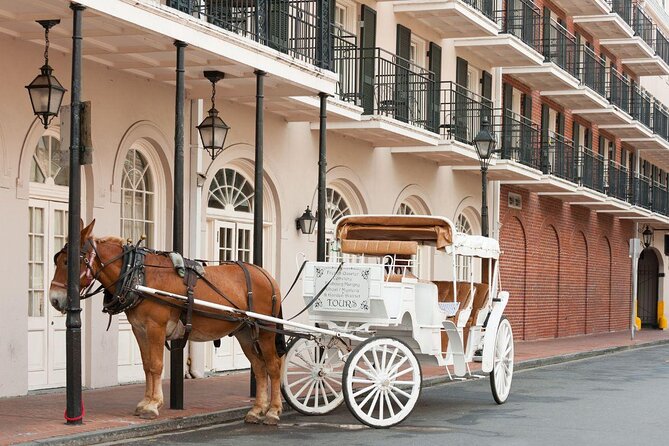
I especially liked how the tour connects big dates to physical places—think 1718 city founding at Jackson Square, then later the Louisiana Purchase era as the Quarter shifts. I also appreciate the mix of headline sites with smaller stops where you can actually look up close: courtyards, alleyways, and shopfront details on places like Royal Street.
The only real drawback is the price: $350 per group (up to 4) is great value if you’re splitting it, but it’s not a budget pick if you’re going solo or with just one person. Also, some stops have admission fees not included, so check what you want to enter.
More ways to wander the Vieux Carre
- New Orleans Food Walking Tour of the French Quarter with Small-Group Option★ 5.0 · 6,118 reviews
- New Orleans French Quarter, Voodoo and Culture Walking Tour★ 4.5 · 2,961 reviews
- French Quarter Historical Sights and Stories Walking Tour★ 5.0 · 2,724 reviews
- Ghost and Vampire Walking Tour Of The French Quarter★ 4.5 · 2,406 reviews
Quick highlights you’ll feel in real time
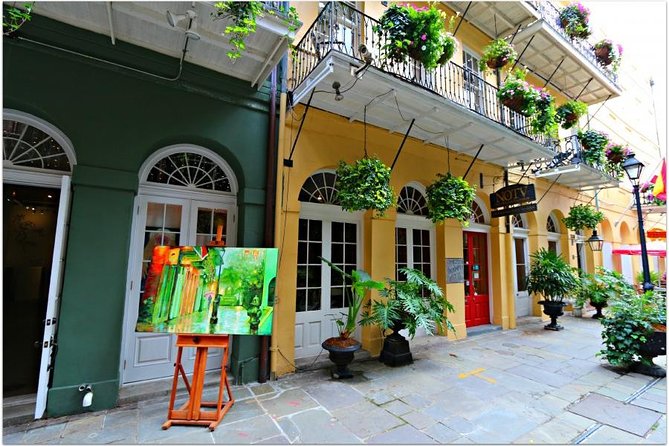
- Private guide, max 4 people: you can ask questions without waiting for a pause in the crowd
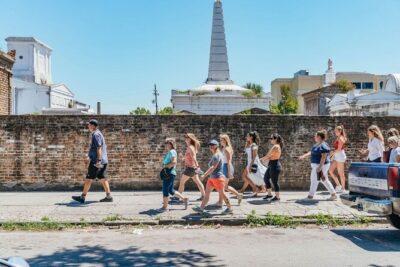
- About 1.5 miles on foot in a leisurely, flexible route
- Start at Jackson Square and get the 1718 founding story early
- Landmarks plus off-the-main-street angles like Pirate’s Alley and Exchange Alley
- Old tech and civic history: gaslights, pharmacies, and preservation fights
- Dominick’s local perspective based on past and present New Orleans
A Private French Quarter Walk That Actually Teaches You to Look
New Orleans is full of signs and legends, but most first-time visitors only notice half of what’s in front of them. This tour fixes that. You spend the morning (or one of the other departures) walking a steady route and learning how to read the Quarter like a local—through buildings, street patterns, and the small details people usually step over.
The format helps. It’s private, offered in English, and aimed at thoughtful wandering rather than nonstop facts. Your guide—often described by name as Dominick—keeps a calm rhythm, answers questions, and doesn’t treat the walk like a race.
You’re also not stuck with a rigid script. The route is set, but the pacing is flexible, so if something catches your attention—say a doorway detail or a street corner story—you can follow that thread.
Price, group size, and when this tour is a smart value
Let’s talk money in plain terms. The cost is $350 per group, and it covers up to 4 people. That means the per-person cost depends on how you’re traveling:
- If you have 4 people: it can feel like a bargain for a private, licensed guide.
- If you have 2 people: it’s still usually worth it if you care about history and want a tailored experience.
- If you have 1 person: it’s likely pricey compared with a shared group tour.
Where you’ll feel the value is in the format: private means you’re not competing for the guide’s attention, and you can shape the questions. Based on how people describe the experience, you also tend to leave with practical extras—like where to eat and what else to see—because the guide takes time for conversation, not just narration.
Where you meet: Tableau by Dickie Brennan & Co., then straight to orientation
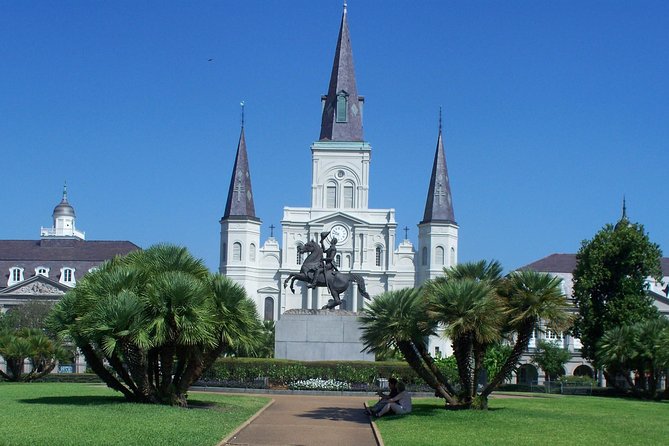
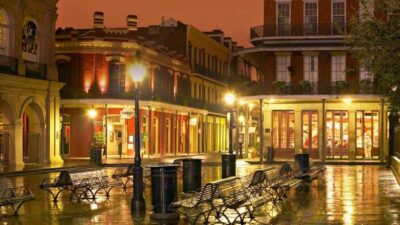
The meeting point is right in the action at Tableau by Dickie Brennan & Co., 616 St Peter. From there, you start by getting your bearings in the part of town most visitors use as a reference point—Jackson Square—and that matters. When you understand where you are, the French Quarter stops feeling random.
Your guide meets you near the heart of the Quarter (close to Jackson Square), then you move through the story in logical steps: founding first, river life next, then the layers of rule, architecture, and everyday life that shaped what you see walking.
Dress is smart casual. Wear comfortable shoes because the Quarter can be rough underfoot—uneven sidewalks are not a rumor. If you’re a moderate walker, you’ll be fine, but you should expect the ground to be a little unpredictable.
More of New Orleans on foot
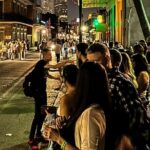

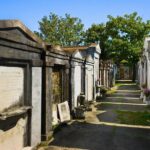
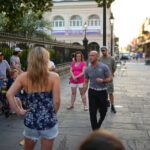

Jackson Square: the 1718 founding story in the first 15 minutes
You begin at Jackson Square, with discussion of the city’s founding in 1718. This isn’t just trivia. It sets your mental map so the rest of the walk makes sense. You’ll understand why the Quarter developed the way it did and how public spaces fit into the city’s early growth.
It’s also a good place to start because it’s a visual anchor. Even if you’re seeing it for the first time, the square gives you reference points for the streets and landmarks you’ll hit soon after.
This stop is scheduled for about 15 minutes, and since admission is free here, you can just focus on listening and looking.
The river walk feel: how Mississippi life shaped the Quarter
After Jackson Square, you head toward the Mississippi river area. This is where the tour makes a big point: New Orleans wasn’t built only by land routes and big political decisions. The waterway mattered from the start.
You’ll pick up how river scenes connect to founding and growth—basically, the river made movement, trade, and settlement possible in a way that shaped the whole Quarter. Even if you’ve seen the river from a distance, hearing the story while you’re close by helps it click.
This section also keeps the pacing friendly. It’s a chance to reset your feet before the tighter, landmark-heavy walking begins.
St. Louis Cathedral: one of the oldest places you’ll see
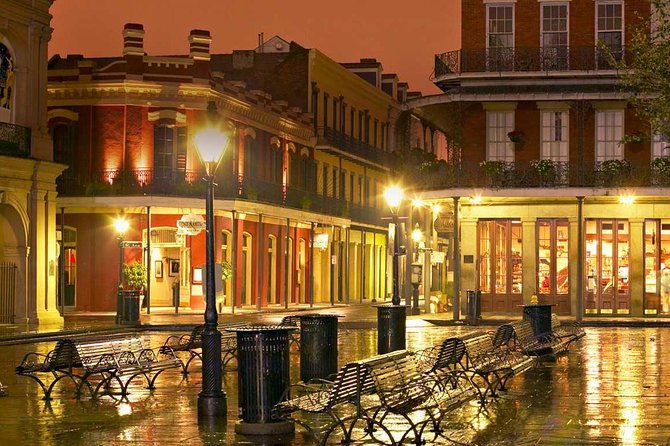
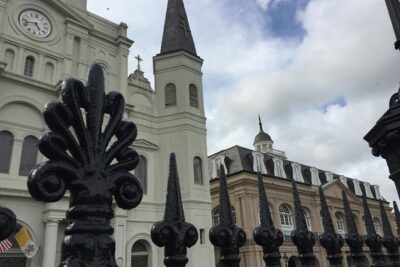
Next up is St. Louis Cathedral, described as the oldest cathedral in the United States. The stop runs about 15 minutes, and admission is free.
What I like about this stop in a guided format is that you don’t just get a building name and a date. You get a sense of how major religious and civic spaces helped structure the city’s identity. It’s a key anchor for understanding why the Quarter’s streets and landmarks feel connected, not random.
If you’re the type who likes to take photos, this is also one of the easiest stops to pause without feeling like you’re slowing down the group.
Cabildo and the Louisiana Purchase ceremony connection
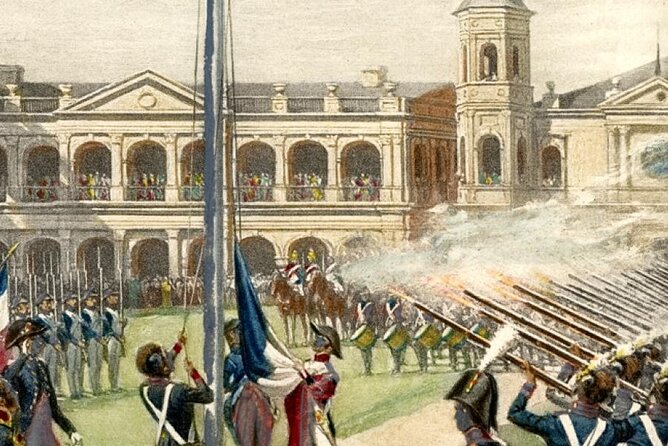
You’ll stop at the Cabildo (about 15 minutes). Admission here is not included, so if you want to go inside, plan to pay separately.
This stop is tied to major turning points, including the Louisiana Purchase and the ceremony history connected to it. That’s important because 1803 is one of those dates people throw around. On this walk, it’s connected to real spaces, not just a timeline.
Even if you only view from the outside, the guide’s interpretation helps you see how political change reshaped everyday life and future building choices.
Royal Street: 30 minutes of windows, governors, and street-level clues
Your time at Royal Street is longer—about 30 minutes—and admission is free. This is a great stretch because it mixes two things you can actually do as you walk: window shopping and paying attention to the way the street reflects past power.
The tour discusses how Royal Governors lived here before Louisiana became a state. That detail gives the street a new meaning. Instead of just being a photo-and-shopping strip, it becomes a corridor where you can sense how authority and commerce lined up.
If you’re the kind of traveler who likes to slow down and people-watch, Royal Street is where your pace can naturally slow without feeling like you’re falling behind.
Alleys and courtyards: Pirate’s Alley, Exchange Alley, and quiet space
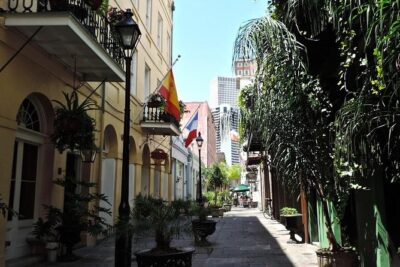
One of the best parts of this tour is the emphasis on the Quarter’s smaller passages. You’ll move down well-known alleys like Pirate’s Alley and Exchange Alley, and you’ll also get chances to look at tucked-away nooks and courtyards.
This is where the guide’s pace earns its keep. You’re not just told alley names; you’re guided to notice what makes them feel different. Narrow lanes change sight lines. Courtyards change sound and light. And when you connect those physical differences to history, you start understanding how people lived here.
This is also one of the easiest ways to see why the French Quarter still feels distinct from other American tourist zones: it’s designed for wandering, not sprinting.
Louisiana Supreme Court and the preservation fight you’ll recognize today
You’ll stop at the Louisiana Supreme Court (about 15 minutes, free admission). Here the guide connects history to a modern issue: preserving the French Quarter from demolition.
I like this stop because it stops the story from being only about the past. New Orleans didn’t just inherit its identity. People fought to keep it. When you hear that while you’re standing near a major public institution, you understand why the Quarter looks the way it does now—why so many structures survived and why some didn’t.
It’s a practical reminder: history is not automatic. It’s negotiated, protected, and sometimes repaired.
Bevelo gas light making factory: old craftsmanship after 1803
The walk includes a stop at the Bevelo gas light making factory (about 15 minutes). Admission is marked as free.
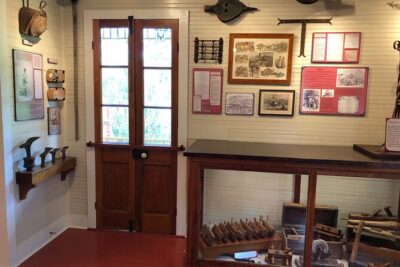
This is one of those stops that sounds niche until you’re standing there. You’ll watch craftsmen building lights by hand and hear how gaslighting in New Orleans took shape after 1803.
Even if you’re not into old technology, this section gives you a feel for how changes in leadership and economy show up in daily life. Light isn’t only a utility—it’s part of what made streets feel safe, functional, and active.
Pharmacy stops: licensed practice, firsts, and the stories behind the buildings
You’ll spend time at the New Orleans Pharmacy Museum more than once in the route, with discussion tied to landmark medical and social history.
One stop focuses on the founding of the first licensed pharmacy practice in the United States. Another focuses on the first licensed pharmacist and the first female to practice pharmacy about a century before the first licensed pharmacist—again, framed as story, not just a fact list.
Admission for the Pharmacy Museum is marked as not included at least once on the route. So treat this as a “want-to-go-in” stop, and be ready to pay if you decide to enter. If you’re only there for the walk-by interpretation, you’ll still get the narrative, but you’ll want to plan so you’re not surprised.
This section pairs well with the preservation theme at the Supreme Court. It shows how public health, regulation, and institutions changed over time—and how those changes can still be read on the street.
Napoleon House: a famous stop with a food-related payoff
The Napoleon House is another headline point on the route, with about 15 minutes allocated. Admission is free for the stop itself on the route.
Here the guide ties the location to plans connected to Napoleon Bonaparte—and then you get a turn toward what’s there today, including the food served now. This is one of the places where the tour stays fun. It’s not all stern architecture and political dates.
If you like walking with a practical “so what do I do next?” mindset, this stop helps you connect the history to where to spend your next hour.
Vincent Nunez House: the fire that shifted architecture from French to Spanish
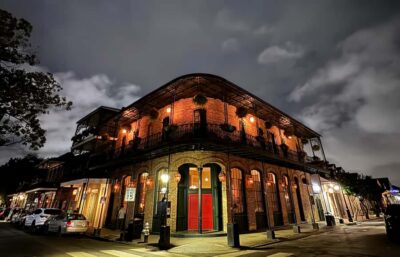
Your final themed stop is the Vincent Nunez House (about 15 minutes, free admission). The story here is tied to the first major fire in the city’s history and how that event changed the architectural character—from French to Spanish.
This kind of story is valuable because it explains why cities look the way they do. Fires, floods, politics, and economics are often the real authors of a skyline. Once you hear how a major fire redirected architectural choices, you’ll notice the differences more easily as you walk after the tour ends.
It’s a strong closing beat: a dramatic cause with visible effects.
What kind of traveler this tour fits best
This is a great match if you want more than postcard French Quarter photos. You’ll probably enjoy it most if you:
- want a private experience with time for questions
- enjoy walking and can handle uneven sidewalks
- like history that connects to the buildings you’re seeing
- value a local guide who can point you to places to eat and visit
If you want a quick hit where you only skim the highlights and keep moving, this might feel slower than you expect, because the pacing is deliberately relaxed and discussion-friendly.
Should you book the Private French Quarter Walking Tour?
Yes—if you’re traveling with up to three others, or if you really care about understanding what you’re looking at. The price is easiest to justify when you split it, but even for smaller groups, the private pacing plus the guide’s local, past-and-present perspective can make it one of the best uses of time in the Quarter.
Book it if you like story-driven walking and you want the French Quarter to make sense beyond the usual highlights. Skip it only if you’re chasing the lowest cost option or you can’t handle a 1.5-mile walking route with uneven pavement.
If you do book, bring comfortable shoes, come ready to ask questions, and don’t be shy about asking what you should do next after the tour.
FAQ
Where do we meet for the tour?
You meet at Tableau by Dickie Brennan & Co., 616 St Peter, New Orleans, LA 70116. The tour ends back at the meeting point.
How long is the walking tour?
It runs about 3 hours, with a leisurely pace and multiple short stops along the way.
What’s the price and group size?
It costs $350 per group for up to 4 people. The price is higher for additional visitors, and the tour is private for your group.
What’s included in the tour price?
The tour includes a fully narrated walking experience with a licensed and insured local guide.
What’s not included?
Transportation to and from attractions, food and drinks, lunch, souvenirs, and admission to unplanned attractions are not included. Admission is marked as not included for the Cabildo and the New Orleans Pharmacy Museum.
Are there different departure times?
Yes. You can choose from three different departure times.
Is the tour in English?
Yes, the tour is offered in English.
What kind of walking should I expect?
It’s a moderate physical activity with a total walk of about 1.5 miles (2.4 kilometers). The French Quarter streets and sidewalks are uneven.
What is the cancellation policy?
You can cancel for free up to 24 hours in advance for a full refund. If you cancel less than 24 hours before the start time, the amount paid is not refunded.
More Tours in New Orleans


More Tour Reviews in New Orleans
More of the French Quarter

Just added to The New Orleans Traveler


French Quarter Tours, compared.
 ★ 5.0Food Walking Tour of the French Quarter with Small-Group OptionFrom $756,118 reviews
 ★ 4.5French Quarter, Voodoo and Culture Walking TourFrom $272,961 reviews
 ★ 5.0French Quarter Historical Sights and Stories Walking TourFrom $352,724 reviews
 ★ 4.5Ghost and Vampire Walking Tour Of The French QuarterFrom $212,406 reviews
 ★ 4.5City Tour: French Quarter, Garden District & CemeteryFrom $402,209 reviews
 ★ 5.0French Quarter Food Tour: Cajun, Creole and CultureFrom $811,246 reviews
 ★ 5.0French Quarter and More Carriage RideFrom $651,141 reviews
 ★ 5.0French Quarter walking Food Tour Famous Flavors of New OrleansFrom $751,115 reviews
Browse the lists this tour appears in