
Reviewed · FOOD TOURS
New Orleans Taste of Gumbo Food Walking Tour
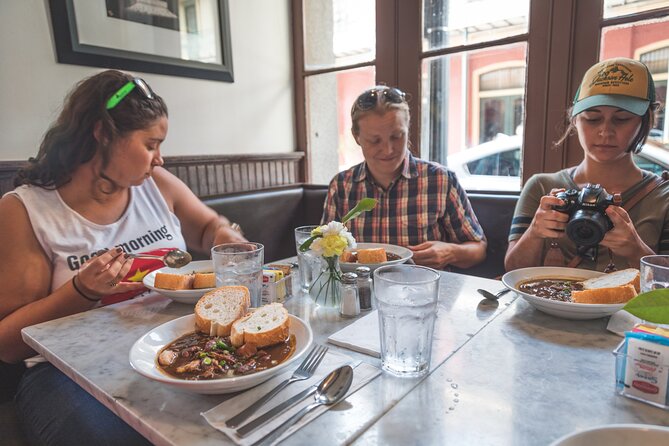
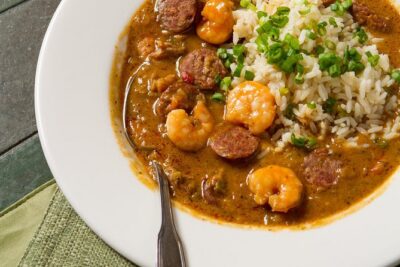
Gumbo in New Orleans is a story. On this New Orleans Taste of Gumbo Food Walking Tour, you walk the French Quarter with a local guide and sample different versions of the city’s best-known dish. I like how the tour is built around generous tastings that add up to a meal, not tiny bites.
Two more things I really like: you get the flavor context (Creole, Cajun, African, and Native American influences) while you’re actually standing in the places where New Orleans history shows up in the streets. The main consideration is that allergies and food restrictions might not be accommodated, and some listed spots may not be guaranteed stops.
In This Review
- Key things to know before you go
- Meeting at 700 Decatur St: Jackson Square’s big-picture start
- French Quarter first stop: St. Louis Cathedral and the tripled-steeple backdrop
- Pontalba Buildings and Spanish colonial details you’ll actually notice
- How the gumbo tastings work like a real meal
- Your French Quarter food stops: the places with long gumbo credentials
- Napoleon House stories and classic orders like Pimm’s Cup
- Restored historic buildings and that mid-1800s vibe
- Cafe du Monde and the beignet-and-chicory cue
- Walking through the Mississippi-view side of history
- The lively street energy: musicians, artists, and horse-drawn carriages
- Private format and small group size: why the guide matters
- Price and value: is $81 really fair?
- What to bring (and what to expect) for a smooth walk
- Who should book this gumbo tour
- Should you book? My take
- FAQ
- How long is the New Orleans Taste of Gumbo Food Walking Tour?
- What food is included in the price?
- Is it a private tour?
- Where does the tour start?
- Are there any extra tickets or admissions to pay?
- Can the guide accommodate allergies or dietary restrictions?
- Can I cancel for a refund?
- Is the tour suitable for people who need accessibility support?
Key things to know before you go
- Private, small-group feel with a maximum of 12 travelers for more personalized attention
- 4–5 tastings designed to total a full meal, so come hungry
- Jackson Square and St. Louis Cathedral are part of the story, not just a photo stop
- French Quarter architecture details like wrought-iron balconies and Spanish colonial lines
- Napoleon House-style lore may come up as you taste in the neighborhood
Still hungry? More gumbo, po'boys and beignets
- New Orleans Food Walking Tour of the French Quarter with Small-Group Option★ 5.0 · 6,118 reviews
- New Orleans Food and History Walking Tour★ 5.0 · 1,544 reviews
- New Orleans French Quarter Food Tour: Cajun, Creole and Culture★ 5.0 · 1,246 reviews
- French Quarter walking Food Tour Famous Flavors of New Orleans★ 5.0 · 1,115 reviews
Meeting at 700 Decatur St: Jackson Square’s big-picture start
You start at 700 Decatur St, a strong launching point because it puts you right by Jackson Square. This square is known as the spot where Louisiana was officially recognized as a U.S. territory, and it’s ringed by major institutions like Cafe du Monde and the Pontalba Buildings.
From your first minutes, the tour is doing two jobs at once: you get your bearings fast, and you learn how food culture grew around power, ports, and changing identities. I like that it doesn’t treat history like trivia; it treats history like the reason your gumbo tastes the way it does.
French Quarter first stop: St. Louis Cathedral and the tripled-steeple backdrop
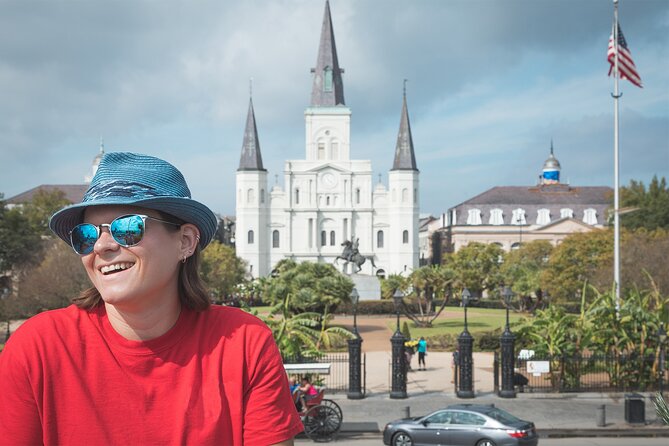
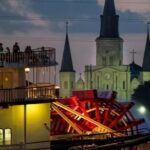
One of the clearest visual anchors in the area is the St. Louis Cathedral, the oldest cathedral in continuous use in the U.S. It’s also the iconic triple-steepled backdrop to Jackson Square, and seeing it early helps you understand why so many visitors (and locals) still treat this area as the heart of the city.
This is also where your guide can connect the dots between place and cuisine. New Orleans food isn’t one culture and one recipe. It’s a set of overlapping traditions, shaped by migration, trade, and survival. When you hear those connections while you’re in front of landmark buildings, it sticks.
Pontalba Buildings and Spanish colonial details you’ll actually notice
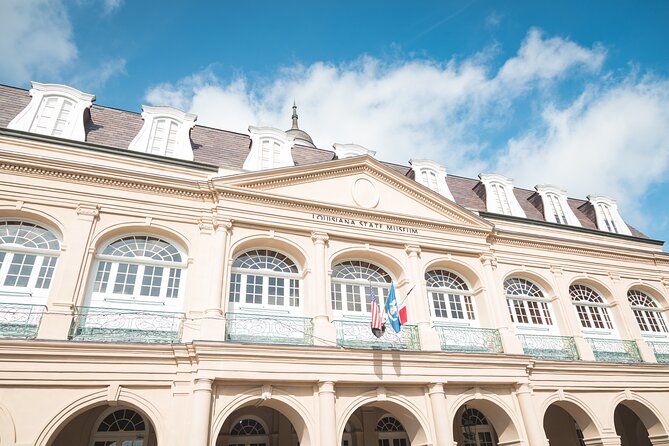
Next up, you’ll be looking at the neighbor to the cathedral, a formal example of colonial Spanish architecture. It was formerly home to the Spanish municipal government before the Louisiana Purchase, so you’re not just admiring pretty stonework.
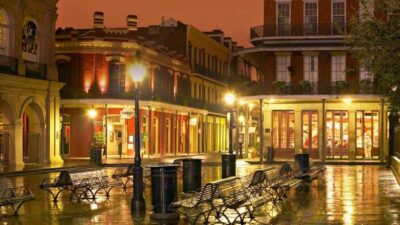
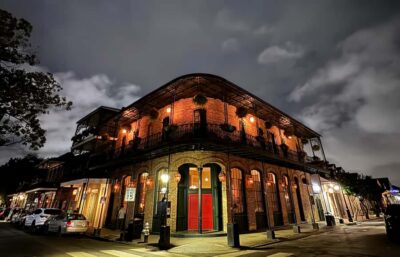
Then comes a detail that makes the whole walking experience feel more grounded: the wrought iron–wrapped balconies that have long been associated with New Orleans architectural style. These brick buildings trace to the period between 1849 and 1851, which matters because it helps explain why the French Quarter still feels like a living historic set—not a theme park.
If you’re the type who usually walks past buildings without noticing, I’d still do this tour. The guide’s job is to point out what your eyes might miss on a normal stroll.
How the gumbo tastings work like a real meal
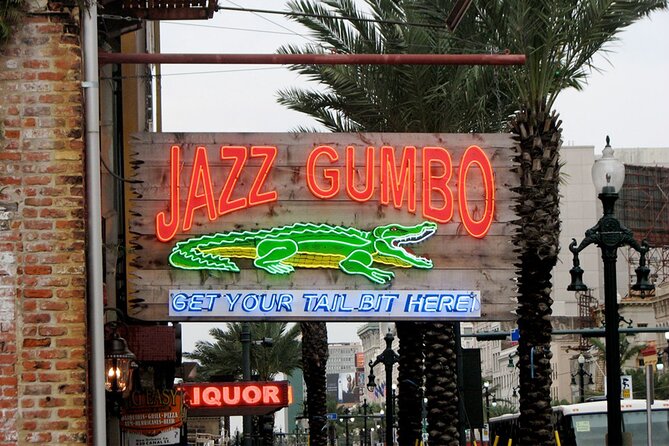
The tour’s heart is the tastings: 4–5 samples meant to add up to a hearty meal. That’s the big value point for your time and money. You’re paying for a guide to steer you to places with long reputations, and you’re getting enough food that you won’t need dinner plans afterward.
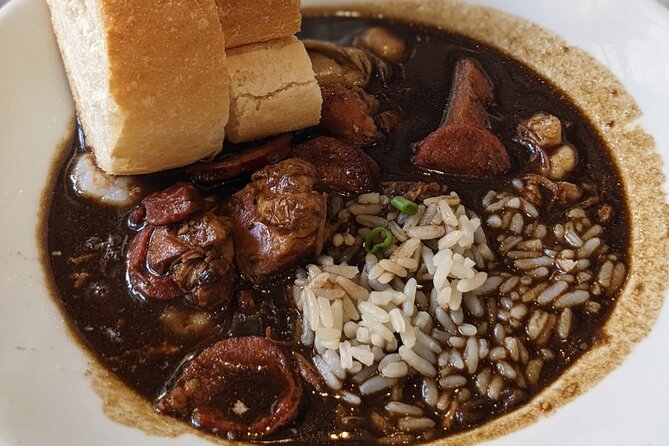
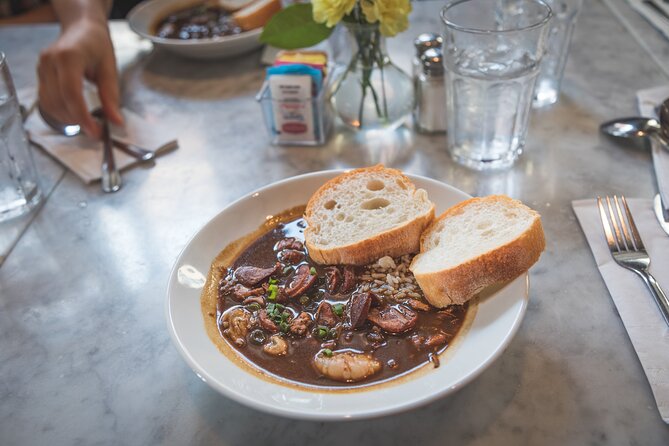
The menu isn’t described as one strict recipe tasting menu. Instead, you’ll taste different versions of gumbo, plus classic New Orleans dishes that often travel with gumbo in people’s minds—think jambalaya and other Creole staples. The point is comparison: how the same dish can tilt depending on who’s cooking and what influences they carry.
One practical tip: wear comfortable shoes. This is a walking tour that runs about 2 hours 30 minutes, and it’s built around moving between neighborhoods and eateries. Pace matters, especially in warm months.
Back to the stove for more Creole cooking

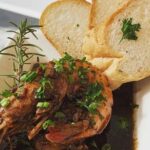
Your French Quarter food stops: the places with long gumbo credentials
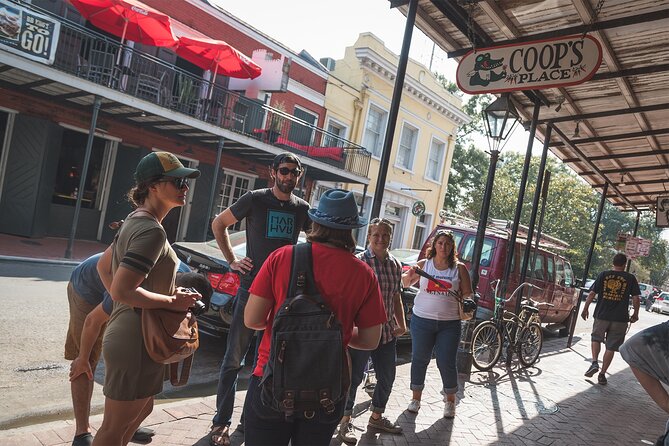
Your tour takes place in the French Quarter, with visits to businesses that have a reputation for some of the best gumbo in the city. The exact stops aren’t guaranteed for every location on the list, but you can count on the guiding theme: gumbo-centric tastings and a mix of well-known and lesser-known eateries.
Here’s what I’d expect in the rhythm of the walk:
- You’ll start with landmark context, then shift into eating.
- You’ll taste, pause, and learn why each version feels distinct.
- You’ll look at the neighborhood while you eat, so the food and streets stay linked.
That last part is underrated. If you’ve ever eaten a great dish while missing the story behind it, this tour is built to prevent that.
Napoleon House stories and classic orders like Pimm’s Cup
As you move through the French Quarter, there’s a good chance you’ll pass by Napoleon House. Your guide may stop or share tales connected to the building while you taste your way through the area.
This is also where the tour gives you a taste of how New Orleans dining traditions work beyond soup. Napoleon House is described as serving traditional New Orleans dishes and the famous Pimm’s Cup cocktail. Even if you don’t order the drink, just knowing it’s part of the location’s identity helps you connect the dots between food and how people socialize here.
And yes, there’s lore. The tour notes stories tied to the place, which can make the walking portion feel like a guided storybook instead of a checklist.
Restored historic buildings and that mid-1800s vibe
One of the stops you might pass includes a beautiful restored restaurant that once had roots as a private residence in mid-1800s New Orleans. The description also points to a paranormal past, so if you like your history with a side of ghost story energy, you’re in the right neighborhood for it.
Even if you don’t buy into every spooky detail, I like that the tour nudges you to look at how buildings are repurposed. In New Orleans, food isn’t only about what’s on the menu. It’s about how places are reused and kept alive.
Cafe du Monde and the beignet-and-chicory cue
Your meeting area isn’t far from Cafe du Monde, the beignet cafe known for chicory coffee since 1862. It’s not listed as an official tour stop, but your guide may point you toward it as a good next move.
If you still have room after the tastings, this is where I’d plan a follow-up. The smart play is to treat your tour as the meal portion, then use Cafe du Monde as the dessert-and-walkaround portion afterward.
Walking through the Mississippi-view side of history
From your meeting point, there’s a raised park where you can see an overlooking view toward the Mississippi. The tour description frames it as a reminder of the complicated legacy of the American Civil War, which is a useful lens for understanding New Orleans’ 20th-century and modern identity, not just the Mardi Gras version people post online.
The lesson here is simple: the city’s cuisine formed in a real world of routes, labor, and power shifts. When your guide keeps that in mind while talking about gumbo origins, the flavors feel earned.
The lively street energy: musicians, artists, and horse-drawn carriages
You’ll also pass through or move toward the street scene where you’re likely to spot street musicians, artists, and horse-drawn carriages. Even if you don’t catch every performance, the tour route helps you feel how public space works in the Quarter—how people watch, listen, eat, and roam all in the same block.
This matters because gumbo culture is social culture. It’s not just a recipe. It’s a way to feed a group and talk through the day.
Private format and small group size: why the guide matters
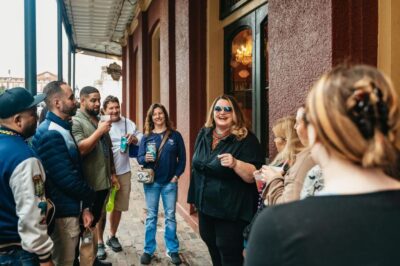
This is a private gumbo-centric tour, and it runs with a maximum of 12 travelers. That small size is what makes the explanations feel relevant, not like you’re standing in a lecture line.
The standout from past experiences is the guide’s ability to make gumbo history feel human. One guide named Neil is specifically mentioned for bringing the history of gumbo, Creole, and Cajun to life and tying it into New Orleans history at the same time. If your guide is strong at storytelling, you’ll leave with a clearer idea of why the dish has so many valid versions.
Price and value: is $81 really fair?
At $81 per person, this isn’t a low-cost snack tour. But the price makes more sense when you look at what’s included: local English-speaking guide plus 4–5 tastings that equal a full meal, along with visits to beloved and lesser-known eateries and views of major French Quarter sights.
In plain terms, you’re paying for:
- a route that groups tastings with context
- enough food that you’re covered for dinner later
- someone to explain what you’re seeing, tasting, and photographing
If you’re comparing it to buying random lunch items on your own, the difference is that you’re paying to avoid guesswork. And gumbo is tricky. People argue about it in New Orleans for a reason. A guide helps you taste broadly without wasting time.
What to bring (and what to expect) for a smooth walk
The tour is around 2 hours 30 minutes, with a walking-heavy format. That means your biggest “bring” is comfort: shoes you don’t mind wearing for a few hours in the Quarter.
Also keep expectations realistic:
- You’ll use a mobile ticket.
- Not all listed locations are guaranteed stops.
- Allergies or food restrictions may not be accommodated, so if you have serious needs, plan extra carefully and ask up front.
Service animals are allowed, and the meeting area is described as near public transportation, which is helpful if you’re building your day without relying only on rideshare.
Who should book this gumbo tour
I’d book this if you want to:
- eat a real meal’s worth of tastings in a short time
- learn how Creole and Cajun influences connect to gumbo
- see landmark French Quarter sights while you eat
- get a guided walk that stays focused on food, not just buildings
I might skip it if you’re looking for a purely hands-on cooking experience (this is a tasting and walking format, not a class), or if you have strict dietary requirements that you already know are hard to accommodate.
Should you book? My take
If you’re spending a day or two in New Orleans and you want gumbo to be more than a single bowl, this tour is a smart use of time. The meal-sized tastings, the landmark context around Jackson Square and St. Louis Cathedral, and the small-group feel are a strong combination for the price.
Book it when you can. This one is often scheduled about 10 days in advance, and with limited group size, it’s not the kind of thing you want to wait on if your trip dates are tight.
FAQ
How long is the New Orleans Taste of Gumbo Food Walking Tour?
It lasts about 2 hours 30 minutes.
What food is included in the price?
The tour includes 4–5 tastings, described as enough to equal a full meal.
Is it a private tour?
It’s described as a private gumbo-centric food tour, with a maximum of 12 travelers.
Where does the tour start?
It starts at 700 Decatur St, New Orleans, LA 70116, USA and ends back at the meeting point.
Are there any extra tickets or admissions to pay?
The tour information notes admission ticket free, and the price includes the guide and tastings; additional food, drink, souvenirs, and tips are not included.
Can the guide accommodate allergies or dietary restrictions?
Allergies and food restrictions or sensitivities may not be able to be accommodated, so it’s important to ask in advance.
Can I cancel for a refund?
Yes. You can cancel for a full refund if you cancel at least 24 hours before the experience starts.
Is the tour suitable for people who need accessibility support?
The information says most travelers can participate, and it allows service animals.
More Tour Reviews in New Orleans


More Cajun & Creole Cooking

More Ways to Eat New Orleans


Just added to The New Orleans Traveler

Food Tours, compared.
 ★ 5.0Food Walking Tour of the French Quarter with Small-Group OptionFrom $756,118 reviews
 ★ 5.0Food and History Walking TourFrom $851,544 reviews
 ★ 5.0French Quarter Food Tour: Cajun, Creole and CultureFrom $811,246 reviews
 ★ 5.0French Quarter walking Food Tour Famous Flavors of New OrleansFrom $751,115 reviews
 ★ 5.0Delicious Donuts & Beignets: A Sweet Walking TourFrom $70928 reviews
 ★ 5.0Cocktail and Food History TourFrom $160819 reviews
 ★ 4.9French Quarter Food History Walking TourFrom $85713 reviews
 ★ 4.5French Quarter walking Food Tour: Signature Tastes of New OrleansFrom $85592 reviews
Browse the lists this tour appears in