
Reviewed · FRENCH QUARTER TOURS
New Orleans French Quarter Walking and History Tour
French Quarter stories start at Cafe Beignet. This small-group, 2-hour walk links river engineering to the Quarter’s most famous blocks, with insider stories that help the area click fast. I like that the guide keeps things practical and easy to follow, not just a list of dates.
I also love the small-group size (up to 9) and the built-in rhythm of frequent stops—so you can actually hear the explanation. One possible drawback: you’re on your feet for about 2 miles, mostly outdoors, so comfy shoes—and decent weather—matter.
In This Review
- Quick takeaways
- Two miles of French Quarter stories, starting with Cafe Beignet
- From Musical Legends Park to the Mississippi River levee: why the ground matters
- French Market stroll: oldest open-air market energy, without the crowds feeling
- Jackson Square landmarks: the Quarter’s “center of gravity”
- Cabildo and Presbytere: government and resilience on the same block
- St. Louis Cathedral inside: the fire story that shaped the style
- Pirate’s Alley and the Quadroon Ballroom balcony: Creole society with hard context
- Literary and film spotting: Tennessee Williams and William Faulkner on the route
- Ursuline Convent Museum: early Louisiana colonization in one oldest-building stop
- Guides who make it work: Dave and Davi Higgins style
- Price and value: $29 that buys time, context, and an inside visit
- Logistics that affect your comfort (and your photos)
- Who should book this French Quarter walking tour?
- Should you book this tour?
- FAQ
- Where does the tour start and where does it end?
- How long is the walking tour?
- About how far do you walk?
- Is it a small group tour?
- What time options are available?
- Do I need to print a ticket?
- Is the tour in English?
- Is the tour mostly outdoors?
- Are museum and attraction entrances included?
- What if the weather is bad?
- What is the cancellation window for a full refund?
Quick takeaways
- Levee and swamp-to-city history first, before you reach the classic landmarks
- Jackson Square landmark loop with Cabildo, Presbytere, and Cathedral context
- Literary and film spotting as you walk, from Tennessee Williams to William Faulkner
- Creole history on Pirate’s Alley, including placage and the Quadroon Ballroom balcony
- St. Louis Cathedral interior visit, plus the fire-of-1788 rebuilding story
More ways to wander the Vieux Carre
- New Orleans Food Walking Tour of the French Quarter with Small-Group Option★ 5.0 · 6,118 reviews
- New Orleans French Quarter, Voodoo and Culture Walking Tour★ 4.5 · 2,961 reviews
- French Quarter Historical Sights and Stories Walking Tour★ 5.0 · 2,724 reviews
- Ghost and Vampire Walking Tour Of The French Quarter★ 4.5 · 2,406 reviews
Two miles of French Quarter stories, starting with Cafe Beignet
If the French Quarter feels like a movie set when you first arrive, this tour helps you understand the plot. You meet at Cafe Beignet on Royal Street, then head out as a group of up to 9—small enough that your guide can answer questions without racing everyone along.
The pace is leisurely, and the total walk is about 2 miles. That’s long enough to see the Quarter’s layout clearly, but short enough that you still have energy for later music, bars, and snacks on your own.
From Musical Legends Park to the Mississippi River levee: why the ground matters
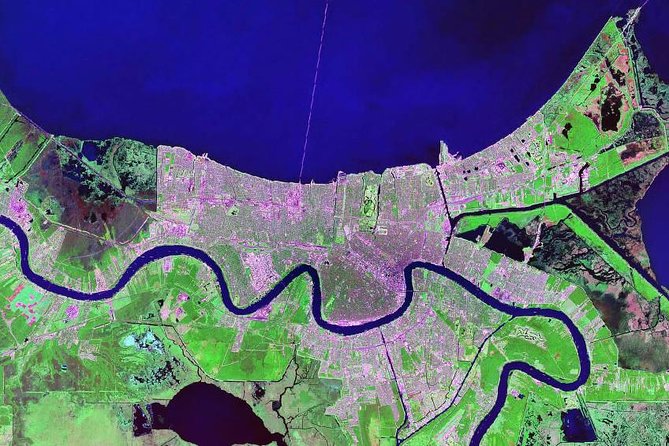
You start near Musical Legends Park, and the first big theme is the river’s power and the city’s survival plan. The guide connects the dots on how levee construction turned sea-level swampland into land people could farm and build on—a detail that makes later architecture and neighborhoods feel less random.
You’ll also look out toward the Mississippi River and paddlewheel steamboat scenery, then hear how the river and the levees shaped daily life. This part is especially valuable for first-timers because it explains the “why” behind the Quarter’s location and importance, not just the “what.”
A small practical note: this is the section where you’ll feel the weather most, since it’s exposed along the waterfront. If it’s hot, plan water breaks later; if it’s chilly, a light layer helps.
French Market stroll: oldest open-air market energy, without the crowds feeling
Next comes the waterside French Market, which is widely known as the oldest open-air market in the US. You don’t just pass by—you walk through the stalls at an easy pace so you can get a feel for local ingredients and Creole flavors without turning it into a full shopping mission.
Even if you skip buying anything, the market gives you a sense of what’s been traded and sold here for generations. It’s also a handy mental reset: you go from civic history and river engineering to the everyday side of the city—produce, fish, and Creole food culture.
Jackson Square landmarks: the Quarter’s “center of gravity”
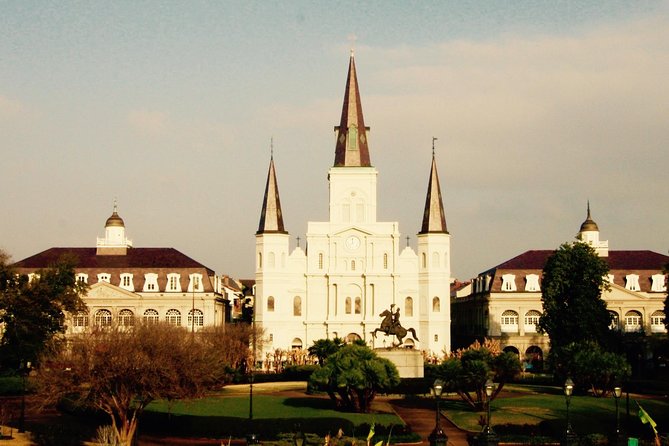
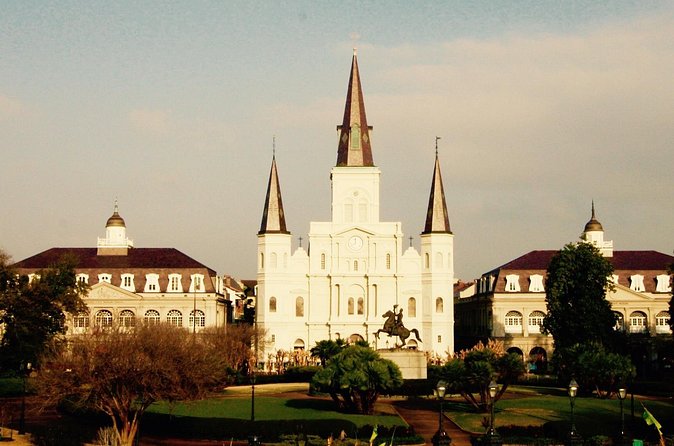
After the market, you head to Jackson Square, the heart of the French Quarter. The guide explains the site’s backstory, including how Place d’Armes set the stage before Jackson Square became the honorary landmark you see today.
Here’s what makes this stop more than a photo break: you’ll understand how the square functions as a landmark anchor. You’ll also get context on major surrounding sights, including the Cabildo, Presbytere, and Pontalba Apartments—the ones that help frame the view in your camera roll.
Time-wise, this isn’t an all-day stop. You’re given enough time to orient yourself, learn what matters, and keep moving.
More of New Orleans on foot



Cabildo and Presbytere: government and resilience on the same block
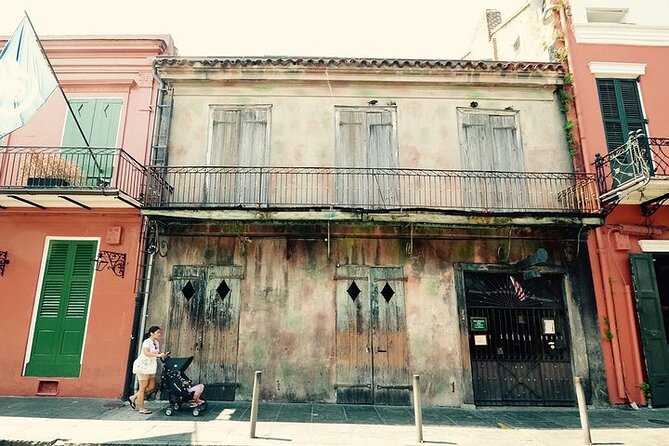
At Cabildo, you learn the building’s role in New Orleans government history, including that it was built between 1795 and 1799. The guide also ties that political past to the city’s wider story, so you’re not just seeing a museum façade—you’re hearing why this street corner had influence.
Then you get to Presbytere, built in 1791 to match Cabildo. The big takeaway is contrast: the guide points out the symbolism of these twin structures around Jackson Square, and how the city’s identity kept shifting even when the buildings stayed.
You’ll likely feel your brain switching from “tour mode” to “I get it now.” That’s the real win with these two stops: they make the layout of the French Quarter legible.
St. Louis Cathedral inside: the fire story that shaped the style
One of the highlights here is that the tour includes time inside St. Louis Cathedral. Outside, you see the classic look. Inside, you get the context for why that look matters.
The guide connects the Great New Orleans Fire of 1788 to the rebuilding process and explains how the aftermath influenced what many people recognize as classic French Quarter architectural style. It’s the kind of explanation that makes the Cathedral feel less like a postcard and more like a turning point.
If you like architecture, this stop pays off fast. If you don’t, you still get a clear city lesson: disasters didn’t just damage buildings—they shaped the way the Quarter looks today.
Pirate’s Alley and the Quadroon Ballroom balcony: Creole society with hard context

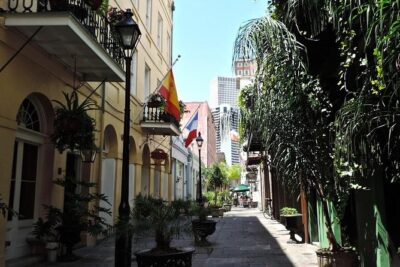
Then you step into one of the most atmospheric corners of the Quarter: Pirate’s Alley. The guide describes the Creole courtyard feel and helps explain how Creole society worked in South Louisiana—what was celebrated, what was exploited, and how power was structured.
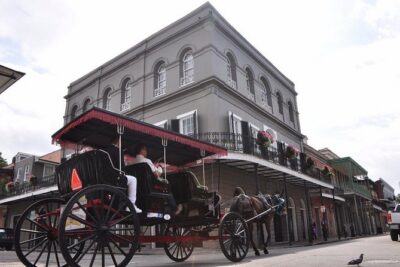
A key moment is the explanation around the Quadroon Ballroom balcony and the practice known as placage. This part doesn’t sugarcoat history. It’s not just gossip or spooky legend; it’s an attempt to explain the system behind the stories.
You’ll also hear about local legends tied to dueling and prison escapes as you move through the alley. And as you walk, you may catch the sound of talented street musicians—one of those small French Quarter realities you can’t plan, but you can enjoy more because you know what you’re looking at.
Literary and film spotting: Tennessee Williams and William Faulkner on the route
If you’re a fan of writers, this tour has a built-in bonus. Your guide points out literary landmark connections along the way—starting with the building where Tennessee Williams wrote A Streetcar Named Desire. Later, you visit William Faulkner’s home, and the guide weaves those locations into the wider story of the Quarter.
You also get film-sight style spotting, so you can look at street corners and recognize why directors like this neighborhood. Even if you don’t watch much film, the city context makes the stories feel tied to the real places, not just trivia.
Ursuline Convent Museum: early Louisiana colonization in one oldest-building stop
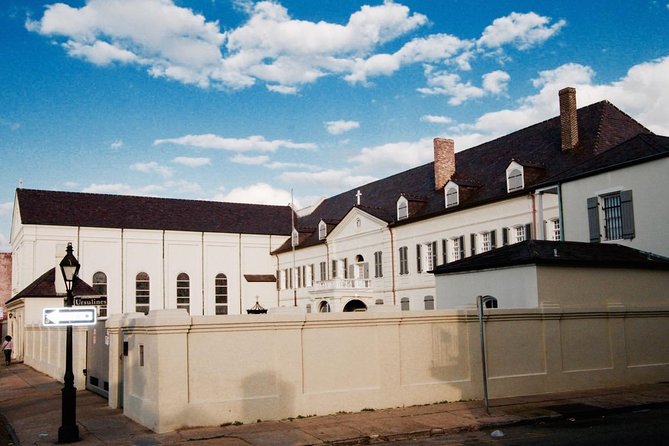
To round it out, you see the Old Ursuline Convent Museum area and learn about the building’s role in early colonization efforts. The guide emphasizes that it’s the oldest building in the Mississippi Valley, and the history gives you perspective on how long the area has been shaped by cultural and political change.
This last stretch is a good way to slow your pace at the end of a walk. After the intensity of Pirate’s Alley history and literary stops, it feels like you’re stepping back into a longer timeline.
Guides who make it work: Dave and Davi Higgins style
The quality here isn’t just about sights—it’s about how the story gets told. Multiple guides come up in the experience, including Dave Roberts and Davi Higgins, and the common thread is clear speaking, a friendly hosting vibe, and humor without turning serious history into a joke.
I especially like that guides often tailor their explanation to the group’s interests. In practice, that means if you’re more into architecture, the talk leans that way; if you’re more into culture and storytelling, you get more of that flavor. On slower days, you might also find the group smaller than usual, which makes the conversation feel even more personal.
Price and value: $29 that buys time, context, and an inside visit
At $29 per person for roughly 2 hours, this is priced for value if you’re going once and want a strong orientation. What helps is that the experience is led by a local guide and includes an inside Cathedral visit, while many surrounding stops are walk-by landmarks or sites you can experience without extra paid admissions on the spot.
Also, the structure matters. You’re not wandering for hours trying to figure out what matters most in Jackson Square and along the river. You get a focused walk—about 2 miles—with stops that explain why each place is there.
If you’re the type who likes doing one guided “framework” tour early in the trip, this is a good pick. It can save you from spending later days on museum research you could have gotten in one guide-led circuit.
Logistics that affect your comfort (and your photos)
This is a walking tour, so your comfort affects everything. Wear comfortable shoes and plan for standing and walking between stops, especially along the river edges and around the square.
Also note that it runs in English and you can pick morning or afternoon start times. That flexibility is handy because the French Quarter can feel different depending on the time of day—morning can be calmer, afternoon can be more crowded.
You’ll also have a mobile ticket, which is convenient if you’re not carrying a printer-friendly life. Confirmation happens at booking, so you’ll know what to expect in advance.
Who should book this French Quarter walking tour?
This works well if you:
- are in New Orleans for the first time and want a fast way to learn the layout
- like history that connects to places you can see immediately
- want literary and movie-style location spotting without doing it solo
- prefer a small-group feel where you can ask questions
It’s also a good choice for families, since the story blend tends to be clear and paced. If you’re someone who hates walking in city heat or doesn’t like guided groups at all, you might prefer a shorter stop-by-yourself plan. This tour is built around moving together.
Should you book this tour?
Yes, I’d book it—especially early in your trip. For $29 you get a guided framework that turns famous locations into an understandable story, from levees and the 1788 fire to Creole social history in Pirate’s Alley. It’s the kind of tour that makes your later French Quarter wandering smarter, not just longer.
Just go in with the right expectations: it’s a real walking tour. Bring good shoes, dress for the weather, and give yourself time afterward to explore on your own. If you do that, you’ll finish the walk with the Quarter’s map in your head—and a few stories you’ll actually remember when the music starts.
FAQ
Where does the tour start and where does it end?
You start at Cafe Beignet on Royal Street (334 Royal St). The tour ends near Jackson Square in and around the French Quarter, close to the Mississippi River levee area.
How long is the walking tour?
It runs for about 2 hours.
About how far do you walk?
You’ll walk about 2 miles (3.2 km) at a leisurely pace.
Is it a small group tour?
Yes. The tour has a maximum group size of 9 travelers.
What time options are available?
You can choose a morning or afternoon start time, depending on the offering that day.
Do I need to print a ticket?
No. You get a mobile ticket.
Is the tour in English?
Yes, it’s offered in English.
Is the tour mostly outdoors?
The tour is a walking promenade through the French Quarter and along the river, so you’ll spend time outside between stops.
Are museum and attraction entrances included?
The listed admissions for key stops are free in the provided details, but food and drinks are not included.
What if the weather is bad?
This experience requires good weather. If it’s canceled due to poor weather, you’ll be offered a different date or a full refund.
What is the cancellation window for a full refund?
You can cancel for a full refund up to 24 hours before the experience starts. If you cancel less than 24 hours before, the amount paid is not refunded.
More Tours in New Orleans


More Tour Reviews in New Orleans
More of the French Quarter


Just added to The New Orleans Traveler


French Quarter Tours, compared.
 ★ 5.0Food Walking Tour of the French Quarter with Small-Group OptionFrom $756,118 reviews
 ★ 4.5French Quarter, Voodoo and Culture Walking TourFrom $272,961 reviews
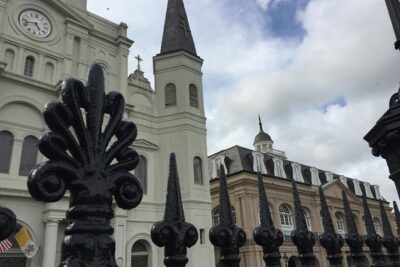 ★ 5.0French Quarter Historical Sights and Stories Walking TourFrom $352,724 reviews
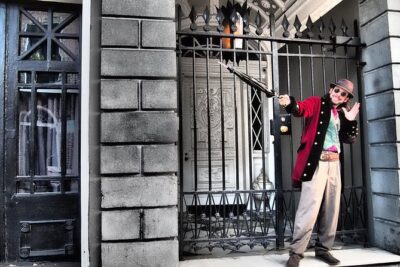 ★ 4.5Ghost and Vampire Walking Tour Of The French QuarterFrom $212,406 reviews
 ★ 4.5City Tour: French Quarter, Garden District & CemeteryFrom $402,209 reviews
 ★ 5.0French Quarter Food Tour: Cajun, Creole and CultureFrom $811,246 reviews
 ★ 5.0French Quarter and More Carriage RideFrom $651,141 reviews
 ★ 5.0French Quarter walking Food Tour Famous Flavors of New OrleansFrom $751,115 reviews
Browse the lists this tour appears in