
Reviewed · FRENCH QUARTER TOURS
French Quarter Walking Tour
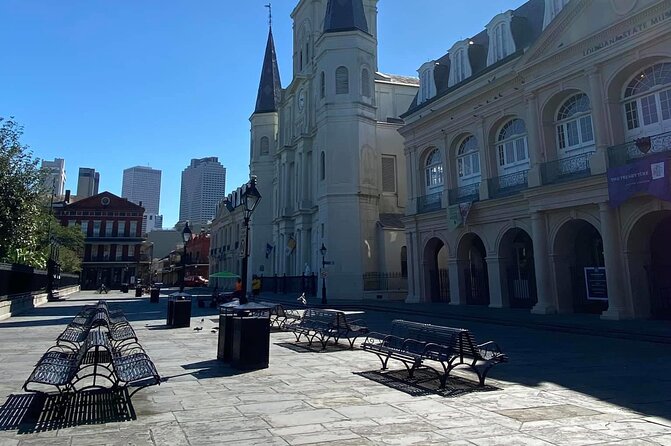
Ghost stories and Bourbon Street lore in under two hours. This French Quarter walk mixes major landmarks with a local guide and a hands-on paranormal twist, all while you get a clear sense of how the neighborhood evolved over time. You’ll be looking at famous New Orleans places like Jackson Square and St. Louis Cathedral, but through a more playful, spook-leaning lens using a real EMF meter.
I like the way the route hits big, recognizable stops without making it feel like a museum day. Cabildo and St. Louis Cathedral anchor the walk with official-looking architecture and strong place-based storytelling, and you also get to experience the Vieux Carré atmosphere on foot. I also like the theater of it: you’re not just hearing spooky tales, you’re using EMF-style equipment during the tour for a more interactive paranormal vibe.
One drawback to weigh: the tour depends on strict timing and smooth check-in, and punctuality can be a concern. If you’re the type who hates last-minute schedule changes, or you want a fully predictable itinerary with no surprises, bring a backup plan and show up early for the start point.
In This Review
- Key Highlights Worth Your Time
- Where You Start: Bourbon Street by Lafitte’s Blacksmith Shop
- What You’re Really Paying For: $35 for Landmarks Plus Paranormal Storytelling
- How the Walk Works: Moderate Pace, No Off-Group Photo Trips
- Lafitte’s Blacksmith Shop Stop: Start With a National Historic Landmark Vibe
- Jackson Square: Big-Name New Orleans With a Story Hook
- St. Louis Cathedral Area: Where Official Looks Meet Legend
- Cabildo and Presbytere: Architecture With a Past Tied to Place
- Ursuline Convent: Faith, Foundations, and a Slower Moment in the Middle of It
- St Anthony’s Garden: A Useful Detour for a Break From the Noise
- The EMF Meter Experience: Fun Interaction With Clear Limits
- Drinks, Bars, and the Bourbon Street Energy You Can’t Ignore
- Group Size and Street Reality: Why Comfort Matters Here
- Punctuality and Consistency: What to Watch Before You Commit
- Who Should Book This Tour (and Who Might Prefer Something Different)
- Should You Book This French Quarter Walking Tour?
Key Highlights Worth Your Time
- Meet at Lafitte’s Blacksmith Shop courtyard gates on Bourbon Street, so you start in the right mood.
- An EMF meter is used during the walk, with ghost, vampire, and voodoo-style stories.
- Landmark stops across the Vieux Carré like Jackson Square, Cabildo, Presbytere, Ursuline Convent, and St. Louis Cathedral.
- A local guide’s take on how the Quarter changed from its beginnings to today.
- Groups up to 28 people with a moderate walking pace on uneven streets.
- Drinks are not included, but you can buy along the route if you want that extra energy.
More ways to wander the Vieux Carre
- New Orleans Food Walking Tour of the French Quarter with Small-Group Option★ 5.0 · 6,118 reviews
- New Orleans French Quarter, Voodoo and Culture Walking Tour★ 4.5 · 2,961 reviews
- French Quarter Historical Sights and Stories Walking Tour★ 5.0 · 2,724 reviews
- Ghost and Vampire Walking Tour Of The French Quarter★ 4.5 · 2,406 reviews
Where You Start: Bourbon Street by Lafitte’s Blacksmith Shop
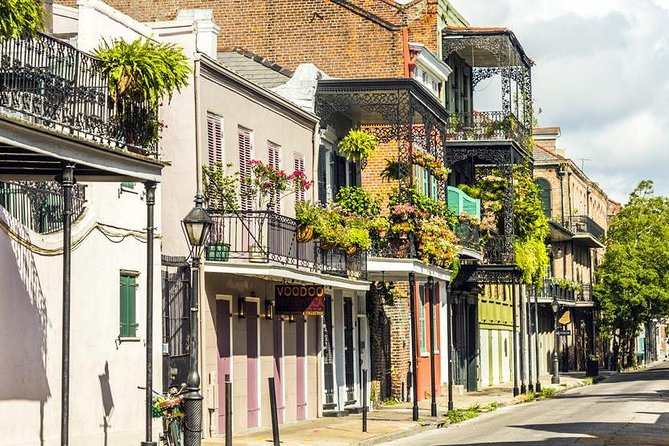
Your tour begins at 941 Bourbon St, at the gates of the courtyard attached to Lafitte’s Blacksmith Shop Bar. The key here is that you do not meet inside—plan to be standing by the courtyard gates and get your bearings fast. If you arrive late, the guide is already rolling, and you may miss the departure.
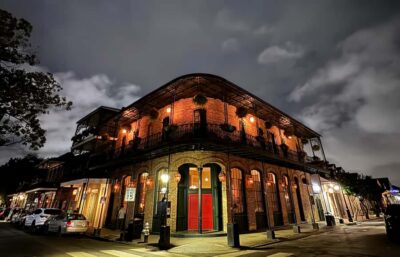
This start matters because it sets the tone right away. Lafitte’s Blacksmith Shop sits on the corner of Bourbon Street and St. Philip Street in a building that was erected between 1772 and 1791 as a French Colonial Louis XV townhouse type (briquette-entre-poteaux construction). Even if you’re not a history nerd, that kind of backstory makes the Quarter feel less like a theme park and more like a place layered with real time.
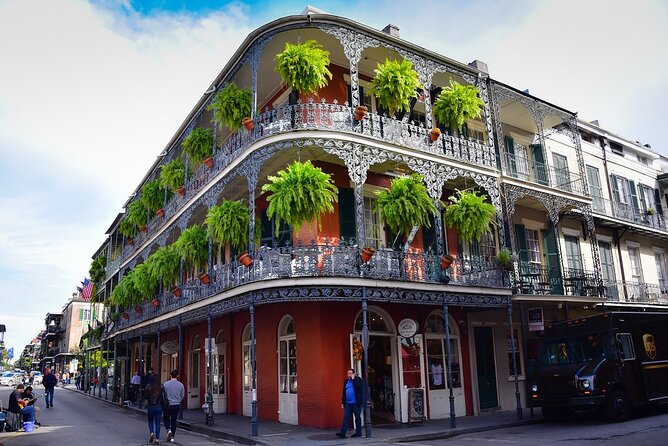
You’ll likely take your first few minutes to match faces, confirm your group, and settle in. After that, you’re off on foot through the Vieux Carré’s tight streets and plazas where Spanish moss and old façades do a lot of the talking for you.
What You’re Really Paying For: $35 for Landmarks Plus Paranormal Storytelling
At $35 per person for a 1–2 hour walking experience, the value depends on what you want most from your New Orleans time.
You’re getting two big components:
1) A guided sweep through major French Quarter landmarks
Stops include Jackson Square, Presbytere, Cabildo, Ursuline Convent, and St. Louis Cathedral. The tour also includes a visit to St Anthony’s Garden during the walk.
2) A guided supernatural angle using a real EMF meter
This is not a vague spooky vibe. The tour uses an EMF meter (ghost/paranormal detector style), and the guide tells ghost, vampire, and voodoo stories.
If you come for straight-up history with minimal entertainment, you may find the paranormal theme takes center stage. But if you like local storytelling—part history, part campfire drama—this ticket can feel like a bargain because you’re getting multiple layers of the Quarter in one go.
One more value point: tickets are mobile, and the tour runs in English, which makes it easier for most visitors to jump in without extra planning.
How the Walk Works: Moderate Pace, No Off-Group Photo Trips
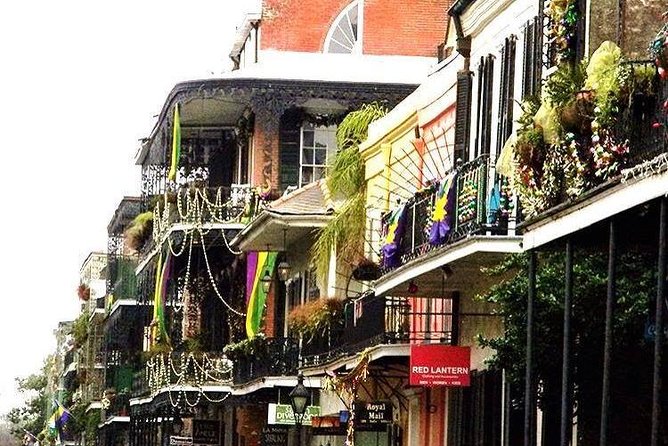
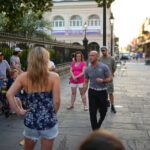
This is a walking tour, so you should expect a steady pace through old streets that are uneven and sometimes narrow. The route stays outdoors and public-facing, and there’s an important rule: you remain with the group the entire time. You cannot wander off for extra photos, and the guide has to keep everyone moving so narration stays on schedule.
Time can stretch. Even within the 1–2 hour window, you may end up out longer if the group hits busier bar areas or there’s waiting around during stops. Some stops include bar windows or to-go-style pauses for people who prefer not to go inside.
Also, audio/video recording is not allowed. That means leave the filming for other days. You can take photos, which helps you remember what you saw.
Lafitte’s Blacksmith Shop Stop: Start With a National Historic Landmark Vibe
Lafitte’s Blacksmith Shop isn’t just a catchy French Quarter landmark to point at. The building itself is recognized as a National Historic Landmark (designated in 1970), and the original construction dates between 1772 and 1791. Even if the tour doesn’t take you inside, the exterior stop gives you a strong anchoring reference for the rest of the walk.
When the guide ties that history into the way the neighborhood developed, it helps you connect dots between different eras of the Quarter. This is especially useful if your first day in New Orleans is when everything still feels new and slightly chaotic.
Practical tip: if you’re sensitive to noise, this start area can be loud and busy. Give yourself a few minutes to settle into the group before the narration gets going.
More of New Orleans on foot

Jackson Square: Big-Name New Orleans With a Story Hook
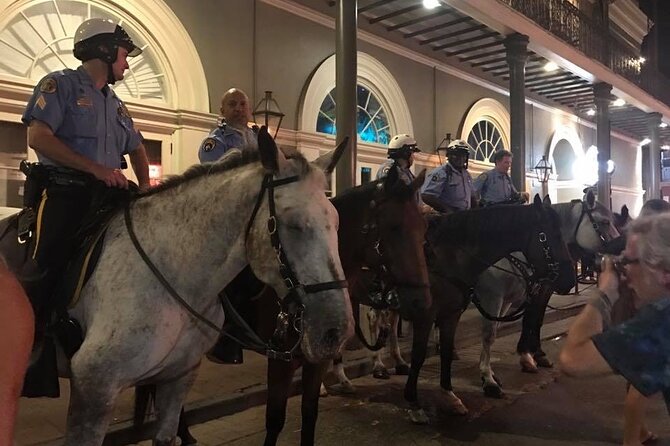
Jackson Square is one of the stops you’ll hit, and it’s the sort of place where you can easily spend hours on your own. Here, you’re there with a guide to frame what you’re seeing and why it matters. Instead of only staring at the architecture and the famous scenery, you’re getting context about how the Quarter’s identity formed and why it looks the way it does.
Jackson Square also works well for the tour’s theme balance. You get public, postcard-ready energy, but the guide brings in the darker and weirder sides of New Orleans storytelling—ghost lore, vampire tales, and voodoo references—so it feels like the square is part of a living narrative, not just a photo spot.
Also note: the tour is described as visiting key landmarks, but there’s no guarantee you’ll be going inside buildings. In practice, you should assume you’re stopping to observe and hear the story from the outside.
St. Louis Cathedral Area: Where Official Looks Meet Legend
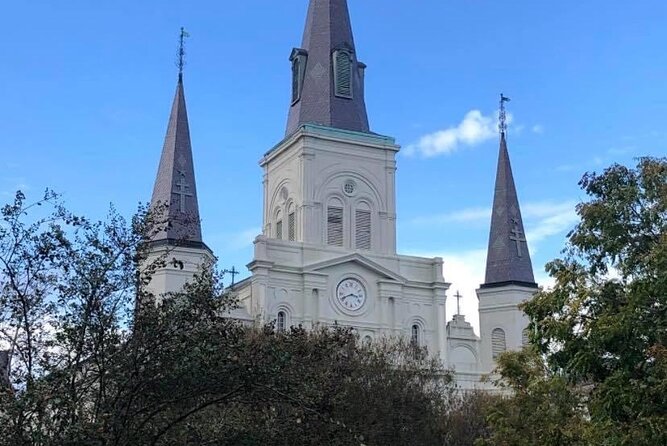
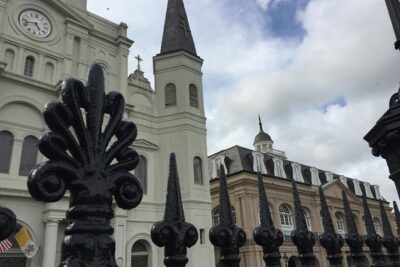
St. Louis Cathedral is another major highlight on the route. This is one of those places where the setting does half the work: the architecture is unmistakable, and the space around it feels historically anchored even when the streets are full of modern visitors.
What you gain from the guided stop is interpretation. A guide can connect religious and civic structures to how neighborhoods evolved and why certain corners became gathering points. That’s what makes this more useful than a quick photo-and-go.
If you’re a first-timer, this is especially valuable. You’ll leave with a clearer mental map of where power and culture visibly concentrate in the French Quarter, and how that connects to the tour’s broader message about transformation over time.
Cabildo and Presbytere: Architecture With a Past Tied to Place
Cabildo and Presbytere appear on the tour route, and those stops are more than just old buildings. They add texture to the story because they’re tied to the Quarter’s political and civic life.
Here’s why I think these stops matter: you get a shift from pure atmosphere to something you can actually orient around. When you understand that certain buildings shaped public life, you’re better able to read the neighborhood later on your own. You’ll notice details more easily because you know what the guide is pointing to.
It’s also a nice contrast to the tour’s supernatural component. Ghost and vampire stories are fun, but pair them with real place-history, and the whole experience feels less like random scares and more like a dramatized tour of how the Quarter’s reputation formed.
Ursuline Convent: Faith, Foundations, and a Slower Moment in the Middle of It
The Ursuline Convent is another listed stop, and it helps balance the tour’s energy. Even if the group keeps moving, a convent setting naturally slows your brain down. It gives you a different kind of historical anchor than a square or a bar corner.
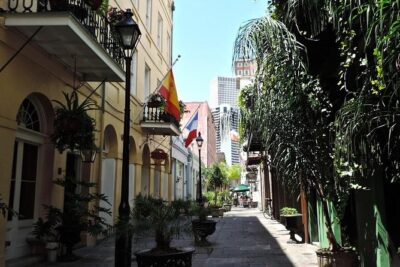
You’ll be walking through the Vieux Carré’s atmosphere—old streets, plazas, and that distinctive Southern look with Spanish moss. The convent stop helps you feel like you’re seeing layers, not just one period of time. It also pairs well with the guide’s theme about the neighborhood transforming through different eras.
If you’re traveling with someone who’s torn between history and the spooky stuff, this stop can be the compromise point where both types of interests get fed.
St Anthony’s Garden: A Useful Detour for a Break From the Noise
You don’t meet at St Anthony’s Garden, but you do get to visit it during the tour. That detail matters because meeting points set expectations, and a garden visit often feels like a breather in a neighborhood known for nonstop activity.
I like tour segments like this because they reset your senses. In a compact area like the French Quarter, you can walk a few blocks and feel mentally overloaded. A garden stop gives you a quick pause, which helps you actually absorb what you hear afterward.
If you want photos, this kind of stop is often easier for them than the densest street corners, though the tour still moves at a schedule pace.
The EMF Meter Experience: Fun Interaction With Clear Limits
This tour uses a real EMF meter, and that’s the centerpiece if you’re chasing a more interactive paranormal experience. The guide incorporates ghost/paranormal detector moments while telling stories connected to ghosts, vampires, and voodoo.
But you should go in with two grounded expectations:
- You should not assume you’ll get a paranormal result on command.
- The tour isn’t promising a guaranteed supernatural encounter.
That’s important because the experience is described as realistic, for entertainment purposes. The goal is to make your walk more engaging by mixing story plus equipment, not to treat it like a science test you can pass or fail.
Practical note: if you use paranormal equipment during the tour, you may have to check it out at the beginning. There’s also a strong emphasis on not losing or damaging equipment, with fees if it goes missing or you fail to return it. Also, guests are allowed to use paranormal equipment during the tour, but it must be checked out and returned to staff before you leave.
One more rule: no video recording of any narrations. Photos are encouraged, so use that for your memories.
Drinks, Bars, and the Bourbon Street Energy You Can’t Ignore
This is also known as the New Orleans Drunk History Tour, but drinks are not included in the ticket price. You can buy alcohol along the route, and the guide/operator may refuse service if someone shows signs of extreme intoxication.
That means the experience might feel more party-adjacent at certain stops, depending on the timing and crowd levels. If you’re sober, that’s still fine—you’re there for the stories and landmark stops—but you should expect the atmosphere to lean toward fun and social.
Also remember: some locations are bar-heavy. Some bar rules can affect kids, and children must be accompanied by an adult. If you’re traveling with a child, the safest move is to check whether a bar stop could be a no-entry situation.
If you want the tour but don’t want the alcohol vibe, it helps to keep water handy and pace yourself through crowded areas.
Group Size and Street Reality: Why Comfort Matters Here
The maximum group size is 28. That’s large enough for energy, small enough that you should still be able to hear your guide most of the time—assuming you’re near the front.
Comfort matters because the French Quarter streets are old and uneven. The tour is outdoors and you should wear shoes you can walk in comfortably for up to two hours (or a bit longer if stops run slow). The operator is not responsible for injuries due to uneven streets, so treat this like a real walking day.
It also helps to bring a weather plan. The tour runs rain-or-shine, and New Orleans weather can swing fast. If you’re going in warm months, you’ll want sun protection; cooler nights call for an extra layer.
Punctuality and Consistency: What to Watch Before You Commit
Here’s the honest part. This kind of walking tour lives or dies by timing. Check in promptly at the start point on Bourbon Street. If you miss departure, you can’t just relocate to catch up.
There’s also a chance of cancellation if minimum numbers aren’t met, with notice sent up to about an hour before departure. Plus, cancellations can happen due to weather or other acts of God.
So my advice is simple: if this tour is a key part of your day, build a backup plan. Keep another activity nearby that doesn’t depend on the tour running on time.
This is not me trying to scare you off. It’s me trying to keep your vacation stress low.
Who Should Book This Tour (and Who Might Prefer Something Different)
You should book if you want:
- A one-shot French Quarter introduction with major landmarks like Jackson Square and St. Louis Cathedral
- A guide who tells stories that mix history with ghost, vampire, and voodoo themes
- A more interactive feel from the EMF meter component
- A moderate walking plan that stays outdoors and keeps you moving
You might skip it if you want:
- Only academic history with lots of time inside official sites (this walk is structured for outdoor stops and schedule-driven pacing)
- A quiet, low-theater experience where paranormal content is minimal
- A tour with zero risk of last-minute changes, since outdoor walking tours can be affected by weather, crowding, and minimum-group thresholds
If you’re flexible, open-minded, and you like New Orleans for its storytelling side as much as its architecture, this can be a fun fit.
Should You Book This French Quarter Walking Tour?
I’d book it if your perfect New Orleans day includes walking, landmark photos, and a guide who keeps the stories moving. The $35 price works best when you’re excited by the paranormal angle, especially the EMF meter interaction, while still getting anchored by real sites like Cabildo, Jackson Square, and St. Louis Cathedral.
If you prefer strict, museum-style history or you hate any chance of schedule disruption, choose a different format. And if you do book, treat it like an outdoor event: arrive early, wear good shoes, and keep a backup plan so your day stays smooth.
If you want French Quarter energy with a spooky wink and some real orientation, this is a solid way to start.
More Tours in New Orleans


More Tour Reviews in New Orleans
More of the French Quarter

Just added to The New Orleans Traveler


French Quarter Tours, compared.
 ★ 5.0Food Walking Tour of the French Quarter with Small-Group OptionFrom $756,118 reviews
 ★ 4.5French Quarter, Voodoo and Culture Walking TourFrom $272,961 reviews
 ★ 5.0French Quarter Historical Sights and Stories Walking TourFrom $352,724 reviews
 ★ 4.5Ghost and Vampire Walking Tour Of The French QuarterFrom $212,406 reviews
 ★ 4.5City Tour: French Quarter, Garden District & CemeteryFrom $402,209 reviews
 ★ 5.0French Quarter Food Tour: Cajun, Creole and CultureFrom $811,246 reviews
 ★ 5.0French Quarter and More Carriage RideFrom $651,141 reviews
 ★ 5.0French Quarter walking Food Tour Famous Flavors of New OrleansFrom $751,115 reviews
Browse the lists this tour appears in