
Reviewed · FRENCH QUARTER TOURS
Small Group Local’s Guide to the French Quarter Tour
French Quarter stories sound better on foot. This $37, 2-hour small-group walk keeps you moving through New Orleans’ French Quarter while a local guide connects landmark names to what they mean in real life.
I like the tight hit list: Jackson Square, Bourbon Street, Royal Street, St. Louis Cathedral, and Cabildo, with the stops marked as free of ticket costs. I also like that guides run the walk like a proper group activity, keeping everyone together and answering questions, with some guides praised for humor and even actor-level performance.
The only catch is pacing. This tour is about two hours on paper, but if you’re hoping for ultra-deep history at every corner, you might want a little more time per stop; and while the plan says it ends back at the meeting point, your day can still shift if the walk runs longer.
In This Review
- Key things to know before you walk
- What you’re really buying: a local walk, not a checklist
- Start on Toulouse St: the easiest way to plug this into your day
- Jackson Square: the story center of the French Quarter
- Bourbon Street: party energy with historical roots
- French Quarter walking segment: the “you’ll notice it now” part
- Royal Street: history in motion, past and present
- A pass by the Pharmacy Museum: medical history, NOLA style
- St. Louis Cathedral: religion as part of the neighborhood story
- Cabildo: a fire, a rebuilding story, and why it matters
- Price and value: $37 for a focused 2-hour orientation
- How long it really takes: stick to the estimate, but plan with slack
- Guides and storytelling style: what you can hope for
- Who should book this tour, and who might want something else
- Should you book this French Quarter Tour?
- FAQ
- FAQ
- How long is the French Quarter tour?
- What does the tour cost?
- What stops are included?
- Are there admission tickets you need to pay for the stops?
- Where does the tour start?
- What language is the tour offered in?
- How big is the group?
- Is a mobile ticket used?
- Are service animals allowed?
- What is the cancellation window for a full refund?
- Is the tour easy for most people to join?
Key things to know before you walk
- Small group (max 15) so you get real time for questions, not just a lecture.
- Mobile ticket makes check-in easier.
- Major French Quarter stops packed in (Jackson Square, Bourbon Street, Royal Street, St. Louis Cathedral, Cabildo) without added entry fees listed for those sites.
- Pharmacy Museum pass-by adds a medical-history twist without turning the tour into a museum day.
- English-language guide with storytelling focus, which works well for adults and teens.
- Starts at 815 Toulouse St near public transportation, so you can build it into a larger day.
More ways to wander the Vieux Carre
- New Orleans Food Walking Tour of the French Quarter with Small-Group Option★ 5.0 · 6,118 reviews
- New Orleans French Quarter, Voodoo and Culture Walking Tour★ 4.5 · 2,961 reviews
- French Quarter Historical Sights and Stories Walking Tour★ 5.0 · 2,724 reviews
- Ghost and Vampire Walking Tour Of The French Quarter★ 4.5 · 2,406 reviews
What you’re really buying: a local walk, not a checklist
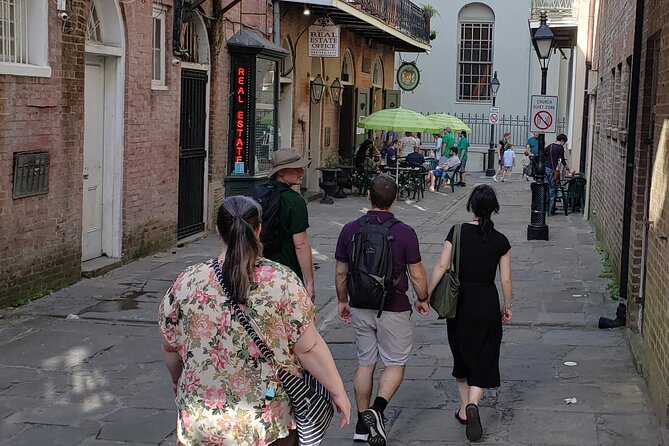
This tour is built around the idea that the French Quarter makes more sense when someone explains it as you go. You’re paying for a guide who can connect architecture, street-level life, and the neighborhood’s past and present to what you’re seeing right now.
The pace matters here. At roughly 2 hours, you’re getting a sweep of the neighborhood’s main landmarks and nearby themes, which is ideal when you’re short on time. If you want one topic taken slowly through multiple layers, you may find this tour feels more like orientation than a full textbook.
That said, the overall value looks strong: $37 gets you an experienced guide, a walk through the Quarter’s key points, and multiple stops marked as free.
Start on Toulouse St: the easiest way to plug this into your day
The meeting point is 815 Toulouse St, and the tour runs on foot. That location is convenient because it drops you in the thick of the Quarter fast, without long transit or complicated logistics.
A practical tip: if you plan to do anything right after the tour, give yourself a small buffer. The official description says the tour ends back at the meeting point, but real-world timing can vary depending on the group and how the guide paces stories. This is especially important if you’re trying to catch a tight reservation.
Also, bring comfortable walking shoes. Even when the stops are short, you’re covering enough ground that blisters can ruin the vibe faster than you’d expect.
Jackson Square: the story center of the French Quarter
Your first stop is Jackson Square, described as the heart of French Quarter history. In plain terms, this is your orientation stop: it sets the frame for what you’ll notice later—why these streets look the way they do, and why the Quarter’s identity isn’t just about what happens there at night.
You’ll spend about 20 minutes here, which is long enough to get context and short enough to keep moving. I like this format because it prevents the classic sightseeing trap: spending so long on the first stop that the rest of the tour becomes a rush.
If you’re the type who asks follow-up questions, this is a good place to start. The guide’s explanations often shape how you interpret everything else.
Bourbon Street: party energy with historical roots
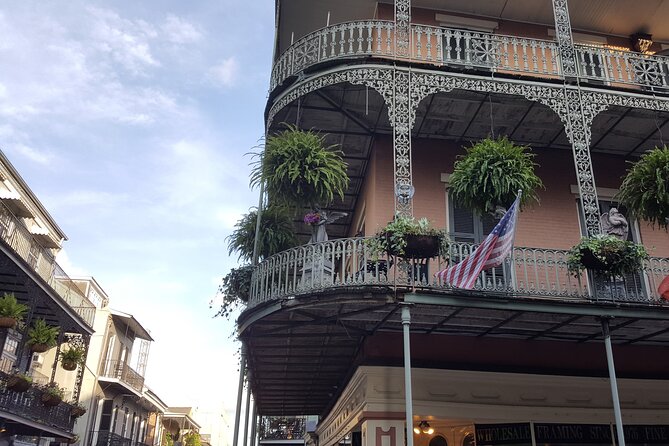
Next up is Bourbon Street, about 20 minutes. The pitch here is smart: it’s more than a party strip. Your guide connects it to deeper historic roots in New Orleans and even wider American history.
This stop works best if you’re open to nuance. You can look at Bourbon as a loud street and still learn something real about why it developed the way it did. The guide’s job is to pull you past stereotypes and into the why behind the signs, buildings, and street rhythm.
One more practical note: Bourbon can be noisy, so it helps if you wear a calm mindset. Guides who keep good group momentum make it easier to hear the stories even when the street is doing its own thing.
More guided New Orleans outings





French Quarter walking segment: the “you’ll notice it now” part
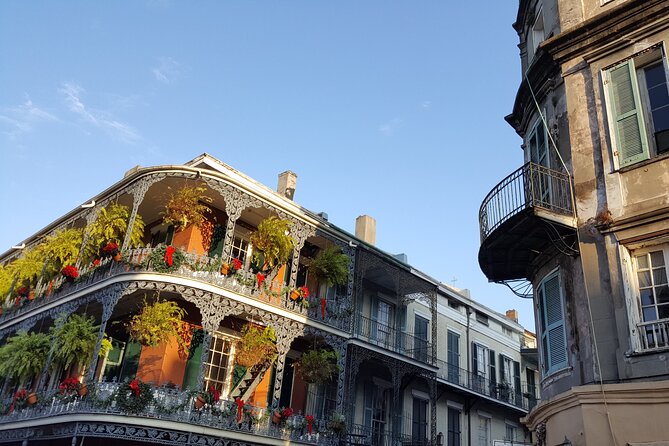
After Bourbon, the tour covers the French Quarter as a whole, with about 30 minutes set aside to show the side that’s different from what people see on the surface. This is where the walk becomes less like a route and more like a guided reading of the neighborhood.
This segment is also a good place to pay attention to what catches your eye. Guides often point out architectural details and street-level patterns that you’d otherwise pass by without noticing. If you care about culture and design, this is usually the most satisfying stretch of the walk.
Because you’re moving through multiple blocks, the stories can feel lighter than they do at a museum door—but that’s also the advantage. You’re learning in real time, not waiting to see if the information lands later.
Royal Street: history in motion, past and present
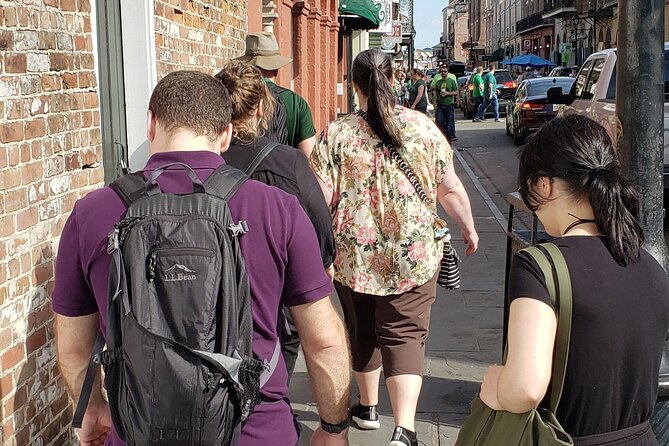
Then you head to Royal Street for about 20 minutes. The promise is that the history here is something you might not expect, both in the past and the present.
This is a useful stop because it balances Bourbon’s intensity. Royal often feels more about style, craft, and how the neighborhood’s identity evolves. Even if you’re not planning to shop or browse, it’s worth paying attention to what the guide highlights, because it changes how you read the street.
If you like photo walks, this is a good time to slow down just a touch at the edges of the group’s route. Take a few shots where the guide’s commentary makes the setting feel meaningful, not just pretty.
A pass by the Pharmacy Museum: medical history, NOLA style
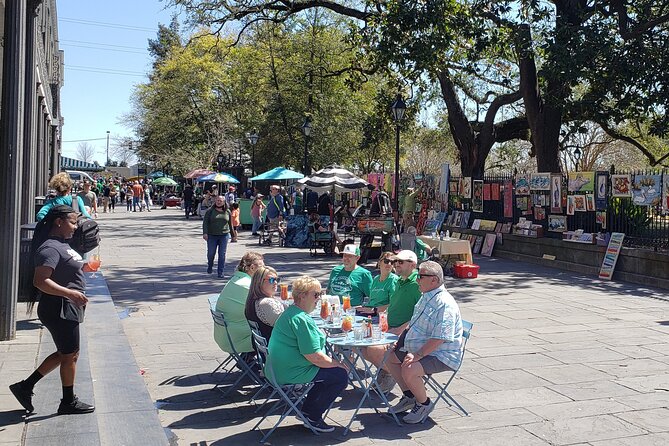
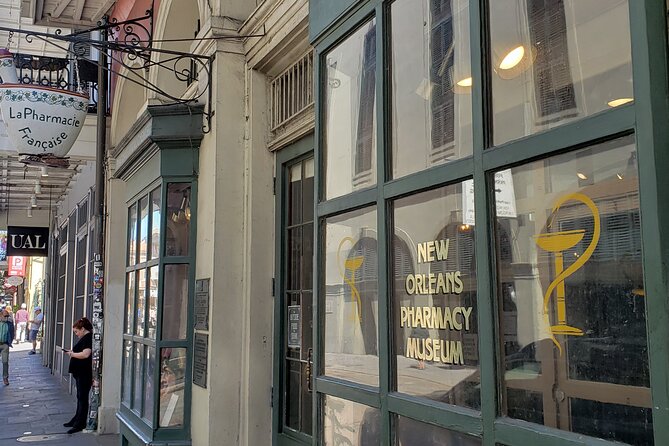
The tour includes a pass by the Pharmacy Museum, with a stop-and-learn moment about medical history in New Orleans. It’s described as one of the favorites, and it’s the kind of twist that keeps the tour from becoming purely scenic.
Because this is a passing stop, you should expect the learning moment to be brief, not a full museum visit. Still, it’s a great add-on if you enjoy unusual local angles, especially when a guide can connect medical history to everyday life in the city’s story.
St. Louis Cathedral: religion as part of the neighborhood story
Next is St. Louis Cathedral, a shorter stop at about 10 minutes. The tour frames it as having deep religious ties into New Orleans and American history, and the guide stops by to explain how religion played a part in the city’s history.
Even with the short time, this stop helps you understand the Quarter as more than entertainment geography. It’s a reminder that the neighborhood’s identity isn’t only built from music, food, and nightlife—it also includes formal institutions and community beliefs.
If you’re coming in with a first-timer mindset, this is the point where the tour starts to click. The stories you heard at Jackson Square and Bourbon become easier to connect to real places you can see.
Cabildo: a fire, a rebuilding story, and why it matters
The final landmark stop is Cabildo, also about 10 minutes. Here the guide focuses on the fact that it was destroyed by fire in the 18th century, plus the rebuilding of New Orleans after that kind of loss.
This stop is all about cause and effect. It turns a famous building into an actual timeline point: something happened, the city responded, and that response shaped what you see later.
I like that the tour ends on a story that’s not just about what’s visible today. It gives you a mental map that goes beyond sightseeing, especially if you enjoy understanding how cities survive change.
Price and value: $37 for a focused 2-hour orientation
At $37 per person, this tour sits in the affordable range for a guided walk that covers multiple major landmarks. You’re not paying extra for the stops listed as free, and you’re getting an experienced guide who runs the group on foot.
The real value is time. You could walk the Quarter on your own, sure. But the guide’s job is to connect dots quickly—history, street identity, and why each place feels like it does. For first-day visitors, that shortcut can be worth the price.
Also, with a max group size of 15, you’re less likely to feel like you’re stuck behind a crowd. That matters on a walking route.
How long it really takes: stick to the estimate, but plan with slack
The tour is described as lasting about 2 hours and the stops are short, often 10–20 minutes. That sounds tidy, and most of the experience should feel manageable.
Still, keep your schedule flexible. One reason: the tour includes multiple moving pieces—street noise, walking pace, and how much the guide spends answering questions. If your day is tightly booked right after the tour, give yourself a little extra time to avoid stress.
A small practical move: plan your next activity somewhere close to the French Quarter rather than across town, just in case you need a few minutes to regroup at the end.
Guides and storytelling style: what you can hope for
This tour’s standout theme is the guide as a storyteller. Multiple named guides in recent tours are praised for being entertaining while staying on task and interactive. Some guides are described as using humor during noisy conditions, and one is even mentioned as an actor—so you may get a more performance-style delivery than a typical walking lecture.
That matters because the French Quarter can feel like information overload without a filter. When a guide keeps the tone engaging and the group safety in mind, the whole walk feels easier to handle.
If you love Q&A, you’re in a good spot. The tour format is short-stop, street-talk, and question-friendly.
Who should book this tour, and who might want something else
This is a strong fit if you:
- Want a quick first taste of the French Quarter’s main landmarks
- Like history explained through real streets, not just museum walls
- Prefer a guided walk over a self-guided scavenger hunt
- Plan to be in the area with limited time
You might consider a different option if you:
- Want deep, stop-by-stop historical detail without time pressure
- Are trying to squeeze in a long list of reservations right back-to-back after the tour
Should you book this French Quarter Tour?
If you’re visiting New Orleans for the first time and you want a guided way to get your bearings, I think this tour is a smart booking. The price is reasonable for the number of landmark stops, the group stays small, and the guide-driven stories help you understand what you’re looking at.
Just build in schedule slack. Even when the plan sounds tight, walking tours depend on street conditions and pacing. If you treat it as orientation with good storytelling—rather than a slow, exhaustive history lesson—you’ll likely have a great time.
FAQ
FAQ
How long is the French Quarter tour?
It runs for about 2 hours.
What does the tour cost?
The price is $37.00 per person.
What stops are included?
The tour includes Jackson Square, Bourbon Street, the French Quarter area, Royal Street, St. Louis Cathedral, and Cabildo, plus a pass by the Pharmacy Museum.
Are there admission tickets you need to pay for the stops?
The stops listed in the tour description are marked as admission ticket free.
Where does the tour start?
It starts at 815 Toulouse St, New Orleans, LA 70112.
What language is the tour offered in?
The tour is offered in English.
How big is the group?
The maximum group size is 15 travelers.
Is a mobile ticket used?
Yes, the tour uses a mobile ticket.
Are service animals allowed?
Yes, service animals are allowed.
What is the cancellation window for a full refund?
You can cancel up to 24 hours in advance of the experience for a full refund.
Is the tour easy for most people to join?
The tour notes that most travelers can participate, and it is near public transportation.
More Tours in New Orleans



More Tour Reviews in New Orleans
More of the French Quarter


Just added to The New Orleans Traveler


French Quarter Tours, compared.
 ★ 5.0Food Walking Tour of the French Quarter with Small-Group OptionFrom $756,118 reviews
 ★ 4.5French Quarter, Voodoo and Culture Walking TourFrom $272,961 reviews
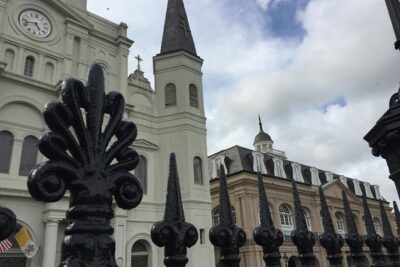 ★ 5.0French Quarter Historical Sights and Stories Walking TourFrom $352,724 reviews
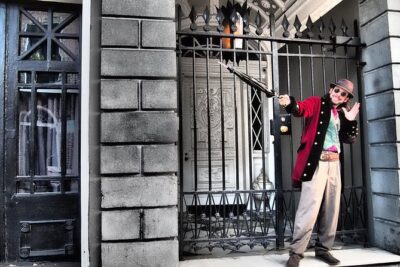 ★ 4.5Ghost and Vampire Walking Tour Of The French QuarterFrom $212,406 reviews
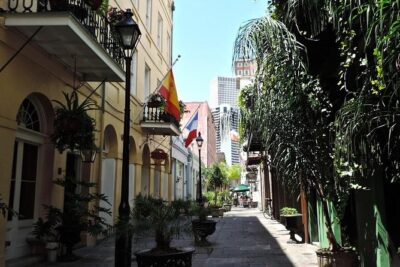 ★ 4.5City Tour: French Quarter, Garden District & CemeteryFrom $402,209 reviews
 ★ 5.0French Quarter Food Tour: Cajun, Creole and CultureFrom $811,246 reviews
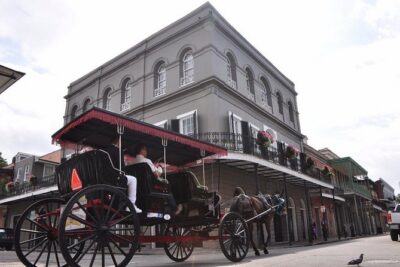 ★ 5.0French Quarter and More Carriage RideFrom $651,141 reviews
 ★ 5.0French Quarter walking Food Tour Famous Flavors of New OrleansFrom $751,115 reviews
Browse the lists this tour appears in