

Reviewed · GARDEN DISTRICT TOURS
New Orleans: Garden District Guided Walking Tour
A leafy stroll through New Orleans history. This Garden District walk pairs ornate antebellum architecture stories with a memorable stop at Lafayette Cemetery No. 1—with your guide explaining the above-ground burial tradition that makes the neighborhood so distinctive.
I especially love how the walk turns pretty streets into a timeline: you hear how the district formed after the Louisiana Purchase and why so many grand homes took shape here. I also like that the guide role feels central—names like James, Lesley, Yvonne, Libby, Renee, and Jackie show up repeatedly in feedback, and the common theme is smart storytelling plus a good sense of humor.
The main drawback to plan for is the walking surface. The area has uneven streets, and you’ll want sturdy shoes even though the tour is wheelchair accessible.
In This Review
- Key highlights to look for
- Walking the Garden District at the right speed for 2 hours
- Antebellum architecture: why the Garden District looks the way it does
- Lafayette Cemetery No. 1: a National Historic Landmark peek through the gates
- Above-ground burial customs explained like a local story
- Why the guide makes or breaks this kind of tour
- Where the tour ends: Magazine Street for shopping and a real meal
- Meeting point and how to prepare for the walk
- Comfort and street reality: uneven surfaces and shoe choice
- Price check: is $35 worth it for 2 hours?
- Who this tour suits best—and who might want a different plan
- Final call: should you book Lucky Bean Tours in the Garden District?
- FAQ
- How long is the Garden District guided walking tour?
- How much does it cost?
- Where does the tour start?
- Will I be able to enter Lafayette Cemetery No. 1?
- Is the tour wheelchair accessible?
- Are pets allowed?
- Are there rules about smoking?
Key highlights to look for

- Ornate Garden District mansions explained as a real “why it looks like this” story
- Lafayette Cemetery No. 1 as a National Historic Landmark stop, with a peek through the gates (not a full public visit)
- Above-ground interment customs explained in plain language as you see the cemetery structure up close
- A guide-led, question-friendly pace, with multiple guides praised for humor and responsiveness
- Magazine Street finish so you can roll straight into shopping and dining right after the tour
Keep strolling the oak-lined Garden District
- New Orleans Garden District History Walking Tour★ 5.0 · 2,879 reviews
- New Orleans City Tour: French Quarter, Garden District & Cemetery★ 4.5 · 2,209 reviews
- New Orleans Small-Group Garden District Walking Tour★ 5.0 · 1,384 reviews
- New Orleans City and Cemetery Tour with Garden District Stroll★ 4.5 · 766 reviews
Walking the Garden District at the right speed for 2 hours

This is the kind of tour that’s made for getting your bearings without rushing. You’ve got about 2 hours of guided walking, which is long enough to connect the dots (history, architecture, and local habits) but short enough that you can still enjoy the neighborhood after.
From what you’re told to expect, you’ll start with a quick orientation to New Orleans and the Garden District. Then the route keeps moving along tree-lined streets where the homes, gates, and gardens do a lot of the “visual teaching” for you.
You should plan your shoes and your stamina first. The neighborhood streets can be uneven, so the tour works best if you’re comfortable walking for an extended block-to-block stretch. If you’re bringing a wheelchair, the tour is listed as wheelchair accessible, but you’ll still want to be ready for the realities of older sidewalks.
Antebellum architecture: why the Garden District looks the way it does
The Garden District has a look that’s easy to notice and harder to explain. This walk focuses on the origins of its antebellum-style architecture—so you’re not just admiring facades, you’re learning what shaped them.
A big part of the story is the district’s early growth as a wealthy suburb after the Louisiana Purchase. Your guide frames the neighborhood’s development around people who took risks, speculated, and chased bigger dreams. That human angle matters, because it helps you understand why the area feels planned and status-conscious, not random.
As you go, you’ll pick up details that connect architecture to everyday life—things like how homes were positioned, how properties signaled wealth, and how the neighborhood’s layout supported that suburban identity. The goal isn’t to memorize terms. It’s to learn how to “read” a building and a street at the same time.
If you enjoy architecture for its clues—materials, symmetry, porch lines, gate styles—this tour gives you context that makes those clues meaningful. And if you’re more of a history person, the same story explains the people behind the buildings, not just the buildings themselves.
Lafayette Cemetery No. 1: a National Historic Landmark peek through the gates

One stop changes the feel of the whole walk: Lafayette Cemetery No. 1. This site is a National Historic Landmark, and the tour is built around a special kind of access—you’ll peek inside the gates, because it’s currently closed to the public.
That limitation is important. You shouldn’t expect a full on-site visit like you’d get at an open museum. Instead, you get a guided look that still makes the cemetery’s design and above-ground structure click.
Your guide also explains why New Orleans burial customs often used above-ground interment. Seeing the cemetery’s form up close helps you understand the logic behind the tradition. It’s the kind of lesson that sticks because you’re learning from what’s right there in front of you, not from abstract descriptions.
Some guides also bring pop-culture connections into the conversation. If you’ve got a familiarity with the kind of gothic storytelling that makes this cemetery famous in fiction, you may find the discussion hits that same tone—without losing the real history.
Above-ground burial customs explained like a local story

Above-ground burial can sound strange until someone translates it into a practical explanation. On this tour, the cemetery portion centers on the customs themselves—how the above-ground approach shaped what you see, how families interacted with these spaces, and how the cemetery became part of neighborhood identity.
This matters because it changes how you look at the rest of the Garden District. After the cemetery explanation, the district doesn’t just read as pretty homes and tidy streets. It also reads as a place with deep continuity—where even the resting places reflect local culture.
The cemetery section also gives you a break in the walking rhythm. You’ll pause, listen, and connect details in a way that helps the rest of the tour land better.
More of New Orleans on foot





Why the guide makes or breaks this kind of tour
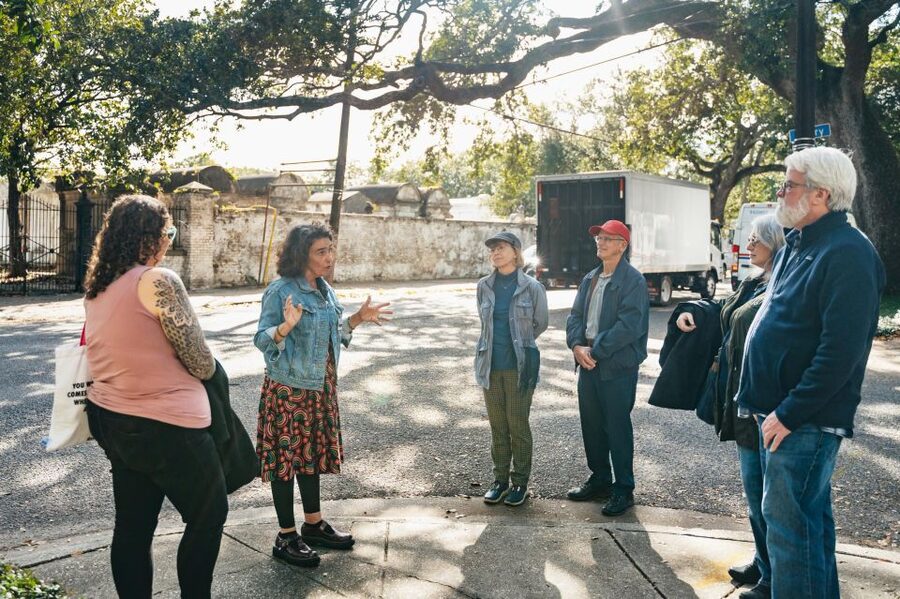
This experience lives and dies with the guide, and the feedback around guides like James comes up again and again. The common theme isn’t just that guides know facts. It’s that they tell the story in a way that feels human—funny, engaging, and responsive to questions.
James shows up frequently in reviews for humor and for adjusting to the moment. In one case, the weather shift didn’t derail the day, and the guide kept the group moving while still getting the important points across. Another recurring praise point: guides offer onward tips—food ideas and next places to visit—so the tour doesn’t end like an island.
Other names—Lesley, Yvonne, Libby, Renee, Jackie, and Betsy—also appear with similar feedback: clear explanations, pride in the neighborhood, and a steady pace that doesn’t feel rushed. Some guides are even described as adapting to what you ask, including fitting in additional houses people want to see along the route.
One underrated detail: question time. The best part of a history walk is when you can ask what you’re wondering. This tour format is built for that, and the guide style is consistently described as welcoming questions rather than lecturing.
Where the tour ends: Magazine Street for shopping and a real meal
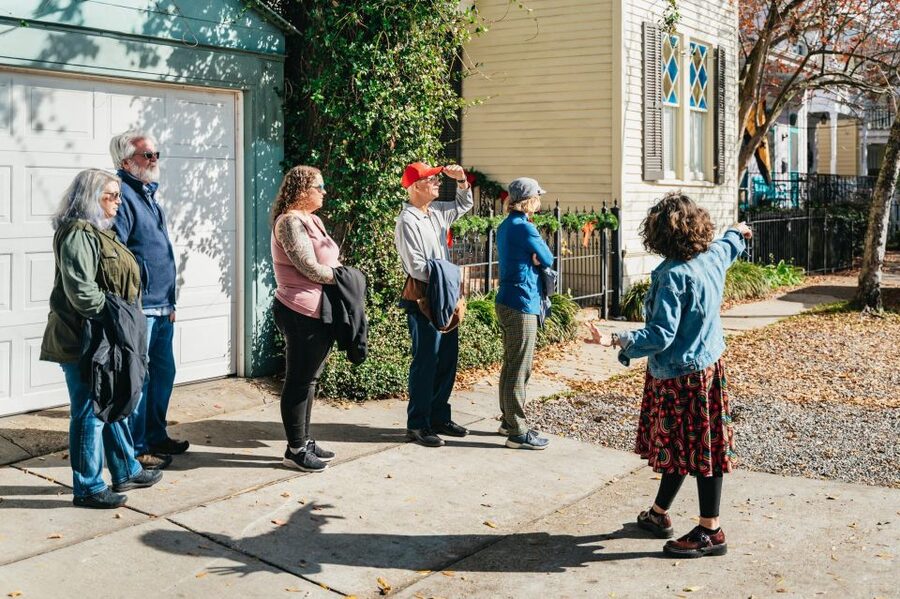
You finish near Magazine Street, which is exactly what you want after a history-and-architecture walk. This is one of the most practical parts of the experience: it gives you an easy, familiar next step without sending you off into planning chaos.
Magazine Street is a good place to stretch your legs a bit longer, browse shops, and grab lunch or dinner. If you prefer to keep the momentum, you can treat the tour as your “starter course” and let Magazine Street be your main dish.
This also works well if your group has mixed interests. Architecture fans get the Garden District story, and shop-and-snack people get their reward right after.
Meeting point and how to prepare for the walk

The meeting point may vary depending on the option booked, so it’s smart to confirm the exact location when you book your time slot. Once you’re there, keep your focus on two things: the walk itself and the cemetery timing.
Because the tour includes a cemetery stop with gates only (not a full public visit), it helps to arrive ready to listen. Don’t assume you’ll have time for long wandering on your own at that stop.
Finally, follow the simple rules: no smoking and no pets. If you’re traveling with animals, you’ll need to plan a separate arrangement.
Comfort and street reality: uneven surfaces and shoe choice

Even if you’re only walking about two hours, the Garden District’s streets can be uneven. The tour specifically recommends sturdy walking shoes, and that’s not a throwaway tip.
Wheelchair users should know the tour is listed as wheelchair accessible, but the area’s surface challenges still apply. In practice, that means you’ll want to go in prepared—comfortable grip, good weather timing, and patience if the route includes small bumps and transitions.
If you’re planning for warm weather, remember you’ll be outdoors and moving between stops. If you’re visiting in cooler months, think layers. Either way, bring what helps you stay comfortable for a continuous guided walk.
Price check: is $35 worth it for 2 hours?
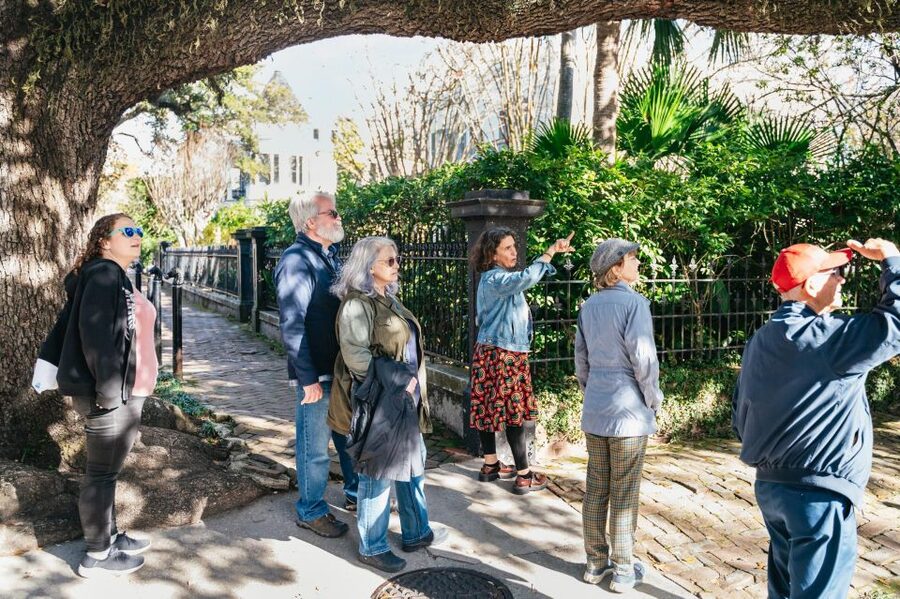
At $35 per person for a 2-hour guided walk, the value comes from what’s included: a live guide and a structured route that helps you interpret what you’re seeing.
If you try to do this on your own, you can absolutely wander the Garden District. But you’ll likely miss the “why” behind the architecture and the meaning behind the cemetery customs. This tour takes those hard-to-figure-out pieces and makes them understandable while you’re standing in the right place.
I also think the cost makes sense because the tour packs in two major appeals:
- a long visual setting of mansions and streets
- a cemetery segment connected to real local burial traditions
When a tour guide brings humor, answers questions, and even shares food and next-stop tips, the $35 starts to feel less like paying for walking and more like paying for time-saving interpretation.
Who this tour suits best—and who might want a different plan
This is a strong match if you like:
- architecture and want the story behind the style
- history told through neighborhoods, not just monuments
- an efficient itinerary that ends with a practical next stop
It’s also a good choice if you want a guide-led look at Lafayette Cemetery No. 1, especially since access is limited and you’ll want context for what you can and can’t do.
If you’re expecting to freely enter the cemetery like a standard public attraction, plan differently. The tour is designed for a gated peek because the cemetery is currently closed to the public.
Final call: should you book Lucky Bean Tours in the Garden District?
I’d book this tour if you want to leave the Garden District understanding more than you can see at first glance. The combination of tree-lined streets, architecture origins after the Louisiana Purchase, and the cemetery stop makes this a smart use of limited time.
It’s also worth booking if you care about guide quality. The repeated praise for guides like James and the consistent notes about humor, pacing, and question-friendly explanations are exactly what you want in a walking history tour.
Just go in with the right expectations: wear solid shoes, bring curiosity, and remember the cemetery segment is a peek through the gates, not a full public visit. If that fits your style, this one is an easy yes.
FAQ
How long is the Garden District guided walking tour?
The tour lasts 2 hours.
How much does it cost?
It costs $35 per person.
Where does the tour start?
The meeting point may vary depending on the option booked.
Will I be able to enter Lafayette Cemetery No. 1?
You’ll peek inside the gates of Lafayette Cemetery No. 1. The cemetery is currently closed to the public.
Is the tour wheelchair accessible?
Yes, it’s listed as wheelchair accessible. The area has uneven walking surfaces, so sturdy mobility support is strongly recommended.
Are pets allowed?
No, pets are not allowed.
Are there rules about smoking?
Yes, smoking is not allowed.
More Tours in New Orleans




More Tour Reviews in New Orleans

Garden District, Block by Block




Just added to The New Orleans Traveler






Garden District Tours, compared.
 ★ 5.0Garden District History Walking TourFrom $352,879 reviews
 ★ 4.5City Tour: French Quarter, Garden District & CemeteryFrom $402,209 reviews
 ★ 5.0Small-Group Garden District Walking TourFrom $351,384 reviews
 ★ 4.5City and Cemetery Tour with Garden District StrollFrom $55766 reviews
 ★ 5.0Highlights of the Garden District Walking TourFrom $37492 reviews
 ★ 4.8Garden District TourFrom $28480 reviews
 ★ 5.0Garden District Home and History Walking TourFrom $26470 reviews
 ★ 4.5NOLA Garden District and Gates of Lafayette Cemetery TourFrom $25444 reviews
Browse the lists this tour appears in