
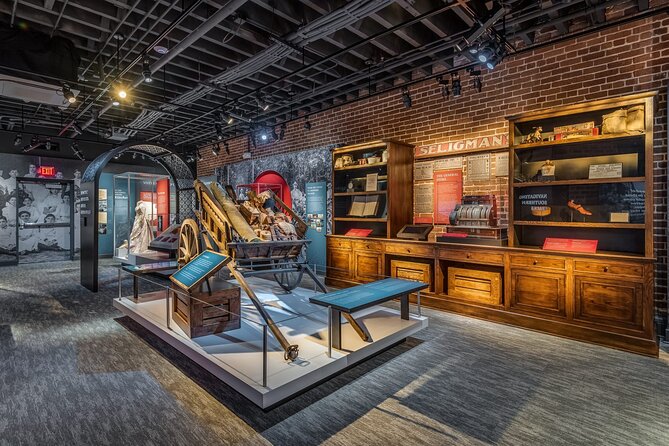
Reviewed · MUSEUMS
Museum of the Southern Jewish Experience in New Orleans
Jewish history in the American South has gravity. I like the convenience of pre-booked mobile tickets, and you’ll get to explore both the permanent galleries and temporary exhibitions at your own pace.
One possible consideration: plan for about 1.5 hours, because if you’re the kind of reader who wants every label, you may feel time-pressed. Also, the schedule provided here lists a Monday 10:00 AM–5:00 PM opening window, so check the day you’re aiming for.
In This Review
- Key Points You Should Know Before You Go
- A Self-Paced 90-Minute Mission: Southern Jewish Life in New Orleans
- Tickets, Timing, and Getting In Without Headaches
- Your One Main Stop: Inside the Museum’s Permanent Galleries
- Temporary Exhibitions: Why Extra Rotation Can Improve the Visit
- Artifacts, Stories, and Videos That Make the South Feel Real
- The Film, Bubbe, and the Emotional Side of the Experience
- Staff Help That Changes How the Exhibits Click: Meet Mark
- Gift Shop Time: The Practical Way to Take the Story Home
- Is This the Right Museum for You? (And Who Might Skip It)
- Should You Book the Museum of the Southern Jewish Experience?
- FAQ
- How much does admission cost?
- How long should I plan for the museum?
- Do I need a printed ticket?
- What are the opening hours in the provided schedule?
- Can I cancel for free?
- Are service animals allowed?
Key Points You Should Know Before You Go

- Pre-booked mobile entry: choose your admission day/time and use a mobile ticket
- Both permanent and temporary exhibits: you’re not stuck seeing just one side of the story
- Self-paced visit: you control your pace instead of orbiting a group
- Strong multi-media storytelling: artifacts, stories, and videos help connect the dots
- A film that lands emotionally: there’s a moving film element built into the experience
- Staff insights matter: one staff member named Mark gets singled out for clarifying the bigger picture
More museums worth an afternoon
- The National WWII Museum Admission Ticket New Orleans★ 5.0 · 2,202 reviews
- French Quarter Walking Tour With Comp 1850 House Museum Admission★ 5.0 · 781 reviews
- New Orleans: The National WWII Museum Ticket★ 4.8 · 704 reviews
- The National WWII Museum Campus Pass plus 4-D Film★ 5.0 · 672 reviews
A Self-Paced 90-Minute Mission: Southern Jewish Life in New Orleans
The Museum of the Southern Jewish Experience is built around a simple idea: Jewish life in the American South shaped—and was shaped by—the places where people settled. You’re not just looking at dates and places. You’re watching a culture move through time: identity, acceptance, and how communities adapt when the world around them changes.
I like that the museum doesn’t act like there’s only one Southern Jewish story. The museum’s focus is on the ways Southern Jews influenced their new homes and how southern culture influenced them back. That balance matters, because it turns history into something you can actually think with, not just read about.
Your visit is also designed for your schedule. This isn’t a long, rigid tour. You’re given admission and then you move through the galleries independently for about 1 hour 30 minutes (approx.). That’s a great fit if you want meaning, but you also want control over your pace.
Tickets, Timing, and Getting In Without Headaches
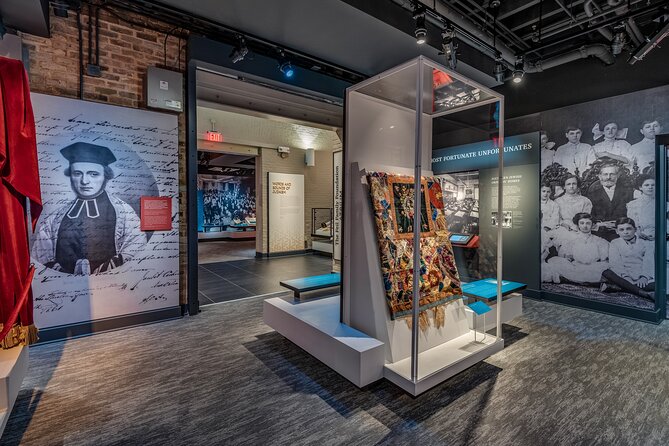
This is a ticketed museum visit priced at $15.00 per person, with admission included. Since it’s set up as mobile tickets, you don’t have to hunt for paper or stress about printing. You book for your chosen day and time of admission, then show up and use your mobile entry.
Duration is listed as about 90 minutes, which is a useful reality check. It’s enough time to see the major exhibits and take in the film component mentioned in reviews, but it’s not a multi-hour marathon. If you love museums that make you slow down, plan to skim less important areas rather than trying to read every sentence.
Hours in the information provided show Monday: 10:00 AM – 5:00 PM. That doesn’t automatically mean other days are closed, but it does mean you should treat Monday timing as your anchor and double-check the exact day you’re planning to go.
Your One Main Stop: Inside the Museum’s Permanent Galleries
Your main stop is the museum itself: the permanent galleries, plus access to temporary exhibitions. The permanent side is where you get structure—how the museum frames Southern Jewish life, and how it connects community identity to broader American life.
Expect a mix of formats rather than one long hallway of static displays. The museum experience is described as including artifacts, stories, and videos, with exhibits “well laid out.” That matters because it signals a thoughtful layout: it’s easier to keep your place and follow the narrative than it is in museums that feel like a random collection of rooms.
What you’ll likely appreciate most here is the museum’s approach to perspective. This isn’t only about what Jews did in the South. It’s also about how southern culture received them, and how that back-and-forth shaped everyday life. If you’re the type of traveler who likes to connect identity and geography, the permanent galleries are where the museum’s logic really clicks.
Temporary Exhibitions: Why Extra Rotation Can Improve the Visit
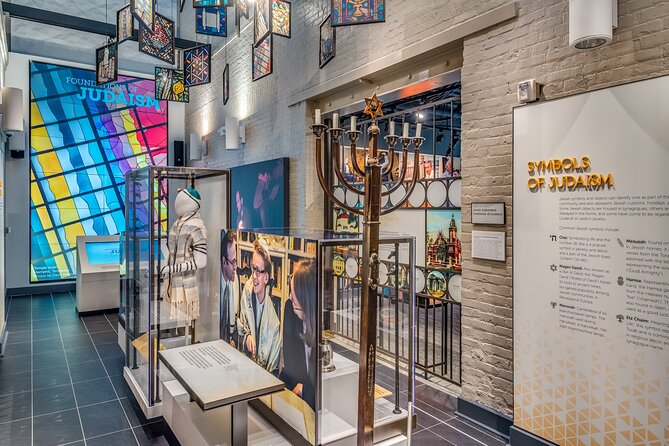
This museum experience includes access to temporary exhibitions as well. That’s a big deal because it means your ticket isn’t limited to the core story only. You can get the permanent narrative and still see what the museum is focusing on right now.
Temporary exhibits often act like a spotlight. Even when the core theme stays the same, temporary shows can zoom in on specific periods, community experiences, or under-covered angles. In a museum like this, rotation can help prevent the visit from feeling like only one kind of learning.
A practical way to use your time: start with the permanent galleries so you build context, then use the temporary exhibits to test what you think you understand. If you’re short on time, go for the temporary exhibit that seems most relevant to your interests first, then circle back to the permanent galleries once you have a hook.





Artifacts, Stories, and Videos That Make the South Feel Real
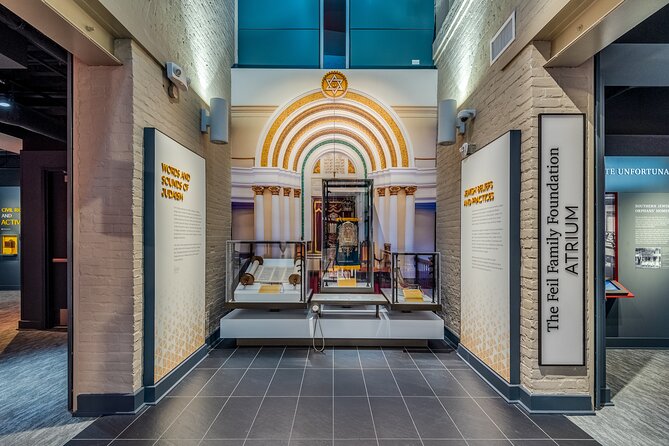
One of the most praised aspects of this museum is how it uses more than one storytelling tool. The experience is described as full of interesting artifacts, stories, and videos, and that blend is a good match for modern attention spans.
Why it works: artifacts give you something physical to anchor to. Videos add emotion and pacing. Stories give you cause-and-effect. Together, they help you understand not just the outcome, but how people got there.
The museum’s themes—identity, diversity, and acceptance—don’t stay abstract. They’re connected to how Southern Jewish communities lived in everyday life and how larger American changes influenced them. If you’re visiting New Orleans and want your cultural time to go beyond music, food, and architecture, this museum gives you a different lens on the region.
Also, the layout being described as well presented matters. It means you’re less likely to feel lost or forced into a single route that doesn’t match your interests.
The Film, Bubbe, and the Emotional Side of the Experience
A standout moment in the experience is the film, described as moving. This is the part where the museum stops being only educational and starts being personal in tone. Films in museums can go either way—too long, too generic, too stiff. Here, the feedback points to something that lands.
There’s also an interactive or playful element mentioned in reviews involving Bubbe. The phrasing suggests it’s enjoyable, not just instructional. That combination—an emotional film plus a lighter moment—can help keep the visit balanced. You learn, but you don’t feel like you’re being lectured for ninety minutes straight.
If you’re deciding whether to go, this is worth noting: museums that balance feeling and context often stay with you longer than museums that only teach facts. The film is a key reason why this place gets such strong recommendations.
Staff Help That Changes How the Exhibits Click: Meet Mark
The museum experience isn’t just about objects on walls. Staff guidance can shift how you interpret what you’re seeing. One visitor highlights a staff member named Mark as a major part of the visit, crediting his knowledge for opening eyes to details they weren’t aware of.
Here’s how to use that in real life: if you spot a moment to ask a question—something like how a particular exhibit connects to the wider Southern Jewish story—do it. A short conversation can turn an exhibit from information into understanding.
Friendly staff is also repeatedly mentioned in reviews, along with an inviting feel to the exhibitions. In a museum about identity and acceptance, that tone matters. It can make you more comfortable asking questions and taking your time.
Gift Shop Time: The Practical Way to Take the Story Home
This museum includes a gift shop, and it’s specifically mentioned as part of what makes the visit worthwhile. If you want to extend the learning after you leave, a shop purchase can help you keep the story close—books, reference material, and museum-related items can reinforce what you just saw.
You also get a simple travel advantage: a place to slow down before you head back out into New Orleans. If your day is packed with multiple stops, the gift shop can serve as a natural buffer while you process what you learned.
Is This the Right Museum for You? (And Who Might Skip It)
This is a strong choice if you want to understand the Jewish experience in the American South as a real cultural story—one connected to identity, acceptance, and how communities adapt. You’ll likely enjoy it if you like museums that use artifacts, videos, and stories rather than only text panels.
It may feel less ideal if you only want a hands-on, guided tour style. This is a self-paced visit, so you’ll get more out of it if you’re comfortable navigating exhibits on your own. And because the time estimate is about 90 minutes, you’ll want to treat it as a focused stop, not something to squeeze into a busy afternoon with zero slack.
Should You Book the Museum of the Southern Jewish Experience?
If you’re in New Orleans and you want one meaningful stop that adds depth beyond the usual tourist checklist, I’d book it. The value is straightforward: for $15, you get a self-paced visit, access to both permanent and temporary exhibitions, and key storytelling elements like the moving film and the Bubbe moment.
It’s also the kind of museum that rewards curiosity. When staff like Mark help connect the dots, the visit can feel more personal and less like you just passed through rooms. And the strong rating signals consistent satisfaction with the layout and presentation.
Book this if you like history that’s tied to people, not just dates. If you want something emotional, thoughtful, and still easy to fit into a day, this one is worth your time.
FAQ
How much does admission cost?
Admission is $15.00 per person.
How long should I plan for the museum?
Plan on about 1 hour 30 minutes (approx.).
Do I need a printed ticket?
No. This experience uses a mobile ticket.
What are the opening hours in the provided schedule?
The provided schedule lists Monday: 10:00 AM – 5:00 PM.
Can I cancel for free?
Yes. Free cancellation is available, with a full refund if you cancel up to 24 hours in advance.
Are service animals allowed?
Yes. Service animals are allowed.
More Museums Worth an Afternoon





More Tour Reviews in New Orleans

Just added to The New Orleans Traveler





Museums, compared.
 ★ 5.0The National WWII Museum Admission Ticket New OrleansFrom $372,202 reviews
 ★ 5.0French Quarter Walking Tour With Comp 1850 House Museum AdmissionFrom $30781 reviews
 ★ 4.8The National WWII Museum TicketFrom $37704 reviews
 ★ 5.0The National WWII Museum Campus Pass plus 4-D FilmFrom $49672 reviews
 ★ 5.0Storyville Museum All Access TicketFrom $2773 reviews
 ★ 4.5Whitney Plantation and Museum Tour from New OrleansFrom $7569 reviews
 ★ 4.8Whitney Plantation & Museum TourFrom $7959 reviews
 ★ 5.0Old Ursuline Convent Museum Ticket: New Pope Leo XIV ExhibitFrom $105 reviews
Browse the lists this tour appears in