
Reviewed · HISTORICAL TOURS
Eras of New Orleans: A History Lover’s Walking Tour
New Orleans has a talent for history that won’t sit still. This walking tour strings together the city’s eras in about two hours, with real stories and stops most visitors miss. I love how the route keeps moving—so you’re always connecting one time period to the next—while still giving you actual time at the key places.
I also like the format: a live guide who ties politics, culture, and everyday life together, not just facts on a sign. The one possible drawback is the amount of detail and walking on French Quarter terrain—cobblestones and uneven ground mean this is best for adults with moderate fitness, not a casual stroller stroll.
In This Review
- What You Get for $27.99 in the French Quarter
- The Walking Route That Explains the City’s Shifts
- Stop 1: Jackson Square and the Start of the City
- Stop 2: St. Louis Cathedral Outside—Economics, Smuggling, Piracy
- Stop 3: Voodoo Authentica and Marie Laveau—What Voodoo Is (and Isn’t)
- Stop 4: Old Ursuline Convent Museum—Nuns, Arrival, and Everyday Impact
- Stop 5: 919 Royal St—Yellow Fever, Fires, and How the City Rebuilds
- Stop 6: Madame John’s Legacy—Architecture as a Clue to Power
- Stop 7: Lafitte’s Blacksmith Shop Bar—End with One of the Oldest
- The Guide Factor: Storytelling That Connects Eras
- Comfort and Footing: What to Wear for French Quarter Terrain
- Should You Book This Eras of New Orleans Tour?
- FAQ
- How long is the tour, and when does it start?
- Where do I meet the guide, and where does the tour end?
- How much does the tour cost, and what’s included?
- Are admissions included for all stops?
- Is it BYOB?
- Is the tour in English, and how big are the groups?
- FAQ
- Can I cancel for a full refund?
- What happens if the tour is canceled due to weather?
- Can I bring a service animal?
- What fitness level do I need?
- Is the ticket delivered on my phone?
- Do I need to speak English?
What You Get for $27.99 in the French Quarter
This tour is priced at $27.99 per person and runs about 2 hours. You’re paying mostly for the guide’s storytelling and the structure of the walk—where to stand, what to notice, and how to connect what you see to what happened next.
The value comes from a smart mix of “look and learn” stops and a couple of places where you may need to plan for admission yourself. Jackson Square is free, and 919 Royal St is also free. St. Louis Cathedral is an outside stop (and admission isn’t included). Voodoo Authentica and the Old Ursuline Convent Museum are listed as admission not included, so budget a little extra if you want to go in or pay any required entry.
Group size helps, too. The tour caps at 22 people. That’s small enough for a real conversation, and big enough that you’re not stuck in “awkward silence” mode.
One more practical note: it’s booked fairly steadily (on average, about 28 days ahead). If you’re visiting in peak season or on a weekend, you’ll want to reserve early so you’re not hunting for space.
More of New Orleans on foot
- New Orleans Premier Ghost, Voodoo and Vampire Walking Tour★ 4.5 · 12,856 reviews
- New Orleans Food Walking Tour of the French Quarter with Small-Group Option★ 5.0 · 6,118 reviews
- St. Louis Cemetery No. 1 Official Walking Tour★ 4.5 · 3,941 reviews
- New Orleans French Quarter, Voodoo and Culture Walking Tour★ 4.5 · 2,961 reviews
The Walking Route That Explains the City’s Shifts
You’ll start at the Witches Brew Gallery & Haunted Sanctuary at 311 Exchange Pl, with the tour beginning at 1:30 pm. The walk ends at Lafitte’s Blacksmith Shop Bar on Bourbon Street—one of the oldest operating bars in the city—so the ending point is memorable and easy to return to later for food or a nightcap.
The route is arranged so the story moves chronologically and thematically:
- early beginnings and power struggles
- religion and colonial-era money games
- Marie Laveau and what Voodoo means in New Orleans
- education, faith, and early community life
- yellow fever and fire that reshaped the city
- architecture that shows who ruled and how people lived
You should also expect multiple brief photo stops plus a handful of deeper “stand here and look at this” moments. It’s not a long bus ride day. It’s a walking day with short windows to absorb a lot.
Stop 1: Jackson Square and the Start of the City
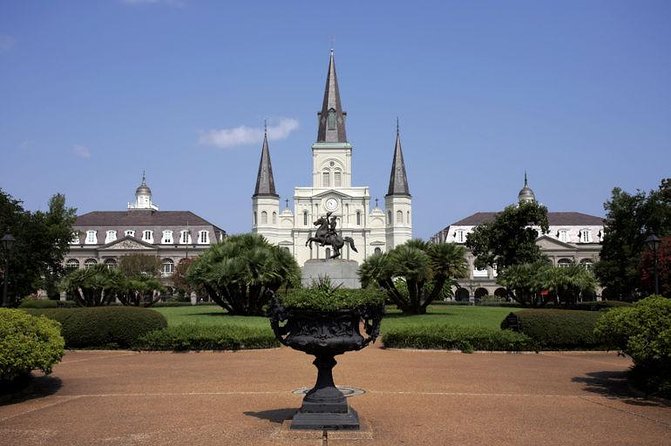
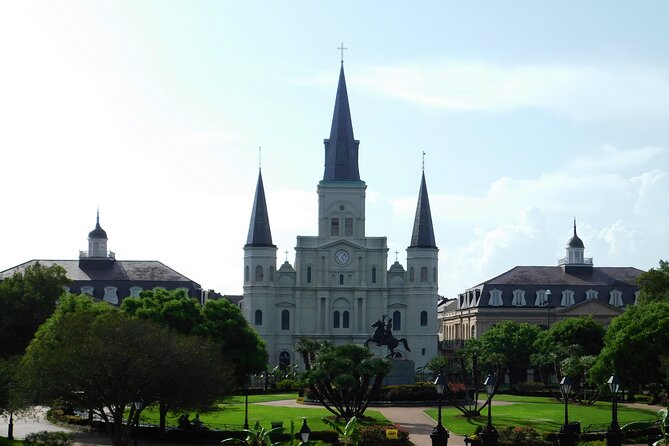
Jackson Square is where the tour puts you right at the center of New Orleans’ origin story. You’ll hear about the earliest settlers in the city and then jump forward to darker chapters, including slave rebellions. This stop is doing more than scenery. It’s teaching you that New Orleans didn’t form as a simple “sunny postcard” town—it formed through conflict, negotiation, and survival.
You’ll also hear about Michaela Almonester, described as an amazing woman tied to the city’s past. Even if you’ve walked by Jackson Square before, this is the kind of framing that changes how you look at the square afterward.
Time on this stop is about 30 minutes, which matters. You’re not rushed. You get time to stand, listen, and connect the rest of the walk to the idea of how the city began and who shaped it.
What to watch for: If you like history, keep your eyes up while you listen. These tours work best when you treat the place like a living map, not just a photo spot.
Stop 2: St. Louis Cathedral Outside—Economics, Smuggling, Piracy
Next comes St. Louis Cathedral, but here you’ll see it from the outside. Admission isn’t included, and the time is short—about 10 minutes—so the goal is awareness, not a full visit.
The interesting part is what the guide connects to the building and the era around it: early economics, smuggling, and piracy. That framing is useful because it explains why “religious centerpiece” and “money and crime” can overlap in port cities. New Orleans was a trading hub, and the tour makes that tangible by focusing on the incentives and risks people faced.
Practical tip: If you’re the type who likes to step inside cathedrals, plan extra time elsewhere. This stop is for context, not a full interior experience.
Stop 3: Voodoo Authentica and Marie Laveau—What Voodoo Is (and Isn’t)
Voodoo is often treated like a costume in tourist storytelling. Here, you’re told that Voodoo is a huge part of New Orleans history and culture, and you’ll hear what New Orleans Voodoo is and isn’t. The tone is important. This stop gives you a way to think about the subject without turning it into pure shock value.
You’ll also learn about the Voodoo Queen Marie Laveau. Even if you’ve heard the name before, the tour’s approach is meant to help you understand why she matters in New Orleans’ story and how these beliefs functioned within the city’s social reality.
Time is about 10 minutes, and admission isn’t included. So treat this as a guided cultural orientation point. If you want more, you can follow up on your own.
Best for: People who like religion, folklore, and how communities protect identity through belief systems.
More of the city's three centuries



Stop 4: Old Ursuline Convent Museum—Nuns, Arrival, and Everyday Impact
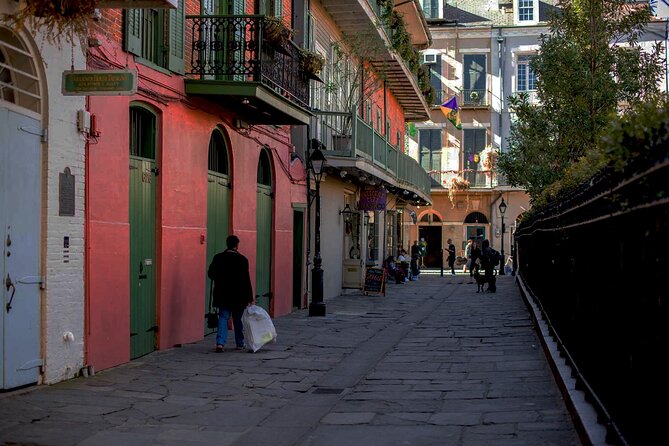
This is one of the longer learning stops: about 20 minutes at the Old Ursuline Convent Museum. Admission isn’t included, but the guide’s emphasis is on the Ursuline nuns—how they came to New Orleans and how they impacted early life in the city.
This kind of stop works well when you’re trying to understand New Orleans beyond “who won battles.” You get a perspective on education, community structure, and how institutions shape daily life.
It’s also a good counterweight to the more dramatic themes earlier in the walk. You’ll shift from rebellions and port crimes into something more steady and long-term: how people tried to build a functioning future.
What I think you’ll appreciate: the way the tour treats education and religion as historical forces, not just background scenery.
Stop 5: 919 Royal St—Yellow Fever, Fires, and How the City Rebuilds
Then you’re at 919 Royal St, with about 15 minutes on site. Admission is free here. This stop is built around what New Orleans looked like in the 18th and 19th century—and how two big disasters changed everything: yellow fever and numerous fires.
That might sound grim, but it’s also one of the most practical history lessons you can get. Port cities live and die by health, infrastructure, and rebuilding. When the tour ties what you’re seeing to what destroyed previous versions of the city, you start understanding why certain patterns show up the way they do.
Also, this stop is a reminder that history is not just dates. It’s cause and effect, and the city you’re walking through is the result of repeated resets.
Quick advice: If you’re prone to “tour history overload,” this is a great place to slow down and let the details stick. You’re learning the why behind the city’s survival.
Stop 6: Madame John’s Legacy—Architecture as a Clue to Power
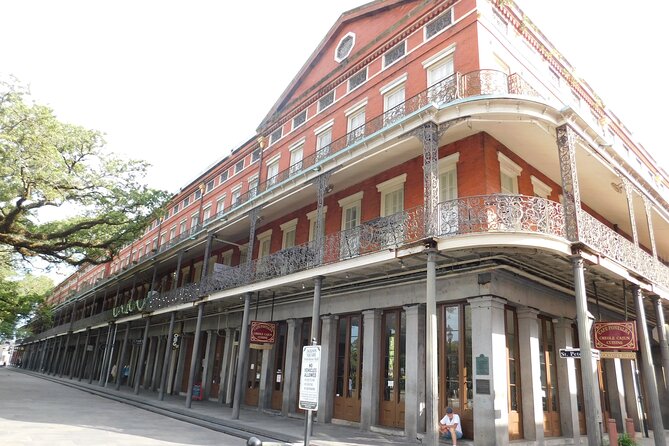
At Madame John’s Legacy, the tour shifts from specific events to architecture—about 10 minutes. The guide explains different types of New Orleans architecture and what makes it unique.
This is one of the best “aha” moments on a walking tour, because buildings are time capsules. When you’re told what to notice, the streets stop feeling like random scenery and start feeling like a record of who built what, for whom, and why.
You’ll likely connect this stop back to earlier themes: economies and rule systems influence what gets built. Health crises and fires influence what gets replaced. Religion and education influence what becomes a center of life.
Who will love this: If you like architecture or you’re the type who looks up at facades, this stop will feel like it “clicks.”
Stop 7: Lafitte’s Blacksmith Shop Bar—End with One of the Oldest
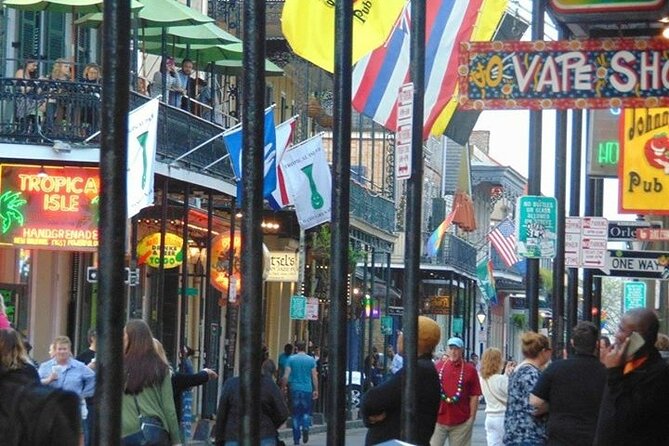
The tour finishes at Lafitte’s Blacksmith Shop Bar, with about 5 minutes at the location. It’s identified as one of the oldest operating bars in the city, so even if you’re not ordering a drink right away, it’s a strong way to cap the walk.
One detail you should plan for: alcoholic beverages aren’t included, and the tour is BYOB. That means if you want to have something to drink during the stop, bring it with you. It’s a simple setup, but it affects how you plan your bag and your comfort level for the last stretch.
Small but important: The ending is on Bourbon Street, which is easy for you to keep going. It’s also where you can find food if your walk-time hunger shows up early.
The Guide Factor: Storytelling That Connects Eras
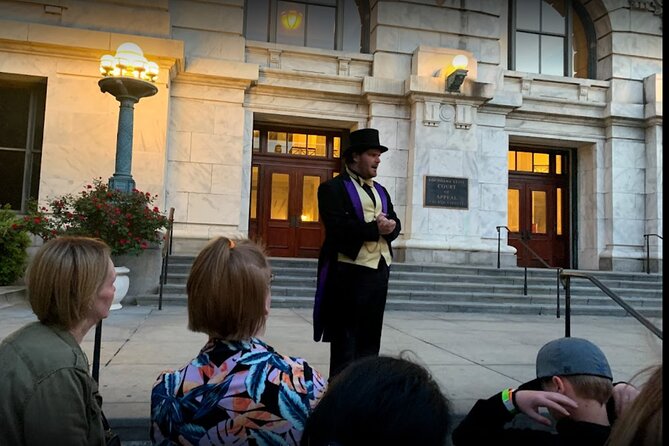
A big reason this tour earns strong ratings is how well the guide holds the thread. One guide named Graham stands out in the feedback, with a style that’s heavy on historical figures and the connections between them. If your guide leans that way, expect the walk to feel like a story with characters—not a slideshow.
You should also know this isn’t a light, kid-first tour. The pacing and the density of information are better suited for adults and history-minded visitors. If you’re traveling with younger teens who like this stuff, they may handle it fine—but don’t assume it’s designed as family entertainment.
The practical win: You’ll leave with a clearer sense of how New Orleans formed through indigenous, Spanish, French, and American influences. The tour frames those shifts as sociopolitical forces, not just trivia.
Comfort and Footing: What to Wear for French Quarter Terrain
The tour notes that you should have a moderate physical fitness level, and it also flags terrain challenges in the historic French Quarter. That usually means uneven paving and lots of short turns.
So do yourself a favor:
- Wear shoes you trust on cobblestones and tight sidewalks
- Bring water, especially if it’s warm
- Think about wind and sun since this is mostly outdoors
Service animals are allowed, and the tour is near public transportation. That’s good if you want flexibility before or after.
Should You Book This Eras of New Orleans Tour?
Book it if you want a structured French Quarter history walk that connects eras, not just random landmarks. The route’s best for history lovers who like politics, social systems, and the “why” behind the city—not just what something looks like today.
Skip or rethink it if:
- You want a short, easy walk with minimal standing
- You’re traveling with younger kids who need constant entertainment
- You’re hoping for a lot of indoor museum time (the walk includes museum-related stops, but some entries aren’t included and time at each stop is limited)
If you fit the first group, this is a solid value at $27.99 for a guided, two-hour experience with a memorable ending at an iconic historic bar.
FAQ
How long is the tour, and when does it start?
The tour lasts about 2 hours and starts at 1:30 pm.
Where do I meet the guide, and where does the tour end?
You meet at Witches Brew Gallery & Haunted Sanctuary, 311 Exchange Pl, New Orleans, LA 70130. The tour ends at Lafitte’s Blacksmith Shop Bar, 941 Bourbon St, New Orleans, LA 70116.
How much does the tour cost, and what’s included?
It costs $27.99 per person and includes a live guide. Admission fees are not included for every stop, and some locations are free while others are not.
Are admissions included for all stops?
No. Jackson Square and 919 Royal St are listed as free admission. St. Louis Cathedral, Voodoo Authentica, and the Old Ursuline Convent Museum are listed as admission not included.
Is it BYOB?
Yes. Alcoholic beverages are not included, and the tour is BYOB.
Is the tour in English, and how big are the groups?
The tour is offered in English and has a maximum of 22 travelers.
FAQ
Can I cancel for a full refund?
Yes. You can cancel up to 24 hours in advance for a full refund. If you cancel less than 24 hours before the start time, you won’t get a refund.
What happens if the tour is canceled due to weather?
The experience requires good weather. If it’s canceled due to poor weather, you’ll be offered a different date or a full refund.
Can I bring a service animal?
Yes. Service animals are allowed.
What fitness level do I need?
You should have a moderate physical fitness level because the French Quarter terrain can be challenging.
Is the ticket delivered on my phone?
Yes. The tour uses a mobile ticket.
Do I need to speak English?
The tour is offered in English.
More New Orleans Walks




More Tours in New Orleans

More Tour Reviews in New Orleans
Just added to The New Orleans Traveler


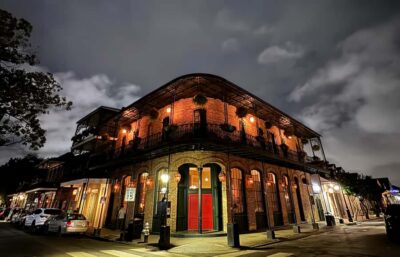
Historical Tours, compared.
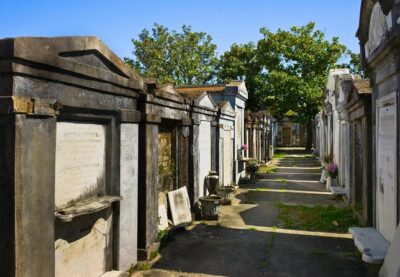 ★ 5.0Garden District History Walking TourFrom $352,879 reviews
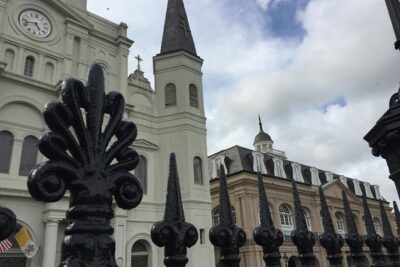 ★ 5.0French Quarter Historical Sights and Stories Walking TourFrom $352,724 reviews
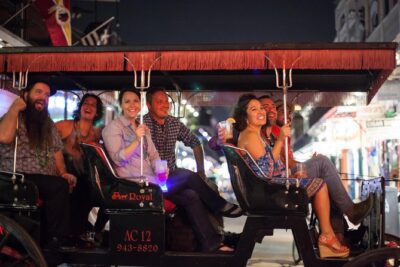 ★ 4.5Small-Group Haunted History Carriage TourFrom $652,289 reviews
 ★ 4.5Haunted History Ghost TourFrom $302,084 reviews
 ★ 4.5Paddlewheeler Creole Queen Historic Mississippi River CruiseFrom $471,948 reviews
 ★ 5.0Food and History Walking TourFrom $851,544 reviews
 ★ 4.3Creole Queen History Cruise with Optional LunchFrom $471,112 reviews
 ★ 5.0Cocktail and Food History TourFrom $160819 reviews
Browse the lists this tour appears in