
Reviewed · HISTORICAL TOURS
Black History & Tremè Neighborhood Walking Tour
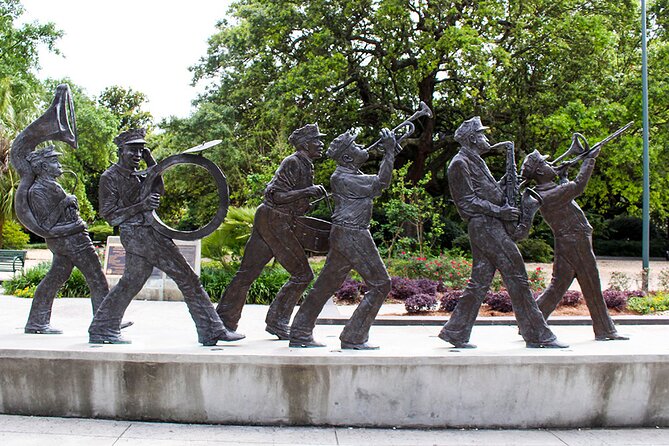
Music lives in Treme’s streets. This Treme neighborhood walk strings together New Orleans Jazz National Historical Park, Congo Square, and St. Augustine’s grounds, with stops that explain how music, faith, and community shaped the city.
I love two things most: the guide connects the music to real names and real locations, citing legends like Moses Hogan, Mahalia Jackson, Louis Armstrong, and Buddy Bolden, and I also like that admission at each stop is free, so the $40 feels aimed at the storytelling and the route—not extra fees.
One thing to consider: this is a walking tour built around a tight schedule and several outdoor stops, so you’ll want to come with comfortable shoes and be ready for good weather (it can be canceled if conditions are bad). With a max group size of 28, you’ll get plenty of questions answered, but it won’t be a private chat at every corner.
In This Review
- Key highlights you’ll actually feel
- A Treme walk built around names, places, and meaning
- Timing and meeting point: make it easy on yourself
- Stop 1: New Orleans Jazz National Historical Park and the people behind the sound
- Stop 2: Congo Square, West African drum circles, and Sunday community life
- Stop 3: St. Augustine Catholic Church and the Tomb of the Unknown Slave
- Stop 4: Louis Armstrong Park and why it can be hard to spot
- The guides make or break it: LaToya and Malika’s story style
- What $40 buys you: value vs. add-on costs
- Who this tour suits best (and who might want a different style)
- Should you book this Black History & Treme walking tour?
- FAQ
- How long is the Black History & Tremè Neighborhood Walking Tour?
- How much does the tour cost?
- Where is the meeting point, and what time does it start?
- What language is the tour offered in?
- Which stops are included on the tour, and is admission covered?
- What is the maximum group size?
- Do I need a paper ticket?
- Is the tour dependent on weather?
- Can I cancel and get a full refund?
Key highlights you’ll actually feel
- Four stops, one clear thread: jazz, West African roots, church remembrance, and the neighborhood that carries it all.
- Small details with big context: the guide turns statues and park spaces into stories you can repeat later.
- Free entry at each major stop: the tour price is for the guided walking and interpretation.
- Treme’s churchyard remembrance: you’ll visit the Tomb of the Unknown Slave at St. Augustine Church.
- Louis Armstrong Park, made findable: the tour helps you get oriented with a place that can be hard to locate on your own.
More of New Orleans on foot
- New Orleans Premier Ghost, Voodoo and Vampire Walking Tour★ 4.5 · 12,856 reviews
- New Orleans Food Walking Tour of the French Quarter with Small-Group Option★ 5.0 · 6,118 reviews
- St. Louis Cemetery No. 1 Official Walking Tour★ 4.5 · 3,941 reviews
- New Orleans French Quarter, Voodoo and Culture Walking Tour★ 4.5 · 2,961 reviews
A Treme walk built around names, places, and meaning
If you only know one side of New Orleans—food, parties, famous streets—this tour gives you another lens. It’s not about dropping facts like trivia. It’s about connecting people to the exact spots where their lives and legacies left marks.
The format is also friendly for a first-time visitor. You’re not stuck on a long bus ride or zigzagging all day. You start in the downtown edge of the French Quarter-adjacent area (meeting at 801 N Rampart St) and then you work your way through Treme and nearby landmarks with enough time at each stop to let the story land.
And yes, the route is intentionally focused on Black history in New Orleans. That includes music history, church history, and the everyday community life that survived and adapted despite slavery and segregation. One of the best parts is how the guide uses humor alongside seriousness, so the experience stays human, not lecture-only.
You’ll also meet this tour with a guide style that feels personal. I’ve seen the same energy associated with guides like LaToya Papillion and Malika, and it shows in the way they keep you talking back with questions and short reactions as you walk.
Timing and meeting point: make it easy on yourself
The tour runs about 1 hour 45 minutes total. It starts at 10:30 am and loops back to the starting point. The pacing is built around four main stops, with set time blocks that keep the day from dragging.
Meeting point: 801 N Rampart St, New Orleans, LA 70116. Because the tour ends back where it starts, it’s simple to plan your next stop—whether that’s brunch, museum time, or just wandering off with a better sense of direction.
This is also designed to be doable even if you’re not traveling with a big group. The tour has a maximum of 28 travelers, which usually means you won’t feel lost in a crowd. And since it’s near public transportation, you can reach it without a car if you’re staying around the central neighborhoods.
Practical note: because it’s a walking tour, you’ll get the best experience with closed-toe shoes and a light plan for sun or sudden rain. You don’t need to pack a whole hiking kit, but you should be comfortable moving.
Stop 1: New Orleans Jazz National Historical Park and the people behind the sound
Your first stop is New Orleans Jazz National Historical Park. Admission is free, and the goal here is to set the foundation: jazz doesn’t appear out of nowhere. It grows from names, communities, instruments, and specific histories.
This is where the guide will connect the dots between major figures in New Orleans music and the broader Black experience that shaped the city. You’ll hear backstories tied to names like Moses Hogan, Mahalia Jackson, Louis Armstrong, and Buddy Bolden. Even if you already know Armstrong, it helps to hear him placed in a wider network of artists and cultural pressure—what people built, what people survived, and what they insisted on keeping alive.
What I like about starting here is that it gives you a mental map before you hit the sites tied directly to community life. Instead of treating Congo Square or the church as separate stops, the park frames them as part of a living system.
Possible drawback for some people: if you’re hoping for a museum-style stop with lots of time indoors, this isn’t that kind of experience. It’s more of a guided orientation with interpretation, and then you move on.
Stop 2: Congo Square, West African drum circles, and Sunday community life
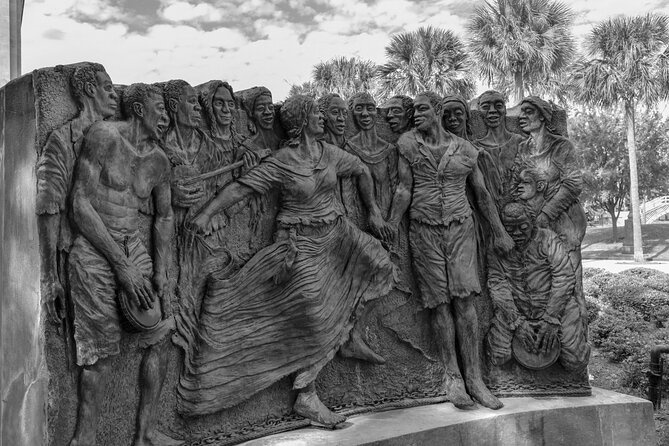
Next comes Congo Square, and this stop is the emotional center for many people. The tour presents Congo Square as the actual site where jazz was born through West African drum circles held every Sunday since 1724.
That detail matters. It takes jazz out of the abstract and places it in weekly, public practice—music you could see, hear, and participate in as a community rhythm. You also learn how congregating wasn’t just leisure; it was part of how enslaved people and free Black communities maintained family, faith, and social order.
You’ll be guided through why this space is so rare. The tour explains that it became one of the few places in the U.S. where enslaved people were allowed to gather for worship, connect socially, and trade goods. That combination—church life, marriages, trading, and music—shows you how culture survives when people fight for it.
What to watch for on this stop: the guide may point out how the ground and surroundings hold layered meanings. Even if you’ve walked near Congo Square before, a guided explanation helps you notice what you’d likely miss on your own.
If you’re sensitive to heavy history, be prepared for moments of seriousness. The stories are honest, and the tour does not sugarcoat what enslaved people endured.
More of the city's three centuries




Stop 3: St. Augustine Catholic Church and the Tomb of the Unknown Slave
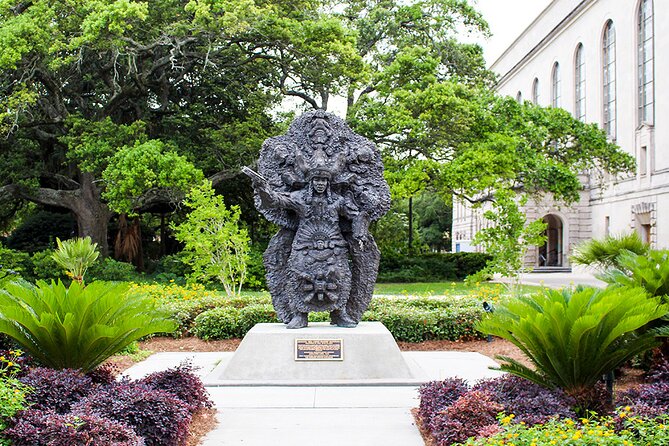
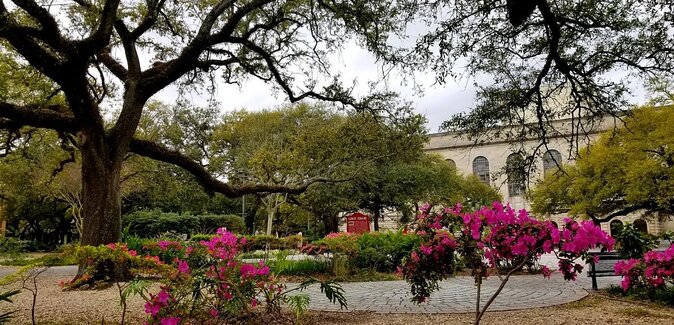
Then you shift from public music history to remembrance. The tour stops at St. Augustine Catholic Church for the Tomb of the Unknown Slave, located on church grounds.
This isn’t a quick photo-op. You spend about 15 minutes here, and the point is to pay respects while understanding what the tomb represents. It’s also tied to the larger story of Treme as a neighborhood. The tour frames Treme as the oldest Black neighborhood in the nation, and St. Augustine’s grounds are part of why that matters.
Why this stop is valuable: it balances the music and community story with the physical reality of slavery’s cost. You can’t keep everything at the level of songs and celebrations when the city itself carries memorials like this.
For some people, this is the moment that makes the whole walk feel real. For others, it’s the moment they realize they need to slow down and reflect rather than rush to the next stop.
Stop 4: Louis Armstrong Park and why it can be hard to spot
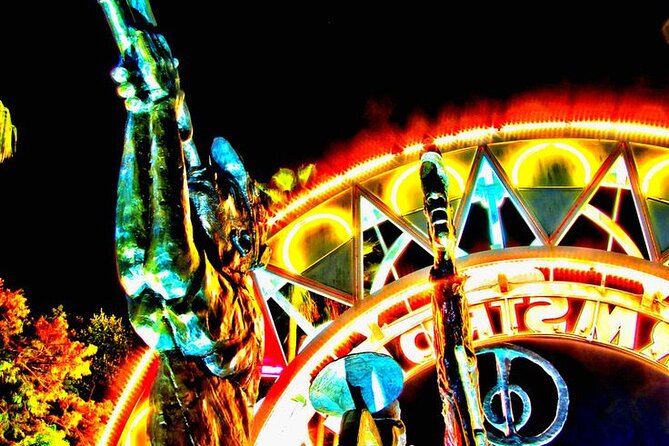
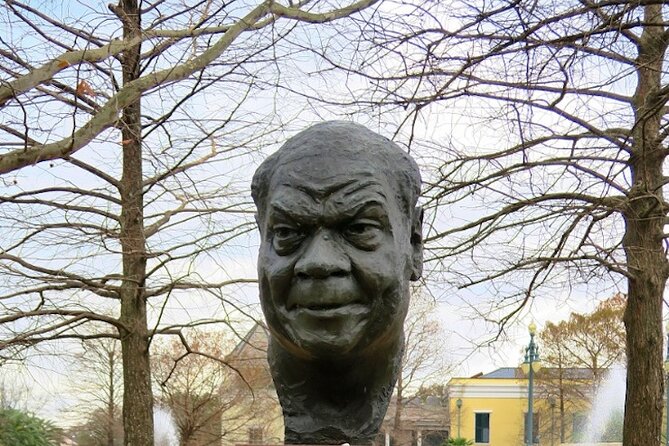
The final stop is Louis Armstrong Park. It’s about 15 minutes, and the tour frames it as a place that connects the foundations of New Orleans music, cuisine, architecture, and culture.
One useful detail: the tour notes that the park can be surprisingly hard to find on your own, even though it’s a key name in New Orleans. That’s exactly the kind of thing a guide helps with—getting you oriented so you leave with something you can return to.
This part of the experience tends to feel lighter than the church stop, but it still lands with purpose. You’re meant to connect how public spaces shape city identity. Parks aren’t just scenery here—they’re where culture shows up in physical form.
Also, if you’re the type who likes to keep moving, this stop gives you a clean finish. You get closure without feeling rushed out the door.
The guides make or break it: LaToya and Malika’s story style
Across the different guides associated with Anansi’s Daughters, the consistent thread is storytelling that feels anchored, not performative. People often praise the way guides stay approachable and keep the group engaged, including encouraging and answering questions as you walk.
Two guide names that show up strongly are LaToya Papillion and Malika. Both are described as energetic, friendly, and deeply invested in Treme’s stories, including connections between past and present. You also get a sense that the guides don’t whitewash history. The tour includes honest context around Black experience in New Orleans, including religion and cultural practices, with a clear effort to separate truth from myths.
If you like guides who can handle curveballs—like a nearby stop being closed or shifting something at the last minute—you’ll probably appreciate the calm, problem-solving energy. That kind of flexibility keeps your walk from turning into wasted time.
Finally, the tour’s size and format make these guides shine. A smaller group helps the guide keep eye contact, respond to curiosity, and pace the conversation for real human attention spans.
What $40 buys you: value vs. add-on costs
At $40 per person, this tour isn’t trying to compete with the cheapest walking options. But the value comes from three angles:
- You’re paying for the interpretation. You’re not just paying to walk between points.
- Major admissions are free. The tour lists free admission for each main stop, including the park and the Congo Square experience. So you’re not layering extra entry fees on top.
- You get a structured route in 1 hour 45 minutes. For a first visit, that kind of time efficiency is worth something. You’re not spending half a day wandering without context.
If you’re staying just a few days, this is the type of tour that helps your later self-guided wandering. You start to notice what matters: street layouts, names, commemorations, and how culture shows up in public space.
Who this tour suits best (and who might want a different style)
This tour is a strong match if you:
- want a first serious look at Treme and Black New Orleans without skipping the painful parts
- enjoy music history that connects to real places, not just big-name artists
- like asking questions and getting direct answers from the guide
It’s also a good fit for couples or solo travelers. The route is short enough that you can handle it without a full day commitment. Families may also appreciate the balance of humor and education, though you’ll still be walking.
What might be less ideal if you:
- want lots of indoor time in air-conditioning
- prefer an unstructured stroll where you set your own pace at every stop
- strongly dislike weather risk, since the tour depends on good weather
Should you book this Black History & Treme walking tour?
I’d book it if you want New Orleans with context, not just color. This tour gives you a guided path through the city’s music roots and remembrance spaces, with a strong focus on community life in Treme.
It’s also a smart choice if you’re worried about missing key details. With stops like Congo Square and St. Augustine’s Tomb of the Unknown Slave, it’s not the kind of history you can easily “figure out” by walking alone.
One last nudge: come ready to listen and to look. If you do, you’ll finish the walk with a better sense of why jazz, church, and neighborhood identity are tied together in New Orleans—and you’ll spot those connections long after you’ve left the street.
FAQ
How long is the Black History & Tremè Neighborhood Walking Tour?
It runs for about 1 hour 45 minutes (approx.).
How much does the tour cost?
The price is $40.00 per person.
Where is the meeting point, and what time does it start?
The tour meets at 801 N Rampart St, New Orleans, LA 70116, USA and starts at 10:30 am.
What language is the tour offered in?
The tour is offered in English.
Which stops are included on the tour, and is admission covered?
You visit New Orleans Jazz National Historical Park, Congo Square, St. Augustine Catholic Church (Tomb of the Unknown Slave), and Louis Armstrong Park. Admission is listed as free for the stops.
What is the maximum group size?
The tour has a maximum of 28 travelers.
Do I need a paper ticket?
No, the tour uses a mobile ticket.
Is the tour dependent on weather?
Yes. The tour requires good weather. If it’s canceled due to poor weather, you’ll be offered a different date or a full refund.
Can I cancel and get a full refund?
Yes. You can cancel up to 24 hours in advance of the experience for a full refund, based on local time.
More New Orleans Walks



More Tours in New Orleans


More Tour Reviews in New Orleans

Just added to The New Orleans Traveler



Historical Tours, compared.
 ★ 5.0Garden District History Walking TourFrom $352,879 reviews
 ★ 5.0French Quarter Historical Sights and Stories Walking TourFrom $352,724 reviews
 ★ 4.5Small-Group Haunted History Carriage TourFrom $652,289 reviews
 ★ 4.5Haunted History Ghost TourFrom $302,084 reviews
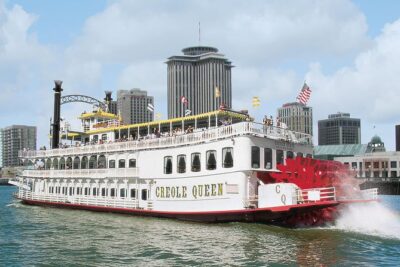 ★ 4.5Paddlewheeler Creole Queen Historic Mississippi River CruiseFrom $471,948 reviews
 ★ 5.0Food and History Walking TourFrom $851,544 reviews
 ★ 4.3Creole Queen History Cruise with Optional LunchFrom $471,112 reviews
 ★ 5.0Cocktail and Food History TourFrom $160819 reviews
Browse the lists this tour appears in