
Reviewed · WALKING TOURS
Walking Tour about The Good, The Bad and The Beautiful Women of New Orleans
A New Orleans walk with bite. This 1-mile route uses unforgettable women’s stories to read the French Quarter like a living document, with stops tied to Bourbon Street and major landmarks. You’ll get a tight mix of politics, piracy, entertainment, food, science, and a few topics they wisely keep off the record.
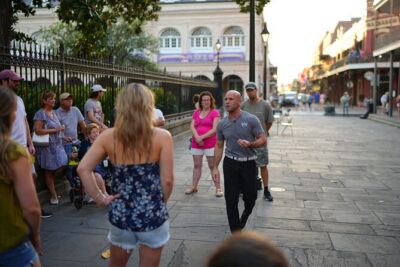
I especially like the way the guide, Mikko, turns local history into fast, high-energy street storytelling with clear answers when you ask questions. I also like that the tour doesn’t lock you in a museum; it keeps you outdoors, moving just enough to stay engaged while still seeing the places that made these women matter.
One thing to plan for: the walk is brief, but summer humidity can be brutal, and it’s not ideal if you have breathing trouble or trouble standing/walking.
In This Review
- Key things I’d circle before you go
- Why women’s stories make the French Quarter click
- Price and time: a $10 hour that’s actually worth the slot
- The walking route: how to set expectations for this “no-stress” pace
- Meeting at 820 St. Louis St.: where you start shapes the whole tour
- Bourbon Street as an alternate history street
- Jackson Square and Barones Pontalba: control, ambition, and money
- St. Louis Cathedral and Henriette Delille’s sainthood
- The Ursuline convent story: education as local power
- Frances Parkinson Keyes: writing made real on these streets
- Madame LaLaurie: the bad side, handled with respect
- Practical tips so you enjoy every minute
- Who should book this women’s French Quarter walk
- Should you book The Good, The Bad and The Beautiful Women of New Orleans?
- FAQ
- FAQ
- How long is the tour?
- How far will we walk?
- Where do we meet the guide?
- Does the tour enter buildings?
- Is there food or drink included?
- What’s the price?
- Is it a mobile ticket?
- Is the group size limited?
- Is it okay in hot weather?
- Where does the tour end?
- Are service animals allowed?
Key things I’d circle before you go
- Meet at 820 St. Louis St. and get your bearings fast before stepping into the stories
- Bourbon Street alternate history that explains why the street’s reputation sticks
- Jackson Square’s Barones(se) Pontalba: power, money, and a woman who acted on her own terms
- St. Louis Cathedral stop for Henriette Delille and her bid for sainthood
- Ursuline nuns and education: the mission behind the beautiful façade
- LaLaurie Mansion area finale: the “bad” side, handled with clear boundaries since it’s a private home
More of New Orleans on foot
- New Orleans Premier Ghost, Voodoo and Vampire Walking Tour★ 4.5 · 12,856 reviews
- New Orleans Food Walking Tour of the French Quarter with Small-Group Option★ 5.0 · 6,118 reviews
- St. Louis Cemetery No. 1 Official Walking Tour★ 4.5 · 3,941 reviews
- New Orleans French Quarter, Voodoo and Culture Walking Tour★ 4.5 · 2,961 reviews
Why women’s stories make the French Quarter click
New Orleans has a talent for drama. Even if you think you know the French Quarter already, this tour changes your angle. Instead of treating the neighborhood like a collection of pretty streets and haunted legends, I like how it frames the city through women who shaped what was legal, what was profitable, what was prayed for, and what people whispered about.
The big idea is simple: New Orleans has always had risk and reinvention, and women were in the middle of it. The tour’s tone is equal parts entertaining and instructive. You’ll hear about famous names, lesser-known movers and shakers, and stories that help you connect dots between politics, work, religion, and the entertainment economy—especially around Bourbon Street.
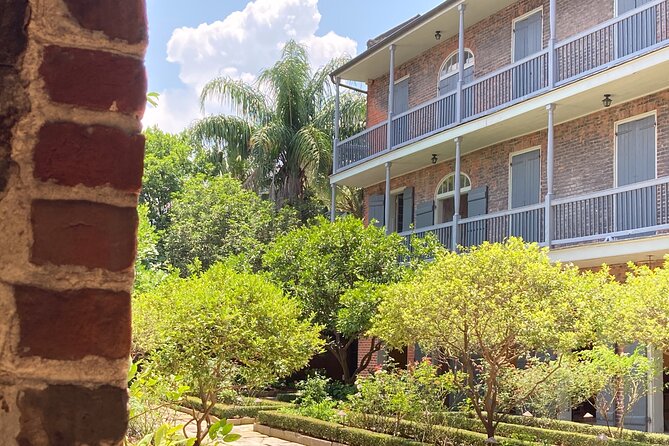
And because this is a walking tour in the real French Quarter streets, the history feels anchored. You’re not just hearing about old New Orleans; you’re watching how the architecture and locations still shape the way the city feels today.
Price and time: a $10 hour that’s actually worth the slot
At $10 per person, you’re buying time with a focused guide rather than paying for a big-ticket spectacle. For a city where tours can run high, this price point is what makes it easy to fit into a packed itinerary. Even if you’re doing other activities, this tour works as a history “shot” that doesn’t steal half a day.
The tour runs about 1 hour and covers roughly one mile. That matters because you can do it without feeling like you just sacrificed the rest of your morning or afternoon. It’s also the kind of length where your attention stays sharp—you’ll be moving from stop to stop often enough to keep the stories fresh.
Two practical notes that help you get more value out of the hour:
- Wear shoes you can walk in comfortably, because this is outdoors and there are multiple stops.
- Bring sun protection. The tour specifically warns that humidity can mess with your day, and dehydration can ruin your vacation.
The walking route: how to set expectations for this “no-stress” pace
This isn’t a long haul. You’re looking at a moderate physical fitness level, plus the reality that it’s still standing time and walking time through the French Quarter’s unevenness.
The group size is also capped: maximum 20 travelers. That’s big enough to feel lively, but small enough that you’re not totally lost in a crowd. I like that the guide can keep the pacing moving without having to slow down for a massive group.
There’s also a minimum to run—at least 4 guests. In practice, that means the tour is more likely to be active and guided rather than padded with filler, but you should still be ready for a reschedule or refund option if it doesn’t meet the threshold.
Meeting at 820 St. Louis St.: where you start shapes the whole tour
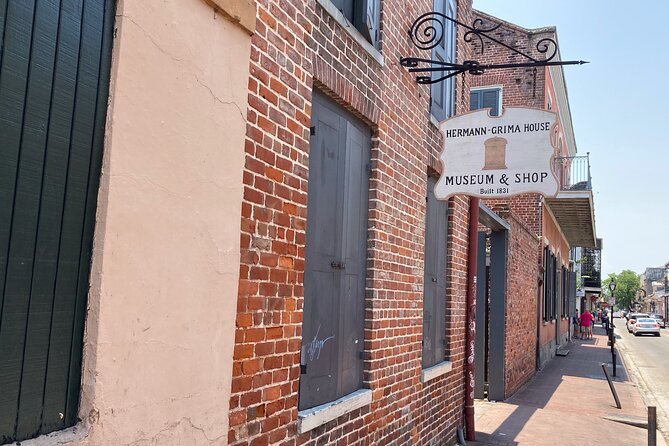
You’ll meet at 820 St. Louis St. and should arrive about 15 minutes early. The instructions are straightforward: if the gates aren’t open, meet by the sign.
I like how this meeting plan gives you a quick “get oriented” moment. You arrive before the guide pulls everyone together, and you can scan the immediate area so the first stories land faster. If you’re coming in from somewhere else on foot, this is close enough to plug into your normal French Quarter wandering without turning the tour into a commute.
The tour ends near the LaLaurie Mansion area at 1138 Royal St. The group disbands in the lower French Quarter at the guide’s discretion, which means you’re set up to pivot into shopping or dining immediately after.


Bourbon Street as an alternate history street
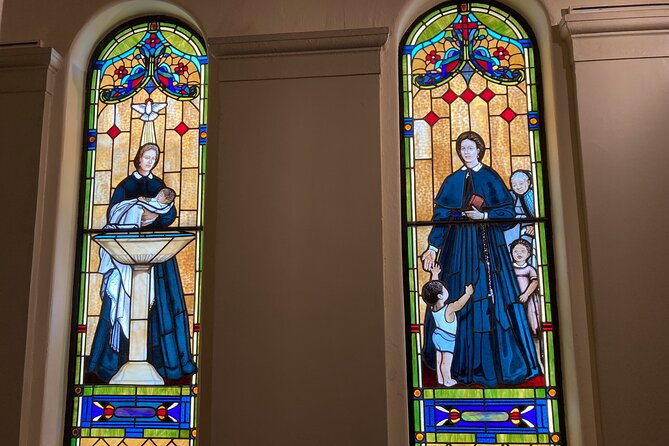
One of the tour’s strongest promises is that it doesn’t treat Bourbon Street as just a party zone. It’s more like a stage where money, business, pleasure, and risk all mixed. The tour includes Bourbon Street connections for many of the women discussed, whether through business or pleasure.
I think this is the right way to handle Bourbon Street. If you go in expecting only neon and noise, you miss why the street became what it is. When a guide ties the street to specific people—especially women—it flips the script. You start noticing that the French Quarter’s reputation didn’t just happen. It was built and maintained.
Also, this stop gives you a chance to see the street’s geography in context. You’ll walk away with a clearer mental map: what’s close, what’s connected, and why certain corners became “named” places over time.
Jackson Square and Barones Pontalba: control, ambition, and money
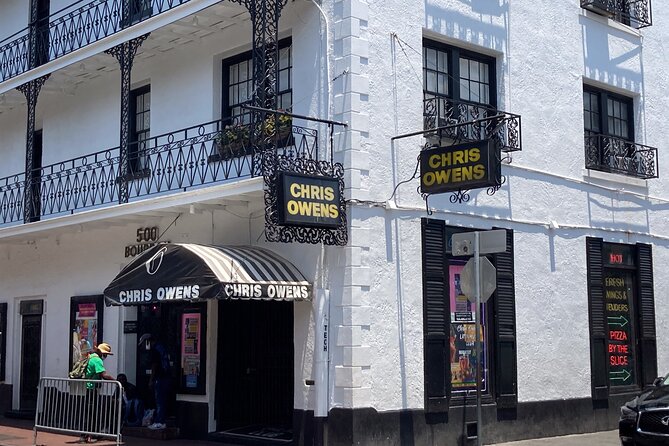
A highlight is the stop tied to Baroness Pontalba in Jackson Square. The tour description makes a point of it: she was anything but meek or dependent. That’s the theme you’ll feel at this part of the walk—women acting from a place of power, not just surviving history.
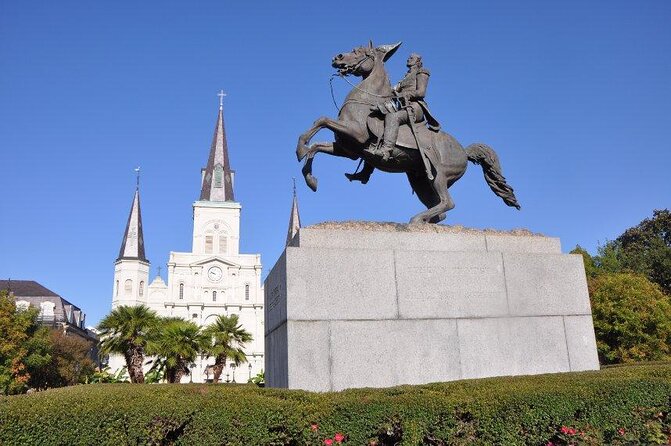
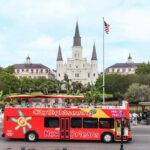
Jackson Square is one of the best places in the French Quarter to understand how buildings and influence work together. Even if you’ve walked past it before, the stories here help you read it like a page with footnotes. The guide’s job is to take you from scenery to significance.
The likely value for you: if you enjoy portraits of strong characters—especially historical ones—this is where the tour really delivers. You’ll get a clearer sense of how leadership and property could shape the city’s public face.
St. Louis Cathedral and Henriette Delille’s sainthood
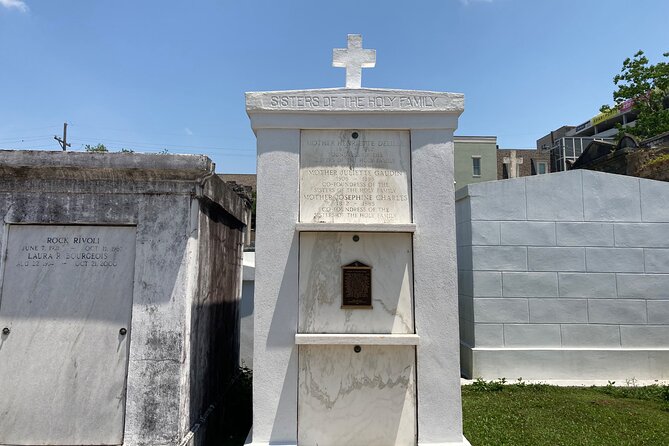
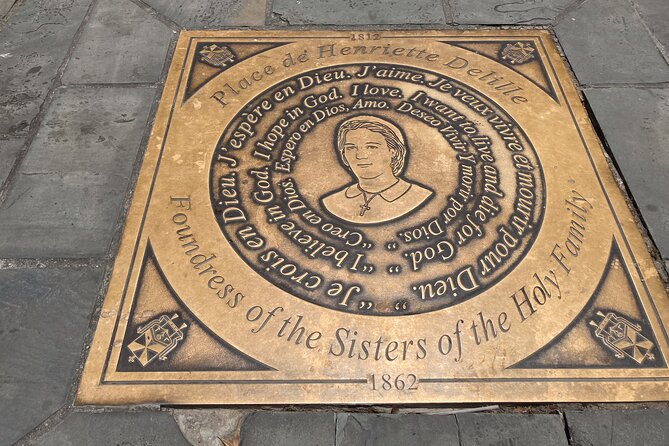
Next you’ll stop at St. Louis Cathedral, where the tour focuses on Henriette Delille, a foundress of the Sisters of the Holy Family and a figure with a bid for sainthood. The guide explains the process and how far along it is, and the stop includes free admission ticket time.
Even if you’re not a deep church-history person, I think this part is useful. It brings you out of the entertainment-and-legend lane and into something more structural: how religious institutions shaped community life, charitable work, and long-term reputations.
This stop also gives your brain a rest. After Bourbon Street energy and the politics-and-business storyline, you get a quieter, reflective change of pace—one that still feels connected to everything else you’ve been hearing.
The Ursuline convent story: education as local power
The tour then turns to the Ursuline Convent and the nuns who came to educate young ladies of New Orleans. This is one of those “you can’t really see it until someone points it out” themes.
Education sounds simple, but in a city shaped by colonial roots, shifting laws, and complicated social layers, educating girls wasn’t just a kindness. It was influence. It meant shaping the future through literacy, training, and networks.
I like that this stop is framed as miraculous in its impact. You’ll come away with a stronger sense of how institutions (not just individuals) carried the city forward. And it also helps balance the tour: you get the good, the bad, and the beautiful, but you also get the lived work that sits behind all that myth.
Frances Parkinson Keyes: writing made real on these streets
Another stop ties to Frances Parkinson Keyes, a famous author who owned and lived in a home in the area where she wrote some of her most famous works. This is a smart addition because it connects the French Quarter’s character to cultural output.
If you like literature, you’ll enjoy realizing that these streets weren’t only for commerce and crowds. They were also for quiet work—writing, thinking, and producing stories that traveled beyond New Orleans.
This part can also help you shift from “tour mode” into “wander mode.” After the stop, you’ll likely look at the surrounding blocks differently. You might start spotting the kind of residential spaces that make a writer’s life possible, even inside a city known for loud nights.
Madame LaLaurie: the bad side, handled with respect
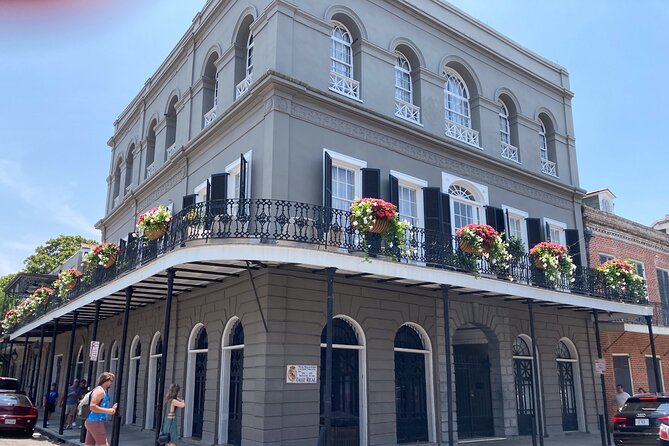
Now for the harder stuff. The tour covers Madame LaLaurie—specifically the contrast between the horror stories you may have heard and another side of her life in New Orleans. The guide keeps it honest and stays on the street-level facts they can responsibly share.
Important detail: this is a private home, so no entry. The tour does not send you inside. You’ll get a stop-and-story moment, not a look-around. That’s the right boundary for a subject like this, and it also keeps the pace consistent.
I think this is where the tour can feel most emotionally sharp. The topic is dark by nature, but the guide’s job is to give context so it’s not only shock value. You’ll end the tour with a more layered understanding of how rumors form, how reputations stick, and how complicated a single person can be in a city that loves legends.
Practical tips so you enjoy every minute
If you want the tour to feel fun instead of tiring, I’d plan like this:
- Bring sun protection: sunscreen, hat, umbrella, and sunglasses are specifically recommended because humidity and sun can hit fast.
- Hydrate ahead of time. The tour warns that dehydration can ruin your day, and that advice is real-world, not theoretical.
- Wear supportive shoes for standing and uneven sidewalks.
- Skip it in summer if breathing is an issue. The tour isn’t recommended for breathing problems in summer months due to humidity.
- Know the limit: it’s not recommended if you have walking or standing problems.
- If you’re traveling with kids or anyone who can’t handle crowds, the short length helps, but you still need a comfort level for street noise and movement.
Also, you don’t need to pack snacks. Food or drink isn’t included, so plan to grab something before or after.
Who should book this women’s French Quarter walk
This is a great fit if you want:
- A fast, guided way to learn about women who affected New Orleans in real ways
- A mix of entertainment and learning without long museum time
- Stories with names you can remember: Baroness Pontalba, Henriette Delille, Ursuline nuns, Frances Parkinson Keyes, and Madame LaLaurie
- A lively guide experience. The reviews you’ll find out there consistently point to Mikko for high-energy storytelling and strong Q&A
It may not be for you if:
- You’re sensitive to heat and humidity
- You can’t comfortably walk and stand for an hour
- You strongly prefer tours that enter buildings or museums (this tour says it stops at locations, but doesn’t enter buildings)
Should you book The Good, The Bad and The Beautiful Women of New Orleans?
Yes—if you want a practical, story-driven way to understand the French Quarter through the women who influenced it. The $10 price is a rare deal for a guided, name-rich hour that covers big touchpoints like Jackson Square, St. Louis Cathedral, the Ursuline story, and the area tied to LaLaurie.
I’d book it especially if you like your history with momentum. This isn’t a slow lecture. It’s a walk where you can ask questions, get clear answers, and leave with a better “map” of New Orleans in your head.
FAQ
FAQ
How long is the tour?
The tour lasts about 1 hour.
How far will we walk?
It’s approximately a one mile walking tour.
Where do we meet the guide?
Meet at 820 St. Louis St, New Orleans, LA 70112. Arrive 15 minutes early.
Does the tour enter buildings?
No. The tour does not enter buildings. You stop at each listed location.
Is there food or drink included?
No. Food or drink is not included.
What’s the price?
The price is $10.00 per person.
Is it a mobile ticket?
Yes. The tour uses a mobile ticket.
Is the group size limited?
Yes. The tour has a maximum of 20 travelers and requires a minimum of 4 guests to run.
Is it okay in hot weather?
The tour warns that summer humidity can be rough and it’s not recommended for travelers with breathing problems in summer months. Sun protection and hydration are strongly advised.
Where does the tour end?
It ends near LaLaurie Mansion, 1138 Royal St, New Orleans, LA 70116, and the group disbands in the lower French Quarter at the guide’s discretion.
Are service animals allowed?
Yes. Service animals are allowed.
More New Orleans Walks



More Tours in New Orleans
More Tour Reviews in New Orleans
Just added to The New Orleans Traveler


Walking Tours, compared.
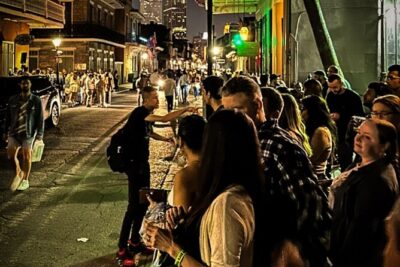 ★ 4.5Premier Ghost, Voodoo and Vampire Walking TourFrom $2712,856 reviews
 ★ 5.0Food Walking Tour of the French Quarter with Small-Group OptionFrom $756,118 reviews
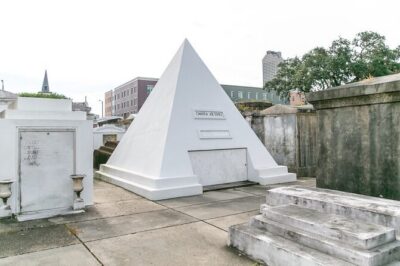 ★ 4.5St. Louis Cemetery No. 1 Official Walking TourFrom $253,941 reviews
 ★ 4.5French Quarter, Voodoo and Culture Walking TourFrom $272,961 reviews
 ★ 5.0Garden District History Walking TourFrom $352,879 reviews
 ★ 5.0French Quarter Historical Sights and Stories Walking TourFrom $352,724 reviews
 ★ 4.5Ghost and Vampire Walking Tour Of The French QuarterFrom $212,406 reviews
 ★ 5.0Adults-Only True Crime and Ghost Walking TourFrom $381,666 reviews
Browse the lists this tour appears in