Reviewed · GHOST & VOODOO TOURS
Voodoo Queen of New Orleans Walking Tour
Voodoo in New Orleans is more history than horror.
On this 90-minute walking tour, you connect Marie Laveau legends, Congo Square’s music roots, and the mix of African and Haitian spiritual practice with Catholic forms—right where it all echoes through the streets.
I really like the licensed guide approach: the tone stays respectful and clear, and you get real context instead of spooky theater. I also like that the tour links voodoo to Congo Square and jazz, so the story makes cultural sense, not just myth sense.
One thing to plan for: you’ll be walking the French Quarter’s sidewalks, which can feel uneven and tight at times—so mobility may be a consideration even if the route is generally manageable.
In This Review
- Key things that make this tour worth your time
- Why This Voodoo Queen Walk Works: Religion, Culture, and Music on Foot
- Where You Meet on Decatur: Easy Transit, Real-World Timing
- The 90-Minute Route: French Quarter to Congo Square, Built Like a Story
- Stop 1: French Quarter streets and St. Louis Cathedral
- Stop 2: A Voodoo shop stop for real-world browsing
- Stop 3: Congo Square and why it matters for jazz
- Stop 4: Marie Laveau’s home spot, plus a photo moment
- Pass by: Rampart Treehouse, tied to her last ghost sighting
- What You’ll Learn About Voodoo (Without Getting Pulled Into Myths)
- Museum and Shop Time: Browsing Potions and Protection Spells
- Pace, Walking Comfort, and What the French Quarter Does to Your Feet
- Price and Value: Why $25.60 Usually Feels Fair Here
- Who This Tour Suits Best (And Who Might Skip It)
- Should You Book the Voodoo Queen of New Orleans Walking Tour?
- FAQ
- How long is the Voodoo Queen of New Orleans walking tour?
- How much does the tour cost, and what’s included?
- Where do I meet the tour?
- Is the tour family friendly?
- Will I need food or drink during the tour?
- How much walking is involved, and is it wheelchair accessible?
- What happens if the weather is poor?
Key things that make this tour worth your time
- Small group size (max 28) makes it easier to hear the guide and ask questions.
- Congo Square gets explained as a meeting point for voodoo practice and the development of jazz.
- Marie Laveau stops include both a photo stop at the original home spot and a pass by the Rampart Treehouse site tied to her last ghost sighting.
- Voodoo shop and museum time lets you look at items like protection spells and potions (browse-focused).
- French Quarter landmarks like St. Louis Cathedral are woven into the story, not treated as a separate sightseeing chore.
- Guides often bring music into the mix, and you may even get a second-line-style moment depending on the guide and day.
Still up for a haunt? More voodoo and ghost walks
- New Orleans Premier Ghost, Voodoo and Vampire Walking Tour★ 4.5 · 12,856 reviews
- Adults-Only New Orleans Ghost, Crime, Voodoo, and Vampire Tour★ 5.0 · 6,545 reviews
- New Orleans Adults-Only Ghost, Voodoo and Vampire Tour★ 5.0 · 3,291 reviews
- New Orleans French Quarter, Voodoo and Culture Walking Tour★ 4.5 · 2,961 reviews
Why This Voodoo Queen Walk Works: Religion, Culture, and Music on Foot
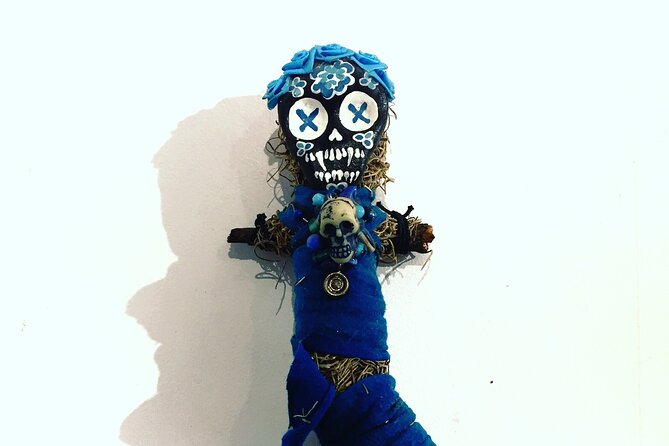
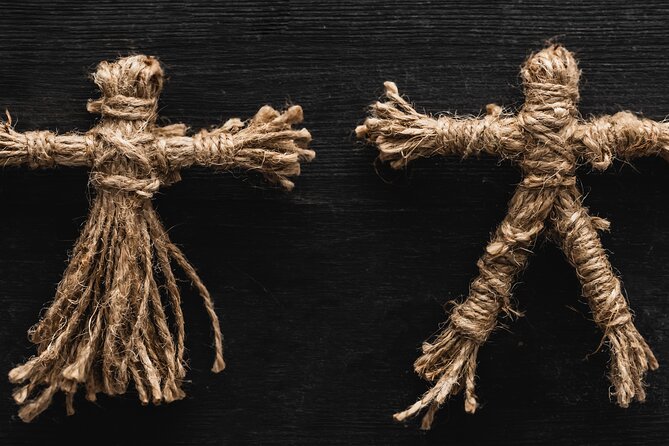
If you’ve ever thought New Orleans voodoo is mostly dolls and chaos, this is the kind of tour that fixes that in your head. You’re not just told legends. You’re shown how voodoo, or voudou, formed in New Orleans through African and Haitian influences, and how it evolved alongside Catholic rituals.
What I appreciate most is the balance. The tour doesn’t lean on cheap scares. It frames voodoo as a lived religious tradition with history, structure, and community meaning. At the same time, it keeps pulling the story outward—toward New Orleans identity, especially Congo Square and its pull on jazz. That connection is key, because it’s where many visitors realize they’ve been separating culture into neat boxes when New Orleans doesn’t work that way.
Also, guides tend to carry the story with personality. People rave about guides like Scott, Gomez, D.J., Wes, John, Orion, and Carlos, not just for facts, but for storytelling that feels grounded and respectful. If you want a walk where questions are welcome (and you’re not treated like you’re interrupting), this fits.
Where You Meet on Decatur: Easy Transit, Real-World Timing
The tour starts at Bon’s New Orleans Street Food, 620 Decatur St Unit 1B. It’s in the middle of where you actually want to be: walkable to most French Quarter sights, and close to public transportation.
A practical tip: plan to arrive 15 minutes early. One small snag I’d avoid—your phone’s map might not drop you exactly on the meeting mark. Showing up early gives you time to orient and confirm you’re at the right spot before your group rolls out.
Transportation-wise, you’re not locked into driving. The meeting area is near the St. Charles and Sixth St. tram stop, and public transit is available with nearby stops. If you’re doing other French Quarter activities that day, this meeting point makes sequencing simple.
And yes, the tour is in the open air. It runs in all weather conditions, so you’ll want footwear that handles wet pavement or heat, plus a layer if the evening breeze hits.
The 90-Minute Route: French Quarter to Congo Square, Built Like a Story
This tour runs about 1 hour 30 minutes, walking through the French Quarter at a pace that’s meant for sightseeing and discussion, not a race. There’s a maximum group size of 28, which helps keep the whole experience from turning into a long conga line where you lose the guide.
Think of the route as moving through three themes:
1) where French Quarter life and landmarks anchor the setting,
2) where voodoo practice is tied to specific places and people,
3) where Congo Square helps explain why New Orleans music became what it became.
Stop 1: French Quarter streets and St. Louis Cathedral
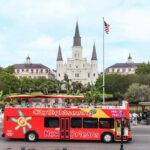
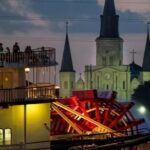
You kick things off in the French Quarter, with a walk past St. Louis Cathedral. The guide highlights it as the oldest cathedral in continuous use in the United States—an anchor point for how long the area has held layers of religion, power, and community life.
For many visitors, this is where the tour’s tone matters. The goal isn’t to treat the cathedral as a separate museum piece. It’s used to frame the cultural overlap: Catholic forms aren’t presented as replacing voodoo, but as part of the way practice blended in New Orleans.
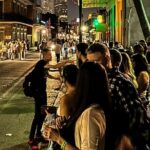
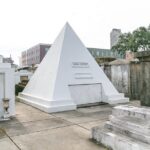
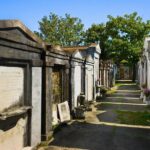
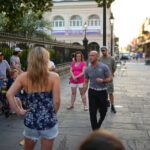
More of New Orleans on foot
Stop 2: A Voodoo shop stop for real-world browsing
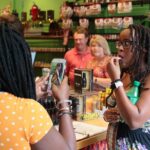
Next, you check out a Voodoo shop (listed as Voodoo Authentica). This is a short stop—about 5 minutes—so it’s not a shopping spree. The point is to see what people mean when they talk about protection, spells, and everyday spiritual tools.
If you’re sensitive about the topic, you’ll likely appreciate that this isn’t framed as a weird performance. It’s framed as culture. Still, you should be aware that some tour content may touch hard history, since the slavery and forced movement context shows up in the way guides explain New Orleans origins.
Stop 3: Congo Square and why it matters for jazz
Then you shift to Congo Square, with about 10 minutes built in. Here’s the big idea: Congo Square isn’t treated like a random tourist stop. It’s explained as a place with deep ties to voodoo practice and a major influence on jazz.
This is often the moment when the tour clicks for people. You stop thinking of voodoo as a “topic” and start seeing it as a system of meaning inside a broader community—one that also shaped New Orleans music. If you like historical connections that feel earned instead of forced, you’ll probably enjoy this stop the most.
Stop 4: Marie Laveau’s home spot, plus a photo moment
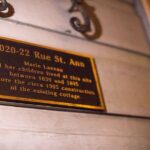
You then hear stories centered on Marie Laveau, including a stop at the original spot of her home—built for a photo op and guided storytelling. This is the point where legends meet geography.
You’ll also hear about how the Laveau family shaped voodoo’s presence in New Orleans, and why Marie Laveau becomes such a magnet for stories. The guide’s job here is to separate sensational retellings from what the place can actually tell you.
Pass by: Rampart Treehouse, tied to her last ghost sighting
Finally, you pass by the Rampart Treehouse area, noted in the tour highlights as the site of Marie Laveau’s last ghost sighting. You’re not going in circles chasing chills. It’s used as a way to talk about how folklore attaches to real people and real locations over time.
The walk ends back at the meeting point, with the whole route stitched into one continuous narrative rather than a scattershot list of stops.
What You’ll Learn About Voodoo (Without Getting Pulled Into Myths)
A big reason this tour gets strong ratings is that the guide frames voodoo in a way that’s easier to understand. You hear about how voudou mixes African and Haitian elements with Catholic rites—so it’s not presented as something “mysterious” or “other.” It’s presented as a living adaptation shaped by people, displacement, and community needs.
You’ll also get an explanation of why Marie Laveau remains such a central figure. She’s treated with reverence, and the tour emphasizes cultural and social impact, not just spooky legends. That approach matters, because New Orleans has a way of turning sacred things into entertainment if you’re careless.
One more content note: some guides may address the truth behind the slave trade and the brutality tied to it. If you’re bringing kids, this can be valuable because it’s historical context, not just scary storytelling. Guides often handle this with respect and clarity; the goal is understanding, even when the facts are heavy.
Museum and Shop Time: Browsing Potions and Protection Spells
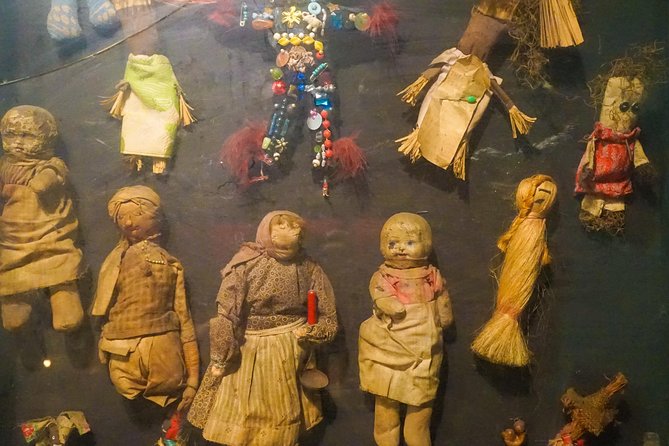
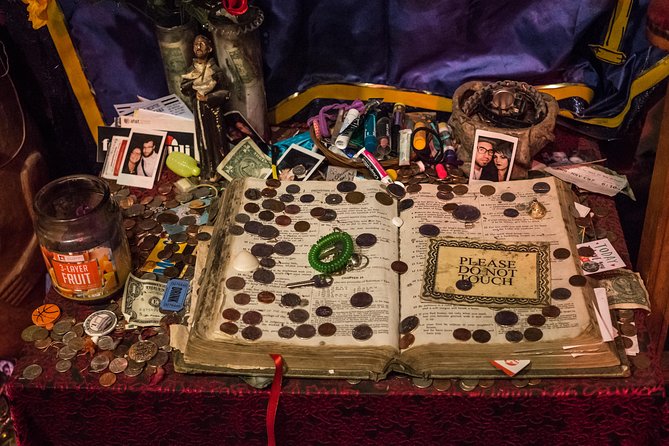
The tour description includes time to stop by the New Orleans Historic Voodoo Museum and browse at Marie Laveau’s House of Voodoo for items like potions and protection spells.
Here’s how to think about this part so you get the most out of it: treat it as a window into belief as commerce, craft, and symbolism. You’re not there to buy anything. You’re there to understand why these objects exist in people’s lives and how they connect to spiritual practice.
If you’re the kind of visitor who loves seeing the physical side of culture—signs, bottles, symbols, and the way people talk about them—this stop adds texture. If you prefer only outside storytelling and don’t want any time inside shops, you can still enjoy the walk, but you should know this portion is intentionally included.
Pace, Walking Comfort, and What the French Quarter Does to Your Feet
This is a walking tour, and it moves through the French Quarter. That means cobblestones, narrow sidewalks, and crowds can change how “easy” it feels day to day.
Here’s the balancing truth: the tour is described as having route accessibility support (with flat, paved areas mentioned in the FAQ), yet the French Quarter itself can still pose challenges for mobility. So I’d treat it like this:
- If you can handle uneven sidewalks for about 90 minutes, you’ll likely be fine.
- If you use a wheelchair or mobility device, go in expecting tight corners and real-world sidewalk limits even if the route is planned to be manageable.
If the heat is heavy, look for how the guide manages the group. People praise guides like Orion for finding shade when needed, which is exactly what you want in New Orleans—practical care, not just a lecture.
Price and Value: Why $25.60 Usually Feels Fair Here
At $25.60 per person for about 90 minutes with a licensed guide, this is priced like a solid history walking tour, not a big production. You’re paying for three things:
- a guide who can connect voodoo to French Quarter landmarks,
- context for Congo Square and jazz development,
- and time to visit the museum/shop spaces tied to the story.
Value improves when the guide is strong. The tour’s ratings reflect that—people consistently highlight guides like Gomez and Orion for weaving New Orleans founding themes into how voodoo formed, plus for answering questions and keeping the tone respectful.
If you’re only doing one guided history-style walk in the French Quarter, this can be a smart choice because it covers culture, music roots, and a major character like Marie Laveau without turning into a gimmick. If you already know a lot about voodoo and want strictly museum-based study, you might prefer a longer museum day instead. But for many first-timers, this is the right mix of story and place.
Who This Tour Suits Best (And Who Might Skip It)
This tour fits best if you:
- want history tied to actual locations, not just abstract explanations,
- care about the Congo Square-to-jazz connection,
- like guides who keep things interactive and let you ask questions,
- want a respectful tone about religion and culture.
It also works for families. The tour is described as appropriate for guests of all ages, and kids can enjoy it when they’re curious about history and not easily spooked by spiritual folklore. Just remember: some guides may include heavy context related to the slave trade.
You might want to choose something else if you strongly dislike any religious or spiritual discussion, or if you’re looking only for ghost stories. The tour is designed to teach what voodoo is and what it isn’t—not to sell fear.
Should You Book the Voodoo Queen of New Orleans Walking Tour?
Book it if you want a high-signal French Quarter experience: Marie Laveau stories grounded in place, Congo Square explained as a music and culture engine, and a guide who treats voodoo as religion and history rather than a dark theme park.
I’d especially recommend it if you’re the type who asks why things are connected—because this tour makes the links between voodoo practice, community life, and New Orleans music in a way that usually sticks.
If you hate walking or you’re very mobility-limited, take a careful look at your comfort level with uneven sidewalks. Otherwise, for a single afternoon slot in the French Quarter, this is one of those tours that gives you more than a few photos—it gives you a clearer lens on the city.
FAQ
How long is the Voodoo Queen of New Orleans walking tour?
It runs about 1 hour 30 minutes (approx.).
How much does the tour cost, and what’s included?
The price is $25.60 per person. It includes a licensed guide and the 90-minute walking tour.
Where do I meet the tour?
You meet at Bon’s New Orleans Street Food, 620 Decatur St Unit 1B, New Orleans, LA 70130. The tour ends back at the meeting point.
Is the tour family friendly?
Yes. It covers history and is described as appropriate for guests of all ages.
Will I need food or drink during the tour?
Food and drink are not included. You can arrive early and grab something from the bakery at the departure location if you’d like.
How much walking is involved, and is it wheelchair accessible?
It does involve a fair amount of walking and requires a moderate physical fitness level. The tour is described as wheelchair accessible, but the historic French Quarter streets may still cause challenges.
What happens if the weather is poor?
The tour requires good weather. If it’s canceled due to poor weather, you’ll be offered a different date or a full refund.
More Tours in New Orleans


More Tour Reviews in New Orleans
More Ghosts, Voodoo & Vampires


Just added to The New Orleans Traveler
Ghost & Voodoo Tours, compared.
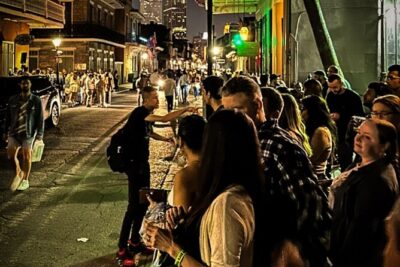 ★ 4.5Premier Ghost, Voodoo and Vampire Walking TourFrom $2712,856 reviews
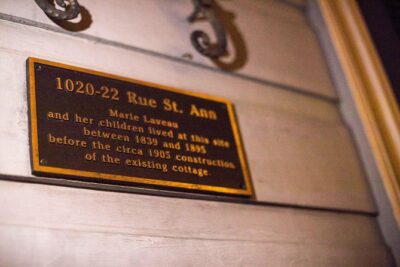 ★ 5.0Adults-Only New Orleans Ghost, Crime, Voodoo, and Vampire TourFrom $376,545 reviews
 ★ 5.0Adults-Only Ghost, Voodoo and Vampire TourFrom $293,291 reviews
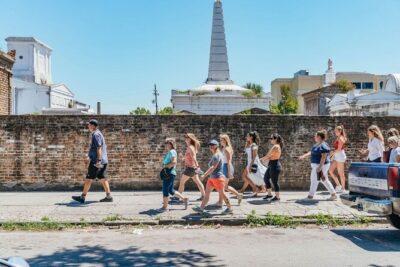 ★ 4.5French Quarter, Voodoo and Culture Walking TourFrom $272,961 reviews
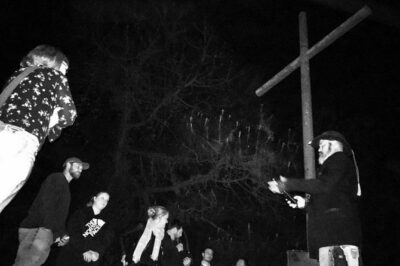 ★ 4.5Cemetery and Ghost BYOB Bus Tour in New OrleansFrom $302,685 reviews
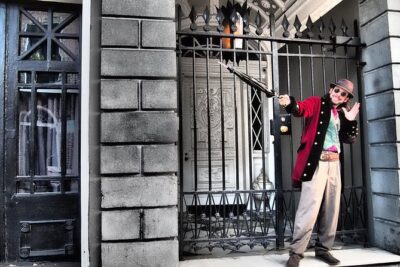 ★ 4.5Ghost and Vampire Walking Tour Of The French QuarterFrom $212,406 reviews
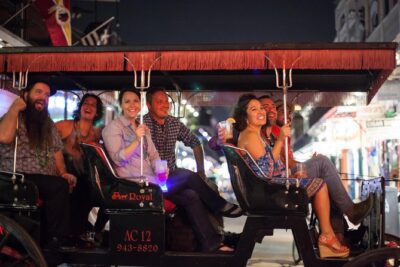 ★ 4.5Small-Group Haunted History Carriage TourFrom $652,289 reviews
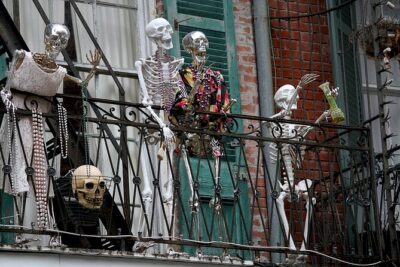 ★ 4.5Adults Only Haunted Pub Crawl in New OrleansFrom $292,158 reviews
Browse the lists this tour appears in