
Reviewed · FRENCH QUARTER TOURS
The French Quarter History Tour
A few blocks can tell a whole city’s story. This French Quarter History Tour stitches together founding legends, scandal, and local perspective as you move between landmarks and the back-street characters tied to New Orleans’ start. I especially like how the stops are story-led, not just photo-led, and how it stays a small group with a cap of 16.
You’ll get to hear details like the French colonists arriving in 1718, the pirate-lore around St. Louis Cathedral and Pirate’s Alley, and the jazz origins tied to Louis Armstrong Park. The one thing to plan for: you’ll be walking and moving between spots, and parts of the route include the kind of weather the Quarter is famous for—so comfortable shoes and patience help. Also note that one stop is a smoking bar, so if smoke bothers you, keep that in mind.
In This Review
- Key points to look for
- Why this tour works for first-timers and return visits
- Price and what you actually get for $35
- Getting oriented fast: meeting point, timing, and walking rhythm
- Stop 1: Cuban Creations Cigar Bar and the Quarter’s living culture
- Stop 2: Washington Artillery Park and the river-under-your-feet story
- Stop 3: Cafe Du Monde, beignets, and why old equals iconic
- Stop 4: St. Louis Cathedral, pirates, and the one quick peek worth waiting for
- Stop 5: The Pontalba Buildings and Baroness Pontalba’s thriller-level drama
- Stop 6: Jackson Square, Andrew Jackson’s spite, and the French colonial darker side
- Stop 7: French Quarter mini-stops and the guide’s big-picture thread
- Stop 8: Lafitte’s Blacksmith Shop Bar, smugglers, war echoes, and Tennessee Williams
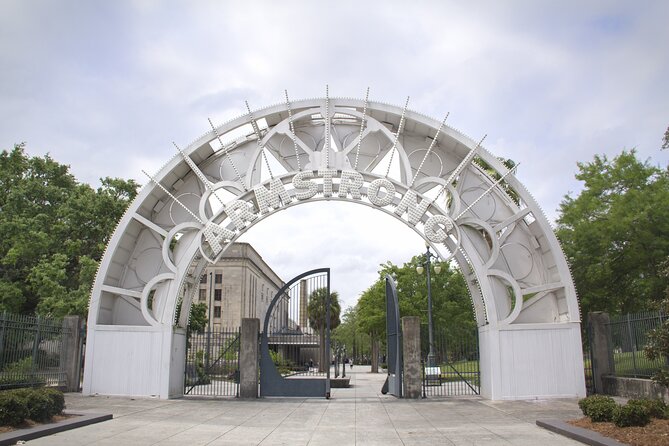
- Stop 9: Louis Armstrong Park and jazz beginnings at the edge of Treme
- What you’ll learn if you choose the right mindset
- Should you book the French Quarter History Tour?
- FAQ
- How long is the French Quarter History Tour?
- What is the price per person?
- What are the main stops on the tour?
- Is the tour a small group?
- Is it offered in English, and is it a mobile ticket?
- What happens if weather is bad, or you cancel?
Key points to look for
- Small group size (max 16) keeps the pace human and the Q&A possible
- St. Louis Cathedral admission included saves you time and adds real value
- Cigar bar stop at Cuban Creations brings atmosphere, plus cocktails
- Founding stories from multiple eras (Chitimacha roots to French colonists to later legends)
- Pirate’s Alley and dueling-ground lore turn major sights into actual stories
- Jazz beginnings at Louis Armstrong Park puts culture on the route, not just architecture
More ways to wander the Vieux Carre
- New Orleans Food Walking Tour of the French Quarter with Small-Group Option★ 5.0 · 6,118 reviews
- New Orleans French Quarter, Voodoo and Culture Walking Tour★ 4.5 · 2,961 reviews
- French Quarter Historical Sights and Stories Walking Tour★ 5.0 · 2,724 reviews
- Ghost and Vampire Walking Tour Of The French Quarter★ 4.5 · 2,406 reviews
Why this tour works for first-timers and return visits
New Orleans has a way of repeating itself: names, alleys, legends, and the same corners with completely different meanings depending on who’s telling the tale. This tour is built for that. Instead of hitting every stop with a generic script, you get a guided line through time—where each landmark comes with a reason it matters.
I like that the route stays focused on places you’ll likely circle again on your own, but here you get the context first. Starting at Cuban Creations also sets the tone fast: you’re right in the Quarter, surrounded by old-street energy, before you ever reach the postcard icons.
The other big value: it’s only about two hours. That’s long enough to feel like you learned something real, not long enough to turn into a slog. And at $35 per person, with one major admission included, it’s easy to justify if you’re trying to make the most of a limited schedule.
Price and what you actually get for $35
At $35.00 per person for roughly 2 hours, this tour sits in the sweet spot for many visitors: structured enough to save you research time, but short enough to keep your day flexible.
Here’s what stands out in the value mix:
- Several stops are free admission on the tour (you’re not paying entry fees at every corner).
- St. Louis Cathedral admission is included, which matters because it’s the kind of stop that costs time and tickets on your own.
- You get a mobile ticket, which is handy in a place where plans can change and you might not want extra paper.
One more practical point: confirmation comes at booking. So you can line up the start time—10:30 am—without last-minute guesswork.
Getting oriented fast: meeting point, timing, and walking rhythm
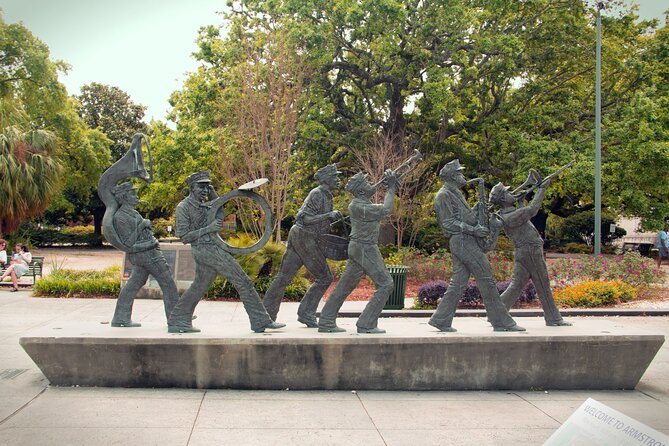
You’ll meet at Cuban Creations Cigar Bar, 533 Toulouse St. The tour ends at the Jazz Statue (1298–1100 St Ann St.), near Louis Armstrong Park in the Treme area just outside the French Quarter.
This matters because it changes how you can plan after the tour. You won’t finish back at the original start spot. Instead, you’ll likely be positioned to keep exploring on foot, or to hop to dinner with less backtracking.
Group size caps at 16, which helps. On tours like this, a smaller group usually means fewer stops where you’re waiting for a line to form. The route also includes short time windows at each stop, so you’re moving through stories rather than hanging around one location for a long stretch.
Stop 1: Cuban Creations Cigar Bar and the Quarter’s living culture
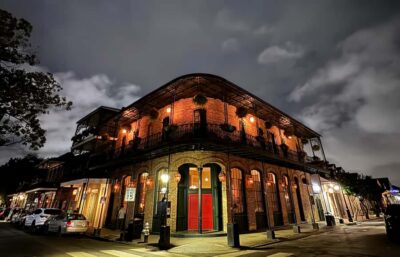
The tour begins at Cuban Creations Cigar Bar, an inviting spot with comfortable indoor and outdoor seating. It’s also the only smoking bar in the French Quarter, so it brings a very specific local vibe.
If you like the idea of seeing how tradition and nightlife blend, this opener works well. It’s not just about history in theory—you start in a real place people use now, while the guide sets up the past you’re about to hear.
Practical note: cocktails are a big part of the appeal here, and the stop is listed as about 20 minutes. If smoke affects you, choose your seating wisely, or just be aware you may pass through a more intense environment than other bars on your route.
More of the city's three centuries

Stop 2: Washington Artillery Park and the river-under-your-feet story
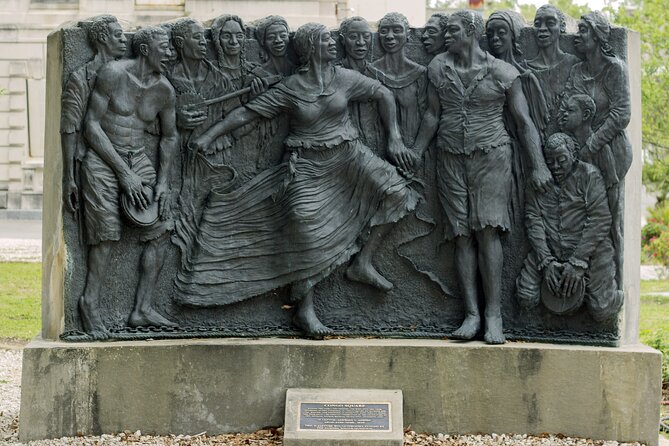
From there, you move to Washington Artillery Park, described as one of the most scenic spots in the Quarter. Here the guide shifts into the city’s origin logic: the river and the bed of mud the city rests on.
Then the history widens. You’ll hear about the early Chitimacha tribe that settled in the area, and the French colonists who founded New Orleans in 1718—not just as a date, but as a turning point that shaped everything you’ll see later.
This is the kind of stop that makes you look up at the buildings differently. Once you understand the ground, the streets feel less random.
Stop 3: Cafe Du Monde, beignets, and why old equals iconic
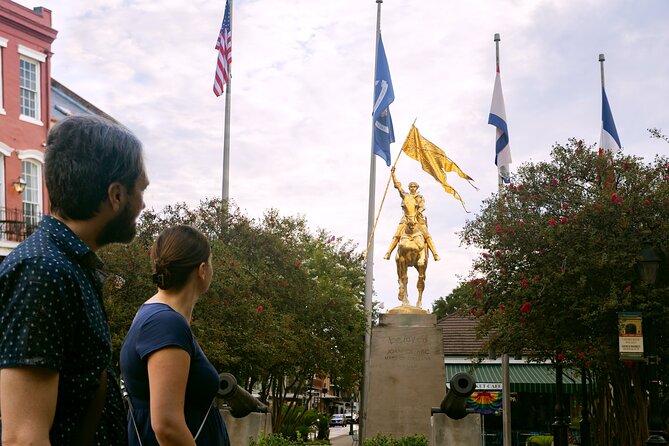
Next you’ll pass Cafe Du Monde, described as the oldest coffee house in the city. The tour uses this as a springboard into the sweet history of beignets.
You’re not stuck in a long line here; it’s more of a story stop. That’s a plus if you’re trying to fit this into a busy day. It also gives you a framework for why the place is so recognizable—so when you return later (or when you see it from a distance), it lands with meaning instead of just being a photo moment.
Stop 4: St. Louis Cathedral, pirates, and the one quick peek worth waiting for
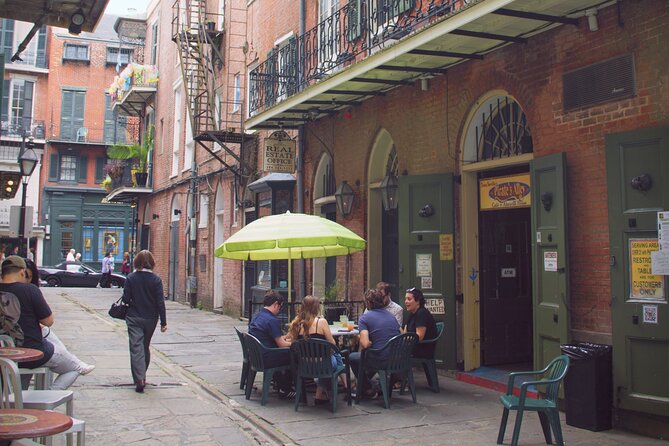
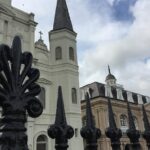
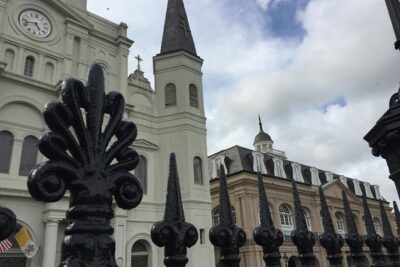
Now comes the star. The tour heads to the St. Louis Cathedral, and it’s hard not to see why. This is the kind of landmark you feel even if you’ve never studied New Orleans before.
The stories around it are the point. You’ll hear about pirate prisons and dueling grounds, plus references to Pirate’s Alley along the way. If it’s open, you may get a quick peek inside the cathedral—fast, but meaningful.
This stop includes admission on the tour, and it’s also noted as the oldest in the country. Even if you’re not a museum person, that detail changes the weight of the visit. It turns a big building into a witness for centuries of conflict, ceremony, and everyday life.
Stop 5: The Pontalba Buildings and Baroness Pontalba’s thriller-level drama
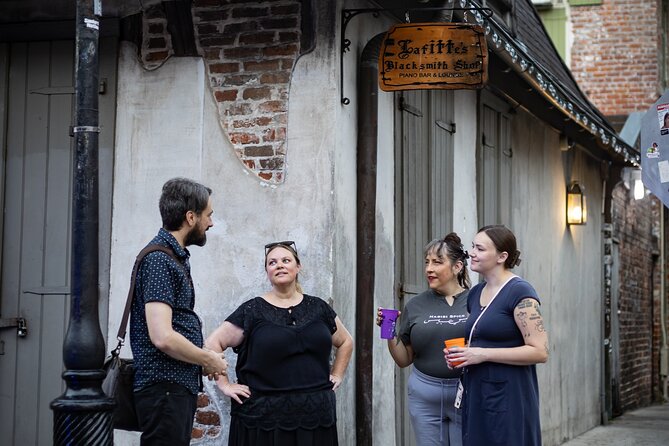
At the Pontalba Buildings, the guide slows the pace just enough to make the story click. You’ll hear about Baroness Pontalba, described as the wealthiest family New Orleans has ever seen, and how Spanish nobles funded construction for buildings in Jackson Square.
The guide frames it as a real-life psychological thriller. That might sound dramatic, but it fits the way New Orleans history often works: power, money, reputations, and consequences all collide in public spaces.
It’s also a useful stop for understanding why the Quarter looks the way it does. The buildings aren’t just pretty—they’re part of a deeper plan, and the guide helps you see that pattern.
Stop 6: Jackson Square, Andrew Jackson’s spite, and the French colonial darker side
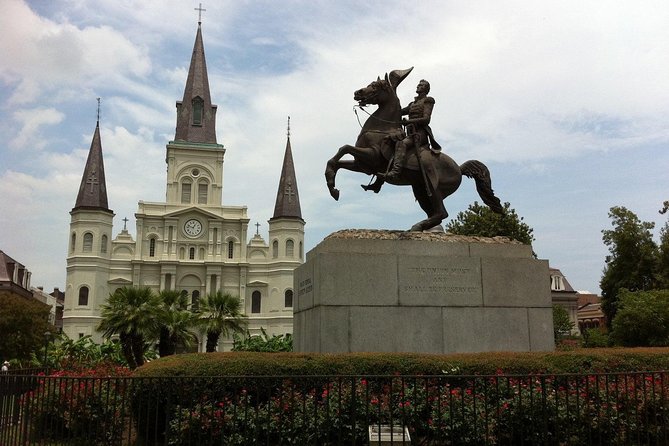
From the Pontalba Buildings, you circle into Jackson Square. The tour shares the story of the Andrew Jackson statue, noted as the only statue in the city erected out of spite.
Then the guide adds a darker layer from the French colonial period, including mention of bizarre punishments in the square. That’s the kind of detail that flips the script on what a visitor might assume about a bright, open plaza.
You’ll look around and realize the square isn’t only a viewpoint. It’s also a stage where social rules have been enforced, bent, and broken over time. That’s why this stop feels different once you’ve heard the context.
Stop 7: French Quarter mini-stops and the guide’s big-picture thread
You’ll keep moving through mini-stops around the Quarter. This part is where the guide ties the city together for you, using the facts you just heard and connecting them to nearby streets and landmarks.
The goal here is practical: you should finish with a clearer sense of how New Orleans developed—who shaped it, what conflicts shaped it, and why people today still talk about those names and places. The tour is designed so you leave with an understanding of the Quarter that’s more than surface-level sightseeing.
If you’re the kind of person who likes to return to places later and think, Wait, I get why this is here—that’s what this segment sets up.
Stop 8: Lafitte’s Blacksmith Shop Bar, smugglers, war echoes, and Tennessee Williams
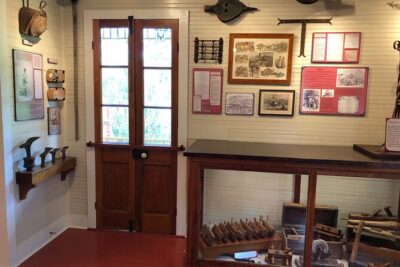
Next comes Lafitte’s Blacksmith Shop Bar, and it’s a stop that feels like a secret even though it’s famous. The building dates to the 1780s, and it sits at a dead-end of Bourbon St. in a way that makes the stories feel extra plausible.
You’ll hear how it once worked as a business front for smugglers and pirates. Even better for story nerds: those pirates also enlisted to fight in the war of 1812. The tour notes that men who re-enact the battle come to drink afterward, which gives the history a modern echo you can feel in the room.
Then comes a later chapter: in the 1960s, Cafe Lafitte was a popular gay bar, frequented by Tennessee Williams. That detail matters because it shows how the Quarter’s identity keeps evolving, not just repeating its colonial-era past.
Stop 9: Louis Armstrong Park and jazz beginnings at the edge of Treme
The tour ends with a stroll through Louis Armstrong Park, described as the birthplace of jazz music. Even though the park is just outside the French Quarter in the Treme area, it works as a cultural reset.
You’ll hear more New Orleans history, including how the city began, and you’ll get the guide’s “juicy stories” before heading into the heart of the Quarter again—or simply before finishing your day with a new lens.
Finishing at the Jazz Statue also makes sense. You don’t just exit the tour; you land at a symbolic point that connects the city’s streets to its music.
What you’ll learn if you choose the right mindset
The best part of tours like this is how they change your attention. After the stories, you’ll likely notice patterns:
- how power shows up in public spaces like Jackson Square,
- how maritime and conflict history connects to alley names and landmark lore,
- how later cultural history keeps layering over earlier days.
If you’re coming in with a short time window, this tour gives you a strong foundation. If you’ve already walked the Quarter on your own, it helps you fill in the blanks—turning what you thought was just a cool building or a famous bar into a place with stakes.
And since the tour is in English and kept to a smaller group, you can actually listen without feeling like you’re just herded from stop to stop.
Should you book the French Quarter History Tour?
Book it if:
- you want a short, structured way to understand the French Quarter,
- you care about stories as much as sights,
- you’re interested in landmarks like St. Louis Cathedral and the lore around Pirate’s Alley,
- you like the idea of learning from a local-style route with a small group.
Skip it if:
- you strongly dislike smoke, since the tour starts at Cuban Creations, the Quarter’s only smoking bar,
- you’re hoping for a long, slow walk with lots of downtime at one stop.
For most people visiting New Orleans, this is an easy yes. It’s priced fairly, it includes an important entry point, and it focuses on the kind of context that makes the Quarter feel like more than a postcard loop.
FAQ
How long is the French Quarter History Tour?
It runs for about 2 hours.
What is the price per person?
The tour costs $35.00 per person.
What are the main stops on the tour?
You’ll stop at Cuban Creations Cigar Bar, Washington Artillery Park, Cafe Du Monde (you pass by), St. Louis Cathedral, the Pontalba Buildings, Jackson Square, Lafitte’s Blacksmith Shop Bar, and Louis Armstrong Park.
Is the tour a small group?
Yes. The tour has a maximum group size of 16.
Is it offered in English, and is it a mobile ticket?
It’s offered in English, and you receive a mobile ticket.
What happens if weather is bad, or you cancel?
The tour requires good weather. If it’s canceled due to poor weather, you’ll be offered a different date or a full refund. You can cancel for a full refund up to 24 hours before the start time.
More Tours in New Orleans


More Tour Reviews in New Orleans
More of the French Quarter

Just added to The New Orleans Traveler


French Quarter Tours, compared.
 ★ 5.0Food Walking Tour of the French Quarter with Small-Group OptionFrom $756,118 reviews
 ★ 4.5French Quarter, Voodoo and Culture Walking TourFrom $272,961 reviews
 ★ 5.0French Quarter Historical Sights and Stories Walking TourFrom $352,724 reviews
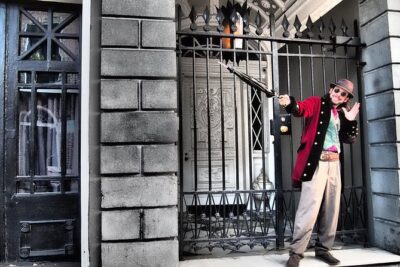 ★ 4.5Ghost and Vampire Walking Tour Of The French QuarterFrom $212,406 reviews
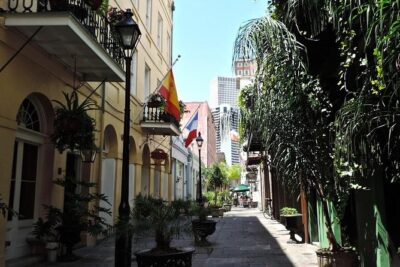 ★ 4.5City Tour: French Quarter, Garden District & CemeteryFrom $402,209 reviews
 ★ 5.0French Quarter Food Tour: Cajun, Creole and CultureFrom $811,246 reviews
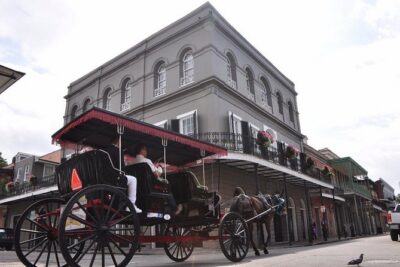 ★ 5.0French Quarter and More Carriage RideFrom $651,141 reviews
 ★ 5.0French Quarter walking Food Tour Famous Flavors of New OrleansFrom $751,115 reviews
Browse the lists this tour appears in