

Reviewed · GARDEN DISTRICT TOURS
Self Guided Walking Tour of New Orleans’ Historic Garden District
Old houses, big stories, your own pace. This self-guided Garden District walk is built around a VoiceMap audio route that lines up with where you are, so you can learn fast without herding strangers. I like the clear, easy-to-follow narration and the ability to go at your pace with offline audio and maps. The main downside to plan around: some sidewalks can be a bit uneven underfoot.
For the price of $7.49, you’re basically buying time-saving orientation plus a guided story thread through some of the neighborhood’s best-known mansions and architectural styles. The walk is roughly 1 to 1 hour 15 minutes, and it ends outside Lafayette Cemetery No. 1, giving you a natural “wrap-up” moment at the finish line.
In This Review
- Key highlights at a glance
- Why this $7.49 Garden District walk is such good value
- Using the VoiceMap app: what you need and how it works
- Starting outside Rink Shopping Center: the easiest way to begin
- Briggs-Staub House and the Opera Guild Home: what to notice on sight
- Louise S McGehee School: where the walk gets more than architectural
- Buckner Mansion: largest pre–Civil War house with TV fame
- Seven Sisters houses: the myth-buster moment
- Pritchard-Pigot House, Carroll-Crawford House, and Warwick Manor
- Camp and Third Street: small intersection, big neighborhood logic
- Montgomery-Hero House and Archibald Montgomery’s story
- Walter Grinnan Robinson House: indoor plumbing as a lifestyle upgrade
- Commander’s Palace sightline and the walk to Lafayette Cemetery No. 1
- Who should book this Garden District audio walk (and who might want to skip it)
- Should you book it?
- FAQ
- How much does the self-guided Garden District walking tour cost?
- How long does the tour take?
- What language is the tour available in?
- What do I need to bring?
- Does it work offline?
- Where does the tour start and end?
- Is this tour for individuals or groups?
- Are service animals allowed?
- What if I need to change or cancel?
Key highlights at a glance
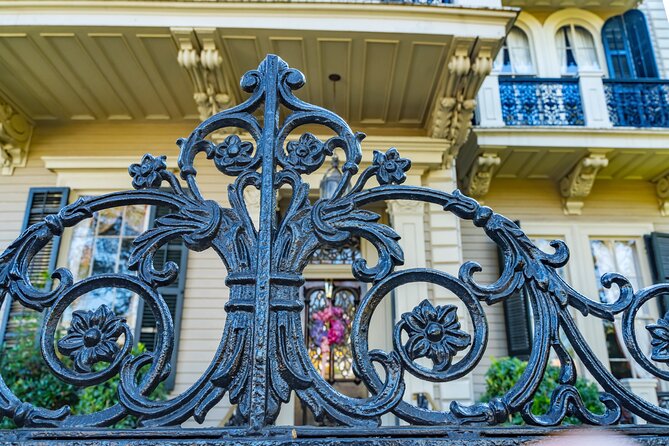
- Offline-ready audio and maps so your phone can stay useful even with spotty coverage
- Narration that starts at the right places, based on your location
- Film-and-TV name recognition tied to real houses like Buckner Mansion and the Opera Guild Home
- Architecture notes you can actually use while you’re standing on the sidewalk
- Flexible pace with the ability to pause and restart prompts
Keep strolling the oak-lined Garden District
- New Orleans Garden District History Walking Tour★ 5.0 · 2,879 reviews
- New Orleans City Tour: French Quarter, Garden District & Cemetery★ 4.5 · 2,209 reviews
- New Orleans Small-Group Garden District Walking Tour★ 5.0 · 1,384 reviews
- New Orleans City and Cemetery Tour with Garden District Stroll★ 4.5 · 766 reviews
Why this $7.49 Garden District walk is such good value

The Garden District can feel like “just pretty houses” if you walk it without a plan. This tour gives you a simple structure: you move block to block, and the audio tells you what to look for and why it matters. That’s the real value here. You’re not paying for a person to talk—you’re paying for a story line that makes the neighborhood click.
I also like how compact it is. At about 1 to 1 hour 15 minutes, you can fit it between other New Orleans plans without sacrificing an entire morning or afternoon. And because it’s self-guided, you can linger in the spots that grab you, then catch up when you’re ready.
The other value win: you don’t need a tour-group schedule. One person’s history-wonk pace is another person’s “I need a breather” pace—and this format supports both.
Using the VoiceMap app: what you need and how it works
You’ll use the VoiceMap app on your phone (Android or iOS). The included offline download covers audio, maps, and geodata, which is handy in New Orleans when signal can be unpredictable.
Bring what’s not included:
- Your smartphone
- Headphones (required)
And do one small pre-trip chore: make sure your phone is charged. The tour relies on the app, and a dead battery turns a great walk into a short, silent mystery.
From the experience feedback, the app is generally accurate at starting the narration at the right locations, and you can pause/start as needed. If the voice tempo feels a little slow, you may be able to adjust playback speed on your device—handy if you’re itching to move faster.
Starting outside Rink Shopping Center: the easiest way to begin
Your walk starts at Rink Shopping Center, 2727 Prytania St. The route begins outside the mall area, passing by the Garden District sign as your first “you’re in the right place” cue.
This matters more than it sounds. Garden District streets can look similar at a glance, so getting oriented early keeps you from wandering. Once the tour narration locks onto you, the rest of the walk tends to feel like a guided stroll rather than a scavenger hunt.
Briggs-Staub House and the Opera Guild Home: what to notice on sight
Right away, you’ll pass by the Briggs-Staub House. It isn’t a long stop, but it sets the tone: large historic homes, strong lines, and details you’ll keep seeing all the way through the neighborhood.
Then comes a standout pass-by that’s worth paying attention to: the New Orleans Opera Guild Home, featuring an 1850 Greek Revival Double Gallery. Greek Revival is all about proportion and bold classical forms, and double galleries are exactly the kind of feature that makes Garden District architecture recognizable.
Here’s the fun connection: it gained extra pop-culture attention through its appearance in the Oscar-winning film Django Unchained. Even if you’re not watching for movie details, this kind of recognizable architecture reference helps you remember what you’ve seen.
Possible tradeoff: since some locations are framed as pass-by moments, you’ll mostly take it in from the sidewalk rather than with time for up-close exploration.
More of New Orleans on foot





Louise S McGehee School: where the walk gets more than architectural
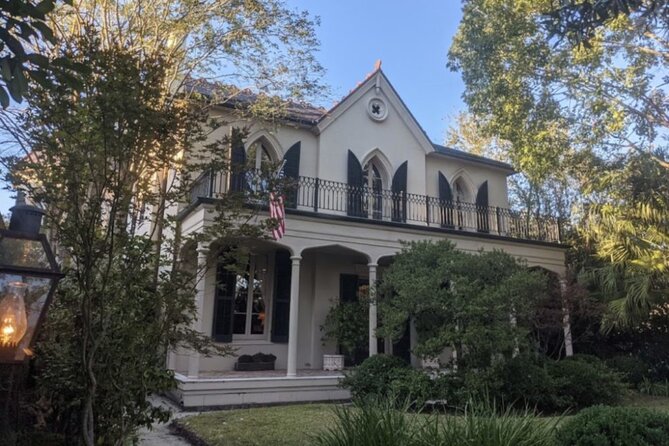
As you continue, you’ll pass by Louise S McGehee School, described as a historic institution in the Garden District. It adds a useful layer beyond “pretty homes.” You start seeing the neighborhood as a lived-in place with real public institutions, not only a stage set for architecture photos.
This is a good moment for you to slow down a bit and look at the street context: how homes, schools, and neighborhood layout interact. That’s where the Garden District stops feeling like a static postcard.
Buckner Mansion: largest pre–Civil War house with TV fame
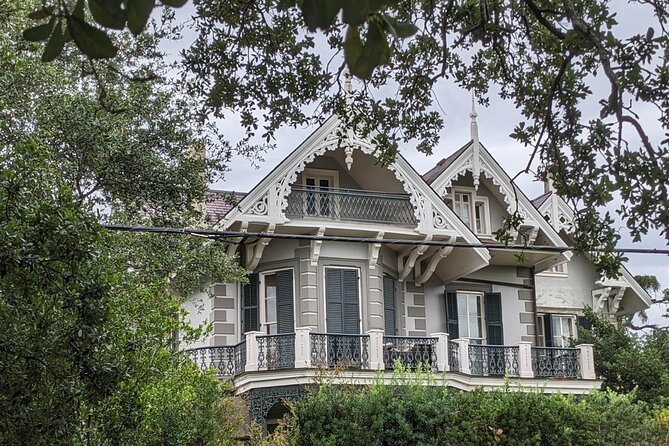
Next up is Buckner Mansion, highlighted as the largest house built before the Civil War. That superlative is worth lingering on, because you can feel the scale just standing nearby—even without needing interior access.
It’s also famous for appearing in American Horror Story, which gives you a modern reason to pay attention. If you like spotting production connections to real places, this is one of the most rewarding stops on the walk.
Practical consideration: large mansion properties often come with viewing limits. You might get your best impressions from the front facade and street-facing angles, so don’t expect a full “touring a home” experience.
Seven Sisters houses: the myth-buster moment
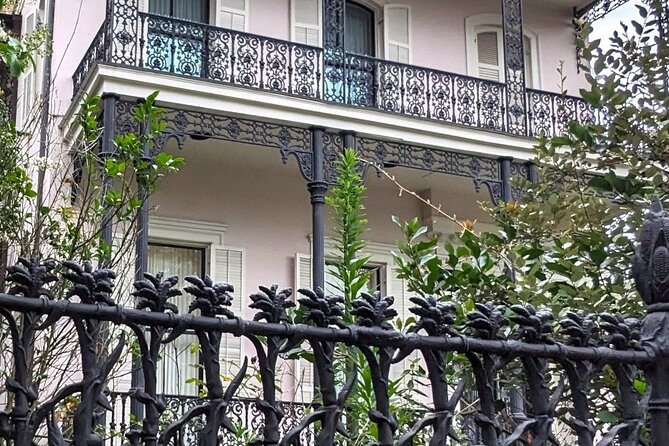
You’ll also see the Seven Sisters houses, and the tour specifically helps clear up a popular story: the myth that their father built them for seven daughters living side-by-side.
Why this matters: Garden District lore can be more entertaining than accurate. A quick myth-busting moment like this nudges you toward the real story—architecture and planning—not just legend.
If you like history with a little street-level skepticism, this part is a nice breather after the bigger, flashier mansion stop.
Pritchard-Pigot House, Carroll-Crawford House, and Warwick Manor

The walk continues past several residential landmarks, including the Pritchard-Pigot House, which the tour notes might look like a frat house. That comparison can help you recognize the style quickly because it translates architectural features into everyday mental images.
Then you’ll pass by the Carroll-Crawford House, which blends into the neighborhood’s elegant streetscape, and Warwick Manor, another distinctive residence that adds visual variety to the route.
This stretch is where the tour starts doing its best work for “regular people.” Instead of overwhelming you with jargon, it points out enough to get you looking. You’ll likely start noticing repetitive themes—columns, galleries, rooflines, and façade rhythms—that make Garden District homes feel like a family, even when they vary in size.
Camp and Third Street: small intersection, big neighborhood logic
You’ll pass the corner of Camp and Third Street. It’s not framed as a major “stop,” but corners like this matter for understanding how the area connects. In neighborhoods like this, streets aren’t just lines on a map—they’re how the whole district “breathes,” with sightlines and block patterns shaping what you see next.
If you’ve ever felt lost on foot in a pretty neighborhood, this kind of navigation cue is exactly what you want from an audio walk.
Montgomery-Hero House and Archibald Montgomery’s story
Another highlighted stop is the Montgomery-Hero House, built for Archibald Montgomery, identified here as the president of the Crescent City Railroad. That detail is more than trivia. It links the house to the economic forces that helped shape New Orleans during that era.
This is where you’ll feel the tour turning from “look at the building” into “why this neighborhood grew the way it did.”
Walter Grinnan Robinson House: indoor plumbing as a lifestyle upgrade
One of the most interesting stops on the route is the Walter Grinnan Robinson House, described as the first home to feature indoor plumbing. That’s a big deal because it’s a technology story, not just a style story.
Think about what that means for daily life: indoor plumbing changes routines, convenience, household labor, and even how a home functions day to day. It’s a reminder that architecture is not only about appearance—it’s also about comfort, systems, and modernization.
If you tend to enjoy history that sounds practical, this will be the kind of moment you remember later.
Commander’s Palace sightline and the walk to Lafayette Cemetery No. 1
Near the end, you’ll pass Commander’s Palace, a well-known Garden District restaurant. It’s not the focus of the tour, but it gives you a real-world anchor: this neighborhood isn’t just preserved for the past. It still feeds modern life—dining, strolling, and everyday New Orleans routines.
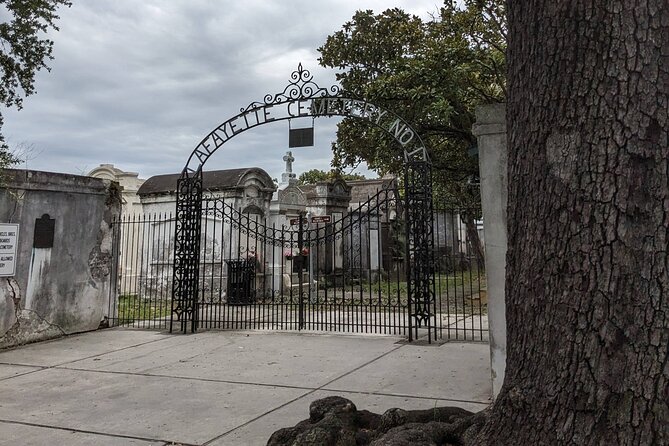
Finally, the tour ends outside Lafayette Cemetery No. 1 at 1427 Washington Ave. This finish makes sense. Cemeteries in New Orleans are part of the city’s long memory, and ending there turns the walk into something more reflective than a loop of houses.
Even if you’re not a cemetery deep-reader, it’s a clean ending point where the stories you heard along the way can land.
Who should book this Garden District audio walk (and who might want to skip it)
This is a great fit if you want:
- A self-guided way to see the Garden District without group pacing
- A route that takes about 1 to 1 hour 15 minutes
- Helpful architecture-and-history notes you can absorb slowly
- Offline audio and maps so you can walk with confidence
It’s also especially useful if you prefer to avoid a group setting. One piece of feedback highlighted that the self-paced format can work well when anxiety or group discomfort is a factor.
A skip might be better if:
- You don’t want to rely on a phone and headphones
- You’re sensitive to minor sidewalk unevenness
- You’re hoping for a tour that gets you inside buildings (this is mostly an exterior walk with pass-by viewing moments)
Should you book it?
If you’re doing the Garden District for the first time, I’d book this. For the cost, you get structure, context, and a story thread that helps the neighborhood make sense fast. You’ll leave knowing what you actually saw: Greek Revival forms, pre–Civil War scale at Buckner Mansion, myth-busting about the Seven Sisters, and the indoor-plumbing milestone at the Walter Grinnan Robinson House.
One last nudge: plan to walk with a charged phone and bring headphones. If you can do that, this tour is a smart, low-pressure way to get real value out of your time in the Garden District.
FAQ
How much does the self-guided Garden District walking tour cost?
It costs $7.49 per person.
How long does the tour take?
Plan for about 1 hour to 1 hour 15 minutes.
What language is the tour available in?
The tour is offered in English.
What do I need to bring?
You need your smartphone and headphones. Smartphone and headphones are not included.
Does it work offline?
Yes. It includes offline access to audio, maps, and geodata.
Where does the tour start and end?
It starts outside Rink Shopping Center at 2727 Prytania St and ends outside Lafayette Cemetery No. 1 at 1427 Washington Ave.
Is this tour for individuals or groups?
It’s a private tour/activity, so only your group participates.
Are service animals allowed?
Yes, service animals are allowed.
What if I need to change or cancel?
This experience is non-refundable and can’t be changed for any reason.
More Tours in New Orleans




More Tour Reviews in New Orleans

Garden District, Block by Block



Just added to The New Orleans Traveler





Garden District Tours, compared.
 ★ 5.0Garden District History Walking TourFrom $352,879 reviews
 ★ 4.5City Tour: French Quarter, Garden District & CemeteryFrom $402,209 reviews
 ★ 5.0Small-Group Garden District Walking TourFrom $351,384 reviews
 ★ 4.5City and Cemetery Tour with Garden District StrollFrom $55766 reviews
 ★ 4.9Garden District Guided Walking TourFrom $35514 reviews
 ★ 5.0Highlights of the Garden District Walking TourFrom $37492 reviews
 ★ 4.8Garden District TourFrom $28480 reviews
 ★ 5.0Garden District Home and History Walking TourFrom $26470 reviews
Browse the lists this tour appears in