
Reviewed · FRENCH QUARTER TOURS
More Than Mardi Gras: French Quarter Tour (Small Group)
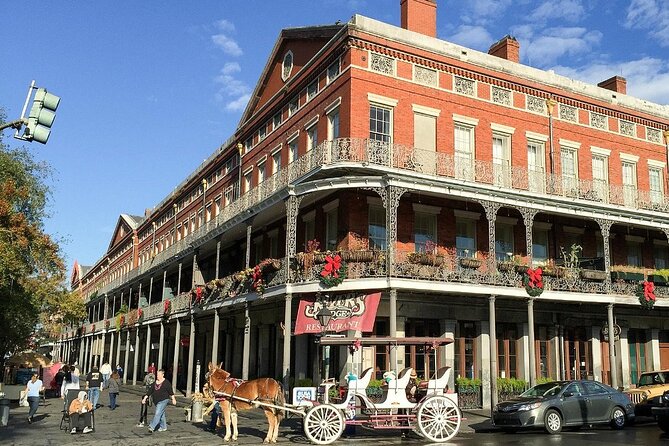
New Orleans rewards curiosity. This French Quarter tour gives you a solid map of what you’re really seeing. You’ll start at Jackson Square, then work your way through the Vieux Carre’s big landmarks and lesser-known stories that explain why this neighborhood feels the way it does.
Two things I like a lot: first, the focus on French Quarter history beyond Bourbon Street, so you’re not just collecting photos. Second, the way the tour connects buildings to real events, like the Catholic influence in Louisiana and the privateer/pirate story tied to the region. One thing to consider: it’s a walking tour, and Bourbon Street is included—so plan for noise and foot traffic if that’s not your vibe.
In This Review
- Key Points at a Glance: French Quarter Highlights That Actually Help
- Why This French Quarter Walk Is Worth Your Time
- Before You Go: Timing, Meeting Point, and How the End Works
- Jackson Square Start: Get Your Bearings Fast
- St. Louis Cathedral: Colonial Louisiana and the Power of Faith
- Pontalba Apartments and Michaela Pontalba: Homes, Power, and Ambition
- Cabildo (Louisiana State Museum): When French, Spanish, and Americans All Held the Room
- Pirate Alley and Privateers: The “Pirates” Story With Context
- Old Ursuline Convent: First Religious Order and Colonial Architecture
- Royal Streets and the Music-Architecture Walk
- Bourbon Street: History, Then a Quick How-To
- Presbytère Finish: Mardi Gras and Hurricane Katrina Exhibits
- What I’m Taking From It: The Guides Make the Difference
- Value Check: Is $39 a Smart Move?
- Who This Tour Suits Best (And Who Might Skip It)
- Quick FAQ: What You Need to Know
- FAQ
- How long is the More Than Mardi Gras French Quarter tour?
- How much does the tour cost?
- Where does the tour start and end?
- What time does the tour begin?
- Is this a small-group experience?
- Will I receive a ticket on my phone?
- Are museum tickets included for the Presbytère?
- Is free cancellation available?
- What happens if I cancel less than 24 hours before the start time?
- Is the tour near public transportation?
- Should You Book This Tour?
Key Points at a Glance: French Quarter Highlights That Actually Help
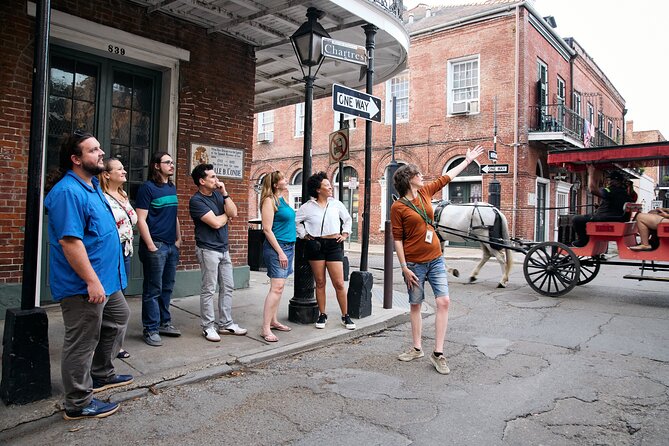
- Small group size (max 27) keeps the walk more personal and less like a parade
- Jackson Square to the Presbytère means you end with museum context for what you just learned
- St. Louis Cathedral, Cabildo, and the Ursuline Convent give you architectural anchors, not random stops
- Royal Street and Bourbon Street history helps you read the neighborhood instead of just passing through
- Pirates/privateers and Mardi Gras context add story layers you can’t spot on a street sign
- Self-guided Presbytère visit lets you slow down where you want, after the walking part
More ways to wander the Vieux Carre
- New Orleans Food Walking Tour of the French Quarter with Small-Group Option★ 5.0 · 6,118 reviews
- New Orleans French Quarter, Voodoo and Culture Walking Tour★ 4.5 · 2,961 reviews
- French Quarter Historical Sights and Stories Walking Tour★ 5.0 · 2,724 reviews
- Ghost and Vampire Walking Tour Of The French Quarter★ 4.5 · 2,406 reviews
Why This French Quarter Walk Is Worth Your Time
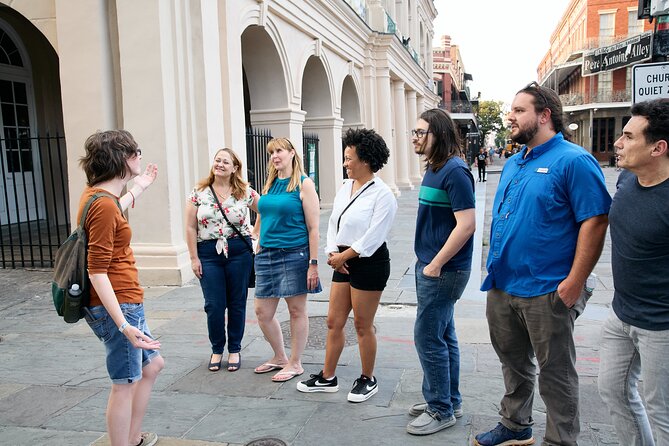
If you’ve only seen New Orleans from the sidelines of Bourbon Street, this tour helps you understand the city’s center of gravity. The French Quarter isn’t just nightlife. It’s a layered place built by faith, trade, politics, and people who kept rebuilding.
I like that the guide doesn’t treat the Quarter like one long photo op. You move site to site, with each stop doing a job: architecture, power, religion, or culture. And when you reach the Presbytère at the end, the story shifts from what the neighborhood was to what it had to become after Hurricane Katrina.
This is also good value. At $39 per person for about 1 hour 30 minutes, you’re paying for expert walking context, plus a guided landing spot for museum exhibits. It’s the kind of time math that works well on a day when you want to feel oriented fast.
Before You Go: Timing, Meeting Point, and How the End Works
You meet at Jackson Square in New Orleans, starting at 10:30 am. The tour ends at the Presbytère at 751 Chartres St. That matters because your last stop isn’t just a viewpoint. You’re set up to see exhibits on your own once the walking portion finishes.
The tour uses a mobile ticket, and you’ll get confirmation at booking. It’s near public transportation, and the experience notes say that most travelers can participate. The group stays small, with a maximum of 27 people, which is a big deal in a neighborhood where sidewalks can tighten up.
One practical tip: wear shoes you trust. The Quarter is mostly walk-and-look, with narrow streets and steady foot traffic. If you’re prone to blisters, bring what you need. You’ll be on your feet long enough to notice.
Jackson Square Start: Get Your Bearings Fast
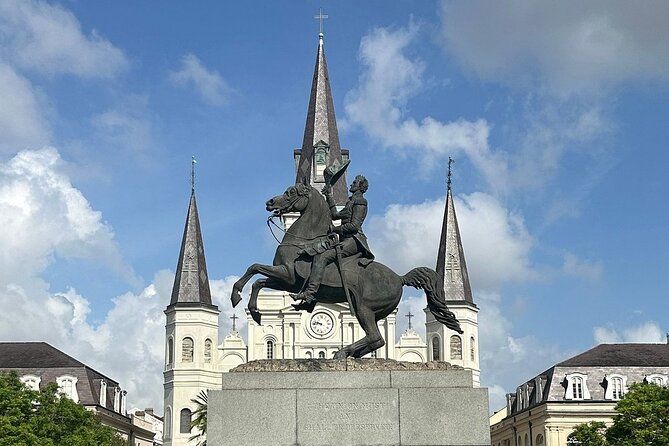
Jackson Square is more than a postcard. It’s where you understand the Quarter’s layout—open space, grand buildings, and the streets that funnel you deeper into the Vieux Carre.
Starting here is smart because it gives you a baseline before you move into the more “story-heavy” streets. You’ll be primed to notice contrasts: religious architecture versus civic power, old residences versus public spaces, and where music and nightlife fit into the bigger picture.
St. Louis Cathedral: Colonial Louisiana and the Power of Faith
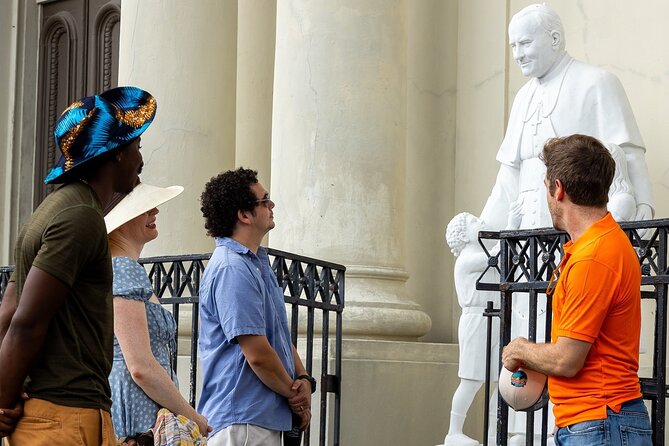
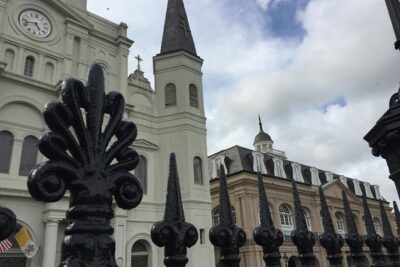
One of the first stops is St. Louis Cathedral—described as the oldest continuously in use cathedral in the United States. You’ll hear why it matters, with an emphasis on its role in colonial Louisiana architecture and regional importance.
This stop is valuable because it explains a theme you’ll keep seeing across the Quarter: the Catholic Faith’s influence on Louisiana culture. That doesn’t mean you’ll walk away with a textbook lesson. It means you’ll start reading the neighborhood with an extra layer of meaning—especially when you hit other religious sites later.
Practical note: cathedral exteriors are easy to enjoy, but if you plan to also go inside, do it thoughtfully. Some areas can be busy, and you’ll want to respect posted rules without rushing.
Behind the beads: more of Carnival

Pontalba Apartments and Michaela Pontalba: Homes, Power, and Ambition
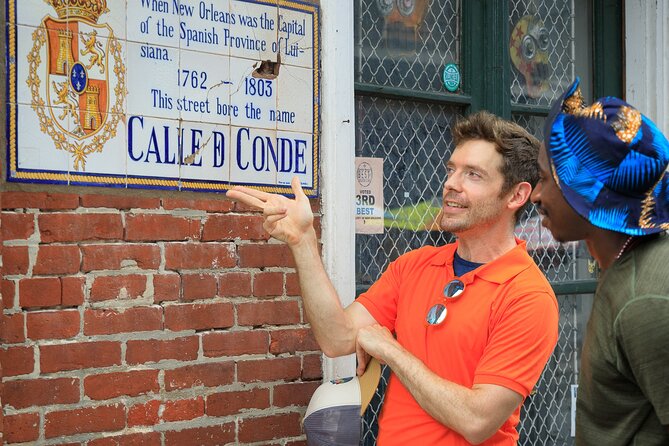
Next up is the story of buildings often described as some of the first apartments in the United States, tied to Michaela Pontalba. The guide shares her struggle to get these apartments created in her father’s legacy.
This is one of those stops that makes you look twice. Instead of treating old buildings like scenery, you connect them to motivation—who wanted what, and how those decisions shaped daily life. It’s also a reminder that the Quarter’s history wasn’t only about ceremonies and politics. It was about housing, economics, and influence.
If you like architecture with backstory, this is where the tour earns its keep.
Cabildo (Louisiana State Museum): When French, Spanish, and Americans All Held the Room
You’ll also stop at the site that served as the seat of government for the French, Spanish, and Americans, which is now associated with the Louisiana State Museum (the tour notes highlight what’s worth seeing inside).
This stop helps you understand why the Quarter looks the way it does. When different powers govern a place, you see layers in buildings and street use. You also learn what you should prioritize once you’re inside—so you’re not wandering around guessing.
A small but useful detail: the tour covers basic do’s and don’ts for the museum visit. That means you get a smoother experience and spend less time figuring out how to behave once you’re there.
Pirate Alley and Privateers: The “Pirates” Story With Context
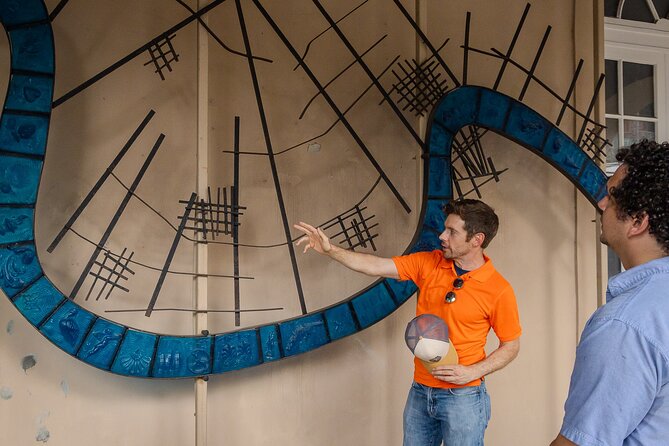
The tour mentions privateers and their pivotal role in the region’s development, along with the idea of pirates. Even if you’ve heard pirate chatter connected to New Orleans, this stop gives you the context behind it.
Why it matters: the pirate/privateer angle can sound like pure drama, but it connects to real commerce and conflict. You start to see the Quarter as a trading and protection-minded place, not just a location for legends.
Also, pirate stories tend to be exaggerated over time. Here, you’re getting the take that ties it back to how the region functioned.
Old Ursuline Convent: First Religious Order and Colonial Architecture
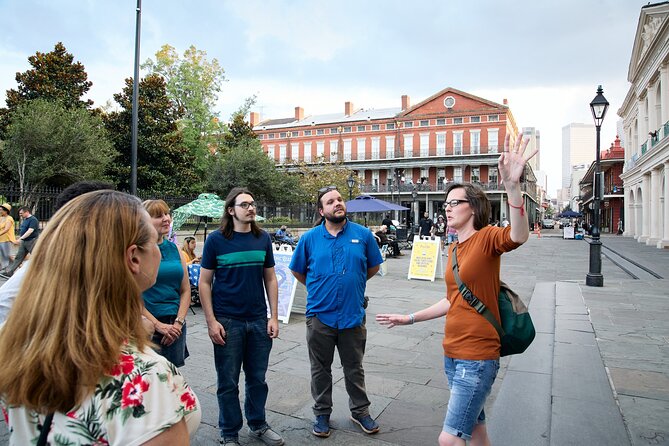
Then you’ll reach the Ursuline Convent, noted as the first religious order to come to New Orleans, and highlighted for its colonial religious architecture.
This stop works well because you’re comparing religious influence across time and space. If St. Louis Cathedral shows you the outward symbol, the Ursuline Convent helps you see how religious communities shaped the Quarter’s built environment.
And architecture lovers will appreciate the specificity: you’re not just told it’s “historic.” You’re told which order, and you get a reason it was significant.
Royal Streets and the Music-Architecture Walk
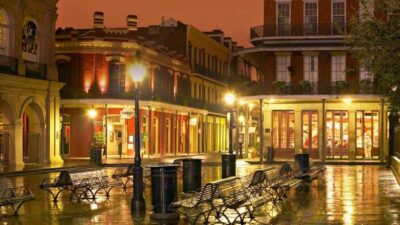
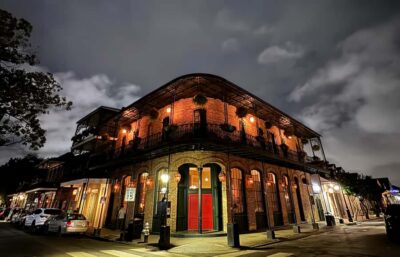
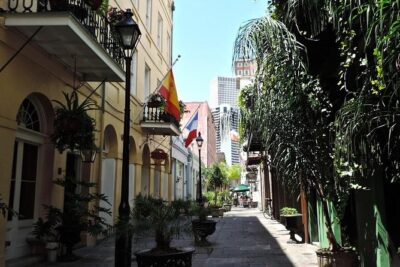
The tour has you saunter down streets like Royal Street and other parts of the French Quarter where you can hear live music and notice unique architecture.
This section is less about a single landmark and more about pattern recognition. You start seeing how the Quarter’s design supports street life—how balconies, facades, and narrow lanes shape what you hear and what you notice while you walk.
It’s also where the tour helps you avoid that common mistake: walking through and thinking everything is random. Instead, you learn to notice how the neighborhood tells its story in small details.
Bourbon Street: History, Then a Quick How-To
Yes, Bourbon Street is included. The tour addresses its sordid history and gives a quick how-to.
That part is useful for practical reasons. Bourbon Street can be fun, but it can also be chaotic. If you’re going to step into that energy, you want to know what you’re walking into: how it got that way and how to move safely and smartly.
The tour’s value here isn’t moralizing. It’s context plus guidance, so you can choose your experience—without getting pulled into the loudest worst-version of the street by accident.
Presbytère Finish: Mardi Gras and Hurricane Katrina Exhibits
The tour ends at the Presbytère. This is more than a finish line. You’ll have tickets the guide has for you to enter for a self-guided visit, focusing on Mardi Gras exhibits and the story of how New Orleans was rebuilt after Hurricane Katrina.
This “walking, then museum” flow is excellent. During the tour, you collect the neighborhood’s background. At the Presbytère, you can slow down and decide what to spend time on. It’s a good way to turn facts into something you can actually process.
And if Mardi Gras is on your mind, this is the kind of stop that helps you connect the tradition to the city’s history. If Katrina is on your mind, you’ll have a built-in place to understand what rebuilding meant, beyond headlines.
What I’m Taking From It: The Guides Make the Difference
The biggest strength here is the guides. In particular, I’ve seen this tour praised for clear, detailed storytelling from guides who really stick to the French Quarter’s threads instead of going off on random trivia.
Two names came up in standout ways: Andrew and Daniel. Andrew was described as very knowledgeable and able to give a detailed background on the origins of the New Orleans and the French Quarter, even for repeat visitors. Daniel, noted as a history major, brought an intensity and focus that made the walk feel like it could last longer than the scheduled time.
That’s what you want from a small-group tour. You don’t just want someone to point. You want someone to explain.
Value Check: Is $39 a Smart Move?
At $39 per person for about 1 hour 30 minutes, this isn’t a splurge. It’s a structured way to save time. You’re paying for:
- a route that hits major anchors (St. Louis Cathedral, Cabildo, Ursuline Convent, Bourbon Street, Presbytère)
- interpretation that connects architecture and culture
- museum context at the end with self-guided exhibits
If you plan to do the Quarter on your own, you can—but you’ll likely spend extra time trying to figure out which stories matter. This tour compresses the learning into a walk you can fit into most itineraries.
It’s also a good choice if you’re traveling with teens or anyone who likes history but wants it told in human terms, not lecture terms.
Who This Tour Suits Best (And Who Might Skip It)
This tour fits best if you want:
- a foundation for understanding the French Quarter quickly
- history tied to places you can see right now
- a guided route that still leaves you options at the end (self-guided museum time)
You might consider another option if you:
- hate walking in crowded areas
- only want nightlife and not history or religion-focused stops
- are looking for a long deep museum session instead of a shorter route plus exhibits
It’s also a great “first Quarter tour” on a visit, because it helps you know what to look for afterward.
Quick FAQ: What You Need to Know
FAQ
How long is the More Than Mardi Gras French Quarter tour?
It runs about 1 hour 30 minutes.
How much does the tour cost?
The price is $39.00 per person.
Where does the tour start and end?
It starts at Jackson Square and ends at the Presbytère, 751 Chartres St.
What time does the tour begin?
The start time is 10:30 am.
Is this a small-group experience?
Yes. It has a maximum of 27 travelers.
Will I receive a ticket on my phone?
Yes. The tour uses a mobile ticket.
Are museum tickets included for the Presbytère?
The tour ends at the Presbytère, and the guide will have tickets for you to enter for a self-guided visit to the museum’s Mardi Gras and Hurricane Katrina exhibits.
Is free cancellation available?
Yes. You can cancel for free up to 24 hours in advance for a full refund.
What happens if I cancel less than 24 hours before the start time?
If you cancel less than 24 hours before the experience starts, the amount you paid will not be refunded.
Is the tour near public transportation?
Yes. The tour is noted as being near public transportation.
Should You Book This Tour?
Book it if you want the French Quarter explained in a way that helps you walk with purpose. The route hits major landmarks and then adds the stories behind them, and the end at the Presbytère gives you a strong payoff through Mardi Gras and Katrina exhibits.
Skip or consider alternatives if you only want club-style time or you’d rather spend your whole day inside museums rather than on sidewalks. For most people, though, this is a smart way to turn your first hours in the Quarter into something you can actually understand and remember.
More Tour Reviews in New Orleans


More of Carnival
More of the French Quarter

Just added to The New Orleans Traveler


French Quarter Tours, compared.
 ★ 5.0Food Walking Tour of the French Quarter with Small-Group OptionFrom $756,118 reviews
 ★ 4.5French Quarter, Voodoo and Culture Walking TourFrom $272,961 reviews
 ★ 5.0French Quarter Historical Sights and Stories Walking TourFrom $352,724 reviews
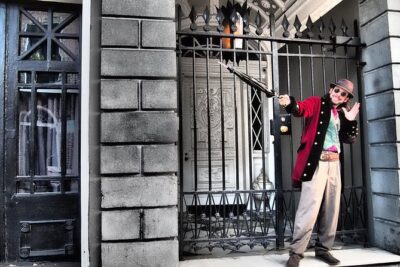 ★ 4.5Ghost and Vampire Walking Tour Of The French QuarterFrom $212,406 reviews
 ★ 4.5City Tour: French Quarter, Garden District & CemeteryFrom $402,209 reviews
 ★ 5.0French Quarter Food Tour: Cajun, Creole and CultureFrom $811,246 reviews
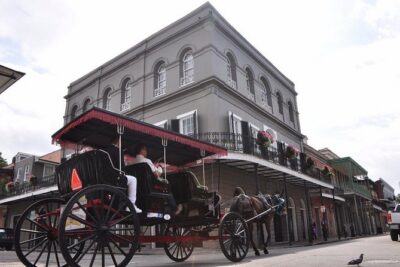 ★ 5.0French Quarter and More Carriage RideFrom $651,141 reviews
 ★ 5.0French Quarter walking Food Tour Famous Flavors of New OrleansFrom $751,115 reviews
Browse the lists this tour appears in