

Reviewed · CEMETERY TOURS
New Orleans: St. Louis Cemetery #3 Guided Walking Tour
A cemetery walk can be surprisingly human. This St. Louis Cemetery #3 guided walking tour takes you through one of New Orleans’s biggest burial grounds while an active cemetery keeps doing what it does—day after day. You’ll hear how the place works, not just what it looks like.
Two things I really like: the way the tour explains the tombs and burial practices as you move through the main aisles, and the guide Sally bringing stories with research behind them, not a script read word-for-word. It stays respectful, but it’s never dull.
One consideration: you’re outdoors for about 90 minutes and it runs rain or shine, so plan for heat, sun, and wet pavement. Comfortable shoes and water aren’t optional.
In This Review
- Key Things You Should Know Before You Go
- St. Louis Cemetery #3 in 90 Minutes: What This Walk Really Covers
- Meet at the Front Gates: Starting Point and First Impressions
- Why Cemetery #3 Feels Different From #1 and #2
- Walking the Main Aisles Named for Saints and Clerics
- Tomb Types You’ll See Up Close: Vaults, Columbariums, and Family Spaces
- Mausoleum Architecture: Greek, Gothic, Egyptian, Baroque, and Byzantine
- The People Behind the Stone: Notables, Notorious Stories, and Reconstruction-Era Leaders
- Sally and the Red Sash Tours Style: Research-Backed and Respectful
- Price and Time: Is $25 Worth 90 Minutes?
- Rain, Heat, and Comfort: What to Bring for a Cemetery Walk
- Should You Book This St. Louis Cemetery #3 Tour With Red Sash Tours?
- FAQ
- How long is the St. Louis Cemetery #3 guided walking tour?
- Where do I meet the guide?
- How much does the tour cost?
- Is the tour guide speaking English?
- Is this tour wheelchair accessible?
- Does the tour run in bad weather?
- What should I bring with me?
Key Things You Should Know Before You Go

- Active, still-functioning cemetery: You’re walking through a burial site that still averages about one burial a day.
- Built for learning as you walk: Main aisles are organized with saint and cleric names, which helps you follow the layout.
- Lots of tomb types in one loop: You’ll see wall vaults, columbariums, public mausoleums, family tombs, and society tombs.
- Architecture you can actually spot: Greek and Roman, Gothic, Egyptian, Baroque, and Byzantine styles show up in real monuments.
- Story-driven stops at notable graves: Chefs, architects, and Reconstruction-era civil rights leaders are part of what you’ll hear.
- Sally’s approach works: She’s known for tangents from thoughtful research and keeping the tone entertaining yet respectful.
More walks among the above-ground tombs
- Cemetery and Ghost BYOB Bus Tour in New Orleans★ 4.5 · 2,685 reviews
- New Orleans City Tour: French Quarter, Garden District & Cemetery★ 4.5 · 2,209 reviews
- New Orleans Dead of Night Ghosts and Cemetery Bus Tour★ 4.5 · 2,068 reviews
- New Orleans City and Cemetery 2-Hour Bus Tour★ 4.5 · 1,967 reviews
St. Louis Cemetery #3 in 90 Minutes: What This Walk Really Covers

If you only know New Orleans cemeteries from photos, this tour will recalibrate your expectations in a good way. St. Louis Cemetery #3 isn’t just a pretty maze of monuments. It’s a functioning place where families have built and maintained burial spaces across generations, and the tour is built to help you understand the system behind the stone.
The overall flow is straightforward: you follow the cemetery’s main aisles, stop at key tombs, and learn what they are—plus who they belong to and why their stories matter. The time window is long enough to get meaning from the architecture and symbolism, but short enough that you’re not stuck standing around for hours.
You’ll also learn some big-picture context right away. Cemetery #3 was established in 1854, and it’s often described as the younger sister to St. Louis Cemeteries #1 and #2—even though it’s twice their combined size. That size difference matters because it’s why there’s so much variety packed into one visit.
Meet at the Front Gates: Starting Point and First Impressions
You’ll meet your guide at the front gates of St. Louis Cemetery #3. From the start, the tone is practical: you’re not just touring; you’re learning how to read the place. That matters because cemeteries can look chaotic until someone gives you a map for what to notice.
The tour runs with a live, English-speaking guide, and the experience is set up as a walking tour focused on the cemetery’s core areas. There’s no mention of pickup or drop-off, so you’ll want to plan to get yourself there on your own.
One small but important point: the meeting location is outside. That’s why it’s smart to arrive a few minutes early, especially if you’re trying to settle in, use the restroom beforehand, and get your bearings.
Why Cemetery #3 Feels Different From #1 and #2

Cemetery #3 is massive, and that scale changes the experience. Learning it’s about the younger sister to #1 and #2—while being twice their combined size—helps you understand why there’s so much monument variety on one route. You’re not just seeing more of the same. You’re seeing a lot of different burial approaches under one roof, so to speak.
You’ll also get a clear sense that this isn’t a sealed museum. The guide explains the workings of an active and still-functioning burial site, which still averages one burial a day. When you hear that, the whole place stops feeling like a prop. It becomes a living part of the community—somber, yes, but very real.
This active-site angle also shapes the tour’s pacing. You’ll spend time on how the cemetery operates and what families have historically chosen—then connect those choices to the monuments you’re standing in front of.
Walking the Main Aisles Named for Saints and Clerics

One of the smartest parts of this tour is that you don’t just wander until you find something interesting. You walk the main aisles, and the tour gives you a way to follow the structure of the site.
The aisles have names associated with saints and various clerics of the church, which helps you build an internal map. Even if you don’t remember every detail later, you’ll remember the feeling of orientation: the cemetery stops being a blur and starts acting like a designed space.
As you move along these aisles, the guide’s job is to connect what you’re seeing to what it means. That’s where the tour becomes more than sightseeing. You’re learning vocabulary—vaults, columbariums, mausoleums, family tombs, society tombs—so the stones start telling a story you can follow.
More of New Orleans on foot





Tomb Types You’ll See Up Close: Vaults, Columbariums, and Family Spaces
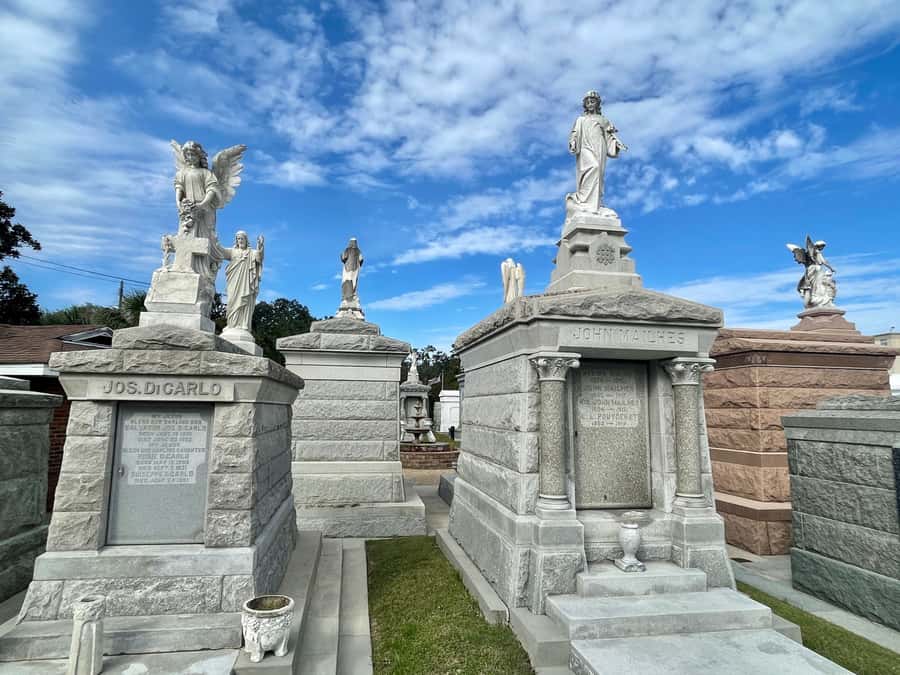
Cemetery #3 gives you a strong “all-in-one” education on tomb design and burial practice. You’ll encounter multiple categories, including wall vaults and columbariums, plus public mausoleums, family tombs, and society tombs.
Here’s what makes that useful for you: if you’re visiting New Orleans and want to understand why the monuments look so different from American cemetery designs, these stops answer the question in real time. Instead of reading about burial practices later, you’re seeing the physical results of those practices as you walk.
A family tomb is exactly what it sounds like, but the tour context makes it clearer—families weren’t just placing names on stone. They were choosing a lasting structure for generations. Society tombs add another layer: they relate to group identity and social ties, and the guide points out what’s unusual about some of these spaces.
If you come into the tour curious, you’ll leave with a much better sense of how people in New Orleans thought about permanence, privacy, and space. And if you’re not curious yet, the guide will usually nudge you there by making the tomb types feel connected to real people and real choices.
Mausoleum Architecture: Greek, Gothic, Egyptian, Baroque, and Byzantine

One reason this tour earns repeat visits is that you get multiple architectural styles in one route. The guide helps you recognize styles including classic Greek and Roman, Gothic, Egyptian, Baroque, and Byzantine.
You might think these words are just labels, but in the cemetery they’re not abstract. The guide explains what you’re looking at so you can connect the “style name” to actual details on monuments. That’s the difference between passing a building and understanding why it was designed that way.
This matters especially if you’re pairing the cemetery with other New Orleans sights. Cemeteries can feel separate from the rest of the city until you realize they’re part of the same broader story of European influence, local culture, and identity-making.
The People Behind the Stone: Notables, Notorious Stories, and Reconstruction-Era Leaders

The tour shines when it turns from architecture to biography. You’ll visit graves tied to notable and even notorious New Orleans figures, with stories aimed at showing who these people were and how their legacies connect to the city.
Expect stops that connect to:
- chefs and architects
- civil rights leaders from the Reconstruction Era
- unusual society tomb stories, including a tale about a hunchbacked photographer who reportedly secretly photographed prostitutes
Even if you’re a little uneasy about the darker angles of history, this tour treats the subject matter with a tone that stays focused on context. That’s useful because New Orleans history often has sharp edges, and you’ll get help connecting the story to the monument and the time period.
One of the most praised elements is the guide’s story delivery. Sally is known for being fully absorbed in the topic, with tangents that come from careful research. That approach can turn the tour into something you remember for the people and the specific details—not just the general vibe of the cemetery.
Sally and the Red Sash Tours Style: Research-Backed and Respectful

Sally is a big reason this tour gets strong marks. The way she presents the material is described as research-based, with fewer gimmicks and more straight facts and stories drawn from her learning.
You’ll feel the difference if you’ve ever been on tours where the guide reads like they’re reciting. This doesn’t sound like that. Instead, you get a guide who can explain symbolism, switch to clarifying details when needed, and add thoughtful context without turning the experience into a performance.
It also helps that she’s described as considerate and attentive, including when language barriers come into play. For you, that means the tour is more likely to feel welcoming and understandable rather than technical and rushed.
Finally, the tone stays respectful. In a cemetery, that’s not optional—it’s the whole point. The tour manages to keep things engaging while still treating the site and the stories with care.
Price and Time: Is $25 Worth 90 Minutes?

At $25 per person for about 90 minutes, you’re paying for two things: a guided walk through a place that’s easier to understand with help, and admission into the cemetery as part of the experience.
The value shows up fast if you ask yourself a simple question: would you know what you’re looking at if you walked alone? In most cases, no. Cemeteries like this are packed with tomb types and architectural styles, and the tour gives you the interpretation on the ground.
Also, 90 minutes is a sweet spot. You get enough time to hit multiple tomb styles and notable graves, but you’re not overcommitting to standing in one place. If you’re doing other New Orleans activities the same day, this slotting matters.
Included items help too: the tour, the guide, and cemetery entrance are part of the price. What’s not included is pickup and drop-off, so you’ll want to plan your own arrival.
Rain, Heat, and Comfort: What to Bring for a Cemetery Walk
This tour runs rain or shine, so your packing is part of the experience. Here’s what you should bring, plain and simple:
- comfortable shoes (the ground and steps matter)
- sunscreen
- water
- comfortable clothes
Since you’re outside and walking, you’ll want to dress for the weather and avoid anything that limits your stride. Cemeteries aren’t the place for stiff shoes or heavy bags.
If it’s hot, water becomes even more important—not because it’s a “fun stroll,” but because the tour is still scheduled to happen no matter what. And if it’s wet, you’ll want traction and patience.
Should You Book This St. Louis Cemetery #3 Tour With Red Sash Tours?
If you want a cemetery visit that teaches you how to read the monuments and understand the burial practices, this is a strong match. You’ll get:
- an organized walk through main aisles
- tomb-type education you can see, not just imagine
- architecture spotting help across multiple styles
- story stops tied to notable (and sometimes notorious) figures
- a guide approach centered on research, respectful storytelling, and clarity from Sally
I’d skip it (or at least rethink your expectations) if you’re hoping for a casual, stop-and-go photo tour with minimal talking. This experience is structured. It’s meant to be informative and story-led, not just a scenic walk.
One last practical nudge: you can book with free cancellation up to 24 hours in advance and there’s an option to reserve now and pay later, which is handy in a city where plans can change fast.
FAQ
How long is the St. Louis Cemetery #3 guided walking tour?
The tour lasts about 90 minutes.
Where do I meet the guide?
Meet your guide at the front gates of St. Louis Cemetery #3.
How much does the tour cost?
The price is $25 per person.
Is the tour guide speaking English?
Yes, the live tour guide is in English.
Is this tour wheelchair accessible?
Yes, the tour is listed as wheelchair accessible.
Does the tour run in bad weather?
Yes, it takes place rain or shine.
What should I bring with me?
Bring comfortable shoes, sunscreen, water, and comfortable clothes.
More Tours in New Orleans




More Tour Reviews in New Orleans

More of the Cities of the Dead




Just added to The New Orleans Traveler






Cemetery Tours, compared.
 ★ 4.5St. Louis Cemetery No. 1 Official Walking TourFrom $253,941 reviews
 ★ 4.5Cemetery and Ghost BYOB Bus Tour in New OrleansFrom $302,685 reviews
 ★ 4.5City Tour: French Quarter, Garden District & CemeteryFrom $402,209 reviews
 ★ 4.5Dead of Night Ghosts and Cemetery Bus TourFrom $552,068 reviews
 ★ 4.5City and Cemetery 2-Hour Bus TourFrom $541,967 reviews
 ★ 4.5Cemetery Bus Tour with Exclusive Cemetery AccessFrom $401,694 reviews
 ★ 4.6Cemetery Bus Tour At Dark with Exclusive AccessFrom $361,654 reviews
 ★ 4.6Walking Tour Inside St. Louis Cemetery No. 1From $251,519 reviews
Browse the lists this tour appears in