
Reviewed · JAZZ & LIVE MUSIC TOURS
New Orleans Music Walking Tour
Music starts on the pavement. This New Orleans Music Walking Tour connects West African traditions, early jazz street life, and the sounds that shaped American music, with a small group and a mobile ticket. You also get a guided, landmark-by-landmark route that ends at Preservation Hall, so the whole experience feels like one flowing lesson.
I especially like how the guide (often David) uses short clips and sound bites on an iPad to make connections easy to remember, even when the neighborhood is crowded. One thing to consider: the tour depends on good weather, so plan for a reschedule or refund if conditions are rough, and expect some steady walking in busy streets.
In This Review
- Key Highlights Worth Marking on Your Map
- Why a 2-Hour Walking Tour Makes Sense in New Orleans
- Rampart Treehouse Start to Preservation Hall Finish: The Route Logic
- Congo Square: Bamboula and the West African Roots You’ll Hear Forever
- Louis Armstrong Park: Tracing Music Styles Without Getting Lost
- Basin St. Station: The Story Behind Basin Street Blues
- Storyville District: Early Jazz, Recorded Sound, and a Tougher Chapter
- May Bailey’s Place Replica: Understanding How People Listened
- Bourbon Street, Tango Belt References, and French Opera House Connections
- Preservation Hall Finale: A Legendary Room Where the Music Continues
- Price and Value: Is $25 a Fair Deal?
- What You’ll Learn (And What You’ll Notice After)
- Who This Tour Fits Best (And Who Might Want to Rethink It)
- Booking and Reliability Tips You Can Use Right Away
- FAQ
- How long is the New Orleans Music Walking Tour?
- What does the tour cost?
- Where does the tour start and end?
- Is Preservation Hall admission included?
- What language is the tour offered in?
- Is the tour affected by weather?
- Should You Book This New Orleans Music Walking Tour?
Key Highlights Worth Marking on Your Map
- Congo Square and Bamboula: Learn how West African religious musical traditions shaped what you hear in New Orleans.
- Louis Armstrong Park styles in motion: A fast walk through how multiple music forms link together, from opera to second line to opera.
- Basin Street Blues origins: Get the story behind one of the city’s most famous songs right at Basin St. Station.
- Storyville soundscapes: Hear recorded music linked to jazz’s early days in the red light district.
- May Bailey’s Place replica: Step into a recreated Storyville parlour to understand how people spent evenings and listened.
- Preservation Hall finale (ticket not included): End where past, present, and future New Orleans music meet.
Follow the brass a little further
- New Orleans Steamboat Natchez Jazz Cruise with Dinner Option★ 4.0 · 7,533 reviews
- New Orleans Steamboat Natchez Jazz Cruise★ 4.5 · 5,334 reviews
- New Orleans: Evening Steamboat Jazz Cruise + Optional Dinner★ 4.3 · 4,548 reviews
- New Orleans: Daytime Steamboat Jazz Cruise + Optional Lunch★ 4.3 · 4,164 reviews
Why a 2-Hour Walking Tour Makes Sense in New Orleans
New Orleans can feel like you’re always one block away from something loud, fun, and historically messy in the best way. This tour is built for your first days, when you want context fast and don’t yet know which streets matter most for music.
It also stays small (up to 14 people), which matters here. A smaller group means you can ask questions, and the guide can keep everyone oriented without turning the walk into a slow shuffle.
Rampart Treehouse Start to Preservation Hall Finish: The Route Logic
You meet at Rampart Treehouse, 740 N Rampart St, and the walk ends at Preservation Hall, 726 St Peter. The start time is 2:00 pm, so it’s a helpful plan for an afternoon slot—one where you can still pair it with dinner and music after.
The route is also practical for real-life visitors: it’s near public transportation, and the tour allows service animals. If you’re managing mobility or energy, note the tour asks for moderate physical fitness, and you’ll be on your feet for close to two hours with short stops.
Congo Square: Bamboula and the West African Roots You’ll Hear Forever
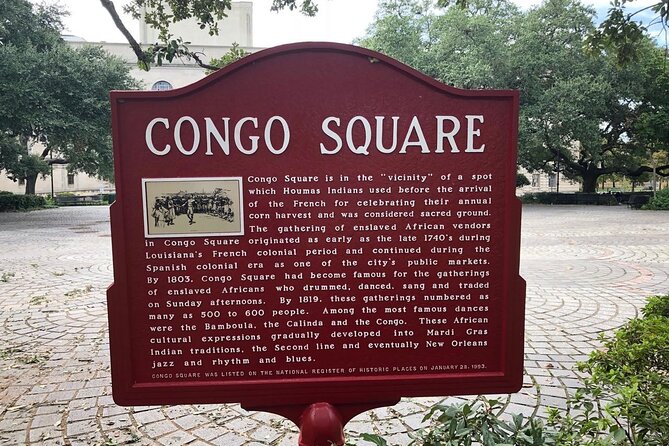
Stop 1 is Congo Square. This is where the tour connects New Orleans music to West African religious musical traditions, including the Bamboula. If you’ve ever wondered why New Orleans percussion and call-and-response feel different from elsewhere, this stop gives you a foundation.
You won’t need museum-style quiet here. This is more like a guided street lesson with a clear idea: New Orleans music didn’t just appear in a single moment. It was carried, transformed, and re-expressed in the city’s social life.
The good part for your planning: this stop is free of admission tickets. You can spend your energy on listening and absorbing the story instead of worrying about costs at each stop.
Louis Armstrong Park: Tracing Music Styles Without Getting Lost
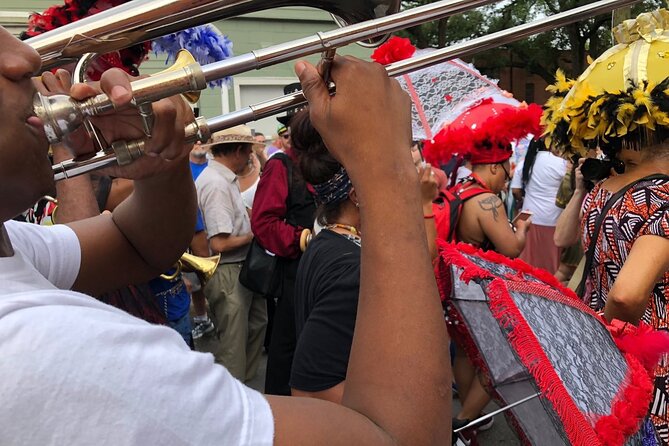
At Louis Armstrong Park, the tour connects multiple New Orleans music styles in one sweep—opera to second line to opera. That may sound like a big jump, but the value is in how the guide links what sounds different on the surface.
Second line traditions are easy to recognize when you’re there. What’s harder is understanding how those rhythms and performance habits relate to other forms people listened to and performed. This stop is where the tour helps you notice the thread.
Admission here is also free. That keeps the pacing simple: you learn, you move, you learn again.
More of New Orleans on foot



Basin St. Station: The Story Behind Basin Street Blues
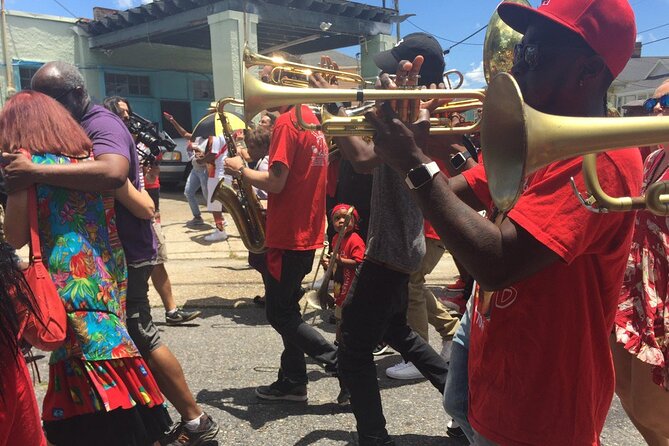
Stop 3 brings you to Basin St. Station, where you learn about several New Orleans music elements and the origins of the song Basin Street Blues. Even if you think you already know the song, this kind of context makes it sit in the city differently.
This is one of those “you’ll hear it later” moments. Once you know how a tune is tied to place, the next time it plays—on a bar playlist, in a band set, or in your own hotel—your brain will connect it to the streets you walked.
This stop also comes with no admission ticket required, so it stays focused on the guide’s explanation and the location itself.
Storyville District: Early Jazz, Recorded Sound, and a Tougher Chapter
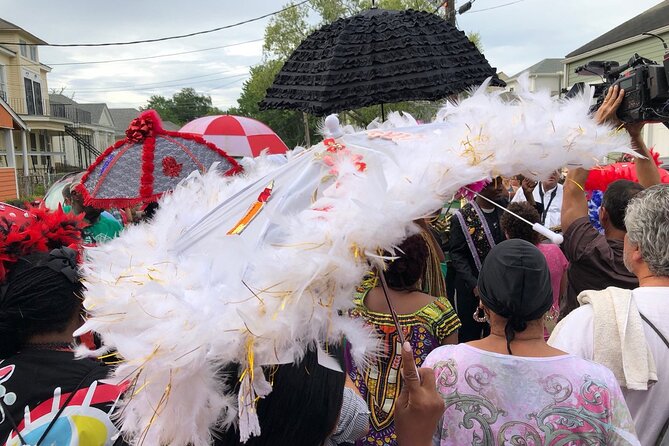
Storyville District is stop 4, and it doesn’t gloss over what the area was known for. You learn about the district and hear recorded music from the early days of jazz that’s linked to that era.
For me, the value here is balance. You’re not just getting a fun tour of “cool history.” You’re getting the context that helps you understand why certain styles developed, how nightlife shaped music demand, and how recording technology changed what people could hear.
There’s also an important “consideration” angle. Storyville is tied to adult entertainment history, and you should be comfortable with that topic before joining. The tour keeps the conversation rooted in music and place, but it’s still a real slice of the city’s past.
Again, this part is ticket-free, which helps keep the tour moving at a steady pace.
May Bailey’s Place Replica: Understanding How People Listened
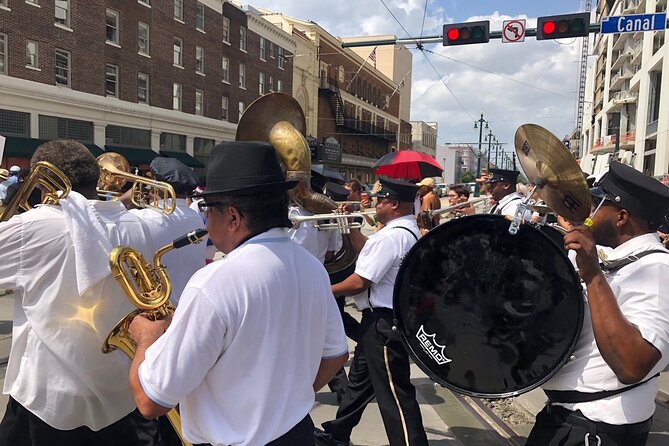
Stop 5 is May Bailey’s Place, where you enter a replica of a Storyville parlour. This is the kind of stop that changes the way you picture a sound. Instead of only thinking about musicians and records, you imagine rooms, social behavior, and how evening listening worked.
The replica format matters because it gives you a practical mental model. It’s not trying to be everything at once. It’s trying to show what “being there” might have felt like—without asking you to find a specific building that has disappeared.
This stop is ticket-free as well, so it’s another straightforward learning block.
Bourbon Street, Tango Belt References, and French Opera House Connections
Stop 6 takes you to Bourbon Street and connects French opera and R&B traditions to what New Orleans became famous for. The walk also references places and ideas tied to the Tango Belt and the French Opera House, which helps explain how the city’s music wasn’t one-track.
Bourbon Street can get loud and crowded, sometimes with street events going on. In situations like that, the guide’s role becomes very real: keeping the group together, pacing you through the noise, and pointing you to what matters instead of letting the street distract you.
This stop is free of admission tickets, but it’s not a “quick photo break.” Plan to listen, not just look. If you’re the type who wants the story behind the signage, Bourbon is a good place for that.
Preservation Hall Finale: A Legendary Room Where the Music Continues
The tour ends at Preservation Hall. This is stop 7, and it’s the place where past, present, and future New Orleans music meet. The key practical detail: Preservation Hall admission is not included, so you’ll want to plan for that additional cost if you want to go inside.
Why this finish works: the tour builds your context first—roots, streets, recordings, and the city’s evolving performance culture—so when you reach Preservation Hall, you’re not just visiting a famous venue. You’re seeing a living endpoint.
If you’re trying to choose what to do next after the tour, this is your easiest transition. You’ll already understand why Preservation Hall is treated like more than a performance space.
Price and Value: Is $25 a Fair Deal?
At $25 per person for about two hours, the price feels fair for a few reasons.
First, several stops don’t require admissions, and the tour is built around interpretation, not constant ticket-buys. Second, the small group size makes the guide’s attention more likely to reach you. Third, the guide uses memory-friendly tools like short audio/video snippets (often on an iPad), which makes the walking route easier to remember afterward.
Is it a bargain? It’s not a “free walking tour” situation. But for a structured, guided music story across multiple key locations—with Preservation Hall as the finale—it’s priced like something meant to give you immediate value during your limited vacation hours.
If you’re doing only one music-focused activity early in your trip, this is the kind that helps you understand what you’re hearing later that week.
What You’ll Learn (And What You’ll Notice After)
By the end of the walk, you should be able to connect music to place in a way that’s actually useful. You’ll have a mental map for:
- why West African rhythms matter in New Orleans music
- how social life and performance spaces helped shape jazz development
- why songs like Basin Street Blues feel inseparable from their neighborhoods
- how adult entertainment history connects to the city’s early recorded sound
- why Preservation Hall became a focal point for continuing the tradition
And the fun part is you’ll start spotting the same themes in other bands, streets, and performances you see afterward. It turns a random music night into something you can decode.
Who This Tour Fits Best (And Who Might Want to Rethink It)
This tour is ideal if you’re:
- a first-time visitor who wants music context fast
- the type who enjoys walking tours where the guide explains what you’re seeing
- traveling with a time constraint and want a coherent, two-hour overview
- interested in the link between traditions, nightlife history, and the recordings that survived
It may be less ideal if you:
- dislike walking in busy areas like Bourbon Street
- want a very quiet, purely academic experience
- are sensitive to the Storyville-era adult-entertainment context
The physical requirement is moderate, but it’s still real. Wear comfortable shoes and expect short stops rather than long rests.
Booking and Reliability Tips You Can Use Right Away
Because this tour depends on weather, I recommend you schedule it earlier in your trip window if your dates are flexible. If you’re traveling during a season with sudden storms, pick a day when you can handle a reschedule without breaking your plans.
Also keep an eye on the start time (2:00 pm). If you like arriving early for breathing room, give yourself a few extra minutes at the meeting point so you start calm and not sprinting.
And yes, it’s a mobile ticket experience with confirmation at booking, so have your phone charged and ready.
FAQ
How long is the New Orleans Music Walking Tour?
It runs for about 2 hours.
What does the tour cost?
The price is $25.00 per person.
Where does the tour start and end?
It starts at Rampart Treehouse, 740 N Rampart St, New Orleans, LA 70116 and ends at Preservation Hall, 726 St Peter, New Orleans, LA 70116.
Is Preservation Hall admission included?
No. Preservation Hall admission is not included in the tour price.
What language is the tour offered in?
The tour is offered in English.
Is the tour affected by weather?
Yes. It requires good weather, and if it’s canceled due to poor weather, you’ll be offered a different date or a full refund.
Should You Book This New Orleans Music Walking Tour?
If your goal is to understand why New Orleans music sounds the way it does—without spending your whole trip in lecture mode—this is a strong choice. The mix of Congo Square roots, Storyville-era context, a song origin stop, and a Preservation Hall finish gives you a practical foundation.
Book it if you like guided walking tours and you want a clear storyline for your first days. I’d hesitate only if weather timing is tight for you or if the Storyville topic would make you uncomfortable. Otherwise, it’s the kind of $25 plan that helps you hear the city with better ears.
More Tours in New Orleans


More Tour Reviews in New Orleans
More Jazz & Live Music



Just added to The New Orleans Traveler



Jazz & Live Music Tours, compared.
 ★ 4.0Steamboat Natchez Jazz Cruise with Dinner OptionFrom $587,533 reviews
 ★ 4.5Steamboat Natchez Jazz CruiseFrom $435,334 reviews
 ★ 4.3Evening Steamboat Jazz Cruise + Optional DinnerFrom $584,548 reviews
 ★ 4.3Daytime Steamboat Jazz Cruise + Optional LunchFrom $434,164 reviews
 ★ 4.0Paddlewheeler Creole Queen Jazz Dinner Cruise in New OrleansFrom $1071,469 reviews
 ★ 4.4Evening Jazz Boat Cruise with Optional DinnerFrom $601,024 reviews
 ★ 4.0Sunday Jazz Brunch Cruise in New OrleansFrom $43889 reviews
 ★ 4.5VIP Jazz Dinner Cruise with Private Tour and Open Bar OptionFrom $190838 reviews
Browse the lists this tour appears in