
Reviewed · JAZZ & LIVE MUSIC TOURS
New Orleans Jazz Walking Tour
New Orleans jazz isn’t just something you hear. It’s something you can walk through. This tour strings together the places where the music’s early chapters were written, then caps it with live performances on Frenchmen Street. I especially love the way the guides use music + stories to make each location feel connected, and I love that you’re not stuck in one room staring at facts—you’re moving. One thing to consider: it’s a standing-and-walking experience built for moderate stamina, and Frenchmen Street means you’ll be standing around for the sound.
I also like that the stops are tightly timed—about 40 minutes at each of the first two anchors—so you get real context without turning it into a long slog. Guides I’ve seen celebrated include Harris Parson and Robin, and their storytelling style tends to answer the big why’s, not just the who’s. The one drawback you’ll want to plan around is group logistics: up to 28 people can make it feel less personal than a smaller private walk.
If you want jazz in New Orleans that feels grounded in place, not just a playlist, this is a strong match. Just wear shoes you can stand in, and show up ready to listen—because the best moments here happen when the street music starts doing its job.
In This Review
- Key Points Worth Your Time
- What You’re Really Paying For: Storytelling That Moves
- Getting Oriented: Louis Armstrong Park as the Starting Point
- Stop 1: Louis Armstrong Park Monuments, Pioneers, and Dance Halls
- Stop 2: The New Orleans Jazz Museum and the St. Pierre Hotel Connection
- Stop 3: Congo Square and Treme’s Role in the Jazz Origins Story
- Stop 4: Frenchmen Street Live Jazz as the Grand Finale
- Group Size and Walking Pace: What to Expect in Real Life
- The Guides Matter: Why Harris Parson and Robin Are Mentioned So Often
- Who Should Book This Tour (and Who Might Skip It)
- Should You Book This New Orleans Jazz Walking Tour?
- FAQ
- How long is the New Orleans Jazz Walking Tour?
- Where does the tour start and end?
- What stops are included on the route?
- Is admission included for the stops?
- Is the tour offered in English?
- Do I need to bring snacks or a meal?
- What’s the cancellation policy?
Key Points Worth Your Time
- Armstrong Park first: monuments and early jazz pioneers set the story before you even hit the museum
- Jazz Museum stop: you visit a museum tied to Louis Armstrong’s New Orleans performances, including the St. Pierre Hotel connection
- Congo Square + Treme: you learn how Sundays and African American neighborhood history shape the sound people call jazz
- Frenchmen Street finale: live music on a block built for it, with venues like the Snug Harbor, Maison, and Spotted Cat nearby
- Local, story-driven guiding: guides like Harris Parson and Robin are praised for turning music and history into something you can picture
Follow the brass a little further
- New Orleans Steamboat Natchez Jazz Cruise with Dinner Option★ 4.0 · 7,533 reviews
- New Orleans Steamboat Natchez Jazz Cruise★ 4.5 · 5,334 reviews
- New Orleans: Evening Steamboat Jazz Cruise + Optional Dinner★ 4.3 · 4,548 reviews
- New Orleans: Daytime Steamboat Jazz Cruise + Optional Lunch★ 4.3 · 4,164 reviews
What You’re Really Paying For: Storytelling That Moves
At $35 for about 2 hours, you’re not buying a ticket to a single landmark. You’re buying a guided route that turns New Orleans jazz geography into a cause-and-effect story. You get structure—four stops with set time blocks—and you get continuity, because the guide keeps linking musicians, neighborhoods, and social life to what jazz became.
This kind of tour is good value when you’re short on time. You can sample several major stops in one walk, and you leave with names (Armstrong, Jelly Roll Morton, Charles Buddy Bolden) and context that helps you understand what you’ll hear later around the city.
You should also know what it’s not. Snacks and meals aren’t included. If you need food, plan for it before you start, or leave a little room for a quick bite afterward.
Getting Oriented: Louis Armstrong Park as the Starting Point
The tour begins at Louis Armstrong Park, at 701 N Rampart St. This matters because it gives you a clean entry to the theme right away: jazz pioneers, memorials, and the early spaces where music and dancing were central.
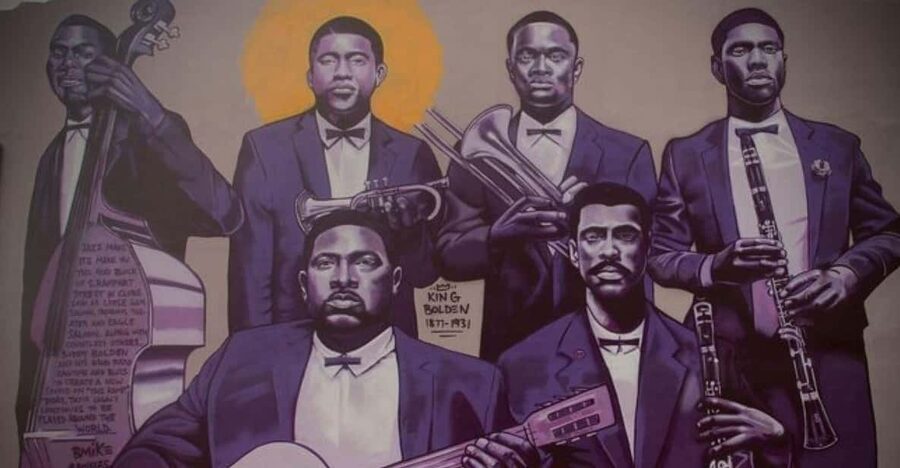
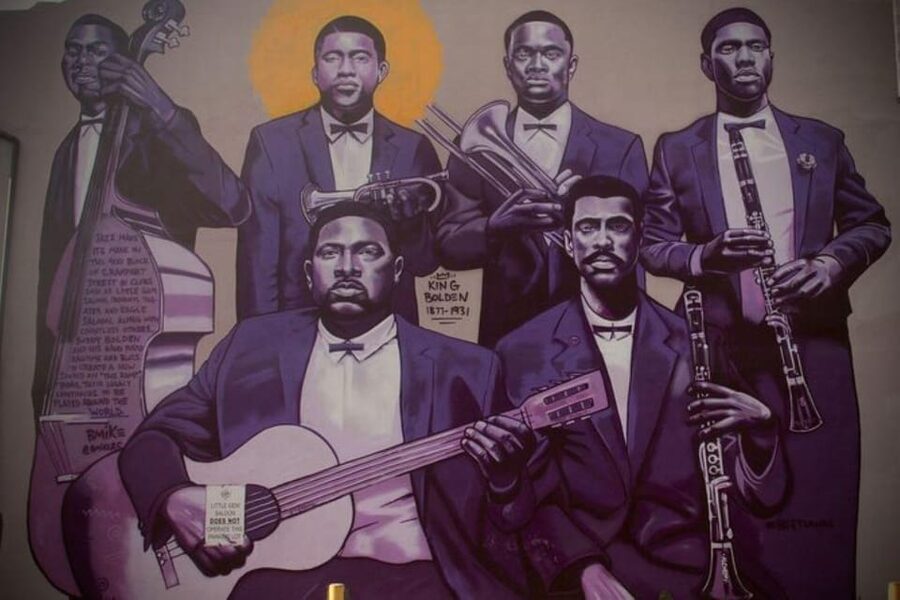
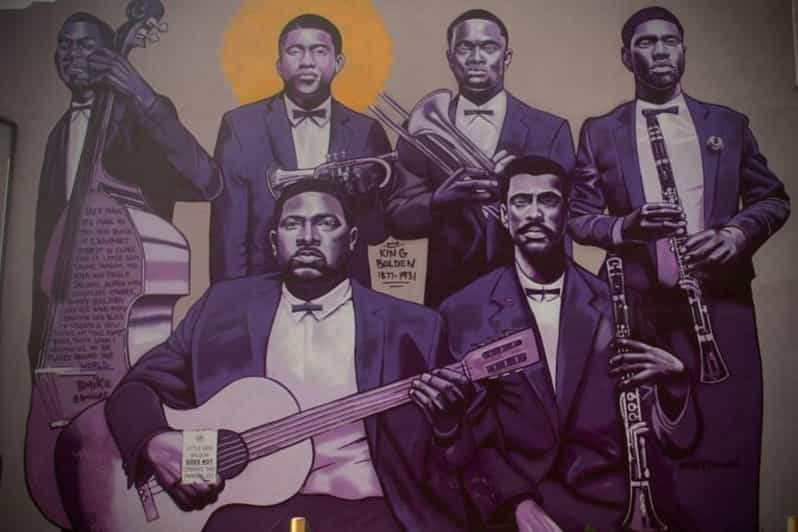
Louis Armstrong Park isn’t just a name-drop. It’s a place with physical anchors—monuments and settings tied to the story. The guide uses those anchors to introduce the first wave of jazz icons, including Louis Armstrong, Jelly Roll Morton, and Charles Buddy Bolden. You’ll also hear about dance spaces where jazz culture wasn’t sitting quietly in the background.
Practical tip: arrive a few minutes early so you can get your bearings and settle in before the walking rhythm starts. And since you’ll be standing and listening throughout, bring a water bottle if it’s warm.
Stop 1: Louis Armstrong Park Monuments, Pioneers, and Dance Halls
This is your first chapter, about 40 minutes. The payoff here is that you’re introduced to the people and ideas that shape the rest of the route. Instead of treating jazz as a single invention, the guide frames it as something built through multiple pioneers and communities.
You’ll also get the “why it felt like this” side of jazz. The tour isn’t only about who performed—it’s about where the music lived. That includes early dance hall culture, which helps explain why jazz grew as a social experience, not just a performance.
One possible drawback: because the first stop sets the tone, you’ll want to pay attention right away. If you’re tired or you tune out early, you may miss the threads the guide later pulls to connect Congo Square to what comes next.
Stop 2: The New Orleans Jazz Museum and the St. Pierre Hotel Connection
Next comes another 40 minutes at the New Orleans Jazz Museum. The tour specifically points you toward the idea of the first jazz museum at the St. Pierre Hotel—where Louis Armstrong stayed during performances in New Orleans.
This stop is valuable because it bridges street-level storytelling with “place-based proof.” A museum stop can feel like it might slow you down, but here it’s used like a hinge. The guide uses it to ground the earlier pioneer stories in a setting tied directly to Armstrong’s time in the city.
In practice, this is also where the tour can help you understand what you’re seeing later on Frenchmen Street. If you know the links between Armstrong, the evolution of styles, and the city’s music ecosystem, the live sets stop feeling random. They start feeling like chapters continuing.
Wear-and-tear note: if you’re sensitive to walking indoors after standing outside, go at a comfortable pace and keep your feet relaxed. You’ll still be on your feet afterward.
More of New Orleans on foot

Stop 3: Congo Square and Treme’s Role in the Jazz Origins Story
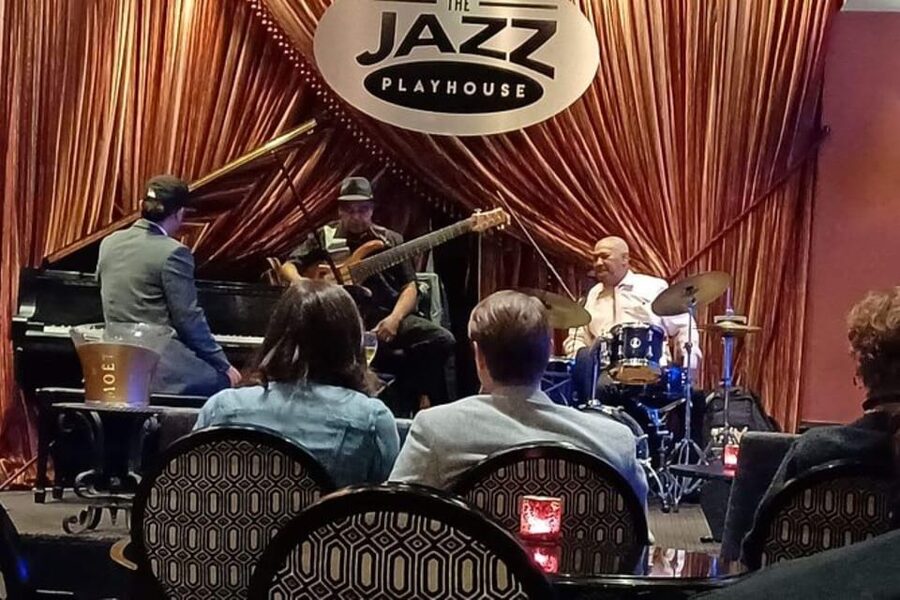
Stop three is about 20 minutes. Congo Square is treated as sacred grounds—often connected to the origins story of jazz—and the tour also folds in the historic context of Treme, noted as the oldest African American neighborhood in the country.
What makes this stop more than a quick photo stop is that it reframes jazz as something tied to community life. You’re not just hearing that music existed; you’re hearing how gatherings, rhythm, and social space helped create the conditions where new musical forms could take shape.
The tour also uses Congo Square to connect past and present. Treme is a key part of the sound’s ecosystem, and the guide’s job is to show you why those neighborhood roots matter when you later hear the music on Frenchmen Street.
Time-check thought: 20 minutes is short, so treat it as a focused orientation. If Congo Square hits you emotionally, don’t rush off. Take a slow moment before moving on so the meaning lands.
Stop 4: Frenchmen Street Live Jazz as the Grand Finale
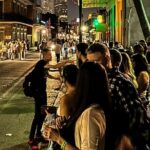
The tour ends on Frenchmen Street, with another 20 minutes built around live jazz. This is where the route earns its keep: you go from stories about origins and museums straight into sound you can actually hear right there on the street.
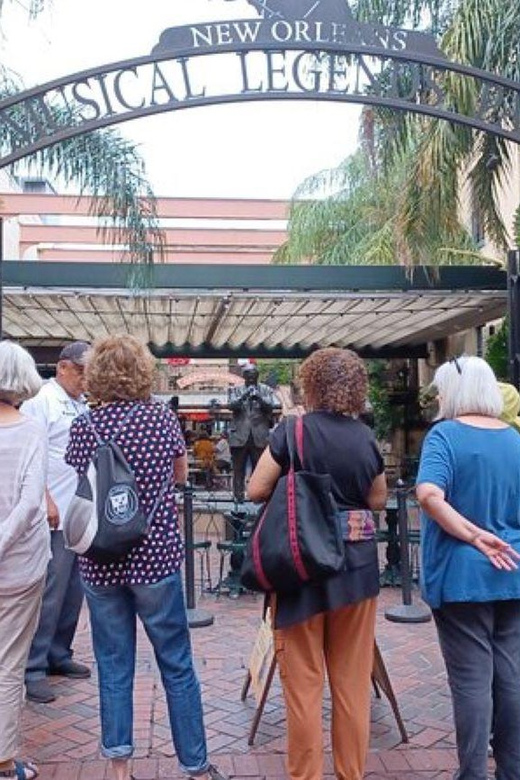
Frenchmen Street is one of the most popular music zones in New Orleans, and the tour steers you toward the vibe and what venues to look for next. Nearby names include Snug Harbor, the Maison, and the Spotted Cat—handy if you want to continue your jazz evening after the walk.
Even better, this stop works like a real-time lesson. If earlier parts of the tour felt like they were teaching you how to listen, Frenchmen Street is where you test that. You can notice what kind of energy the musicians bring, and how the room and street culture shape the performance.
One consideration: Frenchmen Street can be crowded depending on the night. The tour time here is short on purpose, but you should still expect standing and listening conditions.
Group Size and Walking Pace: What to Expect in Real Life
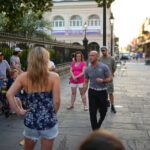
This walk runs with a maximum of 28 travelers. That’s not huge, but it does mean you’ll want to listen closely and stay aware of where your guide is leading the group.
Most tours like this move at a steady walking pace with a few short pauses for context. This one is also clear about the physical demand: you need to be able to stand for a long period of time and have moderate physical fitness. Plan for it as a two-hour standing-and-walking block.
Also, the tour operates with a minimum of 2 guests. If you’re traveling solo and not booking a private tour, this matters. If you’re trying to build a schedule around it, consider what you’d do if a solo spot doesn’t get confirmed.
Tip: wear breathable clothes and shoes that can handle uneven sidewalks. New Orleans streets can be charming and also mildly annoying to walk on for an extended stretch.
The Guides Matter: Why Harris Parson and Robin Are Mentioned So Often
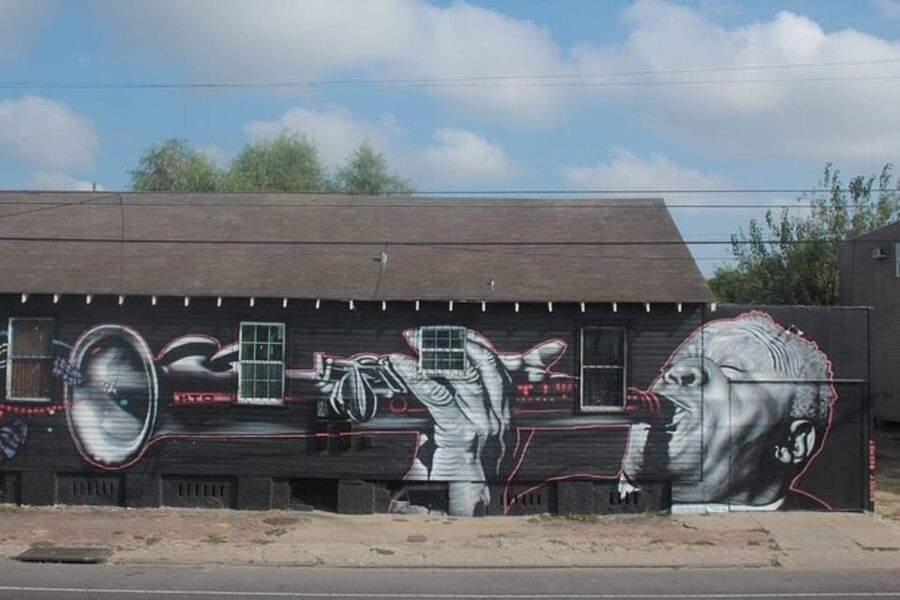
The tour experience is heavily shaped by the guide’s style. Two names you’ll see come up are Harris Parson and Robin, both praised for how they connect the dots between music and the city.
A standout theme in the feedback: the guides don’t just speak. They bring jazz into the moment by using music to highlight different times and genres, and some guides even play songs they mention. That’s a huge difference from tours that only list facts.
Guides are also praised for answering questions and going beyond the music to include architecture and city history. That combination works well because New Orleans jazz isn’t floating in space—it’s part of a city plan, a neighborhood layout, and a way of life.
There’s also a practical “listen or not” element. One note I’d take seriously: this isn’t always the easiest fit for very young kids, since the narrative is more suited to people who enjoy history and stories. If your group includes younger children, you might still enjoy it, but you may need to manage expectations and keep breaks in mind.
Who Should Book This Tour (and Who Might Skip It)
You’ll likely love this tour if:
- you want an easy, structured way to understand how jazz connects to specific New Orleans places
- you like story-driven guides and want context for what you’ll hear later on Frenchmen Street
- you have limited time and want to hit multiple key stops in about 2 hours
You might want to think twice if:
- you don’t do well standing for long stretches
- you’re looking for a food-and-club crawl (snacks and meals aren’t included, and the focus is historical storytelling)
- you’re traveling with very young kids who may struggle to stay engaged for narrative-heavy portions
For couples, the tour tends to work well because it feels like a shared learning experience that ends with live music. Families can enjoy it too, but I’d plan it earlier in the day or pair it with another activity that gives kids a break from listening.
Should You Book This New Orleans Jazz Walking Tour?
If your goal is to understand New Orleans jazz in a way that makes the city feel connected, I’d book it. The route hits four anchors—Armstrong Park, the New Orleans Jazz Museum, Congo Square/Treme, and Frenchmen Street—and it keeps moving so you’re never stuck in one mode for too long.
I’d book it especially if you want your jazz tour to do more than name musicians. The strong guides—Harris Parson and Robin are standout examples—are the reason people leave feeling like they learned how jazz lives in New Orleans, not just when it happened.
The main reason to hesitate is simple: the tour assumes you can stand and walk for the full loop. If that’s a concern, you might want a more seated option. If that’s not an issue, this is a solid, time-efficient way to turn your jazz night into something you’ll understand while you’re hearing it.
FAQ
How long is the New Orleans Jazz Walking Tour?
The tour is approximately 2 hours.
Where does the tour start and end?
It starts at Louis Armstrong Park, 701 N Rampart St, New Orleans, LA 70116, and ends on Frenchmen Street in New Orleans.
What stops are included on the route?
You’ll visit Louis Armstrong Park, the New Orleans Jazz Museum (connected to the St. Pierre Hotel), Congo Square (with Treme context), and you’ll end at Frenchmen Street for live jazz.
Is admission included for the stops?
Admission tickets are listed as free for each stop mentioned (Louis Armstrong Park, the Jazz Museum stop, Congo Square, and Frenchmen Street).
Is the tour offered in English?
Yes, the tour is offered in English.
Do I need to bring snacks or a meal?
Snacks, lunch, and dinner are not included, so plan on eating before or after.
What’s the cancellation policy?
You can cancel for a full refund up to 24 hours in advance. If you cancel less than 24 hours before the start time, the amount paid is not refunded. The experience also requires good weather and may be offered a different date or a full refund if canceled due to poor weather.
More Tours in New Orleans


More Tour Reviews in New Orleans
More Jazz & Live Music
Just added to The New Orleans Traveler


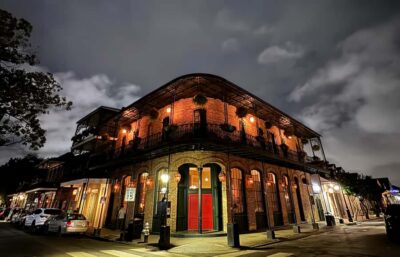
Jazz & Live Music Tours, compared.
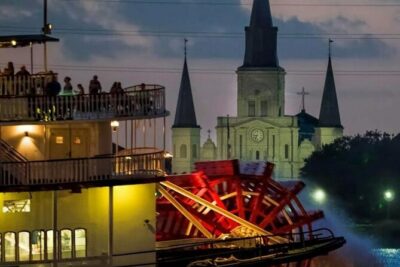 ★ 4.0Steamboat Natchez Jazz Cruise with Dinner OptionFrom $587,533 reviews
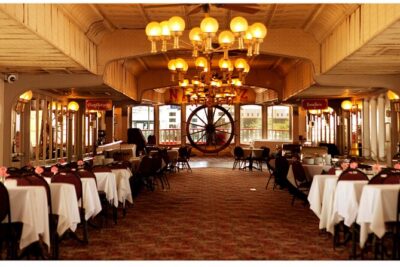 ★ 4.5Steamboat Natchez Jazz CruiseFrom $435,334 reviews
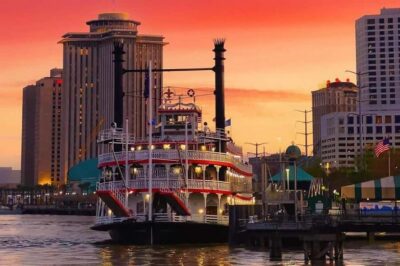 ★ 4.3Evening Steamboat Jazz Cruise + Optional DinnerFrom $584,548 reviews
 ★ 4.3Daytime Steamboat Jazz Cruise + Optional LunchFrom $434,164 reviews
 ★ 4.0Paddlewheeler Creole Queen Jazz Dinner Cruise in New OrleansFrom $1071,469 reviews
 ★ 4.4Evening Jazz Boat Cruise with Optional DinnerFrom $601,024 reviews
 ★ 4.0Sunday Jazz Brunch Cruise in New OrleansFrom $43889 reviews
 ★ 4.5VIP Jazz Dinner Cruise with Private Tour and Open Bar OptionFrom $190838 reviews
Browse the lists this tour appears in