
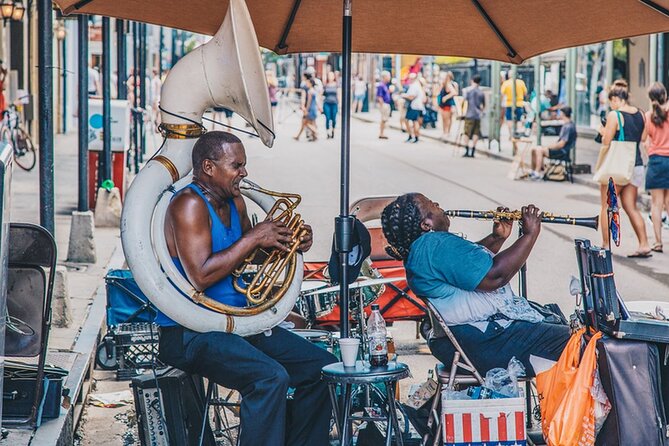
Reviewed · JAZZ & LIVE MUSIC TOURS
New Orleans Jazz History and Music Walking Tour
Jazz roots start with a simple walk. This New Orleans Jazz History and Music Walking Tour pairs street-level history in Tremé and Congo Square with a practical plan to get you into live music, often with a stop on Frenchmen Street or Bourbon Street. Two things I really like: the small-group feel (max 12) and the way your local guide times the evening so you’re not just sightseeing, you’re actually listening. One consideration: if you came for straight-up jazz musician trivia only, be ready that some guides may also spend time on the city’s social and economic story behind the sound.
You’ll start near 701 N Rampart St in Louis Armstrong Park, then make your way into the French Quarter area while your guide chooses the route based on what’s playing that night. The tour clocks in at about 2 hours 30 minutes and adds up to roughly 14 blocks, so it’s not a sit-and-snack kind of plan. I also like that the tour includes one complimentary drink, which helps you jump from “learning” to “listening” without having to negotiate every stop yourself.
Finally, the cost feels more justified because your ticket directly supports local jazz musicians and venues, not some generic history lecture. You’ll also leave with personalized recommendations so you can keep the music going after the walk ends in the French Quarter.
In This Review
- Key Things That Make This Tour Worth Your Night
- Start Smart: Louis Armstrong Park Sets the Tone
- Tremé to Congo Square: Jazz Roots You Can Actually See
- French Quarter Walking: Bourbon Street vs Frenchmen Street
- Getting Inside the Music: How the Live Venue Stop Works
- Why the Small Group Matters (and Who Usually Shines)
- Walking Shoes, Timing, and Night-Comfort Reality
- Price and Value: What You’re Paying For
- Who This Tour Is Best For
- Should You Book This New Orleans Jazz History and Music Walking Tour?
- FAQ
- How long is the New Orleans Jazz History and Music Walking Tour?
- Where does the tour start and where does it end?
- How many people are in the group?
- How much walking should I expect?
- Is the tour in English?
- What’s included in the ticket price?
- Do I get a complimentary drink, and does it need to be alcoholic?
- Is there an age limit?
- What if the weather is bad?
Key Things That Make This Tour Worth Your Night
- Max 12 people keeps the pace human and the conversations real, not shouted over the crowd
- Route flexibility between Bourbon Street and Frenchmen Street helps you catch the music that’s actually happening
- Louis Armstrong Park + Mahalia Jackson Theater gives you early context before you hit the bars and clubs
- A guided live venue stop means you get inside with a local’s sense of timing and etiquette
- Congo Square history is central, not tacked on, including how cultural mixing shaped jazz
Follow the brass a little further
- New Orleans Steamboat Natchez Jazz Cruise with Dinner Option★ 4.0 · 7,533 reviews
- New Orleans Steamboat Natchez Jazz Cruise★ 4.5 · 5,334 reviews
- New Orleans: Evening Steamboat Jazz Cruise + Optional Dinner★ 4.3 · 4,548 reviews
- New Orleans: Daytime Steamboat Jazz Cruise + Optional Lunch★ 4.3 · 4,164 reviews
Start Smart: Louis Armstrong Park Sets the Tone
Most New Orleans music experiences start at the first bar you can find. This one starts in Louis Armstrong Park, and that’s a big deal.
You meet outside the French Quarter area at 701 N Rampart St and begin in Tremé, the neighborhood tied to early Black cultural life in the city. From there, you move through the park with a guide who puts the origins of jazz into plain language. You’re not just hearing that jazz is “American”—you hear why it formed here, out of specific communities and streets.
There’s also a concrete anchor in the Mahalia Jackson Theater of the Performing Arts, named after the gospel singer who was born in New Orleans. Even if you don’t know Mahalia Jackson’s catalog yet, the stop helps you connect the dots between church music, spirituals, and the later sounds that fed jazz.
I like this opening because it protects your night from the common tourist problem: you can only absorb so much once you’re surrounded by noise. Starting in a more grounded setting helps you hear what the guide is pointing to later when the music starts.
Tremé to Congo Square: Jazz Roots You Can Actually See
The middle of the walk matters because it’s not all French Quarter storefronts and photo stops. You spend real time in the cultural heart of the story—Tremé and Congo Square.
Congo Square is the standout. This was historically one of the early places in New Orleans where enslaved people and free people of color could gather and socialize. That detail isn’t just a line in a book. It sets up the musical idea that jazz in New Orleans didn’t come from one source—it came from mixing.
Your guide walks you through how West African and Caribbean sounds interacted with European musical influences. That blend is the backbone of why jazz ended up with its particular rhythm, phrasing, and improvisational feel. You’ll understand it better when you later sit down at a live venue and notice how the band communicates with the room.
If you’re the type who enjoys history you can map onto what you’re hearing, this section is where the tour earns its keep.
French Quarter Walking: Bourbon Street vs Frenchmen Street
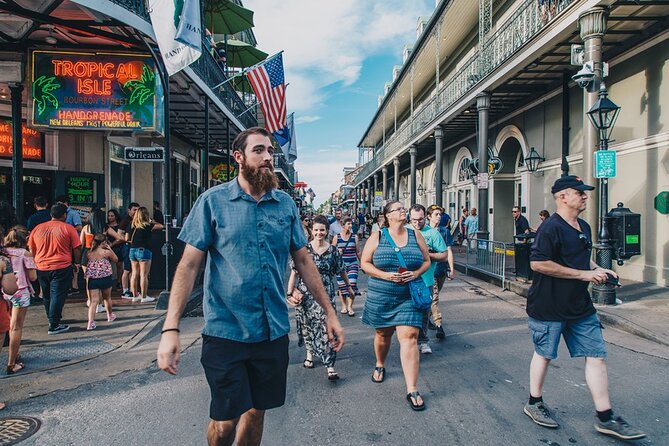
Once you move into the Vieux Carre (the French Quarter), the guide’s job becomes part history lesson, part night-planning.
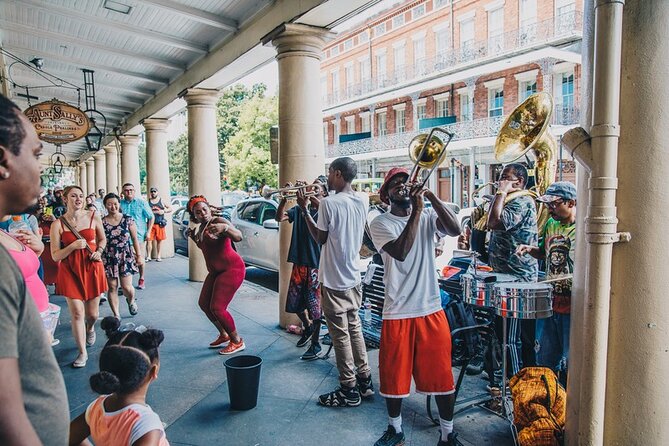
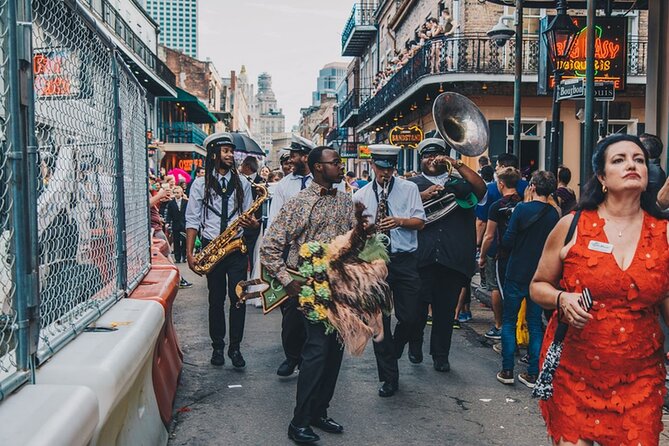
Your path can go two ways. One option includes Bourbon Street—where you learn the background of the street as a music meeting point and you pass places tied to blues and jazz collaborators. There’s also a chance you’ll spot buskers near the French Market, depending on what’s going on that evening.
The other option is Frenchmen Street, which is one of the city’s biggest concentrations of live music venues. Instead of treating it like one long corridor of noise, you get context: why the street works, how venues operate, and how to time your arrival so you catch a set without scrambling.
Here’s what I think makes the route choice smart: it’s not just geography. It’s about matching you to the music that’s actually happening that night. When your guide chooses the route, you’re less likely to waste time standing outside a club that already started or where the sound isn’t great for first-timers.
Also, on the way you’ll pass Preservation Hall in the French Quarter, known for working to preserve and perpetuate traditional New Orleans jazz. You don’t have to go in to get the point—seeing it in the flow of the walk helps you understand how the city protects its musical lineage while still letting new styles grow.
Getting Inside the Music: How the Live Venue Stop Works
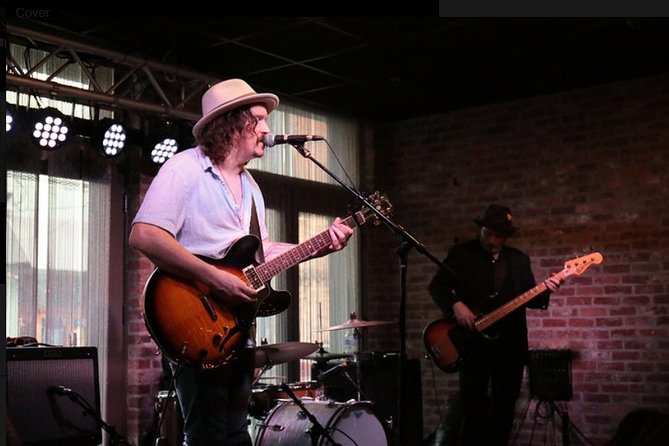
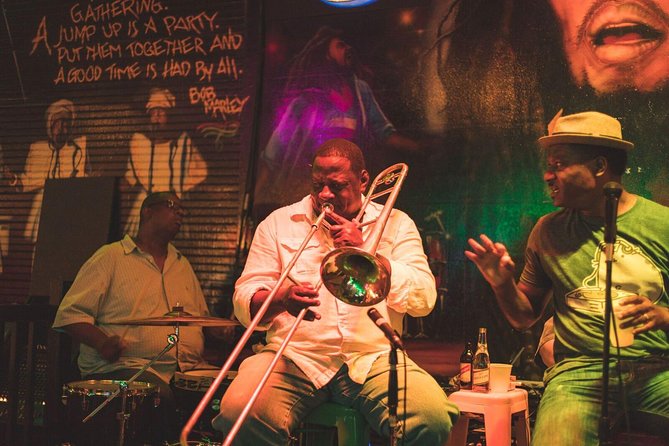
The tour isn’t only about history on the street. It builds in a visit to a live jazz/music venue selected by your guide, and that’s where the tour becomes fun in a very practical way.
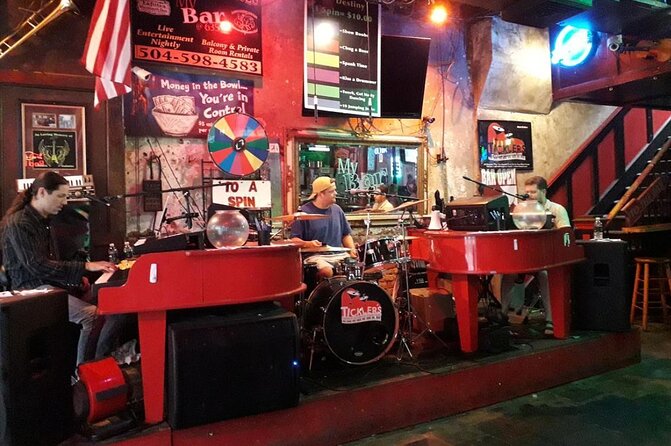
You typically end up going to a music spot where you can actually listen and take in the atmosphere. The guide also helps you understand how the club scene works: where to listen, what to expect from performances, and how to get the most out of the time you’re there.
One detail that helps first-timers a lot: at one stop you get a complimentary drink. And in at least one recent experience, the tour made it clear that an alcoholic beverage wasn’t required. So if you prefer not to drink alcohol, you still get the included token that gets you set up comfortably at the venue.
Guides also seem to take timing seriously. On some nights, people have arrived exactly when a set was starting and then stayed to experience more than one band. In one example, a guide even made sure the group caught Delfeayo Marsalis at a later stop, which shows how hands-on local knowledge can be.
Bottom line: the live venue stop is the part that turns the walk into an evening, not a museum stroll.
More of New Orleans on foot

Why the Small Group Matters (and Who Usually Shines)
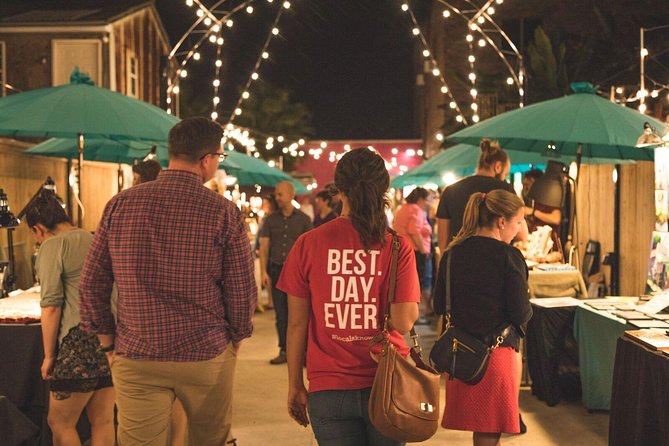
This is designed as a small-group tour, with a maximum of 12 people. That small size isn’t just a comfort feature. It changes how the guide can talk and how you can listen once you’re near clubs.
In a big group, your guide can’t respond to real questions, and it’s harder to adjust pace at the moments when the music is starting. In a small group, you get more back-and-forth, and the guide can better steer you to the right entrances and listening spots.
The people leading this tour range from passionate jazz-focused locals to local musicians. Names that have come up include Adam and Kristi (and you may see other local guides depending on your date). The key theme is the same: the guide doesn’t just recite jazz facts. They talk about how New Orleans jazz culture actually operates—who it serves, how it sounds in the room, and how to plan the next hours of your night.
If you care about the music but also want to understand the city behind it, this is the sweet spot.
Walking Shoes, Timing, and Night-Comfort Reality
Let’s talk logistics in a useful, no-drama way.
You’ll cover about 14 blocks, roughly 1.5 miles on foot. That isn’t a marathon, but it’s enough walking that you should wear comfortable shoes. One of the recurring pieces of advice from people who did the tour is exactly that—this is a “wear good footwear” kind of evening.
The tour also requires good weather. If weather is poor, you’ll be offered a different date or a full refund, so you don’t have to panic if the forecast turns.
Timing-wise, it’s about 2 hours 30 minutes. That makes it a great first-day activity because it gives you a map for how to find music later. It also fits well as an early-to-mid evening plan, before you get stuck in a late-night routine that’s hard to restart.
If you’re sensitive to being inside for shorter listening windows, know that venue stops depend on what’s scheduled. You may not have time to sit through every set possible—but you should get a solid taste with guidance so you don’t waste the evening guessing.
Price and Value: What You’re Paying For
At $60.56 per person for about 2.5 hours, the price isn’t the cheapest way to do New Orleans nightlife. But it has some value levers that matter.
First, you’re paying for a local guide who links street corners to musical origins—Louis Armstrong Park, Tremé, Congo Square, and the French Quarter. That’s not a self-guided stroll, and it’s not just “see this landmark.”
Second, the tour includes a complimentary drink at one stop. That helps offset a chunk of the cost and lowers friction when you enter a venue.
Third, and this is important: your participation supports local jazz musicians and venues. That means you’re putting your money directly into the live music economy instead of only into general tourism operations.
Finally, the small group size and the live venue stop reduce wasted time. In New Orleans, time is your real currency. A guide’s timing can mean you hear the music you came for rather than only finding out after you’ve already committed to the wrong street, the wrong door, or the wrong moment.
Who This Tour Is Best For
This is a strong fit if you want:
- jazz history with a real neighborhood context (Tremé and Congo Square matter)
- a practical way to find and enjoy live music without guessing
- a small-group format with a guide who explains what you’re seeing as you walk
It’s also a good choice if you’re building your first New Orleans plan and want something that makes later nightlife feel more meaningful.
Where I’d be cautious is if you want purely musical nuts-and-bolts—like deep talk on the evolution of specific styles or a musician-by-musician breakdown with zero detours. One experience shared that the tour leaned into social and economic themes more than expected. If that would annoy you, just set your expectation with your guide early so you get the balance you want.
Should You Book This New Orleans Jazz History and Music Walking Tour?
I’d book it if your goal is an evening that connects jazz origins to the city you’re standing in, then rewards you with a real live music stop rather than empty sightseeing. The combination of small-group pacing, Congo Square context, and the guide’s ability to steer you toward live sets is what makes this tour feel worth it.
Skip it only if you dislike walking, hate the idea of a planned venue stop, or you’re looking for purely academic jazz analysis with no broader cultural context.
If you want to understand New Orleans jazz in a way you can feel in your ears, this is the kind of start that sets the tone for the rest of your trip.
FAQ
How long is the New Orleans Jazz History and Music Walking Tour?
It runs for about 2 hours 30 minutes.
Where does the tour start and where does it end?
The start is at 701 N Rampart St, New Orleans, LA 70116, and the tour ends in the French Quarter.
How many people are in the group?
The tour has a maximum of 12 travelers.
How much walking should I expect?
Plan on about 14 blocks, roughly 1.5 miles, on foot.
Is the tour in English?
Yes, it’s offered in English.
What’s included in the ticket price?
You get a guided walk through Louis Armstrong Park, Tremé, and Congo Square; time in the French Quarter area; a live jazz/music venue stop chosen by your guide; one complimentary drink at a music stop; and personalized recommendations to keep your night going.
Do I get a complimentary drink, and does it need to be alcoholic?
The tour includes one complimentary drink. One recent experience noted that an alcoholic beverage wasn’t required.
Is there an age limit?
Yes. Travelers under 21 years old are not permitted to join this tour.
What if the weather is bad?
This tour requires good weather. If it’s canceled due to poor weather, you’ll be offered a different date or a full refund.
More Tours in New Orleans


More Tour Reviews in New Orleans
More Jazz & Live Music
Just added to The New Orleans Traveler


Jazz & Live Music Tours, compared.
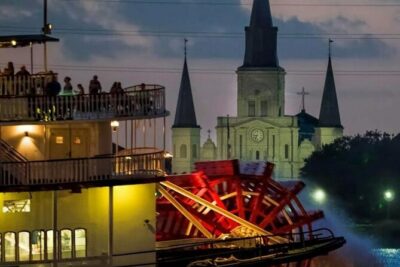 ★ 4.0Steamboat Natchez Jazz Cruise with Dinner OptionFrom $587,533 reviews
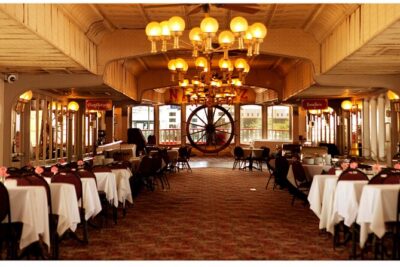 ★ 4.5Steamboat Natchez Jazz CruiseFrom $435,334 reviews
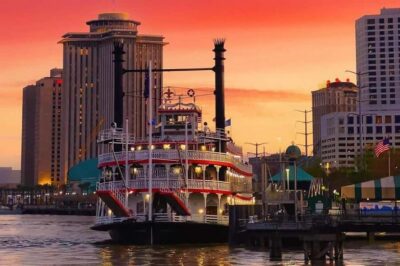 ★ 4.3Evening Steamboat Jazz Cruise + Optional DinnerFrom $584,548 reviews
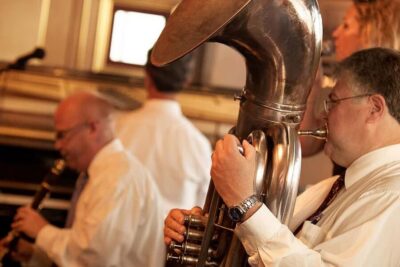 ★ 4.3Daytime Steamboat Jazz Cruise + Optional LunchFrom $434,164 reviews
 ★ 4.0Paddlewheeler Creole Queen Jazz Dinner Cruise in New OrleansFrom $1071,469 reviews
 ★ 4.4Evening Jazz Boat Cruise with Optional DinnerFrom $601,024 reviews
 ★ 4.0Sunday Jazz Brunch Cruise in New OrleansFrom $43889 reviews
 ★ 4.5VIP Jazz Dinner Cruise with Private Tour and Open Bar OptionFrom $190838 reviews
Browse the lists this tour appears in