
Reviewed · HISTORICAL TOURS
Jewish History Tour of New Orleans
Jewish New Orleans starts at the river. This 2-hour guided stroll lines up major stops that connect directly to Jewish life in the city, including the Holocaust Memorial at Woldenberg Riverfront Park and the Royal Street pirate stories. It is not a sit-and-ride tour; it is outdoors and depends on good weather, plus there is no air-conditioned vehicle to retreat to if it gets hot.
What I like most is the way the tour turns familiar landmarks into something you actually understand. You also get strong guiding, with examples from the tour team such as Janet and Suzanne, who focus on clear explanations and bring real specificity to details you would otherwise miss. A small group cap of 14 helps the pace stay friendly, but the route does mean you should expect a solid walking stretch.
For $40 per person, it is good value because you are paying for a licensed local guide plus a set of stops that are free to enter. The average rating is 4.9 out of 5, with 97% recommended, so you are not buying blind.
In This Review
- Key things to know before you go
- Why this 2-hour Jewish history walk works in the French Quarter
- Woldenberg Riverfront Park: the Agam Holocaust Memorial and Malcolm Woldenburg
- From Jackson Square to colonial fears: inquisition-era context
- Madame John’s Legacy: Jewish philanthropy in an old building
- Royal Street to Pirates Alley: Jewish pirate stories on foot
- Preservation Hall: how Jewish preservationists helped music survive
- Omni Royal Orleans stop: Judah Benjamin and slavery before the Civil War
- Price, group size, and logistics you should plan for
- Who this tour suits best (and who might not love it)
- Should you book this Jewish History Tour of New Orleans?
- FAQ
- FAQ
- What is the duration of the Jewish History Tour of New Orleans?
- How much does the tour cost?
- Where do I meet the tour, and where does it end?
- Is the tour offered in English?
- Do I need to pay admission for the stops?
- Will I get a mobile ticket?
- How large is the group?
- Is the tour affected by weather?
- Are service animals allowed?
Key things to know before you go
- Agam Holocaust Memorial at Woldenberg Riverfront Park: you’ll see it in a riverside setting and learn what you’re looking at, including the Malcolm Woldenburg statue nearby.
- Jackson Square colonial context: you’ll get an intro to early colony history and the threat of inquisition-era pressure.
- Madame John’s Legacy: an old building tied to a Jewish philanthropist adds a tangible, street-level story.
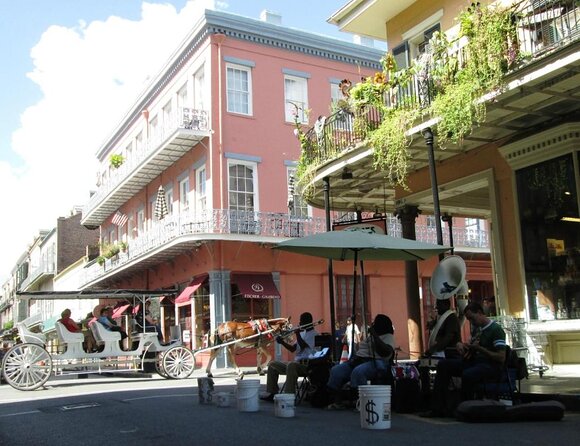
- Royal Street to Pirates Alley: the walk focuses on pirates, with some Jewish ties included in the telling.
- Preservation Hall and Jewish preservationists: the music stop explains how music was kept alive through dedicated community effort.
More of the city's three centuries
- New Orleans Garden District History Walking Tour★ 5.0 · 2,879 reviews
- French Quarter Historical Sights and Stories Walking Tour★ 5.0 · 2,724 reviews
- New Orleans Small-Group Haunted History Carriage Tour★ 4.5 · 2,289 reviews
- New Orleans Haunted History Ghost Tour★ 4.5 · 2,084 reviews
Why this 2-hour Jewish history walk works in the French Quarter
This tour is built for people who want context without spending a whole day in research mode. In just about two hours, you pass through a compact area and come away with a stronger mental map of New Orleans. That matters here because the city often feels like it is all vibes and architecture, but this kind of guided route helps you connect the dots.
The format is simple: you meet at PJ’s Coffee on Canal Street at 10:00 am, walk between stops, and end at St. Louis Cathedral. There’s no air-conditioned vehicle included, so you are basically trusting the walk and the timing more than getting rescued by transit comfort. The upside is that you keep moving, stay close to what you’re learning, and spend more time outside where the city actually is.
With a maximum of 14 travelers, the pace stays conversational. That size also makes it easier for a guide to react to questions and adjust how long you linger at a site that needs more explanation.
Woldenberg Riverfront Park: the Agam Holocaust Memorial and Malcolm Woldenburg
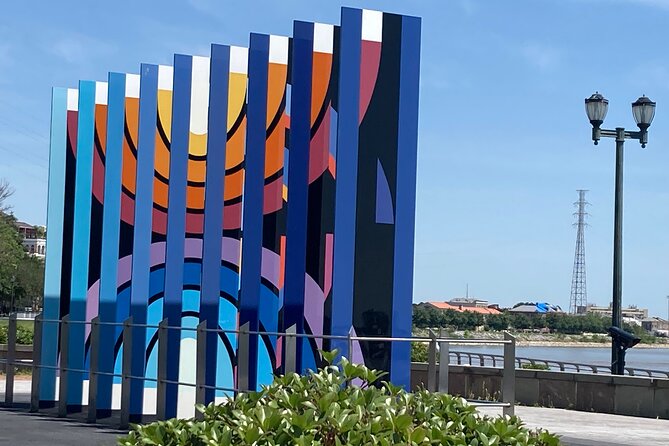
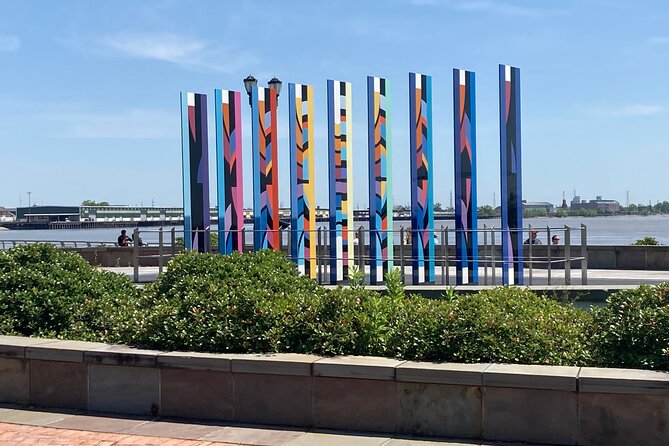
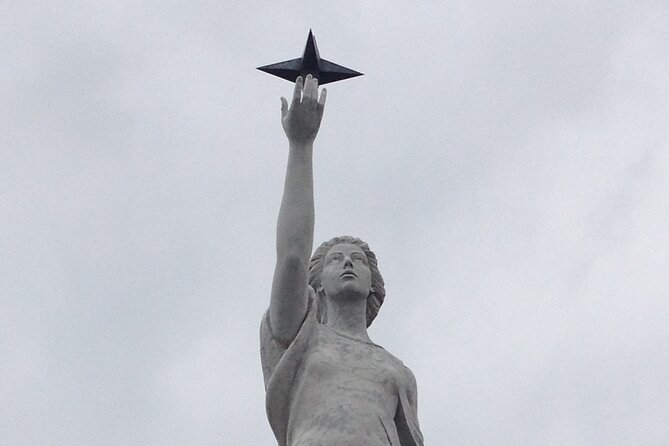
Your first major stop is Woldenberg Riverfront Park, right along the river. This is where you’ll get your biggest emotional anchor of the tour: the Holocaust Memorial, created by artist Agam, placed in an open, public space.
What makes this stop valuable is not only that it is important, but that the guide is set up to help you read it. You are not left staring at shapes and wondering what it all means. You’ll also hear how the site’s layout and the memorial’s structure invite different ways of thinking about remembrance, which can help even if visual art is not usually your thing.
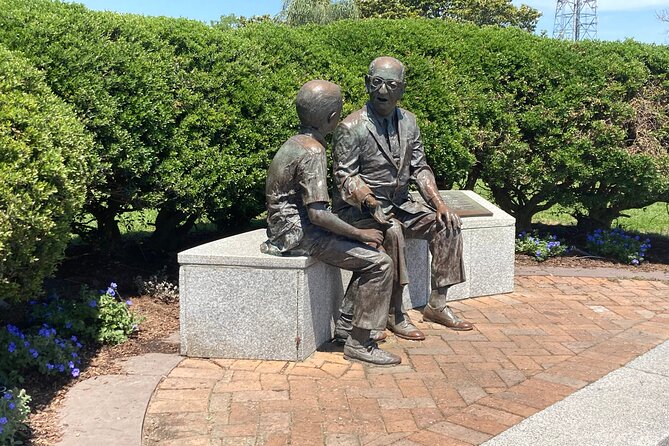
Nearby, you’ll also see the statue of Malcolm Woldenburg. That detail matters because it ties the memorial to a real person and a real civic story, rather than treating the riverfront as scenery. It also puts you in the right mood for the rest of the route, where the tour keeps switching between Jewish contributions, community leadership, and the pressures people faced.
Practical note: this is a riverfront area. In pleasant weather, it is great. In rough weather, it can feel exposed, which is why good-weather conditions matter for the overall experience.
From Jackson Square to colonial fears: inquisition-era context
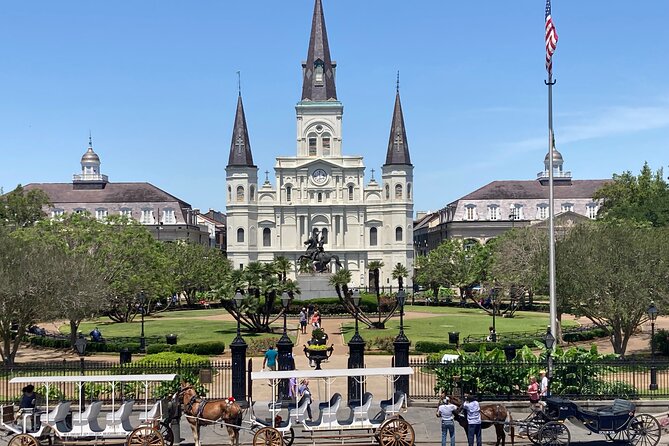
After the riverfront, you move toward Jackson Square for a broader historical setup. This stop is short, but it is designed to do something important: give you an early New Orleans foundation before the tour gets more specific.
You’ll get an intro to the city’s earliest days as a colony, including discussion of threats related to the inquisition. Even if you already know New Orleans is French and Catholic-influenced, this part helps explain why religious pressure mattered to everyday life and why minority communities had to navigate carefully.
This is one of those stops that works best if you let it be a framing device. Think of it like the tour’s rewind button: it helps you understand why later chapters of Jewish community life in New Orleans developed in the way they did.
Also, Jackson Square is a place you likely pass anyway. Making it part of a guided story gives you a reason to look up, slow down, and connect the setting to the people who were affected by religious institutions and political power.
Madame John’s Legacy: Jewish philanthropy in an old building
Next comes Madame John’s Legacy, an older building that once belonged to a Jewish philanthropist. This is the stop that turns history from a concept into a physical address you can point to later.
A building like this is perfect for a walking tour because it is a slow clue. You can stand in front of it, take in the façade, and imagine the kind of daily influence philanthropy had—helping communities, funding needs, and building stability. When a guide connects it to Jewish benefactors, it helps you avoid the common mistake of treating Jewish presence as only religious or only immigrant-era. Here, it is civic and practical too.
This stop also gives you a break from heavy concentration. The story is focused, but the setting is architectural and specific, which helps your brain reset while still keeping you on theme.
If you like walking tours that don’t just list facts, this one is a good match. The goal is not to memorize names and dates. The goal is to see how power and generosity shaped a city block.



Royal Street to Pirates Alley: Jewish pirate stories on foot
Now you get the part that sounds almost too fun to be educational, and that is exactly why it works: Royal Street is where you learn that New Orleans lore and New Orleans history overlap more than people expect.
From Dumaine to Pirates Alley, your guide shares stories of pirates, including some with Jewish connections. This is not random trivia. The point is to show how Jewish life in New Orleans was tied into the broader economic and maritime world of the city.
Royal Street is also a strong walking choice because it is already designed for strolling. The guide’s job here is to keep you from turning the walk into just shopping-window viewing. With pirate tales threaded in, you’re watching the street as a stage for commerce, risk, and ambition, and not just as a backdrop for photos.
What to look for: enjoy the street-level storytelling, but keep your expectations grounded. You’re learning history through narrative, not solving a mystery. Still, the payoff is real: you leave with a more vivid sense of New Orleans as a place where many identities intersected, including Jewish ones.
Preservation Hall: how Jewish preservationists helped music survive
Next is Preservation Hall, in front of one of the city’s most iconic jazz rooms. This stop is where the tour connects cultural memory to action, not just artistry.
You’ll hear about how music was saved by Jewish preservationists. That phrase matters because it shifts the story away from music as something that simply happens, and toward music as something people worked to protect. Preservation is effort. It usually costs time, energy, money, and community leadership.
In practice, this is a great mid-tour moment. By the time you reach Preservation Hall, you’ve already seen memorial and colonial context and philanthropic ties. Now you get a more hopeful angle: the city’s sound survived because people cared enough to keep it alive.
Even if you’re not a jazz superfan, this stop helps you understand why New Orleans music is treated like a civic treasure. It also gives you a concrete way to remember what Jewish communities contributed beyond religious life.
Omni Royal Orleans stop: Judah Benjamin and slavery before the Civil War
For the final discussion, the tour shifts to the Omni Royal Orleans and focuses on Judah Benjamin, a U.S. Senator and cabinet member of the Confederate government, plus slavery in the state before the Civil War.
This is the hardest stop conceptually, because it sits at the intersection of major American political history and a morally heavy topic: slavery. The value here is not comfort. It is clarity. A good guide should help you hold the facts without turning them into either hero-worship or a simplistic moral dodge.
You’ll also hear the larger point: Jewish figures were part of American life in complicated ways, including in government roles that impacted the lives of enslaved people. Learning that complexity matters if you want history to be honest.
If you prefer tours that focus only on pleasant, uplifting stories, this portion may feel uncomfortable. It can also feel necessary, and that is the right way to look at it. New Orleans history is not sugar-coated, and neither is the role of Jewish individuals within it.
Price, group size, and logistics you should plan for
At $40 per person for roughly two hours, you are paying for three core things: a licensed, insured local guide; a tight route through meaningful sites; and stop access that is free.
The free-admission nature of each stop is a big deal for value. You are not adding surprise costs on top of the ticket price. Instead, your budget stays predictable, and you can spend your money on a coffee, a snack, or a quick pastry before you start.
Group size is another practical advantage. With a maximum of 14 travelers, it is not a mass-school-bus vibe. That supports better pacing, and it usually makes it easier to ask questions without feeling like you’re interrupting a conveyor belt.
Two logistics items to keep in mind:
- No air-conditioned vehicle is included, so you rely on shade and your own comfort choices.
- The tour requires good weather, and the schedule is designed as a walking experience.
If you’re booking, pick your clothing with the weather in mind. Comfortable walking shoes help more than you think, especially since the tour runs from Canal Street area to St. Louis Cathedral.
Who this tour suits best (and who might not love it)
This is a great fit if you want Jewish New Orleans to feel real, not like a couple of postcard facts. You’ll like it if you enjoy guided interpretation of specific sites like the Agam Holocaust Memorial and if you want street-level stories on places such as Royal Street.
It also works well for history-minded travelers who like narrative structure. The tour’s stops naturally move from remembrance to colonial framing to community influence to culture, and then into harder political context. That order helps your understanding grow in steps rather than as one long lecture.
It might not be your best match if you dislike walking tours or you’re looking for a purely light, entertainment-only experience. There are serious themes here, and one stop focuses directly on Judah Benjamin and slavery. You should be ready for that.
Should you book this Jewish History Tour of New Orleans?
I’d book it if you want a focused, walkable way to understand Jewish contributions and Jewish presence across multiple layers of the city, from memorial and philanthropy to music preservation and political history. The $40 price feels fair for what you get: a licensed local guide, a small group size, and free access to the key stops.
I’d pause and reconsider if weather is questionable or you are not comfortable with about two hours of walking in the French Quarter. Also, if the topic of slavery and Confederate-era political history will shut you down, this tour may feel heavier than you’re expecting.
FAQ
FAQ
What is the duration of the Jewish History Tour of New Orleans?
It lasts about 2 hours.
How much does the tour cost?
The price is $40.00 per person.
Where do I meet the tour, and where does it end?
You start at PJ’s Coffee, 333 Canal St, New Orleans, LA 70130. The tour ends at St. Louis Cathedral, 615 Pere Antoine Alley, New Orleans, LA 70116.
Is the tour offered in English?
Yes, it is offered in English.
Do I need to pay admission for the stops?
Admission tickets are listed as free for the stops included on the walk.
Will I get a mobile ticket?
Yes, the tour offers a mobile ticket.
How large is the group?
The tour has a maximum of 14 travelers.
Is the tour affected by weather?
Yes. It requires good weather, and if it’s canceled due to poor weather, you’ll be offered a different date or a full refund.
Are service animals allowed?
Yes, service animals are allowed.
More History of New Orleans


More Tours in New Orleans
More Tour Reviews in New Orleans
Just added to The New Orleans Traveler



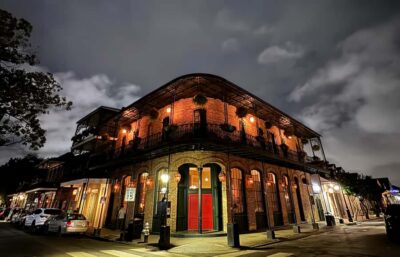
Historical Tours, compared.
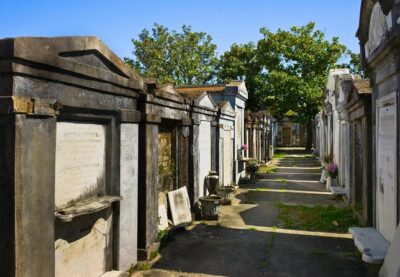 ★ 5.0Garden District History Walking TourFrom $352,879 reviews
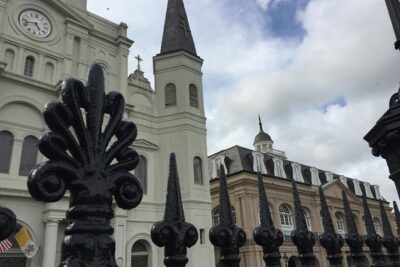 ★ 5.0French Quarter Historical Sights and Stories Walking TourFrom $352,724 reviews
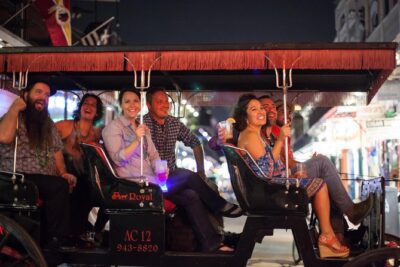 ★ 4.5Small-Group Haunted History Carriage TourFrom $652,289 reviews
 ★ 4.5Haunted History Ghost TourFrom $302,084 reviews
 ★ 4.5Paddlewheeler Creole Queen Historic Mississippi River CruiseFrom $471,948 reviews
 ★ 5.0Food and History Walking TourFrom $851,544 reviews
 ★ 4.3Creole Queen History Cruise with Optional LunchFrom $471,112 reviews
 ★ 5.0Cocktail and Food History TourFrom $160819 reviews
Browse the lists this tour appears in