

Reviewed · HISTORICAL TOURS
Dark History Tour In New Orleans
New Orleans gets real on this walk. I love the dark-but-human stories and the licensed-before-Katrina guides who connect famous corners to the city’s harder past. One watch-out: the tone can feel blunt, and if you’re sensitive to commentary, you may want to set your expectations for direct, sometimes uncomfortable history.
This is a tight 2-hour walking tour in the French Quarter with a bargain of a price point at $30. It runs at 5:00 pm, keeps the group to a maximum of 28, and uses a mobile ticket, so you can show up, get moving, and focus on the places instead of logistics.
In This Review
- Key Points That Make This Tour Worth Your Time
- Dark Stories on the Edge of the French Quarter
- Price, Timing, and Who This 2-Hour Walk Fits
- Staying Grounded: Meeting Point and Route Flow
- Stop 1: St. Louis Cathedral and the Weight of Firsts
- Stop 2: Lafitte’s Blacksmith Shop for a Mid-Tour Reset
- Stop 3: Madame John’s Legacy and French-Era Clues
- City Hall of the Spanish and American Eras Until the Civil War
- Jackson Square: The Gorgeous Place With a Hard Edge
- Guides, Tone, and Pacing: What the Best Versions Do Right
- Is It Actually Fun, or Just Heavy?
- Should You Book the Dark History Tour in New Orleans?
- FAQ
- How long is the Dark History Tour in New Orleans?
- How much does the tour cost?
- Where does the tour start and end?
- Is the tour offered in English?
- Do I get a mobile ticket?
- What is the maximum group size?
- What if the weather is bad?
- Can I cancel and get a refund?
Key Points That Make This Tour Worth Your Time
Dark history, told with care so you get real stories without cartoon villains.
Guides with long local credentials (licensed before Hurricane Katrina), which matters for context and confidence.
Free-access stops inside the Quarter like St. Louis Cathedral and Jackson Square, plus a classic mid-tour break at Lafitte’s Blacksmith Shop.
A pace that works for most people—about 2 hours total, with short stop times.
Q&A included, without gimmicks which is a big reason people come back or recommend it.
More of the city's three centuries
- New Orleans Garden District History Walking Tour★ 5.0 · 2,879 reviews
- French Quarter Historical Sights and Stories Walking Tour★ 5.0 · 2,724 reviews
- New Orleans Small-Group Haunted History Carriage Tour★ 4.5 · 2,289 reviews
- New Orleans Haunted History Ghost Tour★ 4.5 · 2,084 reviews
Dark Stories on the Edge of the French Quarter
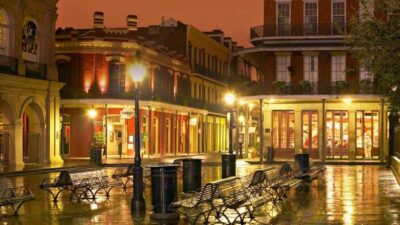
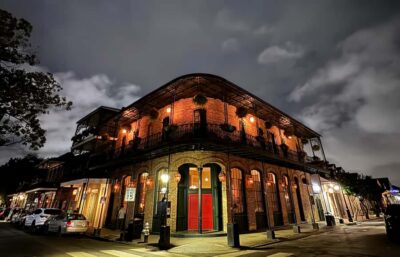
If your idea of New Orleans is only music, balconies, and postcard lighting, this tour nudges you into the other side of the same streets. The Dark History Tour in the French Quarter is built around locations that look familiar—then hit you with the reality behind them.
What makes it work is the way the guide frames each stop. The best tours don’t just list spooky facts. They explain why the story matters and how people lived with it. On this walk, the storytelling is described as compassionate and humanizing, which keeps the focus on lives and choices instead of just shock value.
Still, it’s called dark history for a reason. The stories can land hard. And depending on the guide, the delivery can be more talk-heavy than you expect. If you want light, fast, and breezy, you may find yourself wishing for shorter answers.
Price, Timing, and Who This 2-Hour Walk Fits
At $30 per person for about 2 hours, this tour is a solid value if you want guided context while you’re already in the Quarter. You’re not paying for entrance tickets at most stops either—the itinerary lists multiple stops as free admission—so your money goes mainly to the guide and the route.
Timing matters here. The start time is 5:00 pm, which is a smart window for French Quarter walking. It’s late enough that you’re past the midday heat for many visitors, and you can still enjoy that early evening street energy before things get too late.
Group size is capped at 28, so it’s not a huge herd. That helps the guide move between locations without feeling rushed. It also makes questions easier to fit in when there’s space to talk.
This tour fits you best if:
- You like history but don’t want a lecture hall vibe.
- You’re already in the French Quarter and want a structured walk.
- You’re okay with stories that are uncomfortable, not polished.
If you only want “easy fun,” you might prefer a lighter themed tour.
Staying Grounded: Meeting Point and Route Flow
You’ll start at Pirate’s Alley Cafe, 622 Pirates Alley, and the tour ends at 1035 Chartres St, at the corner of Ursulines and Chartres St.
That matters for two reasons. First, Pirate’s Alley puts you right where the French Quarter feels dense and walkable. Second, ending near Chartres and Ursulines gives you a clean exit point for dinner plans without backtracking.
The tour runs as a true walking experience, not a bus-and-stop photo crawl. Expect short visits at each site rather than long interior time. The itinerary shows brief stops—often around 8 to 10 minutes—so the guide can keep the narrative moving and you’re not standing around waiting for the group.
Also, you’ll use a mobile ticket. That’s convenient on the road because you don’t have to manage paper during a walk, especially when you’ll be on your feet and looking down at smartphones already.
Stop 1: St. Louis Cathedral and the Weight of Firsts
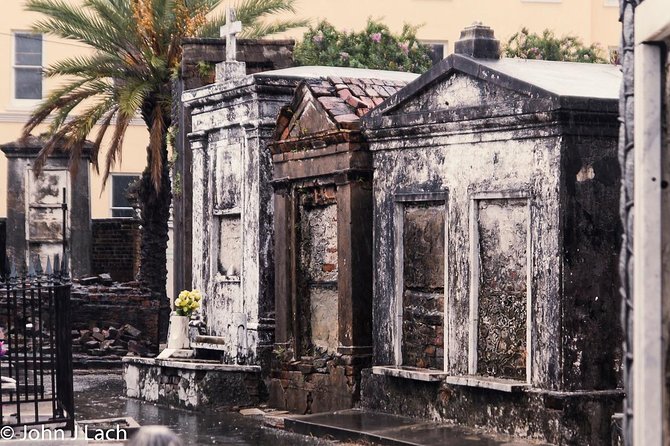
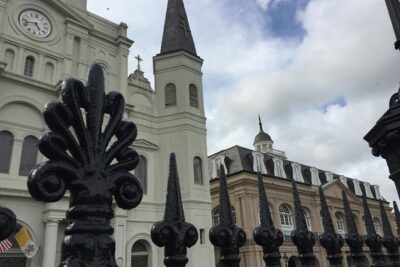
You kick off at St. Louis Cathedral, described as the oldest cathedral of the United States. Admission is listed as free at this stop, which is a practical bonus if you’re keeping your trip costs steady.
More important than the age is the symbolism. When the guide starts with a major landmark like this, it sets a baseline for how you should read the rest of the Quarter. You start with a center of public life and faith, then move toward nearby places where the city’s private, harsh, or shadowy stories played out.
Expect a short time here—about 8 minutes—so don’t come expecting a full cathedral visit. This stop is about context and viewpoint. If you want to linger afterward, that’s easy to do before or after the tour when your schedule allows.




Stop 2: Lafitte’s Blacksmith Shop for a Mid-Tour Reset

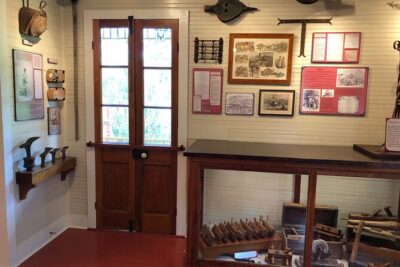
Next comes Lafitte’s Blacksmith Shop Bar, a stop that’s doing more than changing the scenery. It’s framed as a wonderful mid-tour break, and it’s also noted as the oldest tavern in the city. Admission is listed as free.
At this point in a walking tour, people usually need one of two things: a short rest or a change of rhythm. This stop delivers both. It gives you a moment to slow down, hydrate, and regroup while still staying inside the Quarter’s story zone.
The value here is that it doesn’t feel like you’re dragged off-course. The bar stop is part of the narrative arc. You’re not just taking a break; you’re pausing at a site that helps explain how the city’s social life worked, including the darker undercurrents.
Stop 3: Madame John’s Legacy and French-Era Clues
Then you head to Madame John’s Legacy, described as one of the only French buildings in the Quarter—and the only residence of the French period. Admission is listed as free.
This is one of the tour’s most useful stops if you like the “how do you tell?” side of history. When a building is rare, it becomes evidence. The guide uses that idea: what you see in architecture can anchor a story that might otherwise stay abstract.
You’ll have about 10 minutes here. That’s not long enough for a full museum-style walkthrough, but it’s enough to understand why this place matters and how it connects to the broader French Quarter timeline.
If you’ve visited New Orleans landmarks before, this stop can still surprise you because it focuses on what makes the building distinctive—rather than repeating generic talking points.
City Hall of the Spanish and American Eras Until the Civil War
Between the French-era building and the bigger open squares, the tour includes City Hall of the Spanish and Americans until the Civil War.
This stop is quietly important. Many visitors get stuck in the French Quarter story as if it started with French romance and ended with American jazz. But this kind of stop forces a timeline mindset. You start to see how shifts in power and governance shape everyday life—rules, enforcement, and who had leverage.
The “until the Civil War” detail also helps you understand that New Orleans history doesn’t just change scenery; it changes systems. And when systems change, people’s lives change too.
In a 2-hour tour, you won’t get a full lecture on the region’s political evolution. But the stop gives you a hook you can follow on your own later, especially if you’re the type to read plaques after the walk.
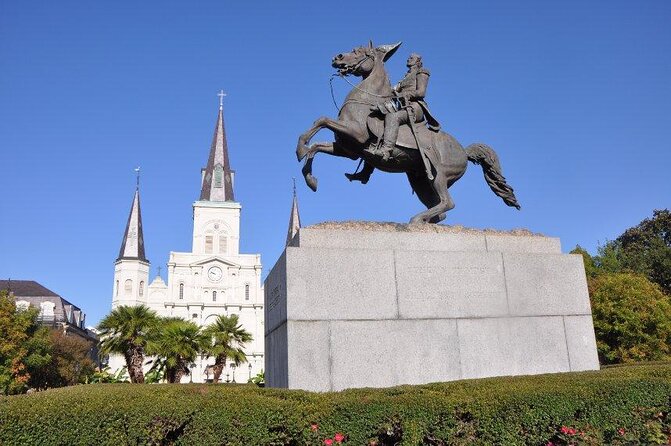
Jackson Square: The Gorgeous Place With a Hard Edge
Finally, you reach Jackson Square, described as lovely and also tied to absolute horror. Admission is listed as free.
This is where the tour earns its dark label. Jackson Square is the postcard location that most people think they already know. The guide’s job here is to flip your lens: instead of treating the space like scenery, you learn to treat it like stage space where history happened.
The stop time is about 8 minutes, which keeps it punchy. You’re meant to absorb the idea quickly and move on, not stand there indefinitely. If you want more time in the square after the tour, plan to do a slower walk around it. That way, you can let the new lens settle before you return to your evening plans.
Guides, Tone, and Pacing: What the Best Versions Do Right
This tour’s reputation hinges on the guide. The strongest experiences in the feedback you’ll see tend to share a few traits: clear facts, story flow, and a human tone that doesn’t treat tragedies like entertainment.
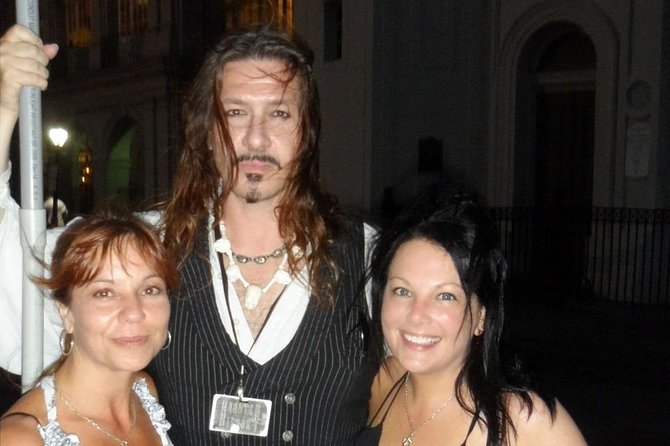
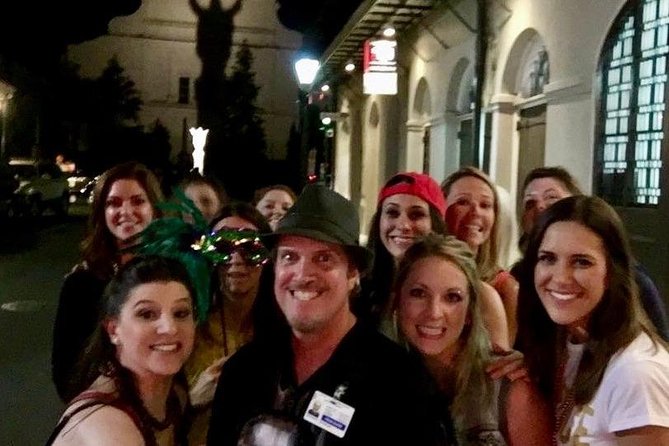
Guides tied to Jonathan Weiss Tours include named guides such as Jonathan Weiss, Jonathon, and Doug. What stands out is that the storytelling style is described as knowledgeable about the city and friendly, with enthusiasm that makes the information feel alive. One review praised Doug for delivering these stories in a compassionate and humanizing way, which is exactly what you want on a dark-history theme.
There’s another angle worth knowing: pacing. One negative note complained that a guide was long-winded and could ramble off target. Another negative note said a guide was rude and condescending. Those are not tiny details if you’re booking with friends and everyone’s expectations are different.
My practical advice: go in expecting a direct, story-forward walk. If you want short answers only, arrive with your own comfort zone set. And if you have specific sensitivities, it’s fair to expect that you’ll need a guide who keeps the tone respectful.
Also, one of the highlights mentions that long-time guides were licensed before Hurricane Katrina. That’s not just trivia. It usually means the guide has spent years learning how to communicate with crowds, manage group motion, and explain context without turning the experience into chaos.
Is It Actually Fun, or Just Heavy?
Here’s the honest balancing act. This is not a horror-movie tour. It’s a history walk with dark themes, built into real landmarks. That’s why it can still feel fun.
The “fun” comes from structure and momentum:
- You’re moving stop to stop across the French Quarter.
- You get short windows at each place instead of endless lectures.
- The pacing is designed to keep your attention from frying out after 30 minutes.
The “heavy” comes from the content. Jackson Square isn’t just pretty. St. Louis Cathedral isn’t just old. Even the break at Lafitte’s Blacksmith Shop has a social-history purpose.
If you like learning, this tour gives you something to chew on during your evening stroll after you’re done.
Should You Book the Dark History Tour in New Orleans?
Book it if you want a guided way to see the French Quarter with a second lens—one that includes the city’s darker chapters without turning them into cheap thrills. At $30 for about two hours, with free admission at multiple stops and a small-to-moderate group size, it’s good value for a first or second trip to New Orleans.
Skip it or choose another tour if:
- You dislike blunt storytelling and prefer a softer tone.
- Your group needs short, tightly paced explanations.
- You’re uncomfortable with history that may bring up difficult topics.
If you’re a history fan, or you want your New Orleans experience to feel more complete than the usual romance-and-music loop, this is a worthwhile add-on to your itinerary.
FAQ
How long is the Dark History Tour in New Orleans?
It lasts about 2 hours.
How much does the tour cost?
The price is $30.00 per person.
Where does the tour start and end?
It starts at Pirate’s Alley Cafe, 622 Pirates Alley, and ends at 1035 Chartres St, at the corner of Ursulines and Chartres St.
Is the tour offered in English?
Yes, the tour is offered in English.
Do I get a mobile ticket?
Yes, the tour uses a mobile ticket.
What is the maximum group size?
The tour has a maximum of 28 travelers.
What if the weather is bad?
This experience requires good weather. If it’s canceled due to poor weather, you’ll be offered a different date or a full refund.
Can I cancel and get a refund?
Yes. You can cancel up to 24 hours in advance for a full refund.
More History of New Orleans





More Tours in New Orleans

More Tour Reviews in New Orleans
Just added to The New Orleans Traveler



Historical Tours, compared.
 ★ 5.0Garden District History Walking TourFrom $352,879 reviews
 ★ 5.0French Quarter Historical Sights and Stories Walking TourFrom $352,724 reviews
 ★ 4.5Small-Group Haunted History Carriage TourFrom $652,289 reviews
 ★ 4.5Haunted History Ghost TourFrom $302,084 reviews
 ★ 4.5Paddlewheeler Creole Queen Historic Mississippi River CruiseFrom $471,948 reviews
 ★ 5.0Food and History Walking TourFrom $851,544 reviews
 ★ 4.3Creole Queen History Cruise with Optional LunchFrom $471,112 reviews
 ★ 5.0Cocktail and Food History TourFrom $160819 reviews
Browse the lists this tour appears in