
Reviewed · PLANTATION TOURS
New Orleans Plantation Tour with Transportation
Live oaks, big stories, heavy truths. This 3.5-hour private plantation outing from La Vie New Orleans Private Tours mixes Creole heritage with clear attention to the American slave trade. You get pick-up within New Orleans city limits, and the day stays simple because transportation is handled for your group.
I particularly like how Laura Plantation is taught through documentation and lived family detail, not just broad labels. You’ll spend about 1.5 hours at Laura Plantation, with a guided tour grounded in French National Archives material, covering free and enslaved families across multiple generations—and you’ll also see restored spaces like the manor house, gardens, and Creole cottages plus slave cabins. Another standout is Evergreen Plantation’s scale and physical layout, including 37 buildings on the National Register of Historic Places and a striking double row of 22 slave cabins.
One thing to consider: this is a tight schedule. With only about 3 hours 30 minutes total, you’ll want to show up ready to absorb a lot of information quickly, and you may leave wanting more time at your favorite stop.
In This Review
- Key Points You’ll Care About
- Oak Alley’s Live-Oak Drive and Why It Matters
- Laura Plantation: Creole Families, Archives, and Fortier’s Tales
- Evergreen Plantation’s 37 Buildings and the Double Row of Cabins
- Price and What You’re Really Paying For
- How the Hotel Pickup and Tight Schedule Work
- The Guide Factor: Expect Friendly Storytelling
- Who This Tour Is Best For
- Should You Book This New Orleans Plantation Tour?
- FAQ
- What’s the duration of the tour?
- What time does the tour start?
- Do I get hotel pickup?
- Is the tour private?
- Is the tour offered in English?
- What’s included with the ticket?
- Is there a mobile ticket?
- Is this tour refundable?
- Is service available for travelers with service animals?
Key Points You’ll Care About
- Hotel pickup included means less hassle and more time thinking about what you’re seeing
- Oak Alley’s quarter-mile live-oak avenue (28 giants) sets the tone fast
- Laura Plantation’s guide style leans on French archives and the stories of multiple generations
- Fortier’s recordings connect to Br’er Rabbit, showing how oral traditions traveled into English literature
- Evergreen’s double row of 22 slave cabins keeps the story grounded in place
- Big tree facts matter here, including live oaks estimated around 300 years old
Other River Road plantation visits
- Swamp Boat Ride and Oak Alley Plantation Tour from New Orleans★ 5.0 · 3,303 reviews
- Oak Alley Plantation Tour with Transportation from New Orleans★ 4.5 · 1,747 reviews
- Whitney Plantation Tour with Transportation from New Orleans★ 4.5 · 1,351 reviews
- Laura Creole Plantation Guided Tour★ 5.0 · 1,279 reviews
Oak Alley’s Live-Oak Drive and Why It Matters
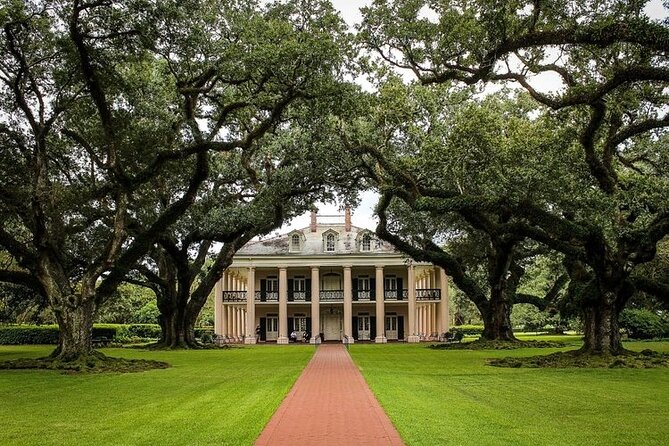
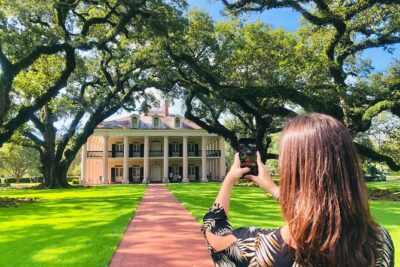
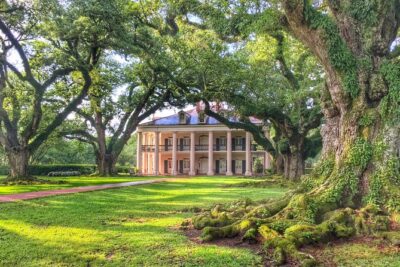
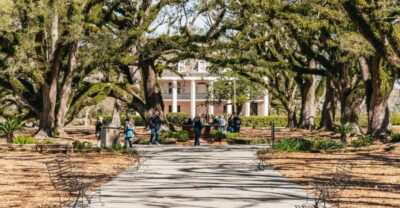
The first named stop is the Grand Dame of River Road—today best known as Oak Alley. The home dates to 1839 and was originally called Bon Séjour, which roughly translates as pleasant sojourn. But the real star, right away, is the approach: a quarter-mile avenue lined with 28 giant live oaks.
This kind of entrance was more than decoration. It was a signal—about wealth, control of land, and the plantation system’s ability to reshape the landscape. Even if you’re just there for photos, I’d treat the live-oak corridor as part of the lesson. Look at the spacing, the scale, and how the trees frame the house. It’s an easy way to grasp how plantation life was designed to be seen and believed in.
Also, because this leg is part of a larger 3.5-hour day, keep your expectations realistic. You’re not going to slow-walk every angle like you would on a longer self-guided visit. The payoff is that you’ll move quickly to two places with deeper, structured interpretation.
Laura Plantation: Creole Families, Archives, and Fortier’s Tales
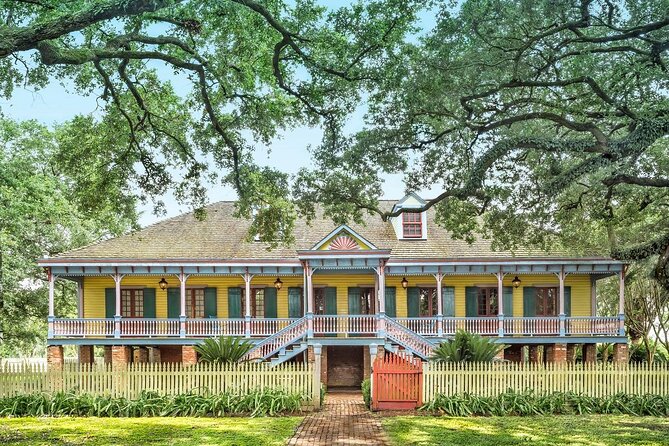
Laura Plantation is the stop that turns plantation history into something you can track through people. Your guided time here is about 70 minutes, and the tour is built on 5,000 pages of documents from the French National Archives about the free and enslaved families who lived there.
That detail matters because it shapes what you notice. Instead of hearing only a single story line, you get threads—Creole culture, family connections, and how generations lived, worked, and survived within a system designed to strip others of choice. The guide explains the accounts of seven generations of Laura Plantation’s Creole inhabitants, which helps you understand the long timeline plantations operated on, not just the headline events.
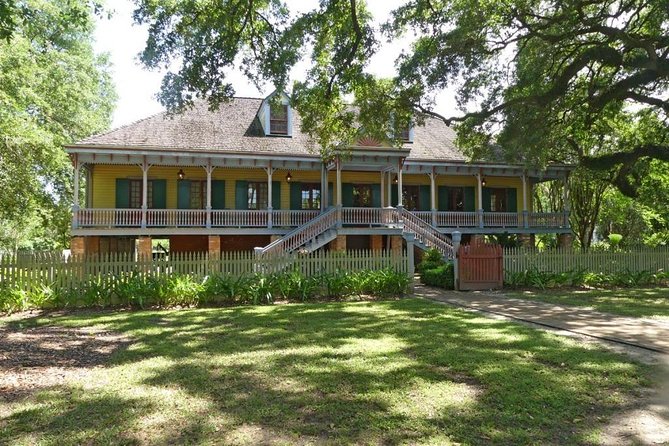
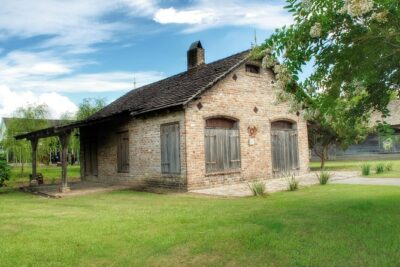
You’ll also get a strong sense of place because Laura Plantation includes 11 structures listed on the National Register of Historic Places. The restored manor house gives you the best “home” perspective. Then you shift to the formal and kitchen gardens, along with the Banana-Land grove, which helps you connect daily life to agriculture. The tour also includes authentic Creole cottages and slave cabins, so you’re not just looking at scenery—you’re seeing how different living spaces were built around inequality.
One of the most memorable threads is the plantation’s reputation for West-African stories tied to folklorist Alcée Fortier. These stories were recorded at the slave cabins here in the 1870s, and they were later popularized in English as Tales of Br’er Rabbit. I like this connection because it reframes the conversation. It’s not only about the tragedy; it’s also about cultural memory—how language, storytelling, and identity were carried through harsh conditions and still found a way into broader literature.
Admission for this portion is included, which helps make the overall day feel more “priced right” than a tour that charges extra once you arrive.
Evergreen Plantation’s 37 Buildings and the Double Row of Cabins
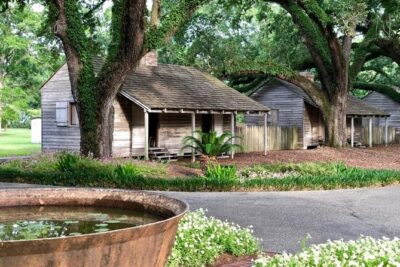
Evergreen Plantation is described as the South’s most intact plantation complex, and the numbers support that. There are 37 buildings on the National Register of Historic Places, including 22 slave cabins arranged in their original double-row configuration.
That double row is the kind of physical arrangement that makes history harder to dodge. It’s not an abstract statistic. You can see how the built environment supported forced labor and how tightly organized the system was. Even if you’ve read about slavery before, this layout forces you to confront what control looked like on the ground.
The property is also an entire living lesson in time because of its live oaks. The Live Oak Society of Louisiana lists 16 registered live oak trees on the grounds. Some are even named after family members. The largest has a girth of 23 feet, and officials estimate the trees are about 300 years old. This gives you a strange contrast to hold in your head: living things that have been growing for centuries on land where human lives were also shaped—and often crushed—over generations.
Even the “background details” have meaning here. Four of the huge oaks shade the St. Joseph home’s backyard well. The iron syrup kettle is listed as 10 feet in width, and there are remnants of a narrow gauge railroad that carried sugar cane from fields. A detached kitchen is part of the picture too, and the St. Joseph home uses double-wide French doors for cross-ventilation, with cypress plank floorboards that are said to have been waxed for decades.
I’d suggest you let the guide point out how these details tie together: house, kitchen, processing, transport, and housing. When you connect those dots, “plantation” stops being a word and becomes a system you can actually visualize.
Price and What You’re Really Paying For
At $297.50 per person for about 3 hours 30 minutes, this isn’t a budget activity. But the value is clearer when you look at what’s included.
First, you get private transportation from New Orleans hotels with pick-up offered within New Orleans city limits. Plantation sites are not right around the corner, and paying for that ride matters if you don’t want to spend your morning figuring out driving times, parking, and logistics.
Second, the day is built around guided interpretation at the main stops, and Laura’s admission is included. If you tried to do this on your own, you’d still need transportation plus paid site access, and you’d lose the contextual explanation that helps the places “make sense.”
Third, it’s a private tour for your group. That’s a real benefit for questions, pace, and attention—especially on topics as heavy as slavery. You can ask follow-ups without competing with strangers in the group.
One more practical point: this is booked on average about 62 days in advance. If you travel during peak seasons or want a specific day, earlier booking usually helps.


How the Hotel Pickup and Tight Schedule Work
The tour starts at 9:00 am, and you’ll be picked up at your location of choice within New Orleans city limits. You’ll also receive a mobile ticket, and the tour is offered in English.
Because the total time is about 3 hours 30 minutes, you’ll move through three major plantation areas with stops designed to cover the essentials rather than let you linger for hours. For me, that’s actually okay—if you treat it as a guided overview that gives you direction for what to revisit later on your own.
A few practical ways to get more out of the day:
- Wear comfortable shoes. Grounds and paths can require steady walking.
- Bring a light layer. Mornings can feel cooler, and you might be outside for stretches.
- Have your questions ready for the guide. The best part of a private format is asking what you really want to know.
If you’re coming from a hotel, the pickup is one of the simplest parts of the plan. Less time on logistics means more time paying attention to what the guide is connecting for you.
The Guide Factor: Expect Friendly Storytelling
A big part of whether plantation history lands well is the guide’s approach. This is where La Vie’s team seems to shine.
In the experience, Benjamin is described as friendly and helpful, with strong skills for turning facts into stories that stay understandable. Another guide, Pam, is mentioned as entertaining in the way she tells the material. That mix matters on this kind of tour because you need both accuracy and clarity.
If you’re the type who likes to ask, go for it. I’d especially ask about:
- How the archives-based approach changes what you learn at Laura Plantation
- Why the Br’er Rabbit connection matters for understanding oral tradition
- How Evergreen’s cabin arrangement shapes the interpretation of the plantation system
And if your guide offers extra local context about New Orleans and the region, take it. Plantation history here isn’t separate from the city—it’s part of the same story.
Who This Tour Is Best For
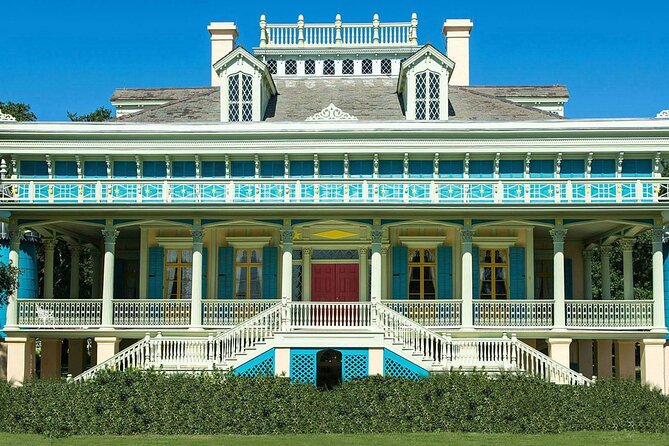
This tour works best if you want plantation history that doesn’t avoid the hard parts. The itinerary highlights Creole plantation life, then moves directly into the impact of slavery and the American slave trade.
You’ll likely enjoy it if:
- You like structured guided history and want more meaning than a quick photo stop
- You care about Creole heritage and how culture was carried through generations
- You prefer a private day where you can ask questions without feeling rushed by a big crowd
One caution: if you’re looking for something only light and scenic, this isn’t that. It’s designed to teach, including difficult subjects tied to forced labor and human suffering.
Should You Book This New Orleans Plantation Tour?
I’d book it if you want a guided, transportation-included plantation day that balances Creole culture with direct attention to the system of slavery. The combination of Oak Alley’s live-oak corridor, Laura Plantation’s archive-driven family stories, and Evergreen’s intact complex and slave-cabin layout makes this feel like more than three separate stops—it feels like a connected lesson.
I wouldn’t book it if you hate tight timelines or you’re hoping for a slow, wandering experience at every site. You’ll get the essentials and then some, but the total time is fixed.
If you’re okay with the price and you want clear interpretation with a private guide, this is a strong fit for a first-time plantation outing from New Orleans.
FAQ
What’s the duration of the tour?
The tour runs for approximately 3 hours 30 minutes.
What time does the tour start?
The start time is 9:00 am.
Do I get hotel pickup?
Yes. Pickup is offered at your chosen location within New Orleans City Limits.
Is the tour private?
Yes. Only your group will participate.
Is the tour offered in English?
Yes, it’s offered in English.
What’s included with the ticket?
Private transportation from New Orleans hotels is included, and Laura Plantation’s admission ticket is included.
Is there a mobile ticket?
Yes, mobile tickets are offered.
Is this tour refundable?
No. It is non-refundable and cannot be changed for any reason.
Is service available for travelers with service animals?
Service animals are allowed.
More Tours in New Orleans

More Tour Reviews in New Orleans
More River Road Plantations




Just added to The New Orleans Traveler


Plantation Tours, compared.
 ★ 5.0Swamp Boat Ride and Oak Alley Plantation Tour from New OrleansFrom $1313,303 reviews
 ★ 4.5Oak Alley Plantation Tour with Transportation from New OrleansFrom $891,747 reviews
 ★ 4.5Whitney Plantation Tour with Transportation from New OrleansFrom $891,351 reviews
 ★ 5.0Laura Creole Plantation Guided TourFrom $321,279 reviews
 ★ 4.7Bayou Swamp Tour and Oak Alley Plantation TourFrom $1251,147 reviews
 ★ 4.7Oak Alley Plantation & Airboat Swamp Combo TourFrom $160906 reviews
 ★ 4.5Oak Alley Plantation and Large Airboat Swamp Tour from New OrleansFrom $160712 reviews
 ★ 4.5Houmas House Estate and Gardens Guided TourFrom $38632 reviews
Browse the lists this tour appears in