Reviewed · TOURS
New Orleans Pestilence, Pandemic and Plague Tour
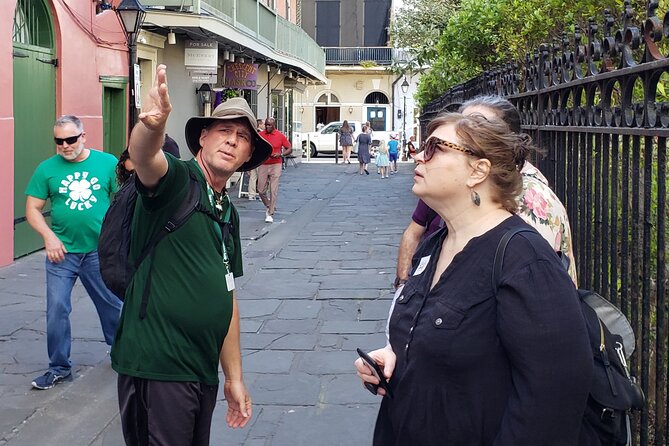
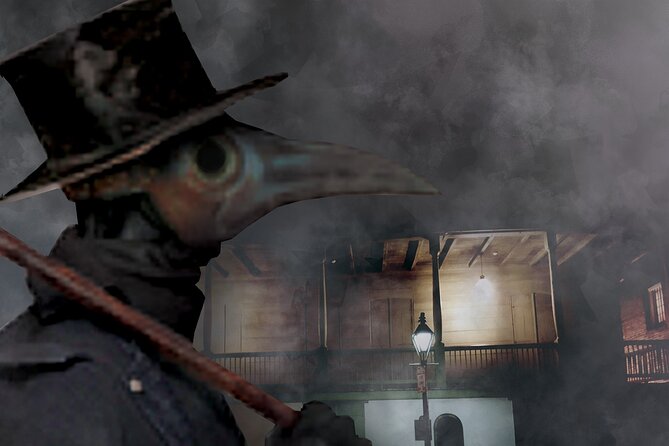
Plague stories walk hand in hand with Mardi Gras. This New Orleans Pestilence, Pandemic and Plague Tour turns the French Quarter into a real-life health history lesson, tied to the streets you’re actually walking. I like the professional guide approach and that directions are handled for you, so you don’t waste time getting lost in the maze.
I also really enjoy the way the tour mixes big historical events with small, concrete details. On stronger guide days, names like Mikko (sharp humor and memorable stops) show you how the city’s “practical stuff” connects to outbreaks, even pointing out things like the in-ground garbage concept during the walk.
One thing to plan for: the New Orleans Pharmacy Museum stop uses an admission ticket that’s not included, and on some days the museum may be closed.
In This Review
- Key takeaways before you go
- From Toulouse to Bourbon: how the walking route actually feels
- Is $37 worth it for a plague-and-pandemic themed New Orleans walk?
- Stop 1: New Orleans Pharmacy Museum and why the medical framing matters
- Jackson Square: reading the French Quarter through epidemics
- French Quarter plague trail: the details you’ll carry home
- The guide matters more than you think (Mikko, Dalvin, Dane, Anderson)
- When to go, what to wear, and how to get more out of it
- Who this tour is best for (and who should skip it)
- Should you book New Orleans Pestilence, Pandemic and Plague?
- FAQ
- How long is the New Orleans Pestilence, Pandemic and Plague Tour?
- How much does the tour cost?
- What’s included in the price?
- Do I need to pay for the Pharmacy Museum admission?
- Where does the tour start and end?
- What is the cancellation policy?
Key takeaways before you go
- A guided route that keeps you oriented across the French Quarter, with the directions taken care of
- A Pharmacy Museum stop to frame the medical story, about 20 minutes, with museum admission not included
- Jackson Square as the historical hub for plague-and-pandemic context, about 20 minutes and free
- A longer French Quarter stretch focused on disease-related sites, about 1 hour 20 minutes and free
- Guides who bring humor without dodging the facts, with examples like Mikko, Dalvin, Dane, and Anderson from past tour experiences
- Limited size (max 56), which usually helps keep the walk feeling manageable
Not quite the one? Here are other New Orleans tours worth a look.
- New Orleans Premier Ghost, Voodoo and Vampire Walking Tour★ 4.5 · 12,856 reviews
- New Orleans Steamboat Natchez Jazz Cruise with Dinner Option★ 4.0 · 7,533 reviews
- Adults-Only New Orleans Ghost, Crime, Voodoo, and Vampire Tour★ 5.0 · 6,545 reviews
- New Orleans Food Walking Tour of the French Quarter with Small-Group Option★ 5.0 · 6,118 reviews
From Toulouse to Bourbon: how the walking route actually feels
The tour starts at 815 Toulouse St in New Orleans at 1:00 pm, and it finishes near Bourbon Street and Dumaine Street. The total time is about 2 hours, which is a sweet spot: long enough to make a point, short enough that you’re not turning your whole day into a lecture.
Because you’re not charting your own route, you can focus on the content. The highlights are also structured so you’re not bouncing between far-flung neighborhoods; you’re moving through the core French Quarter area, with stops that build on each other.
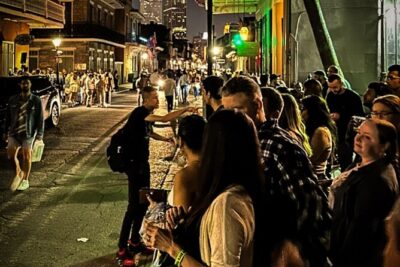
This is a moderate-walking experience. You should wear comfortable shoes and be ready for some standing. If you’re traveling with kids or you’re sensitive to heat, plan to slow down when the guide suggests it—one guide named Dalvin was praised for keeping people comfortable with shade choices and hydration during warmer weather.
Is $37 worth it for a plague-and-pandemic themed New Orleans walk?
At $37 per person for roughly two hours with a professional guide, the value comes from three things: access to a focused expert, a tight route, and context you’d likely miss on your own.
A self-guided French Quarter stroll can get you the postcard New Orleans stuff fast. This tour adds the “how did people think, react, and survive during outbreaks?” angle, and it does it in a way that connects to ordinary city life—streets, public spaces, and details you’d normally walk right past.
You also get the “effort saved” benefit. No getting lost matters in the French Quarter, where it’s easy to zigzag into less interesting side streets and lose time. Plus, with a maximum group size of 56, the pace tends to stay organized.
There’s a catch to factor in: the Pharmacy Museum entry ticket isn’t included. If you’re booking, I’d mentally budget for that museum cost so the math stays satisfying.
Stop 1: New Orleans Pharmacy Museum and why the medical framing matters
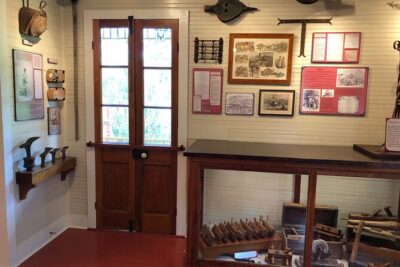
The first stop is the New Orleans Pharmacy Museum, with about 20 minutes on-site. The admission ticket is not included, so you’ll either purchase it when you arrive or handle it based on how the guide plans the timing.
What I like about starting here is that it gives you a baseline for how people approached illness long before modern public health tools. Even if you’re not a medical history person, the museum stop helps you understand why outbreaks were interpreted the way they were—and why “medicine” meant very different things in different eras.
This also sets up the rest of the walk. When you later hear plague and pandemic stories tied to Jackson Square and the French Quarter, you’ll have a framework for why the city responded the way it did. One past tour experience even noted that when the museum was closed, the guide still treated it as a pivot point, keeping the educational arc moving instead of just ending early.
If you’re the type who likes your tours chronological, this first stop helps. If you prefer stories over timelines, it still works as a foundation so the street-level details don’t feel random.
Jackson Square: reading the French Quarter through epidemics
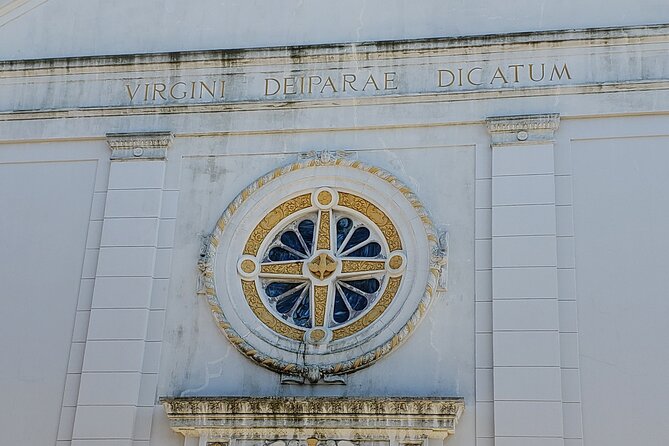
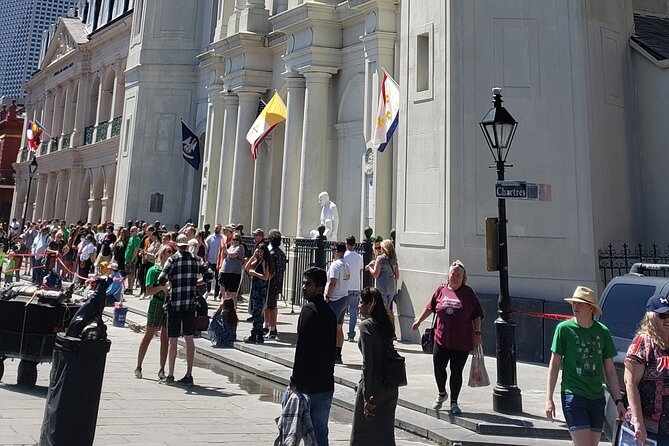
From the Pharmacy Museum, the walk heads to Jackson Square, the central hub of the French Quarter. This stop is about 20 minutes and free.
Jackson Square is a good choice because it’s a visible “center.” When you’re talking about pandemics and disease, central public spaces are often where you see the tension between crowds and safety—between city life and the fear of illness.
On this stop, I’d expect the guide to connect major themes to what you can actually see around you. The square becomes more than a pretty backdrop. It turns into a place to understand how disease pressures can shape daily routines, public gatherings, and how people in power manage (or struggle to manage) crisis.
If you’ve ever thought about why some cities feel like they were built for functions beyond beauty, this is where that idea starts to click. You start paying attention to movement, density, and the way people use space when they’re worried.


French Quarter plague trail: the details you’ll carry home
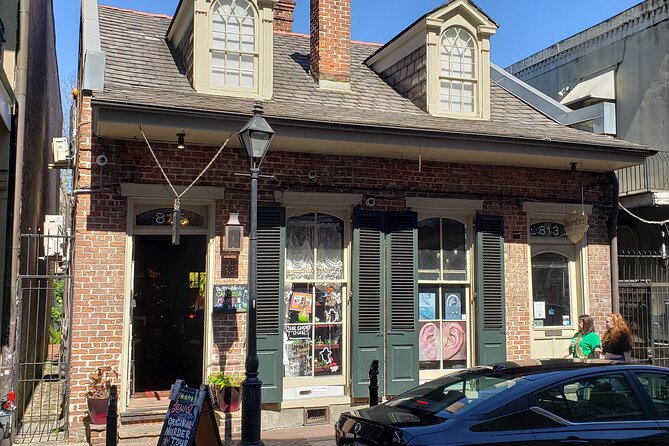
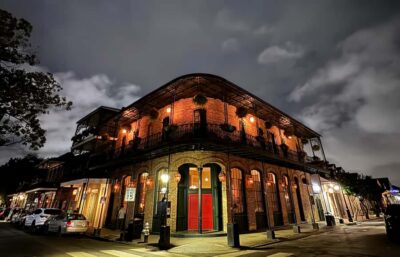
The largest chunk is the French Quarter section, about 1 hour 20 minutes, and it’s free. This is where you get the “lesser-known stories” that you’d almost certainly skip on a standard highlights walk.
The tour is built around multiple plague- and pandemic-relevant sites across the neighborhood. Rather than treating disease history like a separate topic, it frames it as something woven into how the city operated—how people handled waste, how they responded to risk, and how public health changed over time.
One of the most memorable moments in past experiences: a guide named Mikko pointing out the view of in-ground garbage. That kind of detail is exactly what makes this tour feel practical. You’re learning to connect infrastructure to outcomes, not just memorizing dates.
Another theme that comes through in tour feedback is the way guides make you look differently at everyday things. One person described never looking at railings or toppings the same way afterward. That’s the kind of payoff I like: you leave with a mental lens, and the French Quarter looks different for the rest of your trip.
This part of the tour also tends to balance seriousness with humor. Multiple guides have been described as witty without turning the subject into a joke. That matters. Plague history can feel heavy, but the goal here is education with human pacing, not grim shock value.
The guide matters more than you think (Mikko, Dalvin, Dane, Anderson)
This tour’s quality depends heavily on the guide, and the examples from past groups show a consistent skill set: deep topic knowledge, strong storytelling, and the ability to steer conversations.
You may get different guides depending on your date, but names that have been credited for outstanding experiences include Mikko, Dalvin, Dane, and Anderson. Here’s what those strong guide styles have in common:
- Humor that clarifies instead of distracts (Mikko’s rapier wit has been specifically called out)
- Comfort-aware pacing (Dalvin was praised for shade choices and encouraging hydration)
- A teaching style that fits the group (one experience noted the host tailored the tour to different people)
- City love plus medical history (several guides were described as making the subject feel grounded in New Orleans, not floating in textbooks)
Even if you don’t consider yourself a “history nerd,” a guide who can link outbreaks to local details turns the tour into something you can actually talk about later. And if you do like medical history or outbreak response topics, you’ll likely appreciate how the tour keeps the focus on how people understood and responded to disease.
When to go, what to wear, and how to get more out of it
Start time is 1:00 pm, and it’s a walking format. In New Orleans, afternoon can mean heat and humidity, even in seasons that otherwise feel pleasant. I’d plan for that with light layers you can manage, and water you’re comfortable carrying.
Good shoes are non-negotiable. It’s a short tour, but it’s still the French Quarter—uneven sidewalks, curb cuts, and lots of stop-and-go.
Also, don’t assume the Pharmacy Museum part is automatically handled for you in every situation. Since museum admission isn’t included, you should have a plan for that extra cost and time. If the museum happens to be closed on your day, the guide’s ability to adjust matters, and past experiences suggest they do that rather than just letting the program collapse.
Finally, use your mobile ticket. That’s part of the setup, and having it ready helps you start smoothly.
Who this tour is best for (and who should skip it)
This tour is best for you if you want New Orleans history with a specific lens. It works especially well for people who like:
- medical history or public health topics
- history told through places you can see
- guided walks that keep you oriented
- city details that change how you notice streets and everyday objects
It’s also a good pick for families if you’re okay with the death-and-disease angle being part of the theme. Multiple experiences have described it as educational without being gross or purely grim, and the guides’ humor helps keep it from feeling like a dark lecture with no relief.
Who should think twice? If you have trouble hearing in walking-group settings, the audio can be a factor—there’s at least one example where someone couldn’t hear the speaker clearly. Also, if you strongly prefer upbeat historical storytelling, the plague and pandemic topic may feel like the wrong mood.
If you’re the kind of traveler who wants a light, photo-first French Quarter tour, this isn’t that. If you want a story behind the scenery, it fits very well.
Should you book New Orleans Pestilence, Pandemic and Plague?
I’d book it if you’re traveling with a mix of curiosity and time. For $37 and about two hours, you get a guided story that connects the Pharmacy Museum framing to Jackson Square and then into the real French Quarter streets.
Choose this tour when you want more than the usual highlights. The best version of the experience is guided, organized, and packed with specific details—things like in-ground garbage and how small urban features tie to outbreak realities.
Skip or rethink it if you can’t manage the idea of disease history as a central theme, or if you want a purely scenic walk with minimal talking. Also, since Pharmacy Museum admission isn’t included, make sure you’re comfortable adding that cost to your plan.
Overall, this is the kind of tour that gives your trip a memorable angle. It makes the French Quarter feel like a place where history isn’t behind glass—it’s part of the city’s plumbing, priorities, and public spaces.
FAQ
How long is the New Orleans Pestilence, Pandemic and Plague Tour?
The tour is about 2 hours.
How much does the tour cost?
It costs $37.00 per person.
What’s included in the price?
The tour includes a professional guide.
Do I need to pay for the Pharmacy Museum admission?
Yes. The New Orleans Pharmacy Museum stop notes that admission tickets are not included.
Where does the tour start and end?
It starts at 815 Toulouse St, New Orleans, LA 70112 and ends at Bourbon Street & Dumaine Street (Bourbon St & Dumaine St), New Orleans, LA 70116.
What is the cancellation policy?
You can cancel for a full refund up to 24 hours before the experience start time. If you cancel within 24 hours, the amount you paid is not refunded.
More Tours in New Orleans
More Tour Reviews in New Orleans
Just added to The New Orleans Traveler


Tours, compared.
 ★ 4.5Premier Ghost, Voodoo and Vampire Walking TourFrom $2712,856 reviews
 ★ 5.0Adults-Only New Orleans Ghost, Crime, Voodoo, and Vampire TourFrom $376,545 reviews
 ★ 5.0Food Walking Tour of the French Quarter with Small-Group OptionFrom $756,118 reviews
 ★ 5.0Swamp and Bayou Boat Tour with TransportationFrom $705,399 reviews
 ★ 4.5City Sightseeing Hop-On Hop-Off Bus TourFrom $514,943 reviews
 ★ 4.5St. Louis Cemetery No. 1 Official Walking TourFrom $253,941 reviews
 ★ 5.0Swamp Boat Ride and Oak Alley Plantation Tour from New OrleansFrom $1313,303 reviews
 ★ 5.0Adults-Only Ghost, Voodoo and Vampire TourFrom $293,291 reviews