
Reviewed · PLANTATION TOURS
New Orleans: Oak Alley Plantation Tour with Transportation
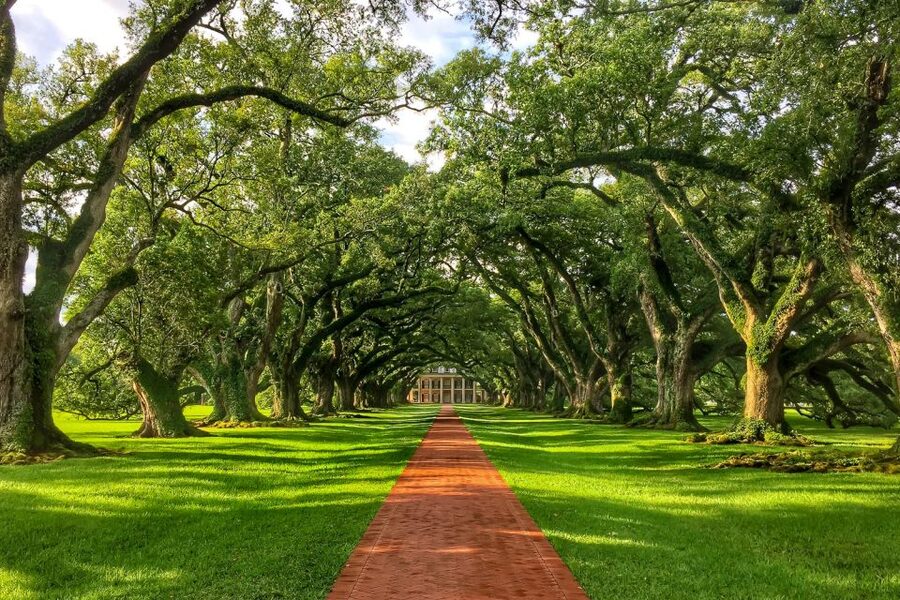
Oak Alley teaches hard truths in tidy rows. This tour gives you round-trip transport from New Orleans to the 1/4-mile Allee of Oaks and into the Big House with guided interpretive stops along the way. It’s the kind of day-trip where the setting looks calm, but the story doesn’t.
I love the combination of the interpreter-led slavery exhibit plus reconstructed slave cabins, because it gives you context you can’t get from the photo ops alone. I also like the river-side drive—crossing the Bonnet Carre Spillway for panoramic Lake Pontchartrain views while you pass other historic plantations. One possible drawback: the schedule can feel tight once you’re on the property, and rules around cameras and phone use mean you’ll want to plan how you’ll document your visit.
In This Review
- Key things to know before you go
- Oak Alley with transportation: what you’re really paying for
- Meeting point at the Lighthouse Ticket Office behind JAX Brewery
- The drive past plantations, then the Bonnet Carre Spillway views
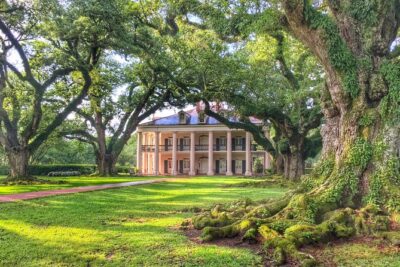
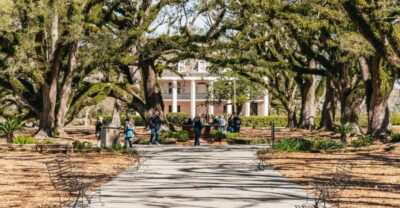
- The Allee of Oaks: 1/4 mile under 250-year-old trees
- Entering the Big House: what the guided tour actually covers
- Reconstructed slave cabins and the slavery exhibit with an interpreter
- Sugarcane Theater, gardens, and the blacksmithing forge
- Plantation Café timing: how to eat without losing the best parts
- Optional upgrade: Manchac Swamp on a covered pontoon boat
- Price and logistics: is $89 a good deal for your time?
- Should you book Oak Alley with transportation?
- FAQ
- How long is the Oak Alley Plantation tour with transportation?
- Where do I meet for the tour in New Orleans?
- What’s included besides round-trip transportation?
- Is the 1/4 mile oak alley part of the tour?
- Can I take photos or videos?
- Is food included?
- What does the Manchac Swamp upgrade include?
- Is the tour wheelchair accessible?
Key things to know before you go
- Round-trip transportation saves stress (and parking time) on the New Orleans side
- Allee of Oaks: a walk under a long line of 250-year-old trees
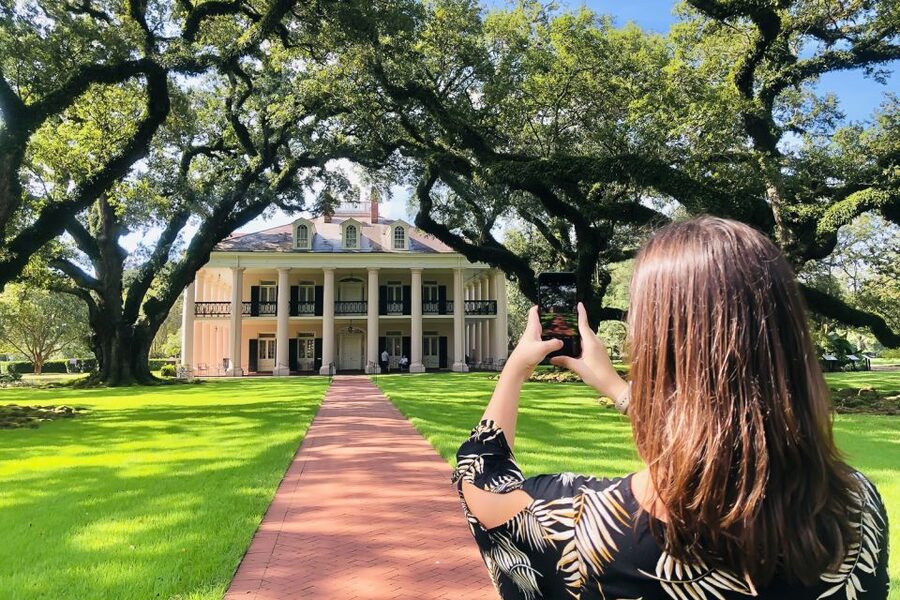
- Big House guided tour with strict phone/camera rules inside the home
- Reconstructed slave cabins + slavery exhibit led by an interpreter
- Optional 90-minute Manchac Swamp upgrade on a covered pontoon boat
Other River Road plantation visits
- Swamp Boat Ride and Oak Alley Plantation Tour from New Orleans★ 5.0 · 3,303 reviews
- Oak Alley Plantation Tour with Transportation from New Orleans★ 4.5 · 1,747 reviews
- Whitney Plantation Tour with Transportation from New Orleans★ 4.5 · 1,351 reviews
- Laura Creole Plantation Guided Tour★ 5.0 · 1,279 reviews
Oak Alley with transportation: what you’re really paying for
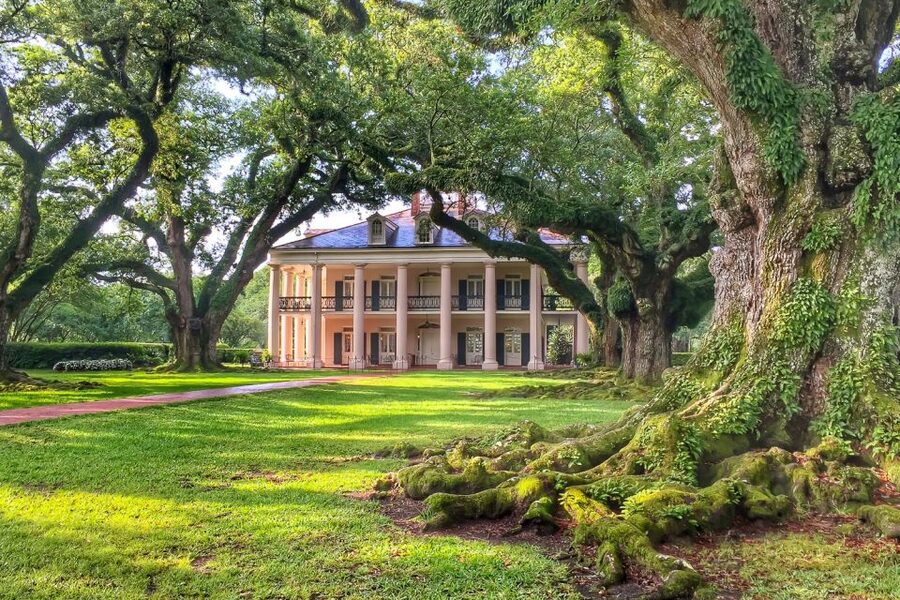
Oak Alley Plantation is one of those Louisiana stops where the landscape pulls you in fast—the straight lines, the big trees, the Greek Revival mansion shape—and then the exhibits slow you down. With transportation included, you don’t have to turn the day into a logistics puzzle. You’re on a schedule, yes, but it’s a guided schedule built to get you from New Orleans to the site and through the most important parts without scrambling.
At $89 per person, the value is strongest if you don’t want to drive yourself. You’re not just buying entry to the plantation. You’re also paying for a guided Big House component, multiple on-site exhibits, and the added benefit of time you gain by skipping the “how do we get there” portion. If you’re the type who likes structure—set times, clear stops—that matters here.
Meeting point at the Lighthouse Ticket Office behind JAX Brewery
Your day starts at the Lighthouse Ticket Office at Toulouse Street and the Mississippi River, right by the Steamboat Natchez dock behind JAX Brewery (at 400 Toulouse Street, New Orleans). You’ll want to show your barcoded voucher 15 minutes before your departure time so the group can load smoothly.
This meeting point is convenient if you’re already spending time around the riverfront. It also means you can plan your morning without guessing where a bus will appear. Bring what you need for the ride: water (if you like), sunglasses, and shoes you’re comfortable walking in—some paths are shaded by oaks, but you still move around.
The drive past plantations, then the Bonnet Carre Spillway views
The trip out from New Orleans includes a guided experience during the ride, with notable scenery along the route. As you cross the Bonnet Carre Spillway, you get a panoramic view of Lake Pontchartrain—a reminder of how closely the whole region’s story is tied to the Mississippi River system.
You also pass other named plantation properties along the way, including Whitney, Evergreen, Felicity, and Laura (and the route description also references St. Joseph). It’s a smart setup: before you reach Oak Alley, you’re already seeing the “plantation corridor” feeling—sugarcane and other crops moving through a port-driven world.
If you’re sensitive to long travel days, aim to travel light. The return ride is part of the experience, not a random commute.
The Allee of Oaks: 1/4 mile under 250-year-old trees
The Allee of Oaks is why many people book Oak Alley in the first place. You’re walking a 1/4 mile stretch of trees described as 250-year-old, planted and shaped using slave labor between the 1820s and 1840s. That detail changes how you see the path. It’s beautiful, but the exhibit framing makes sure you don’t treat it like an untouched fairy-tale lane.
Practically, this is your “slow walk” moment. Go early in your tour timing if you can, or at least don’t sprint through it. The trees create a tunnel effect that’s hard to appreciate if you rush. Also, remember the photography rules: cameras are listed as not allowed, and inside the home photography/video is prohibited, so plan to rely on the areas where photos are encouraged (balcony/grounds/self-paced exhibits).



Entering the Big House: what the guided tour actually covers
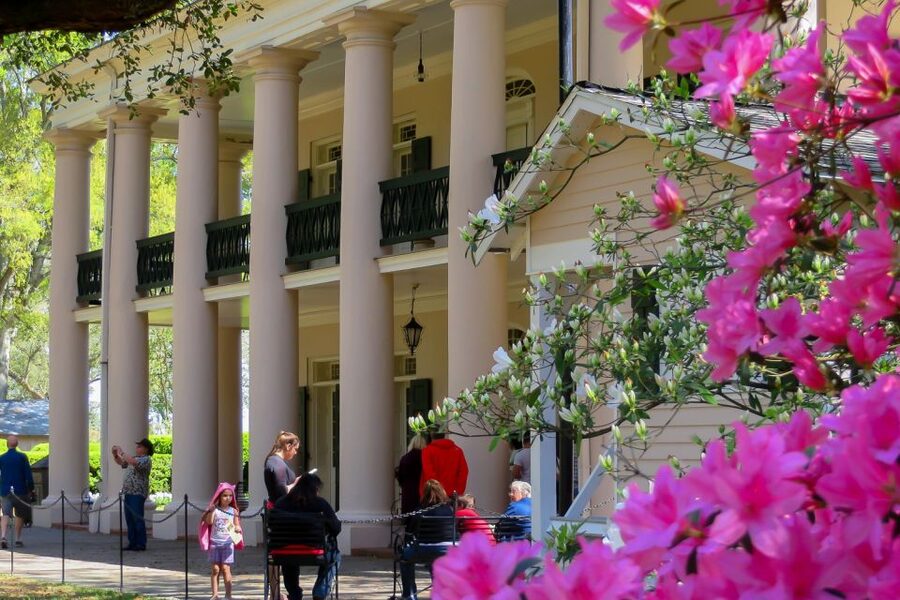
Inside the mansion, the tour focuses on the Big House exhibit and includes a guided tour component. It’s a Greek Revival house built in 1839, designed for the planter family’s success and status—so yes, you’ll notice the architecture and symmetry.
But what makes it worth your time is the interpretive framing, not just the rooms. The program explains life for both planter family members and enslaved people. That matters because a plantation house without the human context tends to feel like a museum of power only.
Two rules you should take seriously:
- Inside the Big House exhibit, electronic devices must be turned off and cell phones muted.
- No photography or video is allowed inside the plantation home.
If you have mobility concerns, there’s also a real logistics point: the second floor involves 22 stairs. Most exhibits are wheelchair accessible, but for guests who can’t climb those stairs, a video tour is available in the media room and needs to be reserved for guests unable to make it to the second floor due to limited seating.
Reconstructed slave cabins and the slavery exhibit with an interpreter
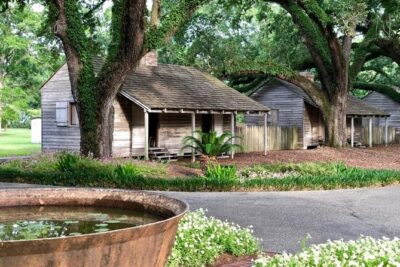
This is the part of the day that can hit you hardest—and for good reason. The tour includes reconstructed slave cabins plus a Slavery at Oak Alley exhibit with an interpreter. You’re not just walking through buildings; you’re guided through the meaning of the spaces and what life there likely involved.
In a place like Oak Alley, I think this is where the tour earns your attention. The reconstructed cabins (with interpreter help) give you a way to connect architecture to daily life: where people lived, how the plantation functioned around them, and how the site’s story connects back to slavery.
Some people also like that the exhibits don’t stop at the antebellum period. There’s an exhibit about subsequent owners following the Civil War, which helps you understand that plantations didn’t vanish overnight. The system changed over time, and the story keeps going.
Sugarcane Theater, gardens, and the blacksmithing forge
After (or alongside) the house and cabins, the tour moves into several on-site interpretive stops that round out the bigger picture.
Here’s what you can expect:
- Sugarcane Theater: a film on sugarcane production plus display elements. It’s one of the most direct ways to connect what you see in the landscape to how the plantation economy ran.
- East and West Gardens: gardens reflecting both the 1840s and later 1930s interpretations. This is useful if you’re thinking about how plantation sites get preserved and presented across decades.
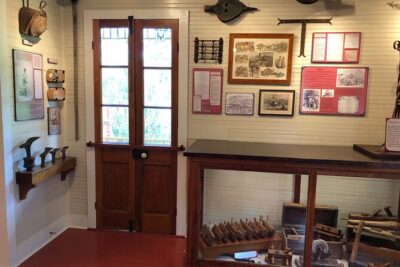
- Blacksmithing exhibit including the plantation’s original forge. When you see tools and craft work framed in context, it helps the plantation feel more “operational” and less like just a pretty backdrop.
This combination is what makes the day more than a single building visit. You’re seeing how work, production, and daily routines fit together across spaces.
Plantation Café timing: how to eat without losing the best parts
You can purchase food at the on-site Plantation Café—snack items like sandwiches/salads, and you’ll find a restaurant, café, and bar on site. Reviews also point out the grab-and-go style works fine, but the amount of time you get to eat can vary depending on the exact flow of your group.
My practical tip: don’t treat lunch like a sit-down meal with a long pause. If you want a fuller meal, plan to eat before you go or expect quick options on site. Also, if you’re hoping to linger in the gardens or make your way back through the oak alley again, build that into your timing. The most common regret at Oak Alley tends to be not enough walking time once you’re there.
Optional upgrade: Manchac Swamp on a covered pontoon boat
If you choose the 90-minute swamp tour upgrade, you’ll take a short ride to the Manchac Swamp. You cruise through a privately-owned wildlife refuge on a comfortable, covered pontoon boat with a local captain at the helm.
The tone here is more Cajun-and-wildlife than plantation-history. The program includes explanation of Frenier and Cajun culture around fishing, hunting, and trapping. And yes, you should keep your eyes open for alligators—the tour notes they may leap up for snacks.
This upgrade is best if:
- You want your day to feel more varied than just mansion plus exhibits
- You like wildlife viewing and don’t mind another segment after the plantation
- You want a contrast between manicured oaks and the wetland edge
Price and logistics: is $89 a good deal for your time?
For $89 per person, you’re buying a full package: round-trip transportation plus a guided Big House tour and several interpretive exhibits (including slavery-focused components), plus access to on-site food options. The value rises if you’re arriving from New Orleans without a car or you simply don’t want to drive.
If you’re the type who likes total freedom—slow wandering, lots of unscheduled time—then the fixed schedule may feel limiting. Some people want longer on the property to walk at their own pace and eat more comfortably. Also, if you’re carrying a camera obsession, the rules here are important: cameras are listed as not allowed, and inside the home photography/video is prohibited. That can affect whether you’ll feel satisfied with your documentation.
Finally, one scheduling reality: travel is travel. If weather or road conditions get rough, bus time can shift. It’s rare, but it’s part of choosing group transportation over DIY.
Should you book Oak Alley with transportation?
Book it if you want a guided day trip that covers the key parts: Allee of Oaks, the Big House guided exhibit, reconstructed slave cabins with interpreter context, and the supporting production and craft stops. The transportation also makes sense if you’d rather spend energy on the site than on getting there.
Skip (or reconsider the upgrade) if you:
- Need lots of extra free time on-site and don’t like a set schedule
- Plan to rely on photography/video inside the home (that’s not allowed)
- Want a fully DIY pace with lots of independent wandering
If your goal is to see Oak Alley without turning your day into a navigation chore—and you’re ready for the emotional weight of the slavery exhibits—this is a strong, practical way to do it.
FAQ
How long is the Oak Alley Plantation tour with transportation?
The duration is listed as 315 to 465 minutes depending on the starting time. That typically makes it a half-day to near full-day outing.
Where do I meet for the tour in New Orleans?
You’ll meet at the Lighthouse Ticket Office at 400 Toulouse Street near the Mississippi River, at the Steamboat Natchez dock directly behind JAX Brewery. You should display your barcoded voucher 15 minutes in advance.
What’s included besides round-trip transportation?
In addition to transportation, the tour includes the guided Big House exhibit, Sugarcane Theater, reconstructed slave cabins and a slavery exhibit with an interpreter, the East and West Gardens, a blacksmithing exhibit with the original forge, and an exhibit about subsequent owners after the Civil War. You also pass multiple plantations along the drive.
Is the 1/4 mile oak alley part of the tour?
Yes. The tour includes the iconic 1/4 mile Allee of Oaks (described as created using slave labor in the 1820s–1840s).
Can I take photos or videos?
Cameras are listed as not allowed. Inside the Big House exhibit, no photography or video is allowed inside the plantation home. Outside, photography is encouraged on the balcony, grounds, and self-paced exhibits. Also, electronic devices must be turned off and cell phones muted while in the Big House exhibit.
Is food included?
Lunch is not included. You can buy snacks, salads, and sandwiches at the on-site Plantation Café.
What does the Manchac Swamp upgrade include?
The upgrade adds a 90-minute pontoon cruise through a privately-owned wildlife refuge at Manchac Swamp. It’s on a comfortable, covered boat driven by a local captain, with information about Frenier and Cajun culture, and chances to spot alligators.
Is the tour wheelchair accessible?
The tour is listed as wheelchair accessible. Most exhibits are handicapped accessible, but the second floor of the Big House has 22 stairs. For those who can’t climb, there is a video tour in the media room (reservation required due to limited seating).
More Tours in New Orleans

More Tour Reviews in New Orleans
More River Road Plantations





Just added to The New Orleans Traveler


Plantation Tours, compared.
 ★ 5.0Swamp Boat Ride and Oak Alley Plantation Tour from New OrleansFrom $1313,303 reviews
 ★ 4.5Oak Alley Plantation Tour with Transportation from New OrleansFrom $891,747 reviews
 ★ 4.5Whitney Plantation Tour with Transportation from New OrleansFrom $891,351 reviews
 ★ 5.0Laura Creole Plantation Guided TourFrom $321,279 reviews
 ★ 4.7Bayou Swamp Tour and Oak Alley Plantation TourFrom $1251,147 reviews
 ★ 4.7Oak Alley Plantation & Airboat Swamp Combo TourFrom $160906 reviews
 ★ 4.5Oak Alley Plantation and Large Airboat Swamp Tour from New OrleansFrom $160712 reviews
 ★ 4.5Houmas House Estate and Gardens Guided TourFrom $38632 reviews
Browse the lists this tour appears in