
Reviewed · TOURS
New Orleans Music Tour
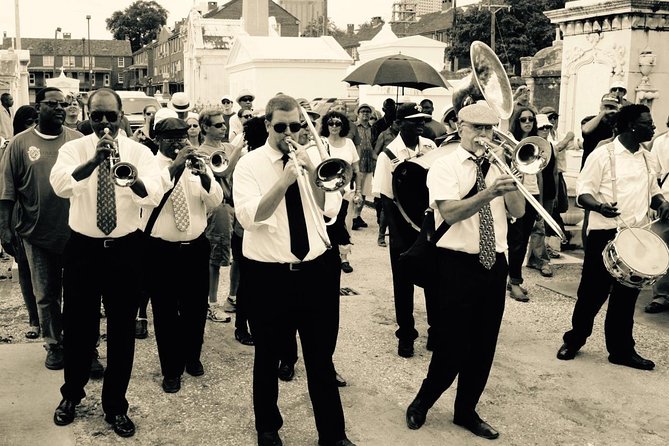
New Orleans music isn’t just something you hear here. It’s something you can walk through, block by block, with a guide who connects the dots from African roots to jazz and rock. The best part is the way the stops are chosen: you go from Louis Armstrong Park to Congo Square, then end at Preservation Hall with live street sounds still in the air.
I really like two things about this tour. First, it gives you a clear, street-level sense of how the city created major musical styles, including the uncomfortable truth about slavery’s role in shaping the music. Second, it’s built for real moments—Congo Square, Basin Street Station, and current street musicians—so you’re not just staring at plaques.
One consideration: this is a walking-and-talking experience, and the schedule is tight. If you’re hoping for a super slow stroll or extra indoor time, you might feel the pace in just 2 hours.
In This Review
- Key points to know before you go
- Why this 2-hour music walk works in New Orleans
- Start at Rampart Treehouse: setting the tone before the first note
- Stop 1: Louis Armstrong Park and Congo Square’s bigger story
- Congo Square: where West African ritual becomes the music’s root
- J&M Studios and the “New Orleans Sound” connection
- A small practical note
- Stop 2: Basin Street Station and the Storyville trail
- Storyville remnants and the early jazz nightlife
- What you might like here (and what to watch)
- Stop 3: May Bailey’s Place and the Tango Belt layers
- Consideration: time for this stop is short
- Stop 4: Preservation Hall and bounce music at street level
- Why Preservation Hall is a smart finale
- Bounce music origins and today’s street musicians
- One caution from reality: indoor access can vary
- What you really get for $25 (and why it’s good value)
- Guides like David Higgins and Eva can change the experience
- How to schedule it: pairing it with the rest of your NOLA day
- What to expect from the walk: pacing, screens, and “did we hit everything?”
- Who should book this tour (and who might want another option)
- Should you book this New Orleans Music Tour?
- FAQ
- FAQ
- How much does the New Orleans Music Tour cost?
- How long is the tour?
- Where does the tour start and end?
- What time does it start?
- Is the tour in English?
- What’s included in the tour?
- Is Congo Square admission included?
- What should I bring?
- Does the tour run in bad weather?
- What is the cancellation policy?
- Is there a limit on group size, and are service animals allowed?
Key points to know before you go
- Congo Square gets put at the center, with West African ritual and musical traditions tied directly to New Orleans music’s roots
- Cosimo Matassa’s J&M Studios is part of the story, including how the New Orleans sound shaped artists you know
- Storyville traces the early jazz-era nightlife along Basin Street, using real locations like Frank Early’s My Place Saloon
- May Bailey’s Place connects the Tango Belt area to older cultural layers, including the Old French Opera House site
- Preservation Hall ends the walk with bounce music context and a chance to hear street musicians carrying the tradition forward
- Small group size (max 20) helps the guide keep your attention without rushing every question
Not quite the one? Here are other New Orleans tours worth a look.
- New Orleans Premier Ghost, Voodoo and Vampire Walking Tour★ 4.5 · 12,856 reviews
- New Orleans Steamboat Natchez Jazz Cruise with Dinner Option★ 4.0 · 7,533 reviews
- Adults-Only New Orleans Ghost, Crime, Voodoo, and Vampire Tour★ 5.0 · 6,545 reviews
- New Orleans Food Walking Tour of the French Quarter with Small-Group Option★ 5.0 · 6,118 reviews
Why this 2-hour music walk works in New Orleans
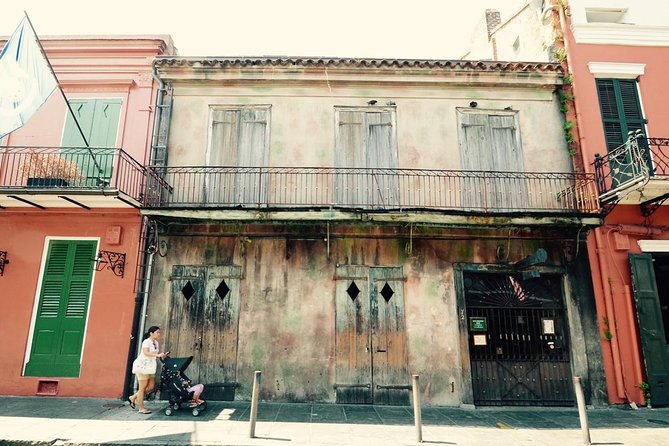
New Orleans can overwhelm you fast. You step outside and there’s music everywhere, but it’s not always clear what you’re hearing or where it came from. This tour is useful because it gives you a path—an order—so the city starts making sense.
I also like the length. Two hours is long enough to connect several major stops, but short enough to still enjoy French Quarter evenings afterward. If you only have a day or two in town and want more than a typical “see the sights” walk, this hits a sweet spot.
And yes, it’s only $25 per person. In a city where “music experience” can mean a pricey show, this is a low-cost way to understand why the music matters—and where to look next on your own.
Start at Rampart Treehouse: setting the tone before the first note
You start at 740 N Rampart St at the Rampart Treehouse. The meeting point matters because it puts you near downtown NOLA energy without dragging you across town first. The tour is listed in English, and the ticket is mobile, so you’re not hunting for paper when you’re already excited to go.
One practical tip: bring the basics. The tour asks for comfortable shoes, water, sunscreen, a hat, and rain/sun protection. That sounds like generic advice, but here it’s real—shade can be limited, and Louisiana weather can switch moods quickly.
Also, this walk is capped at 20 travelers, so you’re not dealing with a giant herd. That makes it easier for the guide to keep people together while pointing out details that most self-guided walkers miss.
Stop 1: Louis Armstrong Park and Congo Square’s bigger story
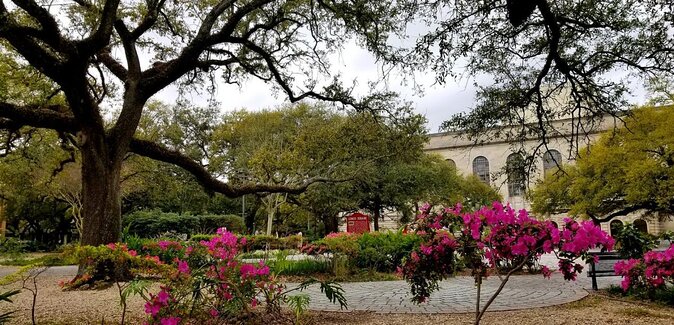
The tour begins at Louis Armstrong Park, and it’s a strong opener because the setting is both scenic and meaningful. From here, you also get to connect to Congo Square right away, which is where the guide turns the music origin story from “fun facts” into something deeper and more honest.
Congo Square: where West African ritual becomes the music’s root
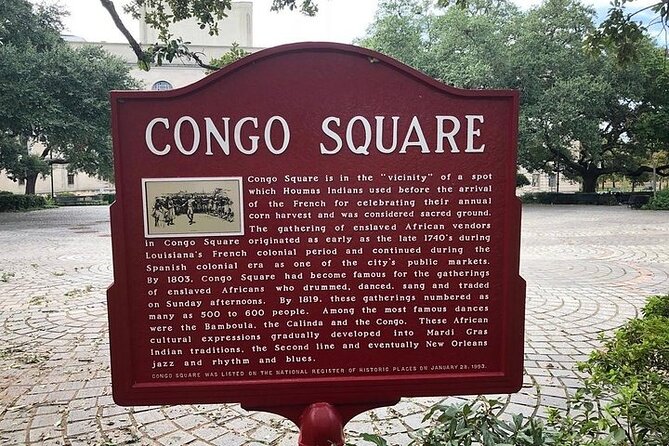
Congo Square is described as the only place in North America where pure West African religious ritual and musical traditions were performed. The tour treats Congo Square as the wellspring of New Orleans music—the place where many major musical threads tied to the city begin.
The tour also points out how the legacy didn’t just disappear. It notes that Congo Square was the site of the first New Orleans Jazz and Heritage Festival in 1970. That gives you a bridge from historical roots to modern celebration.
You’ll also get an important context message: the tour highlights how slavery shaped the music. This isn’t just “and then it happened.” It’s framed as a shaping force—historically painful, but central to understanding what New Orleans music became.


J&M Studios and the “New Orleans Sound” connection
Near Armstrong Park, you’ll view the building that housed Cosimo Matassa’s J&M Studios. The tour connects it to the “New Orleans Sound” and names major local figures such as Professor Longhair, Dave Bartholomew, Fats Domino, Guitar Slim, Shirley & Lee, Lloyd Price, Ernie K-Doe, Allen Toussaint, and Clarence Frogman Henry.
The way the stop is framed is useful: it links a physical location to a style of music, and then links that style to artists you already recognize. The tour also states that J&M Studios is the birthplace of rock ’n roll, which is the kind of claim you can test in your own listening after the walk.
A small practical note
This stop can feel like a lot at once: park atmosphere, Congo Square significance, plus the long list of musicians and studios. If you’re the type who loves grabbing mental anchors, pay attention early—you’ll thank yourself later at Preservation Hall.
Stop 2: Basin Street Station and the Storyville trail
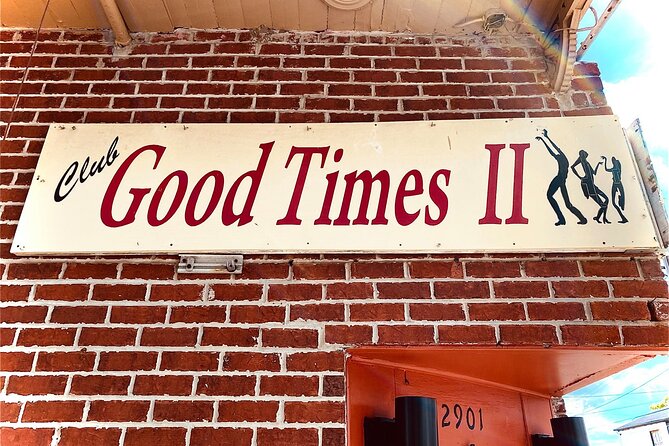
Next you head to Basin Street Station, with time to stroll down Basin Street. This part is valuable because it takes jazz origins out of “myth mode” and into named places tied to a specific era.
Storyville remnants and the early jazz nightlife
The tour highlights the remains of Storyville, including Frank Early’s My Place Saloon, where the song Pretty Baby was written. It also frames Storyville as the turn-of-the-century red light district whose parlors featured early jazz legends such as King Oliver, Buddy Bolden, Jelly Roll Morton, Sidney Bechet, and more.
That list matters because it changes how you think about jazz. It suggests jazz wasn’t only created in concert halls; it grew in social spaces, late nights, and mixed audiences. If you want to understand why the music sounded the way it did, you need this context.
What you might like here (and what to watch)
This is a street stroll, so some parts will be best as “look and listen to the guide’s framing” rather than “take a dozen photos.” If you’re trying to speed-run the French Quarter, don’t. Slow down enough to catch how the guide connects the names of musicians to actual streets and venues.
Stop 3: May Bailey’s Place and the Tango Belt layers
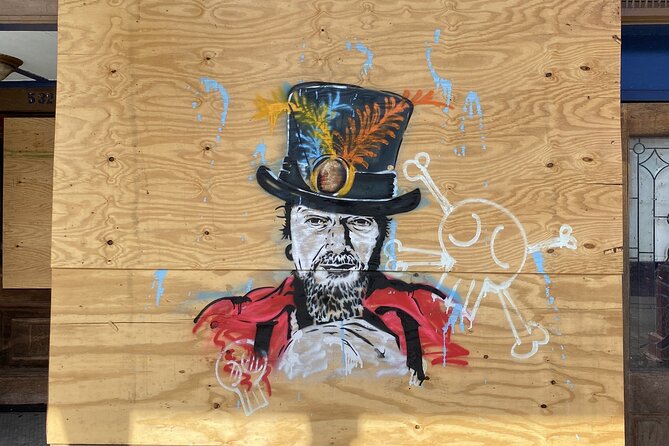
Then the tour moves through the Tango Belt to May Bailey’s Place, which is also described as the site of the Old French Opera House.
This stop is easy to underestimate if you only think of New Orleans music as one continuous story. But the tour uses it to show layering—how the city’s cultural spaces shift over time and still feed music.
It’s also one of those locations where the guide’s storytelling can do a lot of work. Even if the area doesn’t look like a grand landmark in the usual tourist sense, it becomes a meaningful piece of the puzzle once you understand the cultural function it served.
Consideration: time for this stop is short
The stop is brief, so treat it like a “chapter break,” not the main event. If you want more detail, this is a good one to remember and then research later on your own.
Stop 4: Preservation Hall and bounce music at street level
The tour ends at Preservation Hall on St Peter Street—a place strongly linked to New Orleans music’s continuity. You’ll often find people lining up for shows here, and your endpoint location is described as near that 5 PM show crowd.
Why Preservation Hall is a smart finale
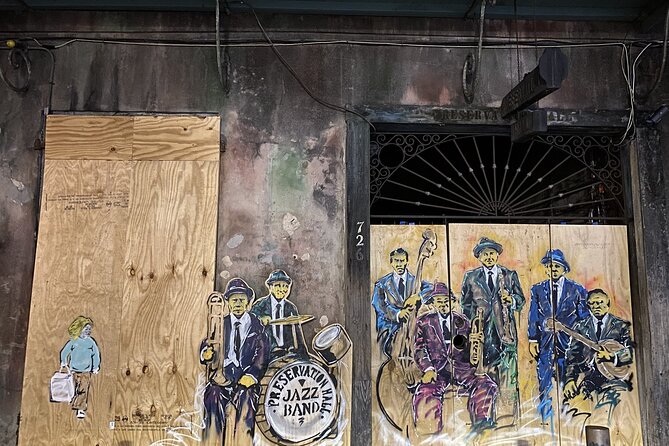
Preservation Hall is described as representing the past, present, and future of New Orleans music. That’s not just marketing language. It’s a good ending philosophy: after several stops that explain roots and historical eras, you finish somewhere that keeps the tradition moving.
Bounce music origins and today’s street musicians
The tour also says you’ll learn the origins of New Orleans Bounce Music, then check out the world’s greatest street musicians who carry that flame forward.
This is where the tour feels most alive. You’re not only learning the past—you’re looking at how music stays public, street-based, and communal. Even if you’re not a bounce specialist, you’ll walk away with names, patterns, and a sense of continuity you can apply to what you hear later.
One caution from reality: indoor access can vary
A couple of past visitors noted the walk didn’t always include every listed stop as expected. That doesn’t mean it’s unreliable, but it does mean you should keep flexible expectations and be ready to adjust your day plan. If Preservation Hall is a big priority for you, I’d treat the final stretch as a “target” and also plan an optional visit either before or after depending on the schedule you find on the ground.
What you really get for $25 (and why it’s good value)
At $25 per person for about 2 hours, you’re buying more than a route. You’re buying someone’s ability to connect details—places, names, and musical evolution—into a story you can actually remember.
The tour also includes:
- a guide
- visits to music-related landmarks
- a look at current street music and where the hottest live acts are
That combination is the value. Many tours show you famous buildings but don’t translate them into listening you can do later. Here, the focus is on origins and influence: from African ritual traditions at Congo Square to jazz eras like Storyville, and then forward to bounce and street music today.
And since the group is limited to max 20 travelers, you’re less likely to feel ignored—especially if you ask questions. Several reviews praised guides for being engaging, funny, and ready with answers.
Guides like David Higgins and Eva can change the experience
The quality of a music tour depends on the guide’s storytelling skill. This one often seems to shine because of the people leading it.
Reviews specifically call out David Higgins for being extremely knowledgeable and fun, with lots of attention and an obvious love for the subject. Another guide named Eva is praised for warm, friendly delivery and clear passion for how the music connects to local culture and history.
A couple of reviews also mention the guide using a phone or tablet during the walk. That can be useful for images and audio cues, but if you personally prefer less screen time, just be aware it’s possible.
How to schedule it: pairing it with the rest of your NOLA day
Because it ends at Preservation Hall around the late afternoon show energy, this tour pairs well with:
- an evening of live music nearby
- a follow-up listen session where you identify what the guide names while you’re out walking
- a quick food stop in the French Quarter area before your next venue
You also start at 2:00 pm, which is a practical slot. It avoids the early-morning rush but still gets you back in time to make dinner plans without stress.
One more scheduling note: this tour can be booked about 20 days in advance on average, so if you’re traveling in a high-demand week, it’s smart to reserve early.
What to expect from the walk: pacing, screens, and “did we hit everything?”
Here’s the honest travel reality: even well-run walking tours can vary slightly depending on crowd flow, timing, and what’s happening on the street.
Most of the stops are outside and time-limited, and the tour’s strength is the guide’s framing. If you’re the type who likes lots of photo stops, you’ll need to balance that with listening.
Also, a couple of reviews complained about portions of the experience feeling shorter or different than expected—like not visiting a named stop. Your best move is simple: at the beginning, ask a quick question about what you’ll see before you settle into the story. That keeps expectations aligned and helps you enjoy the walk even if something changes on the day.
Who should book this tour (and who might want another option)
This is a great fit if you:
- want music origins tied to real neighborhoods (not just a list of famous names)
- like guides who tell stories that connect history to what you hear today
- enjoy walking with enough structure to keep your brain from spinning
It may be less ideal if you:
- want a lot of museum-style time indoors
- hate walking in heat or sun and don’t plan for it
- want a super leisurely pace or a heavy emphasis on one venue only
Should you book this New Orleans Music Tour?
I think this is worth booking if New Orleans music history is a priority for you and you want a practical, guided route that ends at a real live-music hub. For $25, the mix of Congo Square roots, Storyville context, and Preservation Hall bounce music framing is the kind of “aha” package that helps you enjoy the city more after the tour ends.
Just go in with the right expectations: it’s a guided walk with limited time at each stop. Bring the comfort items, wear good shoes, and be ready to listen as much as you look. If you want, ask the guide early about the final stretch so you can plan your evening with confidence.
FAQ
FAQ
How much does the New Orleans Music Tour cost?
The tour costs $25.00 per person.
How long is the tour?
The tour runs for about 2 hours.
Where does the tour start and end?
It starts at Rampart Treehouse, 740 N Rampart St, New Orleans, LA 70116 and ends at Preservation Hall, 726 St Peter, New Orleans, LA 70116.
What time does it start?
The start time is 2:00 pm.
Is the tour in English?
Yes, it is offered in English.
What’s included in the tour?
You get a tour guide, visits to music-related landmarks, and a look at current street music and where the hottest live acts are.
Is Congo Square admission included?
Congo Square admission is included. The other stops in the route list admission tickets as free.
What should I bring?
You should bring comfortable shoes, water, sunscreen, a hat, and rain/sun protection.
Does the tour run in bad weather?
The tour requires good weather. If canceled due to poor weather, you’ll be offered a different date or a full refund.
What is the cancellation policy?
You can cancel for a full refund up to 24 hours before the experience. If you cancel less than 24 hours before, the amount paid is not refunded.
Is there a limit on group size, and are service animals allowed?
The tour has a maximum of 20 travelers, and service animals are allowed.
More Tours in New Orleans
More Tour Reviews in New Orleans
Just added to The New Orleans Traveler


Tours, compared.
 ★ 4.5Premier Ghost, Voodoo and Vampire Walking TourFrom $2712,856 reviews
 ★ 5.0Adults-Only New Orleans Ghost, Crime, Voodoo, and Vampire TourFrom $376,545 reviews
 ★ 5.0Food Walking Tour of the French Quarter with Small-Group OptionFrom $756,118 reviews
 ★ 5.0Swamp and Bayou Boat Tour with TransportationFrom $705,399 reviews
 ★ 4.5City Sightseeing Hop-On Hop-Off Bus TourFrom $514,943 reviews
 ★ 4.5St. Louis Cemetery No. 1 Official Walking TourFrom $253,941 reviews
 ★ 5.0Swamp Boat Ride and Oak Alley Plantation Tour from New OrleansFrom $1313,303 reviews
 ★ 5.0Adults-Only Ghost, Voodoo and Vampire TourFrom $293,291 reviews