
Reviewed · TOURS
New Orleans Music Tour
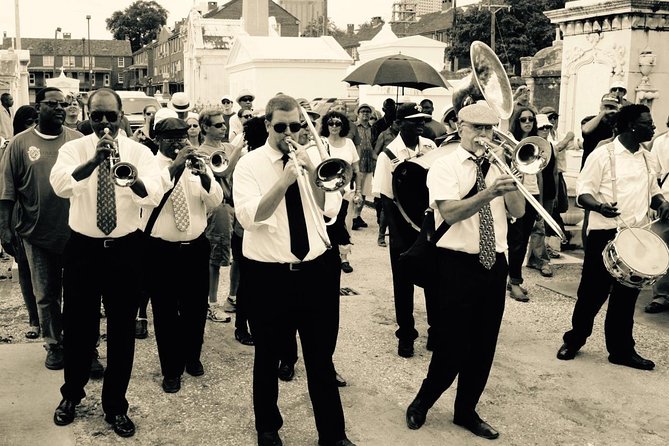
Jazz starts before you hear a note. On this 2-hour New Orleans Music Tour, I love how the route turns streets and landmarks into a timeline of sound, from early jazz conditions to the modern echoes you can still spot today. It’s a simple walking format with a story-first local guide, and it works as a strong orientation to the city.
Two things I really like: the stop at St. Louis Cemetery No. 1 and the Musicians Tomb story, which gives you a feel for how seriously New Orleans takes its artists and legacy. And the time spent around Congo Square and the J&M Studios site, where you see how religion, African traditions, and popular music all got tangled together in real life, not just in textbooks.
One consideration: this is not set up like a live-music concert. You should show up ready for history, architecture, and musician backstories more than guaranteed on-street performances.
In This Review
- Key things that make this tour worth your time
- Entering the musical “why” behind New Orleans
- Starting at 806 N Rampart: the easiest way to find your bearings
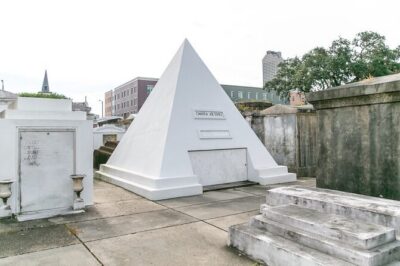
- Stop 1: St. Louis Cemetery No. 1 and the Musicians Tomb connection
- Stop 2: Storyville District remains and the jazz-era cast
- Stop 3: Louis Armstrong Park, Congo Square, and the African roots angle
- Stop 4: J&M Studios and the New Orleans Sound you can name
- Bounce Music, street musicians, and why the present matters
- Price and value: what $25 buys you in real terms
- Who this tour is best for (and who should shop another option)
- Practical tips for a comfortable 2:00 pm walking tour
- Should you book this New Orleans Music Tour?
- FAQ
- Where does the tour start and end?
- How long is the New Orleans Music Tour?
- How much does it cost?
- What’s the maximum group size?
- Is the tour in English, and do I use a mobile ticket?
- Is food or drinks included?
- Can I cancel and get a full refund?
Key things that make this tour worth your time
- Small group (up to 15) keeps the pace personal and the questions flowing
- St. Louis Cemetery No. 1 connects music to place in a way you don’t get from photos
- Storyville remains give you context for the characters who shaped early jazz
- Congo Square and West African ritual roots explain why this music tradition spread globally
- J&M Studios and the New Orleans Sound turn legend names into a real working music world
- Bounce music origins plus street-music energy helps you connect past to what’s happening now
Not quite the one? Here are other New Orleans tours worth a look.
- New Orleans Premier Ghost, Voodoo and Vampire Walking Tour★ 4.5 · 12,856 reviews
- New Orleans Steamboat Natchez Jazz Cruise with Dinner Option★ 4.0 · 7,533 reviews
- Adults-Only New Orleans Ghost, Crime, Voodoo, and Vampire Tour★ 5.0 · 6,545 reviews
- New Orleans Food Walking Tour of the French Quarter with Small-Group Option★ 5.0 · 6,118 reviews
Entering the musical “why” behind New Orleans
New Orleans has a habit of making music feel like a city service. It’s in the parades, the late-night conversations, the rhythms in everyday life. This tour is built to show you why. In two hours, you move through key neighborhoods and landmarks and get the backstory of how jazz and related styles grew—through community, religion, commerce, and plain human creativity.
You’ll also get something practical: a mental map. Even if you’ve been to New Orleans before, the tour’s focus helps you understand what you’re looking at. You start to see how Basin Street, Treme-area connections, and the Congo Square zone all fit together instead of reading like separate spots on a list.
Starting at 806 N Rampart: the easiest way to find your bearings
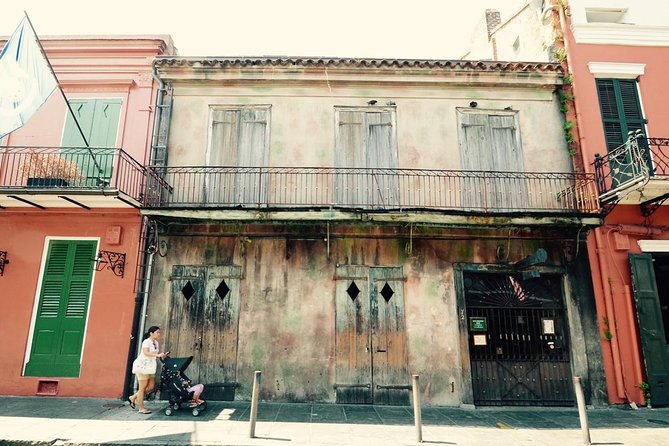
The tour begins at 806 N Rampart St and ends back at the same meeting point. That matters more than it sounds. A walking tour with a clear start and return point lets you keep the rest of your day flexible—grab food after, hit a museum nearby, or just wander with less guesswork.
The tour runs at 2:00 pm and clocks in at about 2 hours. That timing can be great for a mid-afternoon start, but plan around weather. New Orleans afternoons can swing fast. If it’s hot, you’ll want to pace yourself and keep water on hand from your own supplies. If it’s rainy, bring something that actually stays closed (umbrella tech often fails fast in wind).
You’ll use a mobile ticket, so have your phone battery in good shape. It’s also offered in English, and it’s designed for most travelers, with a guide leading you the whole time.
Stop 1: St. Louis Cemetery No. 1 and the Musicians Tomb connection
The first stop is St. Louis Cemetery No. 1, with a stroll through the area known as the Tango Belt on the way to the New Orleans Musicians Tomb. This part of the story hits because it’s not abstract. You’re standing where the city chose to honor musicians, not just where the city decided to sell souvenirs.
Here’s what makes the cemetery stop especially meaningful: the Musicians Tomb uses burial space donated by the Barbarin Family, meant as free burial for musicians. The tour shares a specific beginning point too—the first burial was Lloyd Washington of the Ink Spots on October 23, 2004. That kind of detail gives you a timeline anchor, so the music story has dates, names, and real people attached to it.
What you’ll feel here: music as legacy and community responsibility. In New Orleans, artists aren’t treated like strangers who left town. They’re treated like family members who shaped the neighborhood.
What to watch for: cemeteries are quiet, and walking tours move at a steady conversational pace. If you want lots of room for lingering and photos, keep in mind you’re part of a group flow. This is a story-and-orientation stop, not a long self-guided museum visit.
Stop 2: Storyville District remains and the jazz-era cast
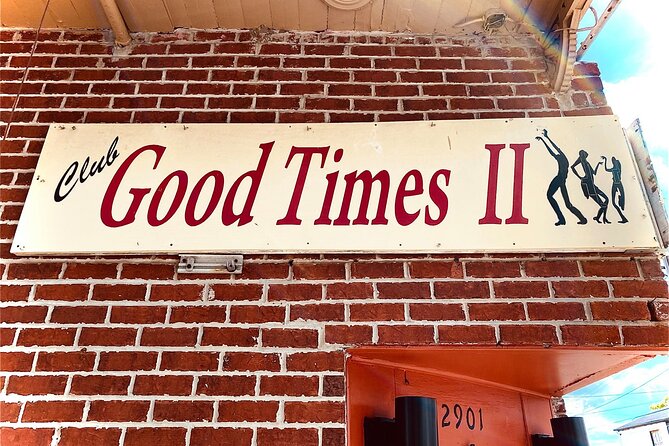
Next you head toward the Storyville District area and look at the remains tied to the era when jazz began to take shape in public life. Storyville was the city’s well-known red-light district, a place of commerce, nightlife, and constant social mixing—exactly the kind of environment where new sounds grow when people meet, work, and trade stories.
The tour highlights names that connect directly to music history. You’ll hear about venues and figures associated with early jazz, including King Oliver, Buddy Bolden, Jelly Roll Morton, and Sidney Bechet. This is where the tour starts doing real work for you: it ties the growth of jazz to a network of people and places, not just to a single genius in a single room.
One specific detail stands out: the tour mentions Frank Early’s My Place Saloon, tied to where the song Pretty Baby was written. It’s a good reminder that New Orleans songwriting didn’t appear from nowhere—it came from the same social spaces where people were gathering and making deals.
Drawback to consider: if you’re hoping for this stop to feel like a dramatic, cinematic version of old New Orleans nightlife, the reality is more subtle. You’re looking at remains and learning context. It’s still fascinating, but it’s more story than spectacle.


Stop 3: Louis Armstrong Park, Congo Square, and the African roots angle
From Storyville, you move toward Basin Street Station and then into Louis Armstrong Park. In this stretch, the tour shifts from the cast of characters to the deeper question: where did the musical ingredients come from?
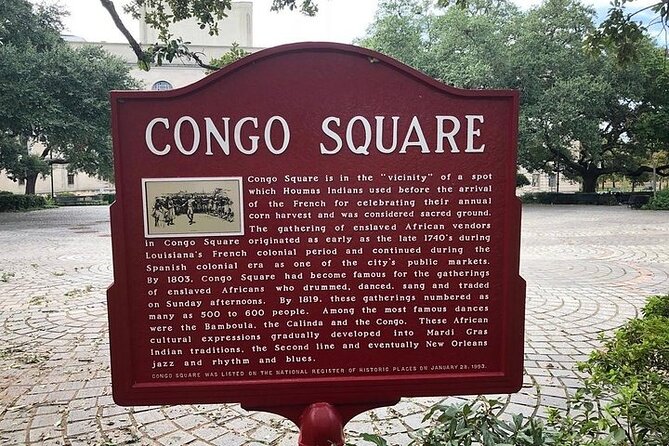
This is where Congo Square enters. The tour frames Congo Square as the only place in North America where pure West African religious ritual and musical traditions were performed. That line matters, because it tells you what you’re really standing on: not just a “festival history site,” but a living cultural practice that influenced music forms.
The tour also connects Congo Square to broader cultural milestones. You’ll hear that it’s considered a wellspring of New Orleans music and that it hosted the first New Orleans Jazz and Heritage Festival in 1970. The stop also references the Municipal Auditorium, tying the square to later public performance culture.
What you’ll like here: the guide typically makes the connections feel logical. You’ll hear how rhythm, community gathering, and ritual traditions helped build the foundation for popular music styles. It’s the kind of explanation that makes the rest of your New Orleans music day click.
One practical tip: this is a prime photo area, but group pacing may limit long pauses. If you care about photos, keep your camera ready and grab quick shots during transitions rather than waiting until the guide is done.
Stop 4: J&M Studios and the New Orleans Sound you can name
After leaving Louis Armstrong Park, the tour enters the building connected to J&M Studios, presented as a place that helped shape the New Orleans Sound. This stop is one of the biggest “wow” moments because the names you hear are not generic. You get a list of specific artists who were tied to the sound, which helps you connect what you know from records to a physical location.
The tour names musicians such as:
- Professor Longhair
- Dave Bartholomew
- Fats Domino
- Guitar Slim
- Shirley & Lee
- Lloyd Price
- Ernie K-Doe
- Allen Toussaint
- Clarence Frogman Henry
It also includes visitors tied to the wider rock and soul world: Little Richard, Ray Charles, and Jerry Lee Lewis. Even if you only know a few of those names, the effect is clear—you learn that New Orleans wasn’t working in isolation. It was part of a bigger musical conversation.
The tour also explains the origins of New Orleans Bounce Music in the same storytelling flow. That’s a smart move. Bounce isn’t treated like a separate planet. You see it as part of an ongoing musical language.
What to expect inside: since this stop is an entry into a studio-associated building, the guide’s storytelling pace often shifts to fit the space. You might not get the same roaming freedom as outside, so listen closely and plan to take notes if you’re the kind of person who likes to remember details for later.
Bounce Music, street musicians, and why the present matters
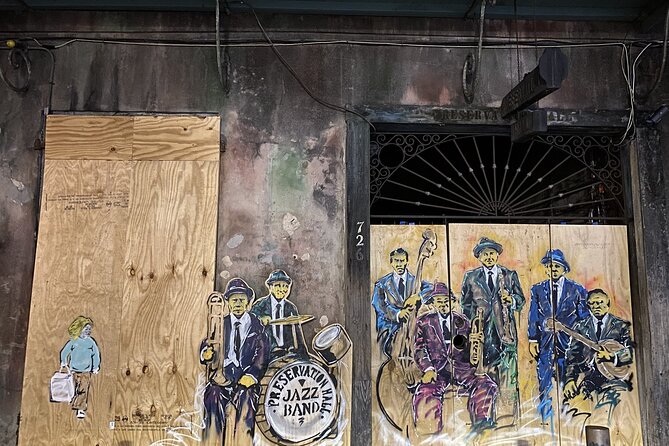
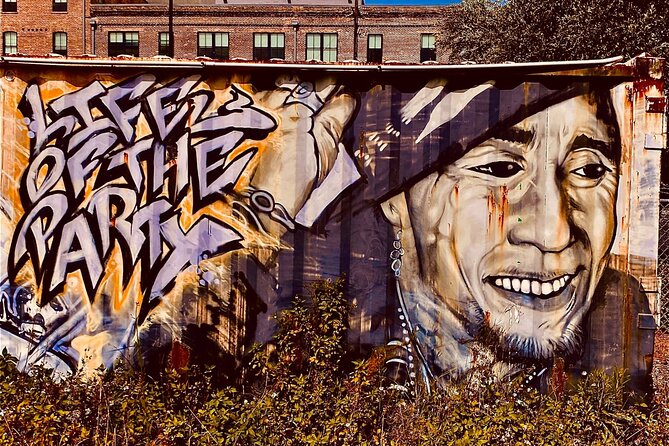
After the J&M Studios stop, you get the bridge to the present: Bounce music origins and the “carrying the flame” feeling from current street musicians. The tour doesn’t just say the music lived once. It makes the argument that people still perform the city’s musical DNA in the streets.
This last stretch is a nice way to end, especially if you’ve spent the day thinking about history. It gives you a reason to keep your ears open after the tour finishes. Even if you don’t recognize every style at first, you’ll start hearing patterns in rhythm and crowd response that feel unmistakably New Orleans.
What to keep realistic: this isn’t a guarantee of a full-on private street jam. It’s more like a guided spotlight on how music still shows up in public.
Price and value: what $25 buys you in real terms
At $25 per person for about two hours, this tour is priced like a serious bargain, especially because it includes a local guide. That matters in New Orleans, where the difference between a random walk and a guided story can be enormous.
You’re not paying for transportation (there’s no hotel pickup or drop-off), and you’re not paying for meals (food and drinks aren’t included). So for best value, treat this like a curated walking experience: you show up with comfortable walking shoes, you bring your own snack plan, and you get the guide’s work and interpretation in return.
The small group size (maximum 15) also improves the value feel. You’re less likely to get shoved into a loud, slow-moving cluster where questions go unanswered.
Who gets the most out of the price: people who want context and a practical city map. If you already know every jazz timeline and you’re only chasing live performances, you might find a different type of music tour better matches your expectations.
Who this tour is best for (and who should shop another option)
This tour is a great fit if you want:
- A fast orientation to the city’s key music-linked areas
- Stories connecting jazz origins to neighborhoods
- A guide who can connect music to religion, politics, architecture, and community
- A two-hour block that leaves the rest of your day open
It’s also a good choice for couples and families because the pacing is manageable and the story is designed to be understandable, not academic.
You might want to look at other tour types if you:
- Want guaranteed live music performances as part of the itinerary
- Prefer a museum-style stop where you linger at each exhibit for a long time
- Are traveling when heat or rain will make long walks hard without frequent breaks
Practical tips for a comfortable 2:00 pm walking tour
A couple things I’d plan around before you head out.
First, dress for time and weather. The tour is at 2:00 pm, so afternoon sun and humidity can be a factor. If rain is in the forecast, bring a rain layer that doesn’t trap you in constant re-adjusting.
Second, bring a small personal kit: your own water plan and a phone charger if you’re using your mobile ticket. Since the tour ends at the meeting point, you’ll likely keep wandering after, so having what you need reduces stress.
Third, match your expectations to the format. This is a musical walking story across major landmarks. You’ll hear about major musicians and cultural milestones, but you should be ready to absorb details rather than just react to performances.
Should you book this New Orleans Music Tour?
If you’re deciding between a quick stop on jazz history and a full day of museums, I’d book this. It’s compact, focused, and strong at turning New Orleans locations into understandable music history. The cemetery stop adds depth, the Storyville context explains the era’s social mix, Congo Square gives you the cultural root story, and the J&M Studios segment gives you a grounded sense of where the sound was shaped.
Book it with one clear expectation: you’re here for story, context, and orientation, not a concert with guaranteed live music. If that matches your style, the value for $25 and the guide-led format make it an easy yes—especially if you like the idea of learning how New Orleans music connects to the city’s real neighborhoods.
FAQ
Where does the tour start and end?
The tour starts at 806 N Rampart St, New Orleans, LA 70116 and ends back at the same meeting point.
How long is the New Orleans Music Tour?
It runs for about 2 hours.
How much does it cost?
The price is $25.00 per person.
What’s the maximum group size?
This tour has a maximum of 15 travelers.
Is the tour in English, and do I use a mobile ticket?
Yes. The tour is offered in English, and it uses a mobile ticket.
Is food or drinks included?
No. Food and drinks are not included.
Can I cancel and get a full refund?
Yes. You can cancel for a full refund up to 24 hours before the experience’s start time.
More Tours in New Orleans
More Tour Reviews in New Orleans
Just added to The New Orleans Traveler


Tours, compared.
 ★ 4.5Premier Ghost, Voodoo and Vampire Walking TourFrom $2712,856 reviews
 ★ 5.0Adults-Only New Orleans Ghost, Crime, Voodoo, and Vampire TourFrom $376,545 reviews
 ★ 5.0Food Walking Tour of the French Quarter with Small-Group OptionFrom $756,118 reviews
 ★ 5.0Swamp and Bayou Boat Tour with TransportationFrom $705,399 reviews
 ★ 4.5City Sightseeing Hop-On Hop-Off Bus TourFrom $514,943 reviews
 ★ 4.5St. Louis Cemetery No. 1 Official Walking TourFrom $253,941 reviews
 ★ 5.0Swamp Boat Ride and Oak Alley Plantation Tour from New OrleansFrom $1313,303 reviews
 ★ 5.0Adults-Only Ghost, Voodoo and Vampire TourFrom $293,291 reviews