

Reviewed · GARDEN DISTRICT TOURS
New Orleans Garden District Architecture Tour
Architecture fans, this walk is a treat. This New Orleans Garden District architecture tour pairs a small-group stroll with a local guide who explains what you’re actually looking at, not just what to photograph. In about two hours, you’ll cover standout buildings, including a stop at Lafayette Cemetery No. 1, and connect the dots between design, money, and the people who lived here.
Two things I really like: first, the way the guide teaches you to spot details in the Garden District’s big house styles, especially Italianate work tied to Samuel Jameson. Second, the stories feel personal and human—at least one guide on this route (Angela, a 10th-generation New Orleanian) shares family-level context, while others bring research and photos to help you compare buildings across decades.
One consideration: this is a walking tour and it depends on weather, and the cemetery stop may not be accessible if services are happening. If you’re short on mobility or you hate being outdoors in heat, plan accordingly and consider a less walk-heavy option.
In This Review
- Key points worth knowing before you go
- Starting at 2727 Prytania St: how the pace stays comfortable
- Lafayette Cemetery No. 1: a sobering stop with rules you should expect
- Morris-Israel House and Carroll-Crawford House: learning Italianate details fast
- Commander’s Palace: how an icon ties architecture to modern life
- Women’s Guild of the New Orleans Opera: spotting two eras in one building
- Louise S. McGehee School: from single-family home to a library
- Carrollton-era recreation at the Rink Shopping Center (1884)
- The Garden District block itself: what to look at after the guide points it out
- Value check: is $40 worth it for this New Orleans walk?
- Should you book the New Orleans Garden District Architecture Tour?
- FAQ
- How long is the New Orleans Garden District Architecture Tour?
- How much does the tour cost?
- How big is the group?
- Where do we meet, and does the tour end there?
- Is admission included for Lafayette Cemetery No. 1?
- Is admission included for all stops?
- What should I wear or bring?
- What language is the tour offered in?
- What happens if the weather is bad?
- Is transportation to and from the sites included?
- Are service animals allowed?
Key points worth knowing before you go

- Small group (max 14): you can ask questions and actually keep up with the guide.
- Lafayette Cemetery No. 1 stop: included for free, but access can be limited during services.
- Italianate focus: you’ll learn what to look for at homes designed by Samuel Jameson (including the Morris-Israel House and the Carroll-Crawford House).
- Built-in neighborhood timeline: you’ll bounce from antebellum mansions to late-19th-century buildings and turn-of-the-century recreation.
- Mix of architecture and city life: Commander’s Palace, the Opera Guild building, and a former skating rink all show different eras of Garden District culture.
- Value math is strong: many stops list admission as free, and the tour is led by a licensed, insured local guide.
Keep strolling the oak-lined Garden District
- New Orleans Garden District History Walking Tour★ 5.0 · 2,879 reviews
- New Orleans City Tour: French Quarter, Garden District & Cemetery★ 4.5 · 2,209 reviews
- New Orleans Small-Group Garden District Walking Tour★ 5.0 · 1,384 reviews
- New Orleans City and Cemetery Tour with Garden District Stroll★ 4.5 · 766 reviews
Starting at 2727 Prytania St: how the pace stays comfortable
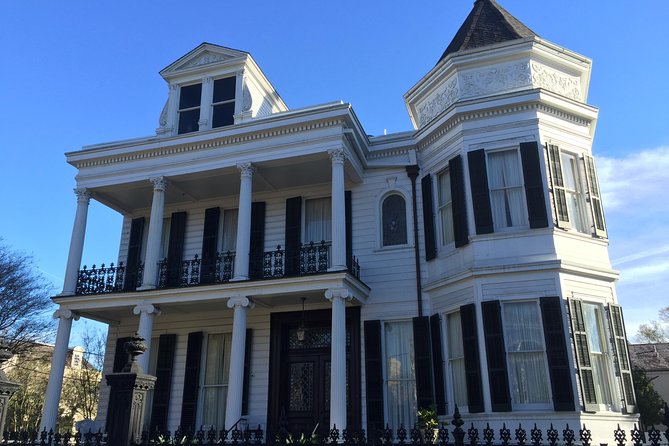
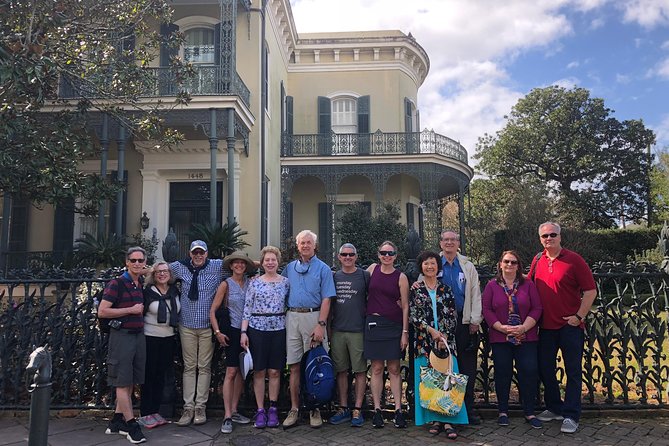
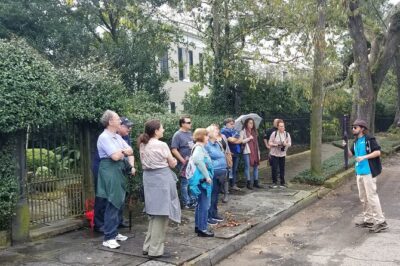
The tour meets at 2727 Prytania St and loops back there at the end. Expect about 2 hours of walking, plus short stops where the guide explains what you’re seeing and what it meant at the time. This is a practical setup: you’re not crossing half the city, and you’re not rushed through a pile of buildings.
Because the group caps at 14 people, the guide can slow down for questions. That matters here. Garden District architecture can look similar at a glance, and the tour’s real value is learning the differences—like how to tell styles apart on the spot instead of guessing later.
Logistics are simple. You get a mobile ticket, the tour runs in English, and it’s set up to work with public transportation nearby. Also: no transportation is included to or from the meeting point, so plan your own ride share, streetcar, or walking approach.
Lafayette Cemetery No. 1: a sobering stop with rules you should expect
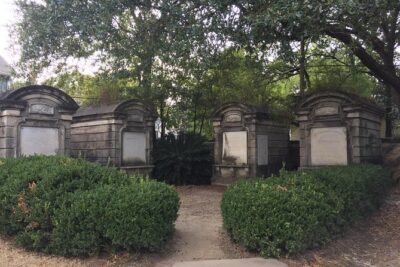
One of the most distinctive parts of the Garden District experience is the Lafayette Cemetery No. 1 stop. You’ll get a short introduction (around 5 minutes) to New Orleans burial customs and how the city thinks about death and memory.
Here’s the practical part. Entry is listed as free, but access is permitted by the City of New Orleans and the cemetery may be closed when services are being performed. That means even if the tour includes the stop, the guide might have to adjust if it’s not open at that moment.
If that kind of thing worries you, don’t overthink it. This is still a worthwhile stop because the guide frames the cemetery customs in a respectful, factual way. The aim isn’t shock—it’s context. And even a brief look helps you understand why the Garden District isn’t just pretty homes. It’s also the city’s way of keeping history visible.
Morris-Israel House and Carroll-Crawford House: learning Italianate details fast
The architecture lesson that clicks best on this walk is the one focused on Italianate style—especially where Samuel Jameson is involved. The tour stops at two major examples:
- Morris-Israel House (1869): designed by Samuel Jameson in 1869, and presented as an especially strong example of iconic Italianate architecture in the Garden District.
- Carroll-Crawford House: also designed by Irish-born Samuel Jameson, and another go-to example of Italianate design.
Why this is so useful: Italianate buildings reward close watching, but most people don’t know what to look for until someone points it out. On this tour, the guide helps you connect design choices to the neighborhood as it developed. You’re not just looking at a pretty façade. You’re learning how these buildings fit together in the same streetscape—and why certain features show up across multiple homes.
In practical terms, when you spot an Italianate building after this tour, you’ll recognize the pattern sooner. That means the rest of your Garden District wandering becomes easier and more satisfying, because you’ve got a mental checklist.
Commander’s Palace: how an icon ties architecture to modern life

There’s a quick stop for Commander’s Palace. The time on this one is short (about 3 minutes) and the focus is not a deep history lecture—it’s discussion of the building’s architecture and the history of its owners, plus what culinary experience guests associate with the address.
One thing I like about including a famous restaurant: it keeps the tour grounded in how people actually live in New Orleans now. The Garden District isn’t frozen in time. It’s still an address people want, and big names still shape the story.
Also, admission isn’t listed as included here. That’s fine. This stop is mostly about what you can see from outside and what the guide explains. If you’re the type who wants to eat your way through neighborhoods, this stop pairs well with dinner plans later that day.





Women’s Guild of the New Orleans Opera: spotting two eras in one building
Another stop focuses on the Women’s Guild of the New Orleans Opera building. The key detail: it was built in two different eras and in two different styles.
That sounds abstract until the guide gives you a way to tell the difference. This part of the tour helps you practice a real street skill: reading a building like a timeline. Instead of assuming one façade equals one moment in time, you learn to look for shifts—changes that hint at when additions or redesigns happened.
This is also a good stop if you’re tired of “tour voice” where everyone points out the same obvious features. Here, the guide pushes you to compare and notice. Even in a short window, you’ll walk away with a better eye.
Louise S. McGehee School: from single-family home to a library

Next comes the Louise S. McGehee School, a late-19th-century building with a transformation story that’s easy to remember. The tour explains how the structure began as a single family residence and later became the library of the McGehee School.
This matters because it shows how neighborhoods change without completely losing their physical identity. A building can shift purpose while still keeping its architectural “voice.” If you’ve ever wondered how a city can modernize and still feel historic, this stop gives you a concrete example.
The listed stop time is about 10 minutes, and the admission is noted as free. That usually means you’ll spend enough time hearing the story clearly, without feeling like you’re stuck in a line.
Carrollton-era recreation at the Rink Shopping Center (1884)
The tour ends its main building run with a stop at the Rink Shopping Center, which connects Garden District streets to turn-of-the-century recreation. The building is tied to a major claim: when it opened in 1884, it housed the largest skating rink in the country at the time.
This is the kind of fact that makes walking tours more than just architecture appreciation. You’re suddenly picturing daily life—what people did for fun, what drew crowds, and what entertainment looked like before movie theaters and sports complexes took over the map.
It also gives your brain a break. After cemetery context and house-style comparisons, it’s refreshing to get a story that’s about play instead of solemnity or design.
The Garden District block itself: what to look at after the guide points it out
The tour’s centerpiece is the time spent in the Garden District area itself, including a long visual stretch (listed at about 2 hours for the Garden District segment). Here’s the real value: you’re not only seeing antebellum mansions. You’re learning what the neighborhood looked like when these homes were built—and hearing stories about the people who designed and lived in them.
On this kind of tour, the best guides do two things:
1) They connect style to people, and
2) They teach you how to compare buildings quickly.
The guide talent pool on this route is part of why it works. Guides you might meet—like Lee, known in feedback for being witty and charming, or Doug, who often uses pictures to help you see changes and may share celebrity connections (including mention of the Ann Rice house)—tend to bring extra angles beyond basic descriptions. Another guide, Pauline, has been described as doing original research on how buildings looked over decades and how commissioners and former owners shaped what you see. John and Gary are also noted for supporting questions with visual aids.
None of that is guaranteed, of course. But it explains why the tour gets such strong marks for staying fun while staying informative.
One more practical tip: wear shoes you can walk in for real. Even when stops are short, the Garden District walking adds up, especially in hotter months.
Value check: is $40 worth it for this New Orleans walk?
At $40 per person for about 2 hours with a licensed, insured local guide and a maximum group size of 14, the price feels fair—mostly because many stops list admission as free. You’re paying for interpretation: someone helps you make sense of architectural styles, neighborhood development, and why the city built the way it did.
If you do this on your own, you can certainly admire the homes. But you’ll likely miss the “how do I tell style A from style B?” part, and you might not pick up the cemetery context that frames why the Garden District isn’t just aesthetic.
Also, remember what’s not included: transportation to and from the meeting point. That cost is yours to manage. If you’re already near Prytania Street or staying within easy reach of public transit, that keeps the value strong.
Finally, the tour is popular enough that it’s commonly booked around 19 days in advance on average. Book sooner if you’re traveling during busy weeks.
Should you book the New Orleans Garden District Architecture Tour?
I’d book this if you want:
- a Garden District intro that teaches you how to read architecture on the sidewalk
- an experience with a small-group feel and time for questions
- a mix of style (Italianate), place (cemetery context), and local storytelling (like recreation history at the skating rink site)
I’d think twice if:
- you dislike walking in heat or you might struggle with a steady 2-hour route
- you’re hoping for guaranteed access inside the cemetery every time, since services can affect opening
If you’re the type who likes to get your bearings fast and then enjoy the rest of the city with clearer eyes, this tour is a solid first step.
FAQ
How long is the New Orleans Garden District Architecture Tour?
It runs for about 2 hours (approx.), with a route that includes multiple short stops.
How much does the tour cost?
The price is $40.00 per person.
How big is the group?
This experience has a maximum of 14 travelers, which helps keep it personal.
Where do we meet, and does the tour end there?
The meeting point is 2727 Prytania St, New Orleans, LA 70130, and the tour ends back at the meeting point.
Is admission included for Lafayette Cemetery No. 1?
The stop at Lafayette Cemetery No. 1 lists admission as free, but access is permitted by the City of New Orleans and may be closed when services are being performed.
Is admission included for all stops?
Many stops list admission ticket free, but Commander’s Palace explicitly lists admission as not included.
What should I wear or bring?
Comfortable walking shoes are recommended, since it’s a walking tour.
What language is the tour offered in?
The tour is offered in English.
What happens if the weather is bad?
The tour requires good weather. If it’s canceled due to poor weather, you’ll be offered an alternative date or a full refund.
Is transportation to and from the sites included?
No. Transportation to/from attractions is not included.
Are service animals allowed?
Yes, service animals are allowed.
More Tours in New Orleans


More Tour Reviews in New Orleans
Garden District, Block by Block





Just added to The New Orleans Traveler





Garden District Tours, compared.
 ★ 5.0Garden District History Walking TourFrom $352,879 reviews
 ★ 4.5City Tour: French Quarter, Garden District & CemeteryFrom $402,209 reviews
 ★ 5.0Small-Group Garden District Walking TourFrom $351,384 reviews
 ★ 4.5City and Cemetery Tour with Garden District StrollFrom $55766 reviews
 ★ 4.9Garden District Guided Walking TourFrom $35514 reviews
 ★ 5.0Highlights of the Garden District Walking TourFrom $37492 reviews
 ★ 4.8Garden District TourFrom $28480 reviews
 ★ 5.0Garden District Home and History Walking TourFrom $26470 reviews
Browse the lists this tour appears in