Reviewed · TOURS
New Orleans Culture Second Line Tour in NOLA
Brass bands can change your whole mood. I love that you’re right in the mix—not parked on the sidewalk—and that King Hollis Burton turns the street chaos into clear, memorable stories about where Second Lines come from. The one thing to plan for is the tradeoff: you’ll deal with loud music and a lot of walking, including uneven spots where it can get hard to hear.
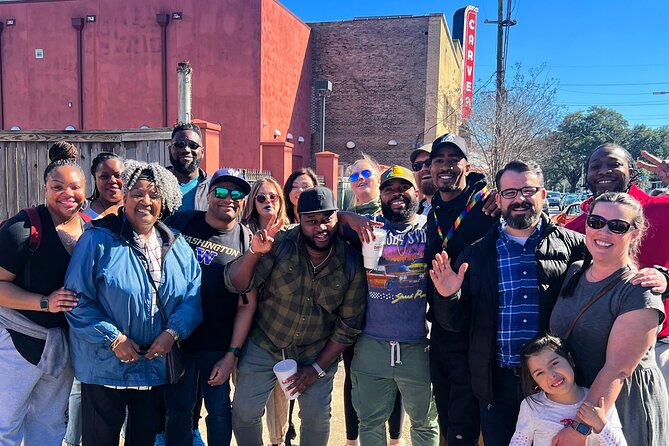
This tour takes you through the Treme neighborhood, then into a Sunday Second Line parade with brass bands and dancers moving through the streets. You meet at 1111 Canal St and you’re back there when it’s done, with a small group size (up to 50) and an included bottled water to help you stay steady.
In This Review
- Quick hits on the Treme Second Line experience
- Why a Treme Second Line beats a standard parade
- King Hollis Burton’s storytelling turns chaos into context
- Stop 1 in Treme: street culture, Mardi Gras Indians, and Congo Square
- Stop 2: joining the Sunday Funday Second Line parade
- Price and value: $30 for history, participation, and water
- Price and Logistics: where to meet and what timing to trust
- Practical details that matter on parade day
- Common hiccups to watch for (and how to avoid them)
- Who this tour fits best
- Should you book the New Orleans Culture Second Line Tour in NOLA?
- FAQ
- How long is the New Orleans Culture Second Line Tour in NOLA?
- Where do I meet for the tour?
- Is the tour in English, and do I need a printed ticket?
- Does the price include anything besides the tour?
- What should I bring for parade day?
- What happens if the weather is bad or the tour can’t run?
Quick hits on the Treme Second Line experience
- You’re joining the parade, not just watching it as brass bands roll by and dancers pull you in
- King Hollis Burton connects the dots between traditions like jazz funerals, Social Aid & Pleasure Clubs, and Mardi Gras Indians
- Small-group feel (max 50) so you can keep up better than in giant crowds
- Fast pace during the march with occasional stops for participants to change outfits
- A lot of street walking with uneven ground and moments where you’ll need to move quickly
- Rain or shine means a poncho or umbrella is a smart call
Not quite the one? Here are other New Orleans tours worth a look.
- New Orleans Premier Ghost, Voodoo and Vampire Walking Tour★ 4.5 · 12,856 reviews
- New Orleans Steamboat Natchez Jazz Cruise with Dinner Option★ 4.0 · 7,533 reviews
- Adults-Only New Orleans Ghost, Crime, Voodoo, and Vampire Tour★ 5.0 · 6,545 reviews
- New Orleans Food Walking Tour of the French Quarter with Small-Group Option★ 5.0 · 6,118 reviews
Why a Treme Second Line beats a standard parade
If you only watch a parade from the curb, you miss the point. A Second Line works because the crowd becomes part of the ritual—hands, feet, rhythm, and the street itself all doing the celebrating together.
This tour is built around that feeling. It’s not a history lecture in a chair. You get the stories while you’re walking and while the music is happening, so the tradition lands in your body, not just your head. And Treme is the right setting for that. It’s the neighborhood where New Orleans culture is more lived-in than performed.
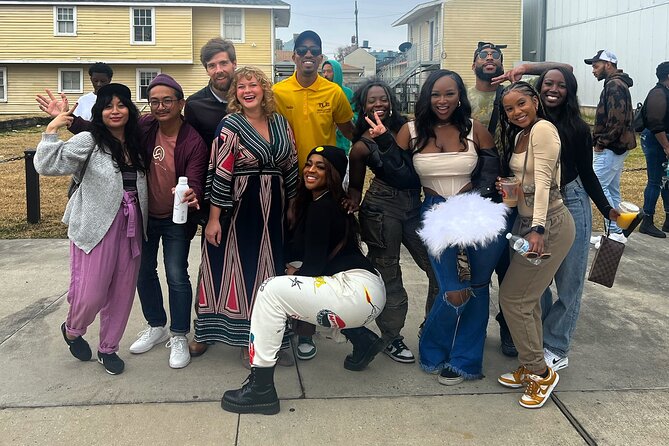
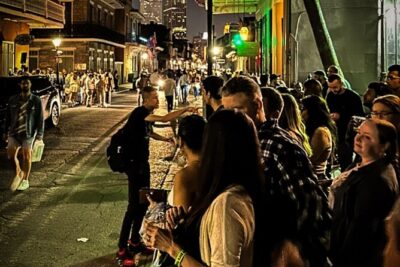
The vibe is also social in the best way. You’re out with a mix of people (families, couples, solo folks) and you’ll likely see visitors from other places having their first taste of how Second Lines work. The energy is big, but it never feels like a theme-park show.
The flip side: because it’s moving, loud, and crowded, it’s not ideal for anyone who needs quiet commentary every minute. If you’re the type who gets stressed when plans change or groups shuffle, keep your expectations flexible.
King Hollis Burton’s storytelling turns chaos into context
A huge reason this tour gets such strong ratings is the guide. King Hollis Burton doesn’t just point at things. He gives you the “why” behind what you’re seeing—how Second Lines connect to jazz funerals, and how Social Aid & Pleasure Clubs shaped community life. He also weaves in stories tied to Mardi Gras Indians, and you’ll hear how these traditions shaped what New Orleans music and street life became.
Here’s why that matters for you: without context, a parade can feel like noise and motion. With context, you start spotting patterns—how people move, how the crowd responds, and what the music carries beyond entertainment.
You also get a direct cultural focus on Treme rather than bouncing around the French Quarter. That’s a practical win. You’re not only seeing New Orleans; you’re getting your bearings in one of the city’s key cultural neighborhoods.
One caution from real-world experience on this kind of tour: even with a great guide, hearing can be tricky once the brass band really starts. If you care about every word, you’ll want to stay closer to where Hollis is positioned and be ready to do some quick adjusting as the group flows.
Stop 1 in Treme: street culture, Mardi Gras Indians, and Congo Square
Your walk begins in Treme, the kind of neighborhood where history isn’t behind ropes. It’s in the streets, in the music you hear nearby, and in the way people carry on.
During this time, Hollis Burton sets the scene with stories that connect several New Orleans traditions:
- Mardi Gras Indians and the meaning behind their presence
- Social Aid & Pleasure Clubs and community support
- The broader music rhythms that make Second Lines feel like more than a parade
You’ll also hear references to Congo Square, which helps explain why Treme matters in the larger story of Black cultural life in New Orleans. Even if you know nothing going in, this kind of framing gives you a map for what you’re about to experience.
A practical note: the parade route can vary. That means your walking paths and exact street turns may shift based on where the parade is. In exchange, you’re more likely to experience the neighborhood when it’s at its liveliest, rather than sticking to one scripted strip.
The main drawback at this stop is simple: it’s walking. And it’s not always smooth. Plan on comfortable shoes and pay attention to your footing when you’re moving to keep up.
Stop 2: joining the Sunday Funday Second Line parade
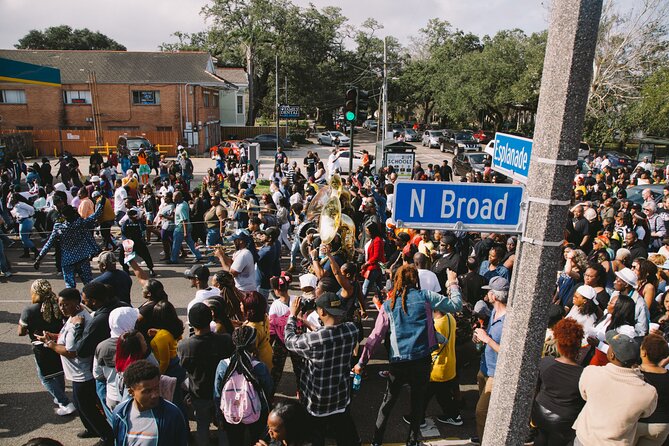
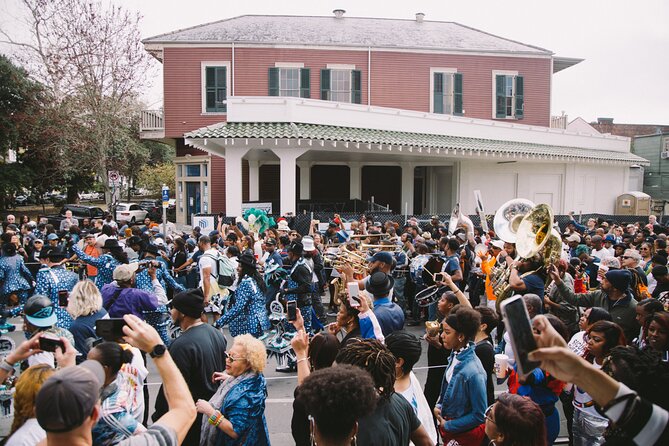
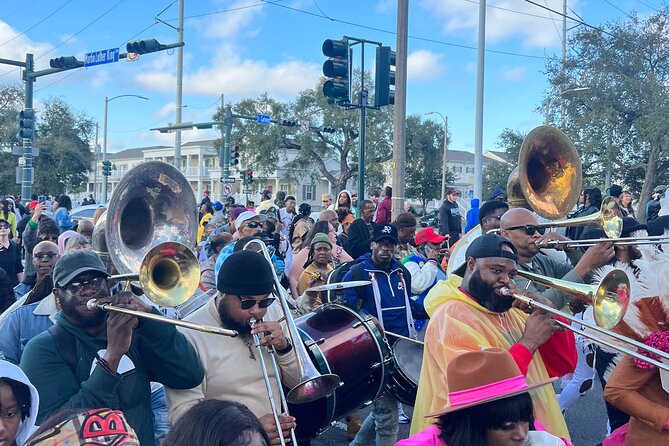
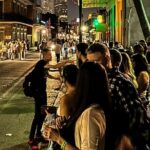
Then comes the part you came for: the Second Line itself. These parades, tied to roots like jazz funerals, feature brass bands and dancers who move with a spontaneous, street-level spirit. You’ll feel the transition from “learning” to “participating” fast.
Once the parade gets going, expect all of the following:
- Loud music that makes conversation difficult
- Dancing and moving through the streets with the crowd
- Short waits when participants change outfits
- Occasional quick walking to stay aligned with the guide and group
The joy here is obvious: you’re not just observing people celebrate. You’re stepping into the rhythm with them. That’s where the best photos and memories usually come from too—not because it’s pretty (though it is), but because you’re actually part of it.
There’s also a safety rhythm. You may see police presence along the route, which can be reassuring when the streets get packed. Still, the crowd movement is real. You should assume the parade will compress and expand as bands pass and dancers regroup.
Food and drink can show up along the route via local sellers. If you want snacks or something cold to drink, bring cash. People sometimes grab bites and drinks during the parade flow, but you shouldn’t expect a formal stop where everyone is herded in for refreshments. If you’re hoping to eat a full meal, plan that for before or after the tour.
A quick tip: if you want to hear the guide at all during the march, don’t let the group drift too far from where Hollis is working. Once you get swallowed by the crowd, it’s mostly body language and vibes.



Price and value: $30 for history, participation, and water
At $30 per person, the big question is whether this is worth it for you. Here’s the honest breakdown: you’re not just paying for entry into a parade. Your price is paying for the guide, the cultural context, and the way you’re guided through the route so you don’t end up lost while music and crowds do their thing.
You also get bottled water included, which sounds small until you’re standing in warm street air with loud music pumping. That little bit of relief helps you stay present.
And even though the parade itself is free as a tradition, the value isn’t the parade ticket. It’s the interpretation: the stories about why Second Lines exist, what they mean in Treme, and how clubs and community ties shaped the culture you’re seeing.
One more value factor: the tour runs about 2 hours 30 minutes. That’s a manageable chunk of time for a hands-on cultural experience. If you’re only in town for a short visit, this is the kind of activity that fits without eating an entire day.
Price and Logistics: where to meet and what timing to trust
You meet at 1111 Canal St, New Orleans, LA 70112. The tour runs on Sunday, during the window shown for 12:00 PM to 4:00 PM, and it ends back at the meeting point.
It’s also one of those activities that people book ahead—on average, about 21 days in advance. That’s a clue to take it seriously if you have specific dates. If you want a specific Sunday slot, book early.
Mobile ticketing is used, and the tour is in English. Service animals are allowed, and it’s listed as near public transportation, which is helpful if you’re juggling a day of walking and don’t want to rely entirely on rideshares.
Max group size is 50, which is the sweet spot for this kind of moving cultural event. Big enough to have energy, small enough that a guide can still work a group.
Practical details that matter on parade day
Here’s what I’d treat as non-negotiable for a smooth experience.
1) Wear comfy shoes
There’s a lot of walking, and the ground can be uneven. You’ll also do quick movements at times to stay with the parade flow and keep up with where the guide is headed.
2) Bring cash if you want food or drinks
You might find opportunities to purchase bites and drinks along the route, and the practical advice is to plan on cash.
3) Dress for rain
This is a rain-or-shine event. Bring a poncho or umbrella. New Orleans weather can switch up fast, and you don’t want soggy clothes to ruin the whole vibe.
4) Plan for noise and crowding
It’s loud by design. Even with a helpful guide, moments come where the music overtakes every word. If that bothers you, choose a position closer to where Hollis is speaking before things get too chaotic.
5) Stay flexible with pacing
The parade movement is not slow and gentle. There can be fast transitions and short waits for participants to change outfits. That’s normal for the event style, but it means you shouldn’t expect a perfectly timed classroom schedule.
If you want one simple mindset: treat it like joining a living tradition. Not like a museum tour with a stop-by-stop timeline.
Common hiccups to watch for (and how to avoid them)
A few practical issues can affect your day, based on how this type of tour is often run in a shifting street environment.
- Meet-up information can change. If the route or location needs to adjust, communication matters. My advice: double-check your confirmation details right before you go, and arrive early so you’re not trying to solve confusion while crowds move.
- Hearing is situational. The guide is giving context while you’re walking and the music is playing. If you’re in the wrong spot in the crowd, you may miss details. Stay close enough to catch what you can.
- Pace can feel like “go.” When the parade is active, staying aligned with the group can require quick steps. If you’re someone who hates rushing, this tour might frustrate you.
The good news is the core experience tends to land: participation, community energy, and the storytelling that makes the parade mean something.
Who this tour fits best
This tour is a great match if you want:
- A hands-on cultural experience where you’re part of what’s happening
- Context that goes beyond what you can get from a quick curbside look
- A Treme-centered New Orleans day that focuses on neighborhood traditions
It also works well for many group types. Families can have a strong time if everyone’s okay with loud music and walking. Couples and solo visitors often like it because it’s social without being overly formal.
Who should think twice:
- If you need a quiet, seated activity
- If uneven walking and crowd movement are deal-breakers
- If you expect to hear every sentence no matter how the parade gets busy
Should you book the New Orleans Culture Second Line Tour in NOLA?
If you want more than a parade photo and you like learning while you move, I’d say yes. The combination of joining the Second Line and getting context from King Hollis Burton is the real draw. It’s the kind of activity that can turn a trip into something you actually remember.
Book it if you:
- Have good walking stamina
- Can handle loud music
- Want Treme culture, not just the most famous tourist streets
Skip it (or plan differently) if:
- You strongly dislike crowds or uneven ground
- You need constant, easy-to-hear narration
- You can’t do flexible pacing on a moving street event
FAQ
How long is the New Orleans Culture Second Line Tour in NOLA?
It runs for about 2 hours 30 minutes (approx.).
Where do I meet for the tour?
Meet at 1111 Canal St, New Orleans, LA 70112, USA. The tour ends back at the meeting point.
Is the tour in English, and do I need a printed ticket?
The tour is offered in English and you use a mobile ticket.
Does the price include anything besides the tour?
Bottled water is included.
What should I bring for parade day?
Wear comfortable shoes since there is a lot of walking on uneven ground at times. It’s also a rain or shine event, so bring a poncho or umbrella. If you want food or drinks along the route, bring cash.
What happens if the weather is bad or the tour can’t run?
The experience requires good weather. If it’s canceled due to poor weather, you’ll be offered a different date or a full refund. It also requires a minimum number of travelers; if that minimum isn’t met, you’ll be offered a different date/experience or a full refund.
More Tours in New Orleans
More Tour Reviews in New Orleans
Just added to The New Orleans Traveler



Tours, compared.
 ★ 4.5Premier Ghost, Voodoo and Vampire Walking TourFrom $2712,856 reviews
 ★ 5.0Adults-Only New Orleans Ghost, Crime, Voodoo, and Vampire TourFrom $376,545 reviews
 ★ 5.0Food Walking Tour of the French Quarter with Small-Group OptionFrom $756,118 reviews
 ★ 5.0Swamp and Bayou Boat Tour with TransportationFrom $705,399 reviews
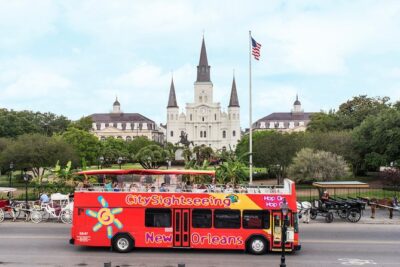 ★ 4.5City Sightseeing Hop-On Hop-Off Bus TourFrom $514,943 reviews
 ★ 4.5St. Louis Cemetery No. 1 Official Walking TourFrom $253,941 reviews
 ★ 5.0Swamp Boat Ride and Oak Alley Plantation Tour from New OrleansFrom $1313,303 reviews
 ★ 5.0Adults-Only Ghost, Voodoo and Vampire TourFrom $293,291 reviews