
Reviewed · TOURS
New Orleans Citywide Driving Tour
New Orleans has layers, and you see them fast. This private half-day drive is built for contrasts, taking you from the French Quarter style streets to St. Charles Avenue, City Park, the University Section, and more in about 50 miles. I like the way you get a licensed local guide doing live commentary, with real context about neighborhoods and famous people. I also like the flexibility to choose where you pause for photos, a cemetery, or a quick museum look. One drawback to plan around: at $595 per group up to 4, it’s a better value if you’re splitting the cost, and it’s still a drive-first tour, so each stop is time-limited.
You’ll start near 701 Chartres St and get hotel pickup and drop-off (or pickup from a designated meeting point). You can pick from morning or afternoon start times, and you can also influence the pacing so you’re not stuck in someone else’s rigid schedule. The guide runs a live, back-and-forth format (think open discussion as well as narration), which is great if you like to ask why New Orleans looks the way it does.
Dress for all weather. The tour runs in rain or sun, and length can stretch or shrink based on weather, traffic, and what your group requests. Also note that food and drinks and any unplanned attractions aren’t included, so bring a basic game plan for snacks and timing.
In This Review
- Key Points You’ll Feel Immediately
- What You’re Really Buying With This Private New Orleans Drive
- Starting Near 701 Chartres St and Getting the City Orientation Fast
- A 50-Mile Neighborhood Loop: French Quarter Basics, Marigny, Esplanade, and City Park
- The Katrina Storm Surge Stop: A Harder Layer You Can’t Skip
- Uptown Through Ideas: Sugar Granulation, the 1884 World’s Fair, Plantations
- Tulane, Loyola, and the University Section: One City, Many Campuses
- City of Lafayette and Louisiana Purchase Tension: French vs. Northeast Newcomers
- American Sector Views to World War II Museum Area, Lafayette Square, Superdome, and Port
- Cemeteries and Museums: How to Choose Stops Without Losing the Plot
- Price, Timing, and When This Tour Makes the Most Sense
- Should You Book This New Orleans Citywide Driving Tour?
- FAQ
- How long is the New Orleans citywide driving tour?
- How much does the tour cost and how many people are included?
- Is hotel pickup and drop-off included?
- What locations will I see during the tour?
- Are admission tickets included for attractions like museums and cemeteries?
- Is the tour private?
- How do I receive confirmation?
- Can I cancel for a full refund?
Key Points You’ll Feel Immediately

- Private door-to-door feel for up to 4, in a small minivan/mini bus, not a bus herd.
- A guide who connects places to stories, including local planning insights from guides like Dominick.
- A citywide route that hits contrasts: French Quarter, uptown grand avenues, City Park, and major post-Katrina areas.
- Flexible stops for cemeteries, photos, and museums, with entrance fees handled separately.
- All-weather operation with a realistic 2–3 hour window that adjusts to traffic and requests.
Not quite the one? Here are other New Orleans tours worth a look.
- New Orleans Premier Ghost, Voodoo and Vampire Walking Tour★ 4.5 · 12,856 reviews
- New Orleans Steamboat Natchez Jazz Cruise with Dinner Option★ 4.0 · 7,533 reviews
- Adults-Only New Orleans Ghost, Crime, Voodoo, and Vampire Tour★ 5.0 · 6,545 reviews
- New Orleans Food Walking Tour of the French Quarter with Small-Group Option★ 5.0 · 6,118 reviews
What You’re Really Buying With This Private New Orleans Drive
This tour is priced at $595 per group (up to 4 people) for about 2 to 3 hours, and that matters for value. If you’re traveling as a couple or small family, it can feel like a fair way to buy time and context—especially when you consider that you get a dedicated vehicle plus a licensed guide rather than piecing together rides, parking, and missed connections on your own.
The “private” part isn’t just marketing. You can shape the route rhythm: more time for photos, a cemetery stop, a museum peek, or a refreshment break. That flexibility is one of the biggest practical advantages in New Orleans, because the city’s best moments often come from small detours and street-level surprises, not from checking boxes on a map.
The flip side is simple: you’re moving. This isn’t a long walking day. If you want hours and hours in one neighborhood, you’ll need to book extra time (or plan to add stops on your own after the tour). Here, your goal is to get your bearings fast and understand how the different parts of New Orleans connect.
Starting Near 701 Chartres St and Getting the City Orientation Fast
You meet at 701 Chartres St and the tour ends back at the meeting point. From there, you’ll get an introduction to New Orleans and its basic history before the real driving loop begins. That early context is useful because so many sights look different depending on what you know about how the city grew, recovered, or rebalanced after major events.
What I like about the setup is that it’s not just “here are landmarks.” The guide’s commentary is designed to help you read the city while you’re driving, so you’ll recognize areas you might visit again later. You’ll also get live, conversational discussion as you go, so if something sparks your curiosity—architecture, neighborhoods, universities—you can ask right then.
A 50-Mile Neighborhood Loop: French Quarter Basics, Marigny, Esplanade, and City Park

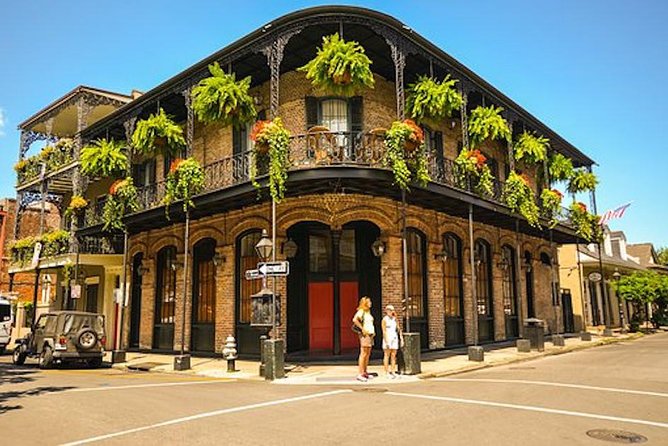
The backbone of the itinerary is a citywide drive that covers around 50 miles, starting from the French Quarter area and sweeping through multiple neighborhoods. Along the way, you’ll see Marigny, Esplanade Avenue, a cemetery area, City Park, the lakefront, St. Charles Avenue, the University Section, the Garden District, and the central business district.
City Park is one of the anchor stops, and it’s a smart one. It gives you a break from pure street scenes and shows another side of New Orleans—space, layout, and a sense of how people use the city beyond the historic core. Then St. Charles Avenue brings you back into the long-stretch, elegant-upright New Orleans mood, where the architecture tells its own story as the city shifts from one neighborhood personality to another.
A practical tip: when you’re on a drive tour like this, it helps to have your photo priorities in mind before you start. If you’re excited about architecture, tell the guide early. If you want a quick cemetery stop, don’t wait until you’re tired—use the guide’s flexibility while you still have energy.
The Katrina Storm Surge Stop: A Harder Layer You Can’t Skip
This tour includes a stop where the storm surge in Hurricane Katrina made landfall. That matters, even if you’re visiting for a short time, because New Orleans can’t be explained honestly without acknowledging what changed.
You’ll also be shown the devastation context associated with areas like the Ninth Ward, which is part of the tour’s promise to show the city’s contrasts. The value here is that you’re not just driving past a tragedy—you’re hearing the why behind the geography and the aftermath.
I’d call this the tour’s emotional core. It’s not the kind of stop you should rush. If you’re the type who likes to ask questions, this is where your guide’s local context can turn a quick sighting into understanding.




Uptown Through Ideas: Sugar Granulation, the 1884 World’s Fair, Plantations
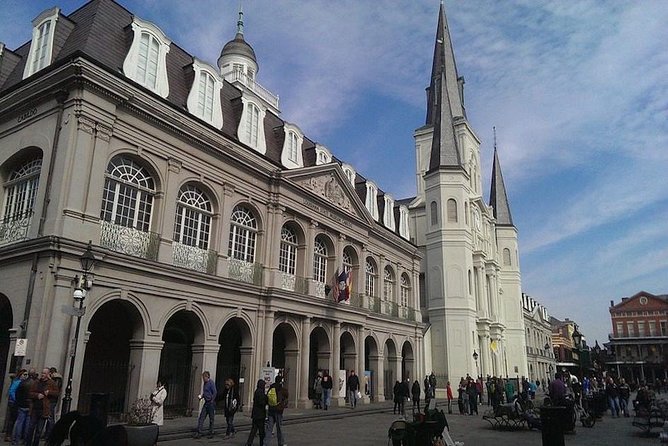
One of the more unusual—and memorable—story threads on this tour focuses on the invention of granulation of sugar and the 1884 World’s Fair. That might sound like trivia until you connect it to the way money, industry, and farming shaped who lived where and what neighborhoods became.
You’ll also talk about plantations and how those economic roots still echo into the uptown direction of the city. The guide uses these topics to explain why certain areas developed the way they did, and why the city’s layout can feel like it has an internal logic even when it looks chaotic from a distance.
If you like history but hate lectures, this is a good middle ground. The facts come in as you pass places, so the story stays tied to what you can see outside the window.
Tulane, Loyola, and the University Section: One City, Many Campuses
The University Section gets its own spotlight, with discussion of Tulane, Loyola, and all the universities in the city. This part works well because universities are more than buildings—they shape neighborhoods, housing patterns, foot traffic, and the overall rhythm of a place.
On this tour, the university talk isn’t isolated. It’s connected to the broader storylines you hear elsewhere: who built what, why certain areas developed, and how New Orleans balances tradition with ongoing change. If you’re visiting as a student, a parent, or just someone curious about how institutions influence cities, you’ll likely enjoy this stop-and-drive approach.
If you want to get the most out of it, ask the guide what students usually notice when they arrive for the first time—because that kind of insight tends to be practical and specific.
City of Lafayette and Louisiana Purchase Tension: French vs. Northeast Newcomers
Another theme the guide covers is the development of the City of Lafayette, along with the struggles between French communities and newcomers from the northeast after the Louisiana Purchase. This is the kind of story that helps explain why New Orleans feels layered with influences rather than one single origin.
The value here is perspective. You see streets and districts, but your guide gives you a reason for the cultural blend—who arrived, who already lived there, and how power and identity shifted over time. It’s also a reminder that neighborhood boundaries often reflect politics and economics, not just geography.
I like this approach because it turns what could be a sightseeing day into a city-reading experience.
American Sector Views to World War II Museum Area, Lafayette Square, Superdome, and Port

As the route continues, you’ll hear about the development of the American Sector of the city. You’ll also get pointed discussion around the World War II Museum area, the art district, Lafayette Square, the Superdome, and the port.
This combination is smart because it covers different New Orleans “modes.” The museum and art district connect you to how people remember and create. Lafayette Square is a social and civic anchor you can recognize quickly once it’s explained. The Superdome and port bring you to the New Orleans that runs on events, logistics, and big-city systems.
Even if you don’t plan to enter every site, the guide’s linking of these areas gives you a better sense of how the city functions now, not just how it looked in the past.
If your group has specific interests—history, sports venues, arts, or maritime trade—this is where you’ll appreciate a private format. You can ask for the “why” and adjust the time for photo stops without derailing the day.
Cemeteries and Museums: How to Choose Stops Without Losing the Plot
The tour specifically includes the option to tour cemeteries and to visit museums, but entrance fees aren’t included unless you add them as an unplanned attraction. This is normal for private tours, but it’s worth planning for so you don’t feel surprised later.
Cemeteries can also take longer than you expect because you’ll want time to slow down, read details, and understand the symbolic choices you’re seeing. If you’re considering a cemetery stop, I’d suggest telling the guide early. That way, the schedule can protect that time instead of squeezing it at the end.
Museums are similar. If you want a quick peek rather than a full visit, the guide can help you aim for the most relevant highlights. It’s also a nice way to keep your day balanced: one or two ticketed blocks max, then back to the city drive where the guide can connect the dots for you.
Price, Timing, and When This Tour Makes the Most Sense
$595 per group for up to 4 is the key number. For two people, it can feel like a splurge. For a family of four (or two couples), it can work out as a reasonable way to get local expertise and a full neighborhood sweep in a short window.
The tour is booked about 8 days in advance on average, which suggests it’s popular for people who want an efficient orientation day. If you’re visiting during peak seasons or on a tight schedule, you’ll want to plan ahead so you can get a start time that fits your itinerary.
Timing-wise, you’ll likely be on the clock for around 2 to 3 hours, with length adjusting based on weather, traffic, and requests. That’s ideal if you want something substantial without burning an entire day.
This tour is best for:
- First-time visitors who want a fast, guided read of several major neighborhoods
- Groups who want pickup and a private vehicle to avoid parking and navigation stress
- People who like discussion and asking questions in real time
- Anyone who wants both the celebratory New Orleans and the post-Katrina reality in one guided arc
It may be a less perfect fit if you:
- Want to spend long hours on foot in a single area
- Expect all museum or cemetery entrances to be included
- Are traveling solo and can’t split the group price
Should You Book This New Orleans Citywide Driving Tour?
If your goal is understanding New Orleans in one focused half-day, I think this is a strong choice. You get a licensed local guide, pickup convenience, a citywide route that hits both iconic and difficult places, and enough flexibility to match your interests without turning the day into chaos.
Book it if you want to learn while you’re moving—especially if you like history that connects directly to streets, neighborhoods, and real city events. Skip it only if you’re looking for a long walking experience or you’re on a very tight budget where private pricing won’t work.
The best part is what a guide can do with a city like this: they help you notice patterns, not just sights. And in New Orleans, that difference is the whole point.
FAQ
How long is the New Orleans citywide driving tour?
It runs about 2 to 3 hours, and the exact length may vary due to weather, traffic, and guest requests.
How much does the tour cost and how many people are included?
The price is $595 per group for up to 4 people.
Is hotel pickup and drop-off included?
Yes. The tour includes hotel pickup and drop-off, plus pickup and drop-off from designated meeting points.
What locations will I see during the tour?
You’ll drive through areas including the French Quarter, Marigny, Esplanade Avenue, City Park, the lakefront, St. Charles Avenue, the University Section, Garden District, and the central business district. The route also includes a cemetery area and coverage of the Ninth Ward and Katrina’s storm surge landfall stop.
Are admission tickets included for attractions like museums and cemeteries?
No. Admissions to cemeteries/museums or any unplanned attractions are not included.
Is the tour private?
Yes. It’s a private tour/activity, and only your group participates.
How do I receive confirmation?
Confirmation is received within 48 hours of booking, subject to availability.
Can I cancel for a full refund?
Yes. You can cancel up to 24 hours in advance for a full refund. Cancellation less than 24 hours before the start time is not refundable.
More Tours in New Orleans


More Tour Reviews in New Orleans
Just added to The New Orleans Traveler



Tours, compared.
 ★ 4.5Premier Ghost, Voodoo and Vampire Walking TourFrom $2712,856 reviews
 ★ 5.0Adults-Only New Orleans Ghost, Crime, Voodoo, and Vampire TourFrom $376,545 reviews
 ★ 5.0Food Walking Tour of the French Quarter with Small-Group OptionFrom $756,118 reviews
 ★ 5.0Swamp and Bayou Boat Tour with TransportationFrom $705,399 reviews
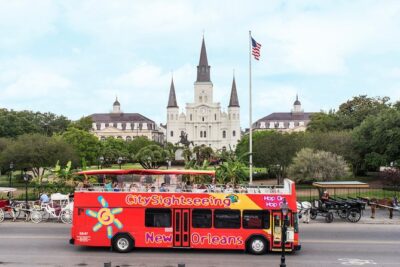 ★ 4.5City Sightseeing Hop-On Hop-Off Bus TourFrom $514,943 reviews
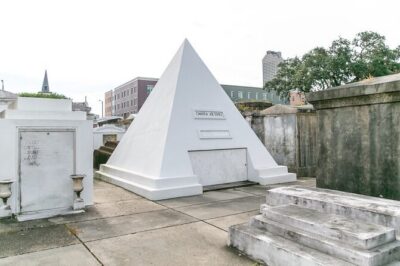 ★ 4.5St. Louis Cemetery No. 1 Official Walking TourFrom $253,941 reviews
 ★ 5.0Swamp Boat Ride and Oak Alley Plantation Tour from New OrleansFrom $1313,303 reviews
 ★ 5.0Adults-Only Ghost, Voodoo and Vampire TourFrom $293,291 reviews