
Reviewed · TOURS
Mules in New Orleans Barn Tour
Mules plus New Orleans legend time. You’ll meet the teams and working animals behind Royal Carriages at the oldest stable in town, then head into Faubourg Marigny for stories that mix real streets with folklore and character.
For a big-ticket city attraction, I love how close you get with the mules, including time to pet and snap selfies, and I love that your guide Shannon turns the barn and neighborhood into a clear, human-sized lesson.
One thing to consider: the whole outing is about 2 hours, so it moves quickly once you’re on foot, and the Jazz Museum stop has admission not included, so you may want to plan for a separate ticket if you want more time inside.
In This Review
- Key highlights
- Royal Carriages Barn Tour: meeting the oldest carriage setup in New Orleans
- Faubourg Marigny on foot: old neighborhood stories after the mule meet
- Frenchmen Street in 15 minutes: music, food, and historic bars at walking speed
- New Orleans Jazz Museum stop: Spanish-rule revolt stories and Civil War mentions
- Price and timing: getting $35 worth in about 2 hours
- What to pack, how to dress, and weather reality checks
- Who should book this mule-and-Marigny tour
- Should you book the Mules in New Orleans Barn Tour?
- FAQ
- Where does the tour start?
- What time does the tour begin?
- How long is the tour?
- How much does it cost?
- Is the ticket mobile?
- How many people are in the group?
- What stops are included?
- Is admission to the Jazz Museum included?
- What is the cancellation policy?
- Does weather affect the tour?
Key highlights
- Royal Carriages stable time: meet the mules and learn how the oldest carriage company keeps everything running smoothly
- Faubourg Marigny on foot: the oldest neighborhood stories come alive street-by-street
- Frenchmen Street taste: a short, focused walk past live-music spots, bakeries, restaurants, and historic bars
- Legend-and-history mix: Spanish-rule revolt stories and Civil War mentions tied to the area
- Small group: a maximum of 14 people, so you’re not lost in a crowd
- Good weather matters: the experience depends on conditions outside
Not quite the one? Here are other New Orleans tours worth a look.
- New Orleans Premier Ghost, Voodoo and Vampire Walking Tour★ 4.5 · 12,856 reviews
- New Orleans Steamboat Natchez Jazz Cruise with Dinner Option★ 4.0 · 7,533 reviews
- Adults-Only New Orleans Ghost, Crime, Voodoo, and Vampire Tour★ 5.0 · 6,545 reviews
- New Orleans Food Walking Tour of the French Quarter with Small-Group Option★ 5.0 · 6,118 reviews
Royal Carriages Barn Tour: meeting the oldest carriage setup in New Orleans
Plan to start at 1824 N Rampart St right around 11:00 am. This tour is set up for a small group (up to 14 people), which is a big deal in a working stable environment. You feel the difference right away: you can actually see what’s happening and ask questions without shouting.
The heart of the experience is the Royal Carriages barn, billed as the oldest stable in New Orleans and tied to the oldest carriage company in the US. That matters because you’re not just looking at old stuff behind glass. You’re meeting the working animals and the routine that keeps a mule team safe and steady day after day. It’s practical history—built on care, timing, and know-how.
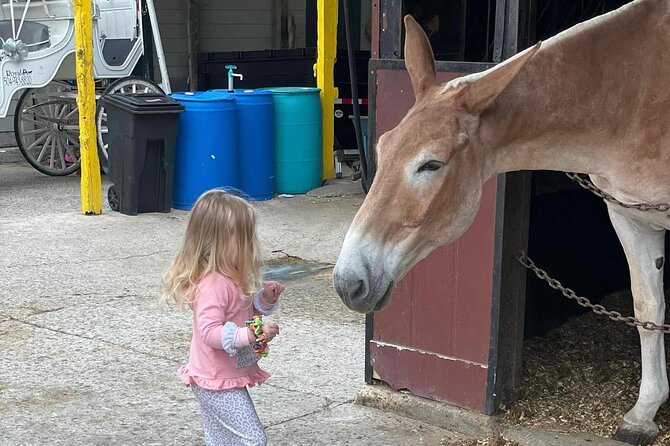
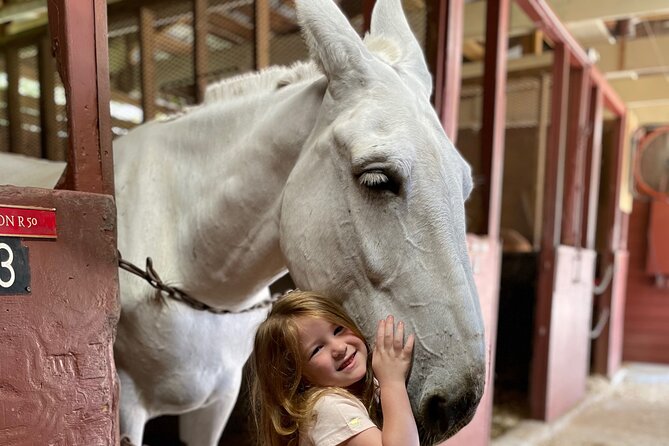
And yes, the mules are friendly in the way that makes you stop thinking of them as props. You get close interaction, including the chance to pet and take selfies. In a place like this, that direct contact is the whole point: you learn faster when you can watch how handlers work and how the mules respond in real time. One of the best review takeaways was how comfortable the mules felt with people—snuggling up and letting folks get those up-close photos.
Your guide Shannon is a key reason this works. The stories aren’t just dates. Shannon connects the stables to what you’ll see later in the neighborhood. It’s a guided narrative, not a quick meet-and-greet.
Practical note: since you’ll be in a stable setting before you walk, wear shoes you can stand and move in comfortably. Also, plan to keep your hands and phone ready during the mule time—but keep them out of the mule space unless your guide indicates it’s okay.
Faubourg Marigny on foot: old neighborhood stories after the mule meet
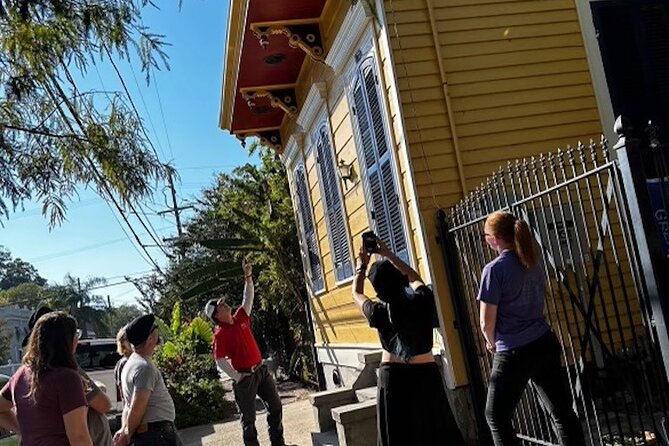
After the barn time, the pace shifts to walking through Faubourg Marigny, described as the oldest neighborhood in New Orleans. This is where the tour earns its name beyond animals. The streets become part of the story.
You’ll hear what makes Marigny unique—its cultural significance in the United States, plus legends that frame the neighborhood as more than a pretty backdrop. The tour also leans into the mix of hero and villain tales, which is perfect for New Orleans. The city loves characters, and legends help you understand why people remember places the way they do.
What I like about doing Marigny after the stable is mental flow. You start with something you can feel—mule behavior, barn routines, care. Then your guide carries that same practical, human scale into the neighborhood. You’re not just handed trivia. You’re given a way to look at blocks, streets, and local references with better context.
One watch-out: the mule portion is engaging enough that you may feel a little rushed on the walking side if you’re especially mule-focused. That’s not bad—it just means your own interests will steer how much you take in. If you’re there for animals first, you’ll still get Marigny, but you’ll have to accept it as a guided primer rather than a long, deep neighborhood wander.
Still, it’s a solid way to orient yourself in New Orleans. Even if you end up returning later on your own, you’ll leave with street names and story anchors you can connect to what you see next.
Frenchmen Street in 15 minutes: music, food, and historic bars at walking speed
Then comes a quick stop along Frenchmen Street for about 15 minutes. This is intentionally short, but it’s also useful. Frenchmen Street is famous for live music, and the tour gives you a chance to register the vibe without forcing you into a long detour.
Along the way, you’ll pass by local live music venues, bakeries, restaurants, and historic bars. Even in a short window, you get enough visual and audio context to decide what to do later—maybe a snack, maybe a drink, maybe just lining up where you want to go after the tour ends.
The only drawback here is also the obvious one: 15 minutes won’t replace an evening on Frenchmen Street. You’re not going to fully experience the music scene in that time. What you get is more like a scouting pass. If you’re the type who wants to hear a full set, treat this as your starting point, not your final destination.
A simple strategy: use the stop to find one or two spots you want to return to. Once the tour ends, you’ll be doing less guesswork.
New Orleans Jazz Museum stop: Spanish-rule revolt stories and Civil War mentions
The final scheduled portion is tied to the New Orleans Jazz Museum, at about 5 minutes. Admission is marked as not included, so this part should be thought of as a focused history prompt rather than a full museum visit.
What you hear during this stop centers on episodes connected to the area’s complex past—stories involving the execution tied to the Creole Revolt, references to the Civil War and the mention of Mumford, and also the claim that a mint connected with the museum is historically linked to forging coins for both the Union and the Confederacy.
Is it enough time for deep museum reading? No. But as an intro, it works well. You get just enough narrative detail to make the museum feel relevant to what you just walked through.
If you want more than the quick story stop, you’ll likely want to circle back on your own later with a ticket. The good news is that this tour doesn’t waste time pretending you’re getting a full museum day. It gives you history cues, then sends you back out into the neighborhood with questions you can actually follow up on.





Price and timing: getting $35 worth in about 2 hours
The price is $35 per person, and the tour clocks in at roughly 2 hours. For New Orleans, that’s a reasonable rate for a guided, small-group experience that includes significant value up front—specifically, the barn and neighborhood time.
Here’s where the value math gets clearer:
- The mule-and-Marigny portions are presented as admission ticket free (so you’re not nickel-and-dimed at the first stage of the tour).
- The Frenchmen Street stop is also ticket-free as part of the walk.
- The Jazz Museum stop is not included, so you control whether you want to pay for a longer indoor experience later.
So, you’re paying for a guide-led story path that begins at a working stable and ends with history prompts you can pursue. For many people, that hits the sweet spot: you get structure and context without spending your whole day inside a building.
Also, note that the tour is often booked around 57 days in advance on average. That’s a sign the time slot sells out. If you’re set on going, don’t treat it as a last-minute add-on.
The start time is 11:00 am, which is nice if you like daytime sightseeing and don’t want your afternoon plans tangled up. It’s also early enough to still explore afterward without burning an entire day.
What to pack, how to dress, and weather reality checks
This experience requires good weather. That’s not a small detail. If New Orleans has rain or other poor conditions, the tour can be canceled and you’ll be offered another date or a full refund. So keep an eye on the forecast the day of, and be ready to pivot.
In terms of comfort, plan for:
- time at a stable (standing and moving around safely)
- a walking portion through Marigny
- a short walk through Frenchmen Street
Wear shoes you trust. You don’t want sore feet when the tour is designed to be short and efficient.
Good to know: mobile ticket is used, and confirmation is received at time of booking. Service animals are allowed, and the experience says most people can participate, which usually means there’s no extreme climbing or complicated movement expected (though you should always use your own judgment if you have mobility limits).
Who should book this mule-and-Marigny tour
Book this if you:
- want hands-on time with mules and care routines at a working stable
- like a guided walk where the neighborhood stories actually help you make sense of what you’re seeing
- prefer a small group pace over a big bus-style tour
- enjoy short history stops tied to places you can return to later
It also fits well for people who want a morning activity that doesn’t swallow the rest of the day. If you’re the type who maps out a full New Orleans route, this tour helps you pick better places to revisit, because you’ll come away with neighborhood anchors—streets, themes, and story points.
If you’re only interested in museums or only want deep historical lectures, this might feel too short for that. But if you want an efficient mix of animals, walking, and story context, it’s a strong match.
Should you book the Mules in New Orleans Barn Tour?
I think it’s worth booking if you want a compact, high-value New Orleans experience: mule time in a real working barn, a focused introduction to Marigny, and a short taste of Frenchmen Street before you get a history cue at the Jazz Museum area. The small group size keeps it personal, and the guide-driven storytelling (with Shannon mentioned by name in feedback) makes the tour feel intentional rather than random.
If you’re coming during uncertain weather, keep flexibility in mind. Also, if museum time is your priority, treat the Jazz Museum portion as a teaser and plan your own follow-up.
FAQ
Where does the tour start?
It starts at 1824 N Rampart St, New Orleans, LA 70116, USA and ends at the same location.
What time does the tour begin?
The start time listed is 11:00 am.
How long is the tour?
The tour duration is approximately 2 hours.
How much does it cost?
The price is $35.00 per person.
Is the ticket mobile?
Yes, the tour uses a mobile ticket.
How many people are in the group?
The tour has a maximum of 14 people.
What stops are included?
The experience includes Faubourg Marigny, a walk on Frenchmen Street, and a stop associated with the New Orleans Jazz Museum.
Is admission to the Jazz Museum included?
No. The New Orleans Jazz Museum admission is listed as not included.
What is the cancellation policy?
There is free cancellation. You can cancel up to 24 hours before the experience’s start time for a full refund.
Does weather affect the tour?
Yes. The experience requires good weather. If it’s canceled due to poor weather, you’ll be offered a different date or a full refund.
More Tours in New Orleans

More Tour Reviews in New Orleans
Just added to The New Orleans Traveler



Tours, compared.
 ★ 4.5Premier Ghost, Voodoo and Vampire Walking TourFrom $2712,856 reviews
 ★ 5.0Adults-Only New Orleans Ghost, Crime, Voodoo, and Vampire TourFrom $376,545 reviews
 ★ 5.0Food Walking Tour of the French Quarter with Small-Group OptionFrom $756,118 reviews
 ★ 5.0Swamp and Bayou Boat Tour with TransportationFrom $705,399 reviews
 ★ 4.5City Sightseeing Hop-On Hop-Off Bus TourFrom $514,943 reviews
 ★ 4.5St. Louis Cemetery No. 1 Official Walking TourFrom $253,941 reviews
 ★ 5.0Swamp Boat Ride and Oak Alley Plantation Tour from New OrleansFrom $1313,303 reviews
 ★ 5.0Adults-Only Ghost, Voodoo and Vampire TourFrom $293,291 reviews