
Reviewed · TOURS
Creole Kids Tour in New Orleans
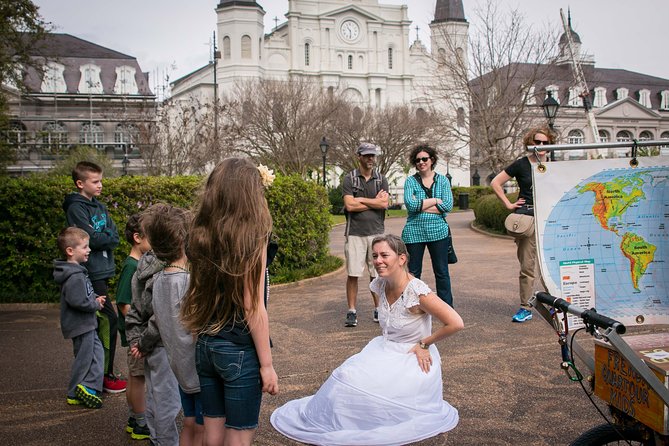
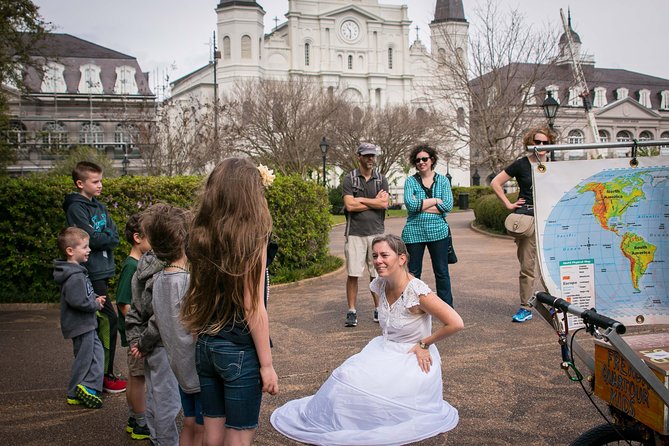
A kids-only history lesson in the French Quarter. This 90-minute Creole Kids Tour turns landmarks into short, teacher-led moments that keep elementary kids curious and moving at a family pace. You focus on Creole heritage while learning how different groups lived, worked, and shaped New Orleans.
I especially like the interactive teaching style, with questions, jokes, and kid-friendly participation baked into each stop. I also like that the route is built around big, recognizable places in the oldest area, so you get context quickly without needing a full-day plan.
One consideration: a lot of the tour is outdoors, including an open park, so you’ll want to plan for sun and heat (or rain) and bring basics like water and hats for the kids.
In This Review
- Key highlights to know before you go
- Why a French Quarter kids tour works (and what makes it different)
- Price and logistics: simple, budget-friendly, and built for families
- Arriving by 10:30: where you start and how the walk is paced
- Stop 1: Mississippi River facts that connect the whole city
- Stop 2: Andrew Jackson Statue with a 19th-century greeting
- Stop 3: Jackson Square shaded breaks and hard history questions
- Stop 4: St. Louis Cathedral, Catholic influence, and Mardi Gras context
- How the guides keep kids engaged without dumbing it down
- Value check: what $30 buys you in New Orleans
- Weather and comfort: plan like a local guide will be doing the thinking
- Who should book the Creole Kids Tour
- Should you book this tour?
- FAQ
- How long is the Creole Kids Tour?
- How much does the tour cost?
- What time does the tour start?
- Where does the tour meet and where does it end?
- Is the tour offered in English?
- Are tickets mobile?
- What is included in the price?
- Is hotel pickup and drop-off included?
- What if the weather is bad?
- Do children need to be accompanied by an adult?
Key highlights to know before you go

- Small-group feel (up to 25) with a teacher-led approach that helps kids stay on track.
- French Quarter landmarks in bite-size stops, each one short enough for attention spans.
- Mississippi River + Jackson Square connections that explain New Orleans through real-world geography and people.
- Andrew Jackson Statue role-play, where kids greet him as a 19th-century citizen would.
- St. Louis Cathedral and Mardi Gras, tied to Catholic tradition and the Code Noir topic in age-appropriate ways.
- All about Creole heritage, with comparisons kids can grasp (free kids vs enslaved children, Americans vs Creoles, boys vs girls).
Not quite the one? Here are other New Orleans tours worth a look.
- New Orleans Premier Ghost, Voodoo and Vampire Walking Tour★ 4.5 · 12,856 reviews
- New Orleans Steamboat Natchez Jazz Cruise with Dinner Option★ 4.0 · 7,533 reviews
- Adults-Only New Orleans Ghost, Crime, Voodoo, and Vampire Tour★ 5.0 · 6,545 reviews
- New Orleans Food Walking Tour of the French Quarter with Small-Group Option★ 5.0 · 6,118 reviews
Why a French Quarter kids tour works (and what makes it different)

The best family tours don’t just show you sights. They manage energy. This one does that by keeping the walking portion compact and the teaching portion active. Kids are not stuck listening in one long block. Instead, you get short stops and interactive prompts, with the guide steering the group like a classroom that happens to be outside.
The other big difference is the theme. You’re not only doing general New Orleans trivia. The tour frames what you see through Creole heritage and the everyday realities behind the city’s famous buildings and squares. For many adults, that’s a relief. You get structure fast, and it feels less like wandering with no plan.
Price and logistics: simple, budget-friendly, and built for families
At $30 per person for about 1 hour 30 minutes, this is priced like an entry-level family experience rather than a full-on private tour. The value comes from two things: you get guided teaching from both a local guide and a professional guide, and the route uses major public landmarks where admission is free.
Logistically, it’s straightforward:
- Start at Decatur at Dumaine (New Orleans, LA 70116) at 10:30 am
- End at Pirates Alley, near St. Louis Cathedral in Jackson Square
- It runs in English
- You’ll use a mobile ticket
- Confirmation comes at booking
This is also capped at 25 travelers, which matters for families. Smaller groups tend to mean more chances for the guide to answer kid questions and keep everyone together.
Arriving by 10:30: where you start and how the walk is paced
You’ll meet at Decatur and Dumaine. From there, you work your way through key stops that each last only a few minutes. That timing is a feature, not a bug. For families, short segments help kids reset: look, listen, respond, then move on.
The walk includes a moderate level of movement and requires that children are accompanied by an adult. If your child can handle short periods on foot and attention that comes in short bursts, you’re in the right zone.
Stop 1: Mississippi River facts that connect the whole city
The tour begins with the Mississippi River, and that choice is smart. The river is not just scenery here. It’s how New Orleans grew, how people traded, and how the city’s power and problems traveled with the water.
At this first stop, families learn facts about the river and how it was used over the past centuries. You also get Dad jokes and thought-provoking questions, which is exactly the kind of mix kids handle best at the start—fun first, then curiosity.
Why it’s valuable: when kids understand the river early, later locations make more sense. Jackson Square and the French Quarter stop feeling random. They feel connected.




Stop 2: Andrew Jackson Statue with a 19th-century greeting

Andrew Jackson gets a quick, kid-friendly introduction at a nearby statue. In about 5 minutes, kids learn who he was, what he’s best known for, and why New Orleans has a statue of him.
Then comes the fun part: kids greet him as a 19th-century citizen would. That small role-play moment turns a stiff monument into a conversation starter. It also helps kids remember details because they’re not just hearing facts—they’re acting them out.
A drawback to note: because this stop is so short, it’s best if your child is okay with quick transitions. If your kid wants to linger, you’ll have to accept the pace and move with the group.
Stop 3: Jackson Square shaded breaks and hard history questions
Jackson Square is where the tour gets most meaningful. This open park gives families a place to sit in the shade and talk, and the guide uses that setting to explain who controlled, worked, and lived in New Orleans since the 1600s.
You’ll cover how people came to this land willingly and how others were forced into slavery. The guide weaves thought-provoking discussions into reenactment elements, with age-appropriate comparisons designed for kids, including:
- daily life for free kids versus enslaved children in the 1800s
- Americans versus Creoles
- boys versus girls
Why this stop is so strong for families: kids often have the attention for emotion and real questions, but only if the presentation fits their level. This tour builds those concepts through direct, guided comparisons rather than leaving kids to guess.
If your family prefers history told in a purely light tone, this is the portion that may feel heavier than expected. It’s still structured for kids, but the topic is real.
Stop 4: St. Louis Cathedral, Catholic influence, and Mardi Gras context
The final landmark stop focuses on St. Louis Cathedral. The teaching theme here is the Catholic Church’s role in setting up the colony, plus the Code Noir, which governed religion and the roles of enslaved people.
You’ll also hear about Mardi Gras as one of the most popular Catholic holidays. That matters because Mardi Gras is easy to treat like pure party culture. Here, you get a reason behind the tradition, tied to religion and local history.
One small practical note: this stop is short (about 5 minutes) and involves looking along the side of the cathedral. It’s a good closer because it shifts your attention from the square’s wider discussion to a landmark that kids can clearly picture.
How the guides keep kids engaged without dumbing it down
The tour is explicitly built for kids, but it doesn’t treat kids like they can’t handle serious topics. Instead, the guide uses a format that works in real life:
- short stops
- questions that get kids involved
- role-play moments (like greeting Andrew Jackson)
- a clear thematic arc from geography (river) to power (statues, institutions) to everyday life (Jackson Square)
In the small-group setting, your child is more likely to get the chance to answer or participate. That’s a big part of why families find the 90-minute length comfortable. The tour doesn’t ask kids to endure too much sitting or too many lectures in a row.
Value check: what $30 buys you in New Orleans
At $30 per person, you’re paying for guided interpretation more than for access. The itinerary’s landmarks—Mississippi River reference points, Andrew Jackson Statue, Jackson Square, and St. Louis Cathedral—are all places families can typically see on their own.
So why book? Because the tour adds:
- kid-centered teaching that keeps momentum
- guided links between places and Creole heritage
- structured, short explanations that prevent the usual New Orleans problem: seeing a lot and understanding little
Also, you’re not paying extra for hotel pickup. That keeps costs lower and makes it easier for families who are staying near the Quarter. If you’re already near the start around Decatur and Dumaine, the logistics become even simpler.
Who might skip it: if your kids are very young toddlers, the walking and listening format may be tough. If you have older teens who want deep politics, you might want a longer adult-focused history tour instead.
Weather and comfort: plan like a local guide will be doing the thinking
This tour runs in all weather conditions, but the overall experience still depends on conditions being workable for an outdoor walk. Translation: bring a rain layer if skies look questionable, but also be ready for sun.
I’d pack:
- hats and sunscreen for Jackson Square
- water for kids
- a light rain jacket if needed
- comfortable shoes (this is a walk-through experience, not a bus tour)
A bonus for families: the schedule includes shaded or seated breaks, especially in Jackson Square, which helps a lot when kids get restless.
Who should book the Creole Kids Tour
You’ll get the best match if your family wants:
- a kid-friendly French Quarter walking tour
- a focused introduction to Creole heritage and New Orleans history
- interactive teaching for elementary-age children
- a route that’s short enough to do without wiping out the rest of your day
You’ll also like it if you want your child to learn without it feeling like homework. The guide turns learning into activities—questions, jokes, greetings, and reenactment-style moments.
And adults benefit too. The tour encourages understanding of how different groups lived and were governed, including topics like Catholic influence and the Code Noir, presented through a children’s lens that still keeps the truth on the table.
Should you book this tour?
If you’re in New Orleans with kids and you want an easy-to-follow plan that makes the French Quarter meaningful, I think this one is a strong yes. The combination of short stops, interactive teaching, and a Creole-focused story gives you value for the price and a clear path through the area.
Consider passing if:
- your child can’t handle 90 minutes of guided walking and attention in short segments
- your family wants only light topics with no discussion of slavery and daily life under it
If you’re on the fence, check your schedule first. This tour’s strength is its timing and pace—an efficient way to get real understanding of the Quarter without turning your day into a marathon.
FAQ
How long is the Creole Kids Tour?
It lasts about 1 hour 30 minutes.
How much does the tour cost?
The price is $30.00 per person.
What time does the tour start?
The start time is 10:30 am.
Where does the tour meet and where does it end?
It starts at Decatur at Dumaine in New Orleans and ends at Pirates Alley, next to St. Louis Cathedral in Jackson Square.
Is the tour offered in English?
Yes, it is offered in English.
Are tickets mobile?
Yes, you’ll receive a mobile ticket.
What is included in the price?
A local guide and a professional guide are included.
Is hotel pickup and drop-off included?
No, hotel pickup and drop-off are not included.
What if the weather is bad?
It operates in all weather conditions, but if the experience is canceled due to poor weather, you’ll be offered a different date or a full refund.
Do children need to be accompanied by an adult?
Yes, children must be accompanied by an adult.
More Tours in New Orleans

More Tour Reviews in New Orleans
Just added to The New Orleans Traveler


Tours, compared.
 ★ 4.5Premier Ghost, Voodoo and Vampire Walking TourFrom $2712,856 reviews
 ★ 5.0Adults-Only New Orleans Ghost, Crime, Voodoo, and Vampire TourFrom $376,545 reviews
 ★ 5.0Food Walking Tour of the French Quarter with Small-Group OptionFrom $756,118 reviews
 ★ 5.0Swamp and Bayou Boat Tour with TransportationFrom $705,399 reviews
 ★ 4.5City Sightseeing Hop-On Hop-Off Bus TourFrom $514,943 reviews
 ★ 4.5St. Louis Cemetery No. 1 Official Walking TourFrom $253,941 reviews
 ★ 5.0Swamp Boat Ride and Oak Alley Plantation Tour from New OrleansFrom $1313,303 reviews
 ★ 5.0Adults-Only Ghost, Voodoo and Vampire TourFrom $293,291 reviews