
Reviewed · CEMETERY TOURS
5 Cemeteries of New Orleans – Anne Rice’s & other famous graves
Cemeteries in New Orleans have stories. This 2-hour walk targets the city’s best-known burial grounds and famous tombs, with a guide explaining why the rules of death here don’t look like they do elsewhere in the US. You’ll spend the morning moving through landmark cemeteries tied to Catholic, Protestant, and Jewish traditions, and you’ll make time to see specific celebrity graves, including Anne Rice in Metairie.
I really like that the tour is built for learning without feeling like a lecture. The pacing works (about two hours, and you’re back at the start point), and the guide-led format makes the symbolism and family rivalries easier to grasp than wandering alone. In particular, I’ve heard guides like Bobby and Christopher lead with a friendly, question-friendly style, adjusting to your pace.
One thing to consider: you’ll hear heavy stories. That includes Irish hardship and yellow fever mass burial history, plus the Hurricane Katrina Memorial’s account of bodies being lost and later rediscovered. It’s handled with respect, but it’s not a light-and-fun stroll—bring the right mood.
In This Review
- Key highlights you’ll feel fast
- A 10:00 AM plan that fits your morning
- Greenwood, Cypress Grove, and Gates of Juhad: the burial traditions lesson
- Metairie Cemetery and Anne Rice: celebrity graves with meaning
- St. Patrick Cemetery #1, #2, plus Charity Hospital: Irish immigrants to yellow fever
- The Hurricane Katrina Memorial: remembrance plus a recovery story
- Price and value for a $29 morning tour
- Who should book this cemetery tour?
- Should you book the 5 Cemeteries of New Orleans tour?
- FAQ
- What is included in the tour price?
- How long is the tour, and where does it start?
- Which major cemetery stops will I visit?
- Are admission tickets included for the cemeteries?
- Is the tour offered in English, and how big is the group?
- What is the cancellation policy?
Key highlights you’ll feel fast
- Anne Rice’s grave at Lake Lawn Metairie and other well-known names in the same cemetery area
- Greenwood and Cypress Grove with celebrity tombs and a pointed feud story between the families behind two monumental graves
- Gates of Juhad Cemetery to see how Jewish burial practices in New Orleans differ from Catholic and Protestant traditions
- St. Patrick’s cemetery complex showing the contrast between an older Irish Catholic cemetery and a later one built with new money
- Charity Hospital Cemetery’s yellow fever mass burial history explained in plain, guide-led terms
- Hurricane Katrina Memorial where remembrance and a real-life detective-style recovery story meet
More walks among the above-ground tombs
- Cemetery and Ghost BYOB Bus Tour in New Orleans★ 4.5 · 2,685 reviews
- New Orleans City Tour: French Quarter, Garden District & Cemetery★ 4.5 · 2,209 reviews
- New Orleans Dead of Night Ghosts and Cemetery Bus Tour★ 4.5 · 2,068 reviews
- New Orleans City and Cemetery 2-Hour Bus Tour★ 4.5 · 1,967 reviews
A 10:00 AM plan that fits your morning
This tour is scheduled as a morning start at 10:00 am, and it ends back at the meeting point. The headliner here is timing: you get your cemetery fix in about two hours, and then you’re free to keep exploring the rest of New Orleans afterward.
The meeting point is the Morning Call Coffee Stand (5101 Canal Blvd, New Orleans). It’s set up so you can find it easily, and the tour is near public transportation. You’ll also get a mobile ticket, and the tour runs in English.
Group size is capped at 22, which matters in places where you’ll be stopping for explanations and photos. Smaller groups tend to mean more Q&A, and the tour’s design supports that—especially in older cemeteries where good questions can turn a quick stop into something memorable.
Also, cemeteries are outdoor spaces. Wear shoes you trust. Even if the route feels straightforward, you’re walking on paths that can be uneven, and New Orleans weather can shift quickly. A light rain layer is a sensible idea if the sky looks uncertain.
Greenwood, Cypress Grove, and Gates of Juhad: the burial traditions lesson
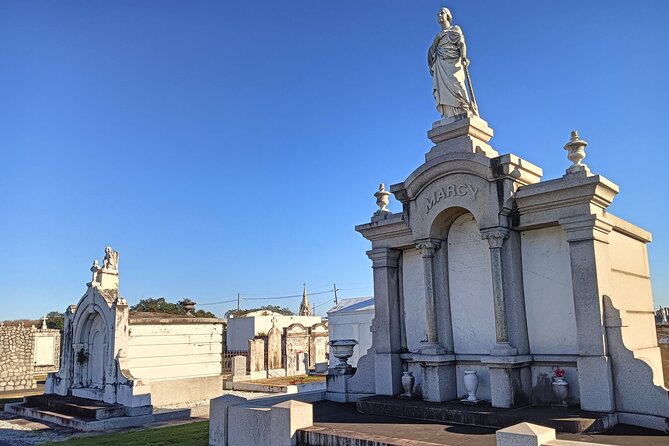
Stop one is really a set of landmark burial grounds: Greenwood, Cypress Grove, and Gates of Juhad. This is where you start to understand that New Orleans cemeteries aren’t just grave markers—they’re systems built by different communities with different rules.
At Greenwood Cemetery, you’ll visit notable celebrity graves and hear how burial procedures in New Orleans are different from anywhere else in the United States. Your guide doesn’t just point to names; they connect the cemetery layout and traditions to the people who built them and the needs of the city.
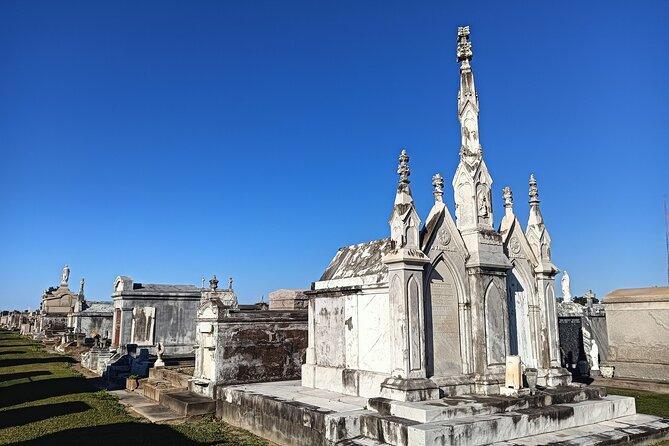
Then you move to Cypress Grove Cemetery, described as a Protestant graveyard. Here you’ll see more celebrity graves and two of the most monumental graves in the city. You’ll also hear the story of a feud between the two families that built those grand tombs. That feud detail is one of those “wait, really?” moments that makes the whole place feel more human and less like a museum prop.
Finally, you’ll visit Gates of Juhad Cemetery, a Jewish cemetery where the guide explains how Jewish burial practices in New Orleans differ from Catholic and Protestant burial practices. Even if you’re not a burial-ritual expert, you’ll leave with clearer context on how different faith communities expressed identity through the way they lay a body to rest.
Practical note: stop one has multiple sites, so listen for how your guide manages transitions. That’s the difference between feeling rushed and feeling like you’re getting the story thread straight.
Metairie Cemetery and Anne Rice: celebrity graves with meaning
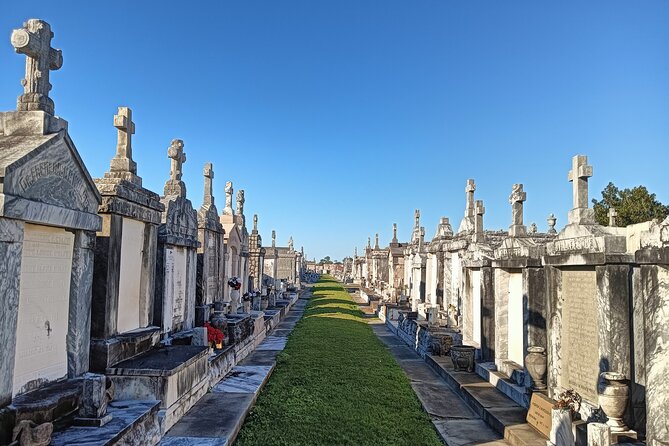
Stop two is Lake Lawn Metairie, often referred to as Metairie Cemetery. Many people call it one of the most beautiful cemeteries in America, and the reputation is tied to the way the grounds feel both grand and personal—like a city within the city.
This is where you’ll see Anne Rice’s grave. If you know her work, that detail adds an extra layer of excitement, but the tour keeps it grounded in place. You’ll also see the grave of Louie Prima, plus graves of actors and some mafiosos.
That mix is part of why this stop works. You’re not just chasing famous names. You’re watching how New Orleans remembers different kinds of people—artists, performers, and figures tied to the darker edges of the city’s past—within the same cemetery world.
The stop is about 30 minutes, with admission ticket listed as free, so you’re not losing time to paperwork or extra costs. It’s a focused hit: enough time to get the key graves, hear what you came for, and then keep moving.
If you’re the type who takes lots of photos, this is a good moment to slow down slightly and frame your shots carefully. The tombs here can tempt you into snapping everything, but it helps to listen first—then photograph with purpose.
St. Patrick Cemetery #1, #2, plus Charity Hospital: Irish immigrants to yellow fever
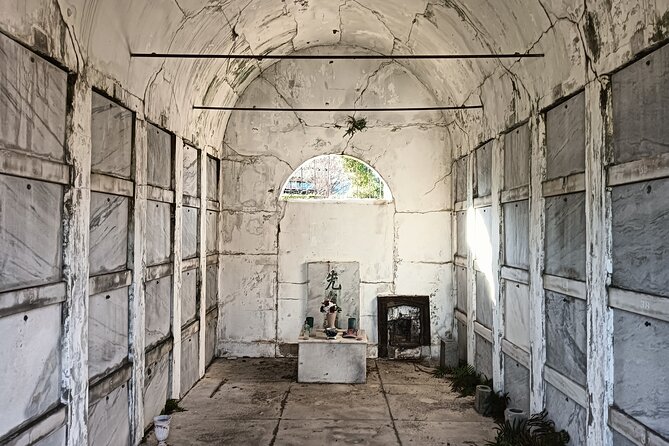
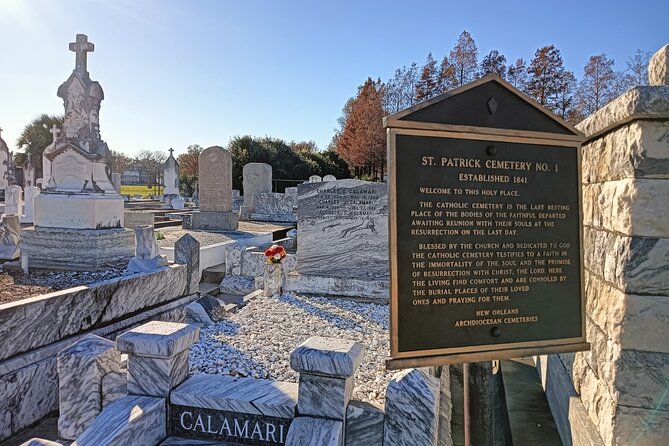
Stop three is a full three-part cemetery complex, and it’s one of the most emotionally loaded sections of the tour. You’ll visit Saint Patrick #1 Cemetery, St. Patrick #2 Cemetery, and the Charity Hospital Cemetery.
In Saint Patrick #1, you’ll see the oldest Irish Catholic cemetery in the city. The cemetery began with Irish immigrants who escaped the Irish Potato Famine. The tour explains how this first generation of Irish New Orleanians built modest graves in a rough, somewhat haphazard way—because they were impoverished.
Cross the street and the story changes at St. Patrick #2, built a generation later. This is where you’ll see what new money meant. The graves here are described as imposing, monumental, and ornate. The guide ties the cemetery style to the struggles of the Irish community in the city’s early days, so you understand the design choices as social history—not just decoration.
Next door you’ll also visit Charity Hospital Cemetery, a mass burial ground used for victims of yellow fever. This is where the tour’s tone turns darker. You’ll hear the sinister and macabre history of how and why yellow fever was so prevalent in New Orleans.
This section is valuable because it shows change over time. You’re not just viewing “Irish cemeteries.” You’re seeing a timeline: hardship, community survival, and later the visible shift in resources.
A small tip: pace yourself here. This is the portion most likely to hit you in the gut. If you need a quick moment to step back and catch your breath, do it. The stories will still be there when you’re ready.




The Hurricane Katrina Memorial: remembrance plus a recovery story
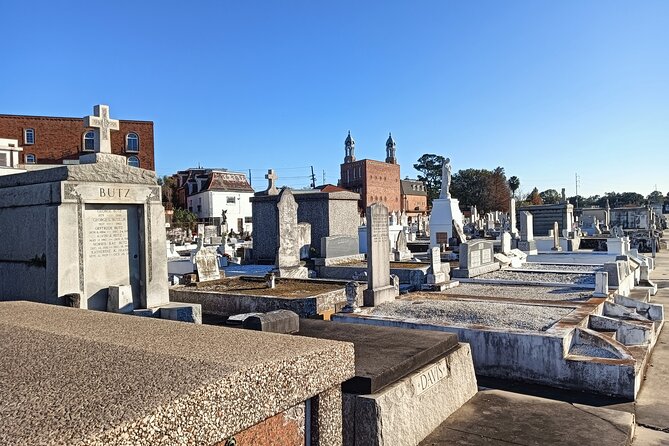
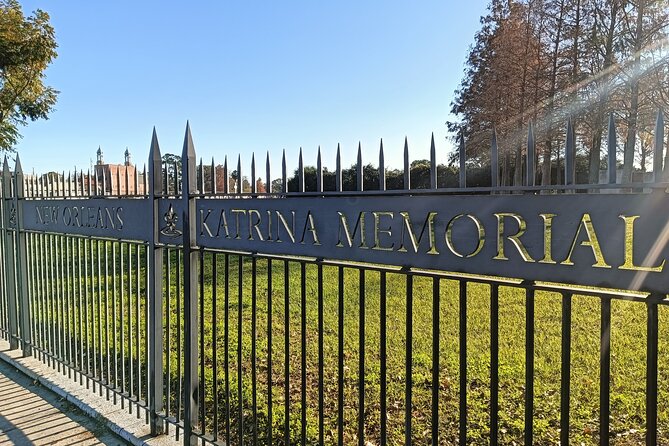
Stop four is Hurricane Katrina Memorial, which isn’t only a memorial to hurricane victims—it also serves as a cemetery for 80 locals who died in 2005.
What makes this stop stand out is the way it’s framed as both personal remembrance and a real detective-style story. You’ll hear the touching accounts of the people who were lost, and you’ll also learn how bodies were reportedly “lost” by local authorities and later “re-discovered” in an obscure local massive freezer. After that, the victims received a burial with the respect and dignity they deserved.
This stop doesn’t just count casualties. It explains how recovery and recognition worked—how families and communities eventually found a path to closure.
It’s still a cemetery visit, so keep your behavior respectful and quiet. But it’s also deeply informative, because the guide gives you the why behind the memorial’s existence and the community meaning behind it.
The stop is again about 30 minutes, and with admission listed as free. That’s a lot of weight packed into a short time—so listen closely and don’t rush your photos.
Price and value for a $29 morning tour

The price is $29 per person, and the tour runs about two hours. That’s easy to compare because many of the cemetery admissions you’ll encounter on the itinerary are marked as free in the tour details.
So what are you really paying for? You’re paying for:
- a guide who ties together multiple cemeteries and different burial traditions
- the ability to see several landmark graveyards in one morning
- the context that makes celebrity tombs and family stories understandable
If you were to do this alone, you might be able to find famous names, but you’d probably miss the threads that connect the graves to faith traditions, immigrant history, and specific events like yellow fever and Katrina. That’s the core value here: it turns a collection of stops into a story you can follow.
Also, with a maximum of 22 on the tour, you’re not getting stuck in a crowd. Reviews overall rate the experience 4.9 out of 5, with the strongest praise going to guides like Bobby, Chris, and Christopher for being prompt, friendly, and able to answer questions while keeping the pace comfortable.
One practical consideration: this is not a food tour. Lunch isn’t included, and alcoholic beverages aren’t included. Since it’s a morning start, you might want to eat beforehand or plan a snack afterward so you’re not thinking about hunger while your guide is telling you the heavy details.
Who should book this cemetery tour?
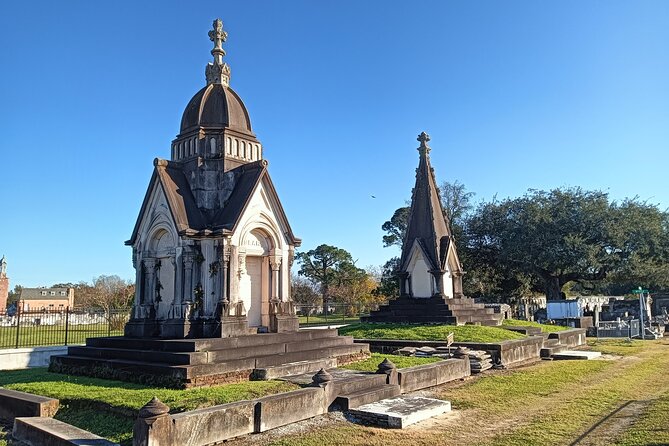
I think this tour is a great match if you want New Orleans history you can walk through. It works especially well for:
- people who like context more than just checking boxes off a map
- visitors who want to see Anne Rice’s grave without turning it into a solo scavenger hunt
- travelers interested in immigrant history, public health tragedy (yellow fever), and modern memory (Katrina)
It’s also a good pick if you’d rather spend your morning learning than searching for clues. A guided route matters in cemeteries because the meaning doesn’t always show itself from the sidewalk.
If you dislike somber themes, this may not be the right morning. The tour includes stories that are emotionally heavy by design. If you’re fine with that, you’ll likely find the explanations make the experience feel thoughtful rather than bleak.
Should you book the 5 Cemeteries of New Orleans tour?
Yes, if you want an efficient morning that covers multiple famous burial grounds and gives you the background to understand what you’re seeing. The value is strong at $29 because it includes a guide and pairs several major cemetery stops with free-entry details.
I’d skip it only if:
- you’re looking for something strictly light and casual
- you don’t want to hear about yellow fever mass burial history or the Katrina recovery story
- you prefer to travel entirely at your own pace with no scheduled stopping points
If you book, come ready to listen, wear comfy shoes, and give yourself permission to slow down at the stops that hit hardest. This is the kind of tour that makes New Orleans feel more specific—less postcard, more real life.
FAQ
What is included in the tour price?
The tour includes the guide and visits to the cemetery stops, with the focus on the burial procedures in New Orleans and the important tombs and graves covered during the route.
How long is the tour, and where does it start?
The tour lasts about 2 hours and starts at 10:00 am at Morning Call Coffee Stand, 5101 Canal Blvd, New Orleans, LA 70124. It ends back at the same meeting point.
Which major cemetery stops will I visit?
You’ll visit multiple landmark graveyards across the tour: Greenwood Cemetery, Cypress Grove Cemetery, Gates of Juhad Cemetery, Lake Lawn Metairie (Metairie Cemetery), the St. Patrick #1 and St. Patrick #2 cemetery sites, Charity Hospital Cemetery, and the Hurricane Katrina Memorial.
Are admission tickets included for the cemeteries?
Admission is listed as free for the cemetery stops on the itinerary.
Is the tour offered in English, and how big is the group?
Yes, it’s offered in English, and the tour has a maximum group size of 22.
What is the cancellation policy?
You can cancel for a full refund up to 24 hours before the experience’s start time. Free cancellation applies as long as you meet that cutoff based on local time.
More Tour Reviews in New Orleans

More of the Cities of the Dead



Just added to The New Orleans Traveler




Cemetery Tours, compared.
 ★ 4.5St. Louis Cemetery No. 1 Official Walking TourFrom $253,941 reviews
 ★ 4.5Cemetery and Ghost BYOB Bus Tour in New OrleansFrom $302,685 reviews
 ★ 4.5City Tour: French Quarter, Garden District & CemeteryFrom $402,209 reviews
 ★ 4.5Dead of Night Ghosts and Cemetery Bus TourFrom $552,068 reviews
 ★ 4.5City and Cemetery 2-Hour Bus TourFrom $541,967 reviews
 ★ 4.5Cemetery Bus Tour with Exclusive Cemetery AccessFrom $401,694 reviews
 ★ 4.6Cemetery Bus Tour At Dark with Exclusive AccessFrom $361,654 reviews
 ★ 4.6Walking Tour Inside St. Louis Cemetery No. 1From $251,519 reviews
Browse the lists this tour appears in