

Reviewed · BUS & HOP-ON HOP-OFF TOURS
New Orleans: Sightseeing Bus Tour
There’s more to New Orleans than one street. I like how this 2.5-hour bus tour gives you a fast orientation across neighborhoods, plus the storytelling style from guides such as Cynthia or Sean keeps the history moving. I also love the mix of big-name sights and local texture: Frenchmen Street music in the mix, then a short cemetery walk with Creole culture context. The main trade-off is that some stops are brief pass-bys, and the tour is not designed for wheelchair users.
If you only have a day or two, this is a smart way to get oriented without bouncing between bus stops in a heat-and-humidity sprint.
In This Review
- Key highlights at a glance
- Getting Oriented: Meeting at Bon’s and Riding in Comfort
- French Quarter Stops You’ll Actually Remember: Cathedral, Market, and the Mint Pass-By
- Frenchmen Street and Esplanade Avenue: Music Energy, Then the City’s Bigger Frame
- Marigny, Tremé, and the Lower Ninth Ward: Learning the City Beyond Postcards
- Musicians’ Village and Degas House: Smaller Stops, Strong Context
- City Park, Lake Pontchartrain, and the Beignet Break That Makes Sense
- Cemeteries With Creole Culture Stories: Saint Roch and St. Louis #3
- Uptown Route Perks: St. Charles Avenue and the Old Streetcar Line
- Magazine Street to the Warehouse and Arts District: Architecture and Style Changes
- Price and Timing: Does $47 for 150 Minutes Feel Like Value?
- Should You Book This New Orleans Bus Tour?
Key highlights at a glance

- Frenchmen Street at street level with live music energy spilling out of venues
- Neighborhood sweep through Marigny, Tremé, and the Lower Ninth Ward
- Creole culture stories at cemeteries with a guided walk at St. Louis Cemetery #3
- City Park break plus beignets at Cafe du Monde (buy what you want)
- Uptown icon route on St. Charles Avenue, including the oldest streetcar line
Hop back on for more of the sights
- New Orleans City Sightseeing Hop-On Hop-Off Bus Tour★ 4.5 · 4,943 reviews
- Cemetery and Ghost BYOB Bus Tour in New Orleans★ 4.5 · 2,685 reviews
- New Orleans Dead of Night Ghosts and Cemetery Bus Tour★ 4.5 · 2,068 reviews
- New Orleans City and Cemetery 2-Hour Bus Tour★ 4.5 · 1,967 reviews
Getting Oriented: Meeting at Bon’s and Riding in Comfort
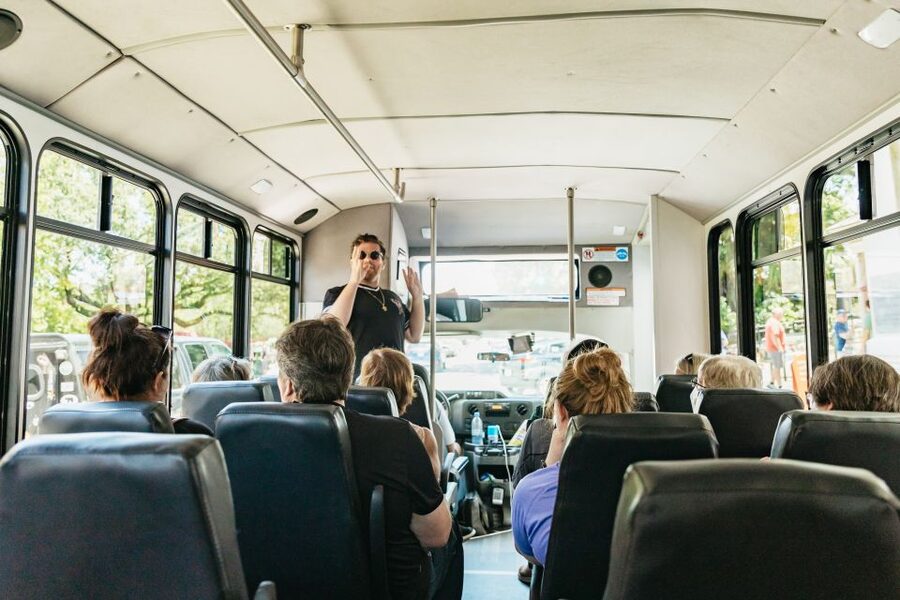
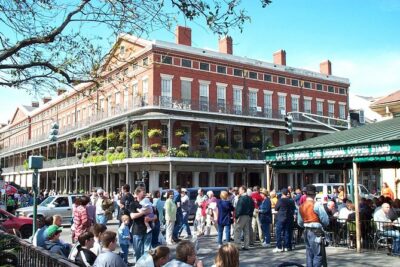
You start right by Jackson Square area, meeting outside Bon’s New Orleans Street Food. That matters because you’re already positioned at the edge of the classic French Quarter core, but you’re not stuck spending the whole time there.
The ride is on a luxury bus with an English-speaking guide, and the plan runs rain or shine. One practical win: you get air-conditioned time on a schedule that’s built for how New Orleans weather behaves. If it’s raining, you’re not just standing in it. Bon’s provides a place to wait indoors when conditions get messy.
The big idea here is orientation. You’re not trying to “see everything.” You’re learning how the city’s different parts connect—commercial center, music corridors, residential neighborhoods, and the cemetery landscape that New Orleans does so well.
A note on expectations: you’ll cover a lot of ground in 150 minutes, so it’s more “scenes and stories” than deep, step-by-step sightseeing at every corner.
French Quarter Stops You’ll Actually Remember: Cathedral, Market, and the Mint Pass-By
You begin with the French Quarter as your baseline. That helps you understand what comes next, because the tour contrasts the Quarter with neighborhoods a short ride away—places with different rhythms, different histories, and different architecture details.
You’ll pass by landmarks like the St. Louis Cathedral and the French Market. These are strong “anchor points” for first-timers. Even if you don’t do a long walk inside, you still get the visual context: the cathedral’s role as a civic center, and the market’s connection to everyday commerce and craft traditions.
You also pass by the Old U.S. Mint, a reminder that New Orleans is not only about music and balconies. It has a long paper-and-metal economic story too. The guide’s narration is what helps these stops land in your brain rather than sliding by as postcard images.
Best use of your brain here: watch for the changes in building style as you head away from the Quarter. The tour’s value is seeing that shift in one trip, without having to plan a route yourself.
Frenchmen Street and Esplanade Avenue: Music Energy, Then the City’s Bigger Frame
One of the easiest ways to understand New Orleans is sound. The tour takes you down Frenchmen Street, where live music leaks out of venues and sets a mood before you even step into anything.
This isn’t about performing for you. It’s about New Orleans being New Orleans—music functioning like background infrastructure. Even when you’re just riding by, you get the key idea: the city’s cultural life is active in the streets, not trapped behind ticketed doors.
From there, you move along Esplanade Avenue. This stretch helps you switch gears from the tight, iconic feel of the French Quarter to a wider, more residential and boulevard-like New Orleans. It’s a good moment for quick note-taking. Later, when you’re walking around on your own, those boulevard landmarks help you orient without pulling out a map every five minutes.
If you’re thinking, should I trade this for a longer French Quarter walk? I’d say no if you have limited time. This route gives you a “front page” of sights plus the city’s tempo beyond the Quarter.
Marigny, Tremé, and the Lower Ninth Ward: Learning the City Beyond Postcards

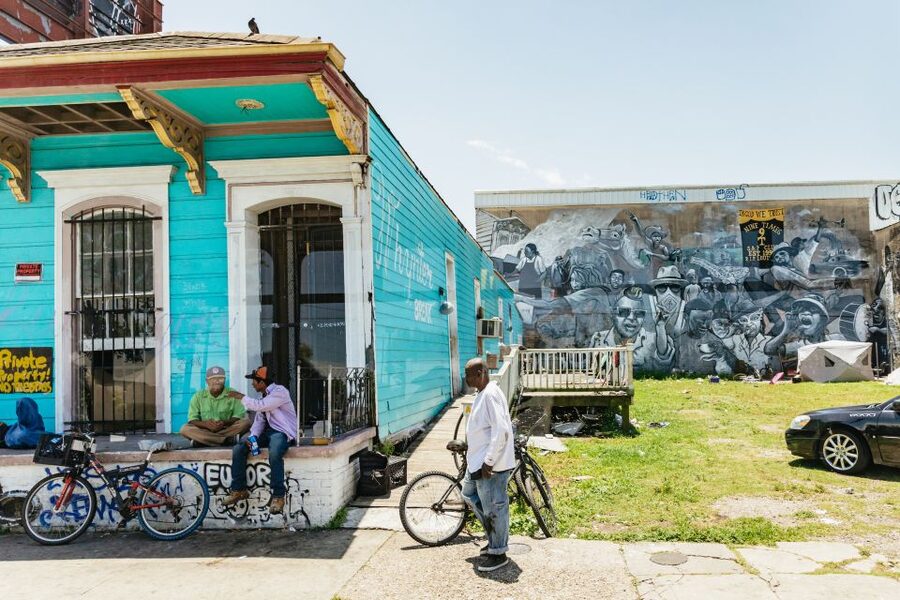
This tour’s personality changes once you leave the classic tourist blocks. You head toward Faubourg Marigny and Tremé, plus a look at the Lower Ninth Ward area. These neighborhoods are the point of the tour, not side quests.
Marigny gives you a sense of the city’s creative, lived-in character. It’s a district people often want to reach—but it’s not always the easiest place to reach on your own if you’re short on time. Having the bus handle the navigation lets you focus on what you’re learning: how the streets feel, how the housing varies, and how the neighborhood story differs from the French Quarter.
Then comes Tremé, a neighborhood that adds depth to the Creole and African American cultural layers that make New Orleans distinct. The guide’s job here is to connect the dots: who lived where, how communities formed, and why the city’s music and food culture didn’t appear by accident.
The Lower Ninth Ward stop is especially important because it shifts the conversation from “fun sightseeing” to “place and consequence.” Even with a pass-by, you come away with a clearer sense of how history shaped the modern city—and why it’s important to pay attention rather than treat it like just another stop.
Practical consideration: this section may include more stops where you’re mostly viewing from the bus rather than stepping out. That’s normal for a 150-minute sweep. If you want hands-on time in these neighborhoods, use the tour as your orientation, then plan a follow-up walk on a separate day.





Musicians’ Village and Degas House: Smaller Stops, Strong Context
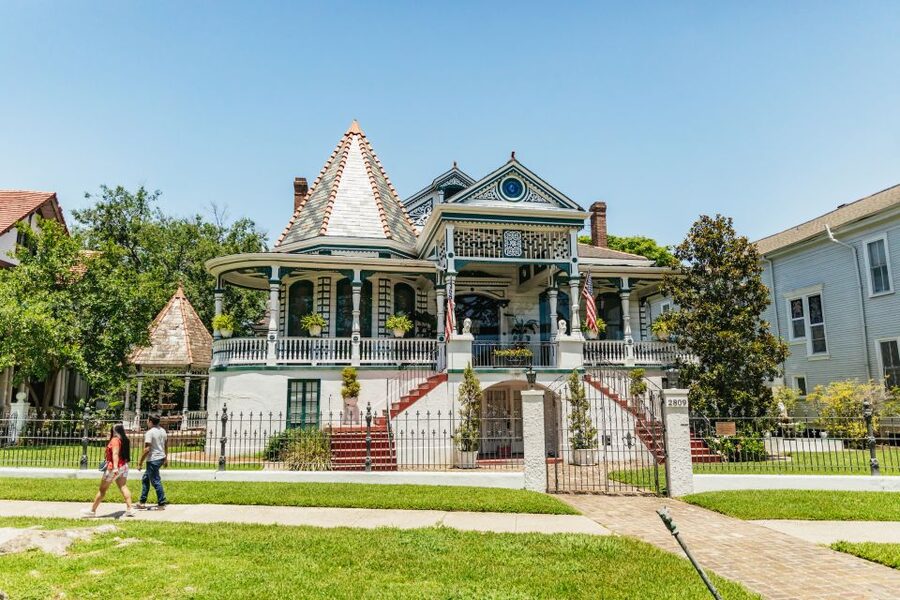
Two stops help round out your understanding of how New Orleans builds identity.
At Musicians’ Village, you’ll enter the area, not just pass by. That matters because it’s a chance to see how culture can be organized into space—how creative life becomes a community infrastructure rather than a one-night event.
Then you’ll pass by Degas House. This isn’t about celebrity tourism. It’s about seeing how the city has long attracted artists and outsiders, and how those stories get tied to place. A quick pass like this can still be useful if the guide explains why it’s there and what it tells you about New Orleans over time.
If you like the “why is this here” side of travel, these moments are worth paying attention to. Keep your phone away and just watch the setting.
City Park, Lake Pontchartrain, and the Beignet Break That Makes Sense

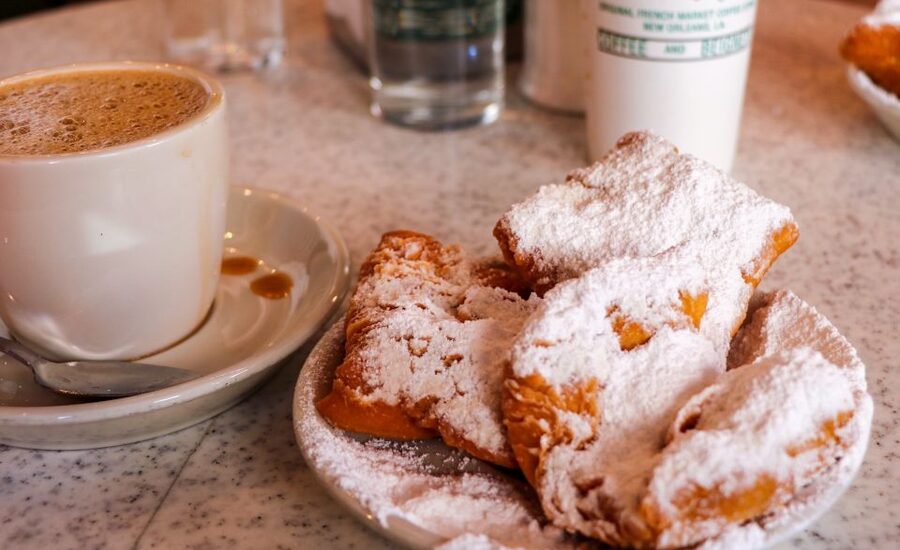
After the neighborhood sweep, the tour gives you a breather: City Park and Cafe du Monde. There’s a short break window built in—enough time to step out, cool off, and do the famous thing without turning the whole day into a waiting game.
Cafe du Monde is your beignet moment. Since food and drinks aren’t included, treat this as your chance to buy what you want: beignets are the obvious choice, but it’s also where you can reset your energy before the later ride.
One smart detail: you’re not sent there and then told to disappear. You still stay on schedule, then keep moving.
The tour also passes by Lake Pontchartrain. Even if it’s not a long lookout-style stop, it helps you understand New Orleans as a water-shaped city. That context matters, especially after learning about neighborhoods that have been affected by the region’s history and weather patterns.
If you’re planning what to do after, this is the section where you can start thinking: I’ll come back and walk this area later, or I’ll take my time around City Park once I know what I’m looking at.
Cemeteries With Creole Culture Stories: Saint Roch and St. Louis #3
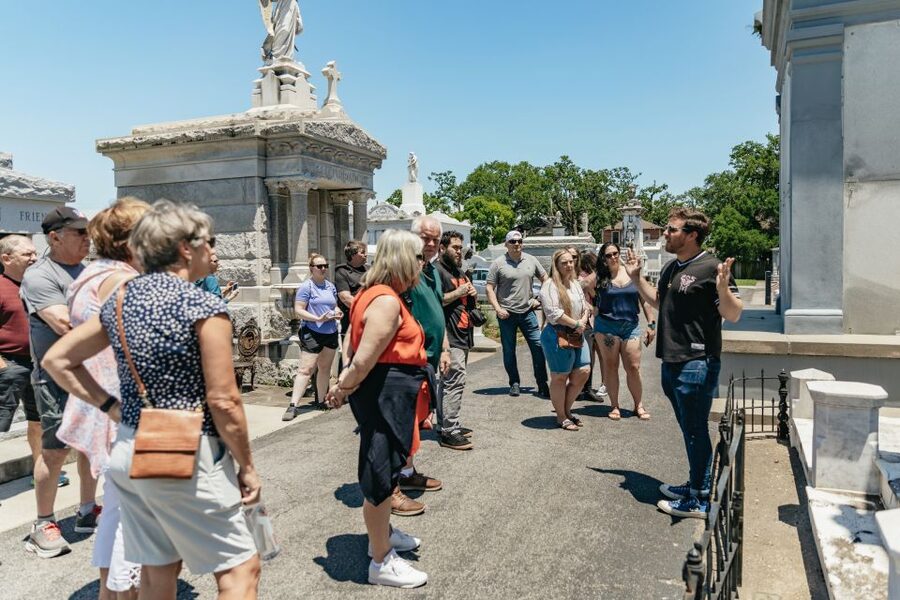
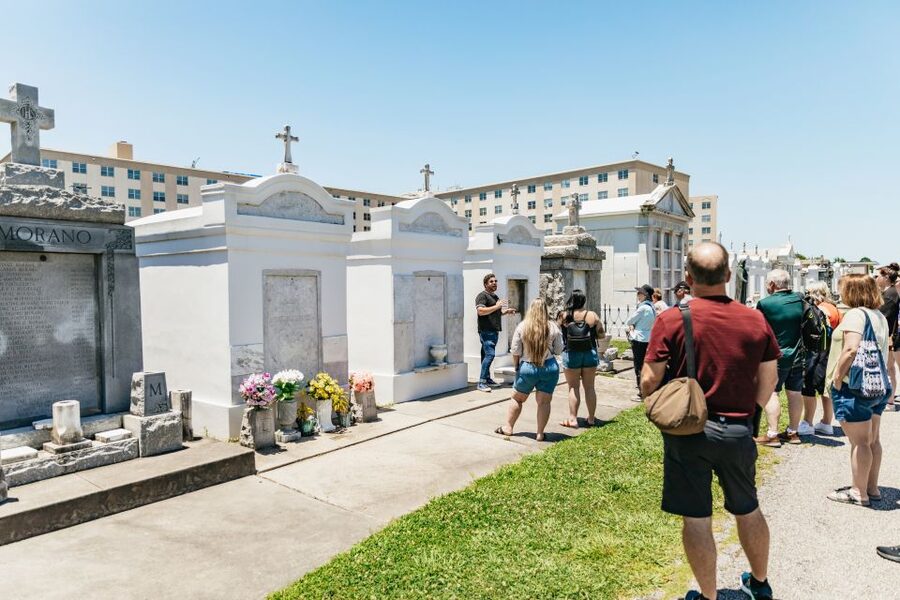
New Orleans cemeteries aren’t just spooky photo stops. On this tour, they come with a guided story about Creole culture.
You learn Creole cultural context at Saint Roch Cemetery #1, and you also get a guided walk at St. Louis Cemetery #3 (about 15 minutes). That’s a short window, but the value is that the guide gives you the framework for what you’re seeing—how the cemetery landscape is built, why it matters, and how it connects to identity.
This is also where you’ll see the difference between “fear marketing” and actual understanding. A short, guided cemetery stop should feel respectful and educational, not like you’re being pulled into a horror movie. If you’re a first-timer who’s curious but not sure how it’ll feel, this timing helps.
Practical tip: wear shoes you can stand in. Even a 15-minute walk can feel longer if the ground is uneven or you’re dressed for summer heat without support.
Uptown Route Perks: St. Charles Avenue and the Old Streetcar Line
Once you go uptown, the city’s vibe shifts again. The tour moves through Uptown/Carrollton and then enters the Garden District area.
A highlight here is St. Charles Avenue, where you’ll see the oldest streetcar in the world. Even if you’re just viewing from the bus, that detail changes your understanding of the city’s layout. It tells you transportation is part of the story, not an afterthought.
You’ll also pass by Tulane and Loyola universities, which gives you a sense of how education and youth presence reshape certain streets. It’s not just mansions and old brick. There’s a whole modern layer running alongside the historic one.
Then the tour rolls into the Garden District with a stop for celebrity home viewing along the way. The point isn’t name-dropping. It’s architectural variety and street planning—how the district looks and feels compared to the neighborhoods you saw earlier.
If you’ve been taking in a lot of heavy history, this section can feel like a visual palate reset, as long as you remember it’s still part of the same city story.
Magazine Street to the Warehouse and Arts District: Architecture and Style Changes
After uptown, you head back toward the mid-city commercial culture with Magazine Street. This is one of those routes where you start noticing that New Orleans isn’t one thing. It’s retail and craft, food and design, and a steady pulse of everyday life.
Along the way, you’ll arrive near the Warehouse District and Arts District. Even though you’re primarily riding through, you’re getting the shape of the city’s creative and commercial zones. This can help you later when you’re choosing where to spend your walking time.
The tour also passes by The Buckner Mansion. That kind of landmark is useful because it gives you an image anchor. When you’re back on your own, you’ll be able to say, I’ve seen that—now I know what district it signals.
Price and Timing: Does $47 for 150 Minutes Feel Like Value?
At $47 per person for about 150 minutes, the value depends on how you like to travel.
If you’re the type who enjoys structure—someone else handles the route, you get narration, and you see multiple neighborhoods quickly—this price can feel like a bargain. You get luxury bus transport and a live guide, and you’re not paying for car rental, parking stress, or multiple transit tickets.
If your travel style is slow and deep, you might feel the trade-off: the day is built for coverage. Some places are pass-by moments, and you’ll do short breaks rather than long, self-paced wandering. Food is also not included, so your beignet stop and any drinks are extra.
The sweet spot is first-timers and time-crunched visitors. The tour gives you a “city map in your head,” which makes everything you do later smoother. You’ll spend less time guessing and more time choosing the right neighborhoods for your interests.
One more consideration: the tour is not suitable for wheelchair users, so mobility planning matters.
Should You Book This New Orleans Bus Tour?
I’d book it if you want a clear, guided orientation that reaches beyond the French Quarter. It’s especially good for you if you care about understanding neighborhoods, not just ticking off famous spots.
Skip it only if you want long walks at every stop or you need full accessibility support. Otherwise, think of it as your foundation day. Do this first, then return on separate days for the places that grabbed you most—music blocks, cemetery areas, or the Garden District streets.
More Tours in New Orleans

More Tour Reviews in New Orleans
More Hop-On, Hop-Off Sightseeing




Just added to The New Orleans Traveler



Bus & Hop-On Hop-Off Tours, compared.
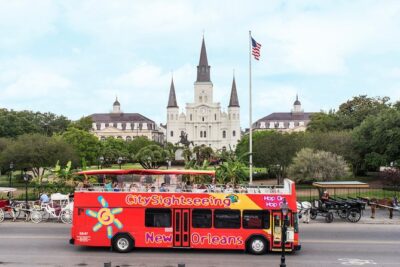 ★ 4.5City Sightseeing Hop-On Hop-Off Bus TourFrom $514,943 reviews
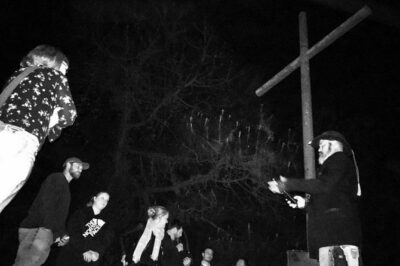 ★ 4.5Cemetery and Ghost BYOB Bus Tour in New OrleansFrom $302,685 reviews
 ★ 4.5Dead of Night Ghosts and Cemetery Bus TourFrom $552,068 reviews
 ★ 4.5City and Cemetery 2-Hour Bus TourFrom $541,967 reviews
 ★ 4.5Cemetery Bus Tour with Exclusive Cemetery AccessFrom $401,694 reviews
 ★ 4.6Cemetery Bus Tour At Dark with Exclusive AccessFrom $361,654 reviews
 ★ 4.5City Sightseeing New Orleans HOHO Bus Tour & Bookable ExtrasFrom $511,077 reviews
 ★ 4.5Hop-On Hop-Off Unlimited Sightseeing PackageFrom $54528 reviews
Browse the lists this tour appears in