Reviewed · New Orleans
Fly a Plane in New Orleans: No Experience or License Required
Your hands can steer New Orleans skies.
This no-license discovery flight lesson turns you into the pilot-in-command for real moments, not a staged photo op. I love the hands-on cockpit control plus live coaching, and I love the way the route gives you French Quarter views from the air plus landmarks along the Mississippi and bayou country.
One key consideration: if you’re prone to motion sickness, this experience may not be the right fit, since refunds aren’t provided for that reason.
In This Review
- Key Highlights You’ll Care About
- First Steps at Lakefront Airport (Photo ID and Waiver First)
- The 20-Minute Ground Lesson That Actually Preps You
- Cockpit Time and Takeoff: What You’ll Do, What the Instructor Does
- Aerial Views Over the French Quarter and the Mississippi Curve
- Spot the Superdome and Bayou Country From Above
- Landing, Touchdown Coaching, and Your First-Flight Paper Trail
- Is $284.80 Worth It for a 50-Minute Discovery Flight?
- Who This Fits Best (And Who Should Skip It)
- Observer Options and the 12-Hour Confirmation Rule
- Practical Tips That Help You Enjoy the Flight More
- Should You Book Fly a Plane in New Orleans?
- FAQ
- Do I need a pilot license to fly?
- How long is the experience?
- What do I need to bring or do before the flight?
- Can I bring an observer?
- Are there age limits?
- What restrictions should I know about for the aircraft?
Key Highlights You’ll Care About
- You do more than sit there: 30 minutes of dual flight time with the instructor guiding you, plus you learn the airplane basics first.
- Preflight teaches you the why: engine start sequence, taxiing, and takeoff prep in plain language.
- Aerial views most visitors never get: French Quarter along the Mississippi, plus swampland and bayou sights.
- Big sports landmarks from above: views of the Mercedes-Benz Superdome and the Smoothie King Center.
- A real memento: a first flight certificate and help recording your first flight in your logbook.
- Small, private group feel: max 3 people per booking (including observers).
Not quite the one? Here are other New Orleans tours worth a look.
- New Orleans Premier Ghost, Voodoo and Vampire Walking Tour★ 4.5 · 12,856 reviews
- New Orleans Steamboat Natchez Jazz Cruise with Dinner Option★ 4.0 · 7,533 reviews
- Adults-Only New Orleans Ghost, Crime, Voodoo, and Vampire Tour★ 5.0 · 6,545 reviews
- New Orleans Food Walking Tour of the French Quarter with Small-Group Option★ 5.0 · 6,118 reviews
First Steps at Lakefront Airport (Photo ID and Waiver First)
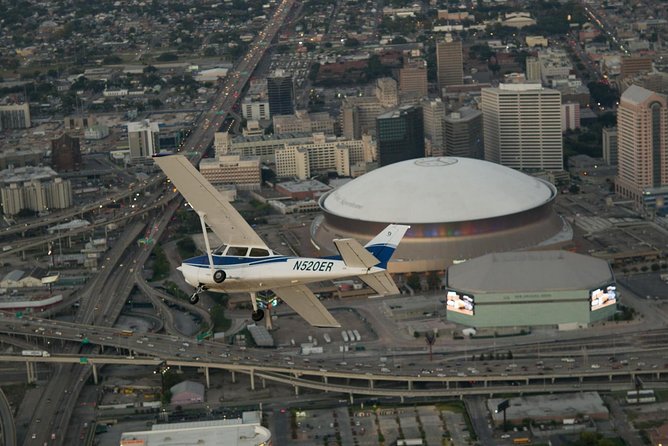
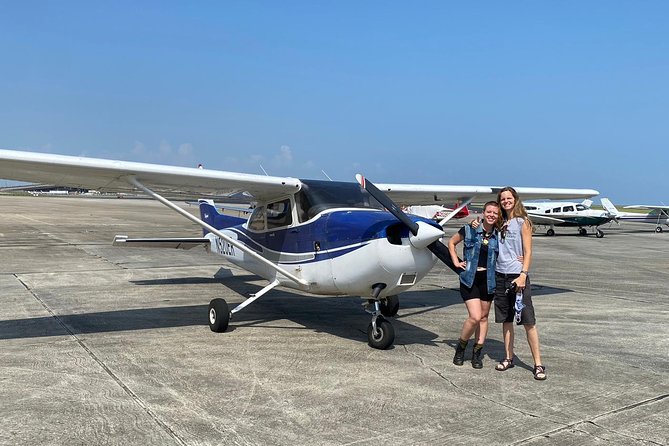
This is a true “show up, suit up, fly” kind of activity. You’ll meet at Lakefront Airport at 6575 Stars and Stripes Blvd, New Orleans, and you’ll get set up from there. Plan on being ready to check in with photo ID and sign a safety waiver before you go anywhere near the airplane.
It’s also private in the good way: only your group participates, with a maximum of 3 people per booking including observers. That matters because you’re not stuck watching other people take turns in a big line. You’re in the cockpit loop, then in the sky loop.
A few small practical points to bake into your plan: there’s no A/C in summer months, and there’s no onboard food, drinks, or large bags allowed—only small purses and bags. There also aren’t restrooms on board, so use the airport facilities before you board.
Finally, one detail that affects everyone: you must advise your weights at booking, with a combined cap of 450 lbs and no individual over 300 lbs. That’s not trivia. It can change who fits on a specific aircraft.
The 20-Minute Ground Lesson That Actually Preps You
Before you fly, you start with about 20 minutes of ground instruction. This isn’t meant to turn you into a pilot overnight. It’s meant to help you understand what the controls and procedures feel like in real time.
You’ll go through the airplane controls and flight procedure, including the engine start sequence, taxiing, and the takeoff preparation steps. I like this part because it gives you a map. When you’re later in the cockpit, you’re not just grabbing switches randomly. You’re following a plan you practiced on the ground.
This also helps your nerves. Even if you’re excited, takeoff has a way of making your stomach write poetry. Knowing what taxiing and takeoff prep should look and feel like helps you stay calm and focused.
And yes, you’ll be told what to do, but you’re not treated like a passenger who can only watch. The whole point of the format is that you’re learning the job while the instructor keeps the situation safe.
Cockpit Time and Takeoff: What You’ll Do, What the Instructor Does
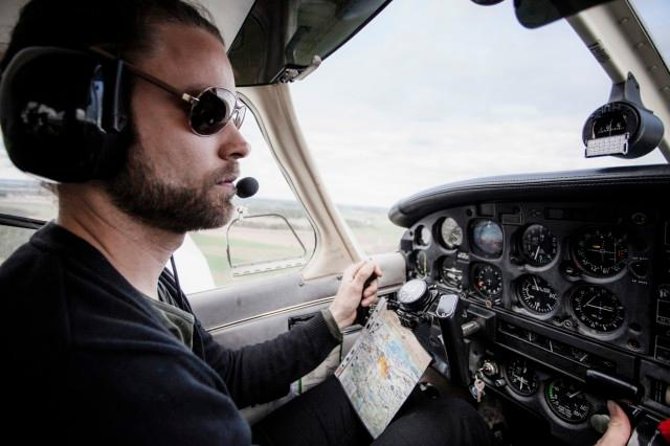
Then it’s your seat in the cockpit next to the professional pilot. The experience includes 30 minutes of dual flight time—meaning you’re flying with the instructor right there, handling guidance and safety. In practice, you can expect that you do key parts of control during the flight, while the pilot manages the “must be right” parts.
Takeoff is the big moment. Your instructor guides you through the process, then helps you get airborne. After that, you’ll follow along with what’s happening and why. You’ll also get live commentary, and you may hear the rhythm of air traffic control as you fly in the area.
A nice clue from past flights: some instructors have a style that pushes students to do more than just straight-and-level. People remember being encouraged to try maneuvers and to keep their attention on what matters, not just hovering through the sky. That’s exactly what you want from a first flight lesson.
One important nuance: you’re not doing everything end-to-end. You’ll learn and do a lot, but the instructor still runs the operation so you stay safe.
Aerial Views Over the French Quarter and the Mississippi Curve
Once you’re up, the tour shifts from training mode to New Orleans from above. Expect aerial views of New Orleans and the surrounding swampland, including a clear look at the French Quarter as it bends along the curve of the Mississippi River.
From ground level, the French Quarter is all street corners and stories. From the air, it becomes geography: you start noticing the river’s shape, the way neighborhoods line up, and how the city’s layout follows the water. If you love cities, you’ll like seeing how New Orleans actually sits in its own environment.
You’ll also have a chance to follow the Mississippi for a bit as it winds through the city. That’s a different kind of sightseeing. It’s not just landmark spotting. It’s watching a major water system steer the whole region.
I especially like this segment if you’re the type who plans photo stops. You’ll get angles that no sidewalk shot can copy, and it’s quick enough that you don’t feel worn out by the time you land.




Spot the Superdome and Bayou Country From Above
This flight doesn’t just focus on downtown. You’ll also fly over and around big sports landmarks, with views of the Mercedes-Benz Superdome and the neighboring Smoothie King Center.
Then, you’ll see parts of the broader area—swampland and the bayou system that surrounds the city. From above, the bayou region reads like a map of connected waterways and low, flat terrain. It makes New Orleans feel less like a single tourist bubble and more like a whole water-world.
A quick reality check: you won’t get a long, slow scenic cruise. This is still a lesson flight. So the views are real, but they come in a focused window. If your goal is to stare at the skyline for a long time, you might wish for more airtime. If your goal is to fly and learn, this timing is spot on.
Landing, Touchdown Coaching, and Your First-Flight Paper Trail
The best part of the end of the flight is what you learn during landing. After your sightseeing segment, your instructor leads you through the touchdown procedure and helps guide the plane safely back to the ground.
You’ll also want to pay attention here, because landing is where “knowing what’s happening” matters most. Even if the instructor does the critical landing control, you’ll understand the steps and what to watch for.
Then comes the memento moment. You’ll have your first flight recorded in your official logbook—and you’ll receive a first flight certificate. This matters more than people expect. A certificate doesn’t teach you anything, but it creates a clear milestone. It’s a reminder that you did something real with your own hands, not just watched someone else do it.
Is $284.80 Worth It for a 50-Minute Discovery Flight?

Let’s talk value, because this isn’t cheap, but it’s also not a long fancy vacation. The price is $284.80 per person, and the flight duration is about 50 minutes.
What you’re really paying for is this combination:
- No prior experience required
- 20 minutes ground instruction
- 30 minutes dual flight time
- Live commentary
- Cockpit time that’s hands-on
- A first-flight certificate
- Help logging your flight
And here’s a detail that changes how you read the time: flight time is defined from engine start to engine shutdown, including the ramp-to-runway portion and the walk-back after. So the experience feels like more than just the “in the air” minutes.
If you’re comparing this to a pure sightseeing flight, the difference is you get instruction and control moments. If you’re comparing it to beginner flight training, you’re not paying training-school tuition. You’re getting a taste—plus a certificate and logbook entry.
Small groups also help value. With a max of 3 people per booking, the instructor attention stays tight.
The main downside isn’t the price. It’s that you’re dealing with weather and aircraft operations like any real aviation activity. If you’re set on a specific day, keep an alternate plan in mind.
Who This Fits Best (And Who Should Skip It)

This flight lesson fits best if you want:
- a hands-on experience in the cockpit,
- a chance to fly without a license,
- and scenic aerial views of New Orleans plus the wider marshy region.
It also works for many group types. I’d especially call it out for solo travelers who want a “do something” story and for couples celebrating something, since the cockpit time makes it feel personal.
Age limits are clear: the minimum age for the lesson is 10. Observers can be age 5 and up. There’s a maximum of 3 people total per booking, and observers cost extra.
Now the “skip it” list:
- If you’re prone to motion sickness, this isn’t recommended, and refunds won’t be provided for that reason.
- If you have weight constraints, you must fit under the 450 lbs combined limit and 300 lbs per person max.
- If you need onboard comfort perks like bathrooms or cooling, you should know those aren’t part of the setup—there are no restrooms on board, and summer means no A/C.
Observer Options and the 12-Hour Confirmation Rule
If you want to record video or take photos from the back seat as an observer, you can add an observer for an additional fee, with a maximum of 2 observers. But here’s the part that can make or break your plans: you have to call the supplier at least 12 hours before your flight to confirm the flight time and observer attendance.
Observers aren’t guaranteed unless they’re confirmed ahead of time. That’s not a minor detail. If you’re booking this as a gift and someone is counting on being the photographer, treat that phone call as part of your reservation, not an optional extra.
Also note what you can and can’t bring. There are limits on bag size, and no large bags are allowed on the aircraft. Plan your “observer kit” accordingly.
Practical Tips That Help You Enjoy the Flight More
Here are the things I’d do to make your day smoother, based on the rules and what tends to matter in real flight lessons:
- Bring photo ID for check-in.
- Wear weather-appropriate clothing. Dress code is weather dependent, and summer months can feel hot since there’s no A/C.
- Pack light. Only small purses and bags are allowed.
- No food or drinks on board—save snacks for before you arrive.
- Use the airport restroom before boarding, since there are no restrooms on board.
- If you’re traveling with a group and weights change, address that at booking since weight limits apply.
- If the weather turns unusual, the flight may be rescheduled at no charge within two weeks. Refunds aren’t available when rescheduling happens due to weather, so pick an alternate date you can live with.
One last tip: if you’re nervous, tell the instructor and pay attention to their coaching. Some of the strongest praise people give is about pilots who helped them feel safe and who encouraged them to do real control work, not just watch.
Should You Book Fly a Plane in New Orleans?
I’d book this if you want a real first-flight experience where you actually take controls with professional guidance, and you care about seeing New Orleans from a rare angle—French Quarter by the river, plus stadiums, plus bayou country.
I would think twice if motion sickness is an issue for you, or if you need onboard basics like restrooms and cooling. Also, if you’re bringing an observer, don’t treat the 12-hour confirmation as optional.
If your goal is to collect one unforgettable pilot-story with a certificate and a logbook entry, this is exactly the kind of value-focused thrill that works.
FAQ
Do I need a pilot license to fly?
No. This is a discovery flight lesson designed for people with no prior experience.
How long is the experience?
The total experience is about 50 minutes. The included instruction time is 20 minutes of ground instruction plus 30 minutes of dual flight time.
What do I need to bring or do before the flight?
Bring photo ID at arrival. You’ll also sign a safety waiver before take-off.
Can I bring an observer?
Yes. Observers can be added for an additional fee, up to 2 observers. You must call the supplier at least 12 hours in advance to confirm observer attendance, since observers are not guaranteed unless confirmed.
Are there age limits?
Yes. The minimum age for enjoying the lesson is 10. The minimum age for an observer is 5.
What restrictions should I know about for the aircraft?
There are no restrooms on board, no food or drinks allowed on the aircraft, and no large bags are permitted (only small purses and bags). Dress is weather dependent, and there is no A/C in summer months.